[email protected] Serving West, East, Southern & North Africa
0%

Choosing the 2026 best types of Pallet Storage Racks requires more than comparing product photographs or advertised capacities. Warehouse conditions decide the answer. SKU variety, pallet dimensions, inventory turnover, aisle width, forklift reach, and building height all influence rack performance. A selective system may provide fast access for many SKUs. Drive-in racks can offer higher density, but they reduce direct pallet access. Push-back, pallet flow, double-deep, and automated storage systems each solve different operational problems.

Industry evidence supports a careful, data-led approach. The MHI 2024 Annual Industry Report identified supply chain technology investment as a continuing priority for many industry leaders. Its findings reinforce a practical point: storage decisions increasingly connect with labor availability, inventory visibility, and automation planning. The 2024 CBRE U.S. Industrial and Logistics Occupier Survey also highlighted ongoing pressure to improve warehouse efficiency and use space more effectively. Space remains expensive.

Safety cannot be treated as an afterthought. OSHA guidance emphasizes proper rack design, loading practices, inspection, and forklift control. Manufacturer load tables and qualified engineering reviews should confirm every proposed configuration. Local fire codes and seismic requirements may also affect the final design. Small details matter, including beam deflection, pallet overhang, upright protection, and damaged frames.

There is no universal winner. That answer sounds convenient, but it is incomplete. This guide compares major rack types through access, density, flexibility, cost, safety, and long-term scalability. Some conclusions may change after a site survey. The best 2026 solution is the one that fits measured warehouse behavior, not optimistic assumptions.
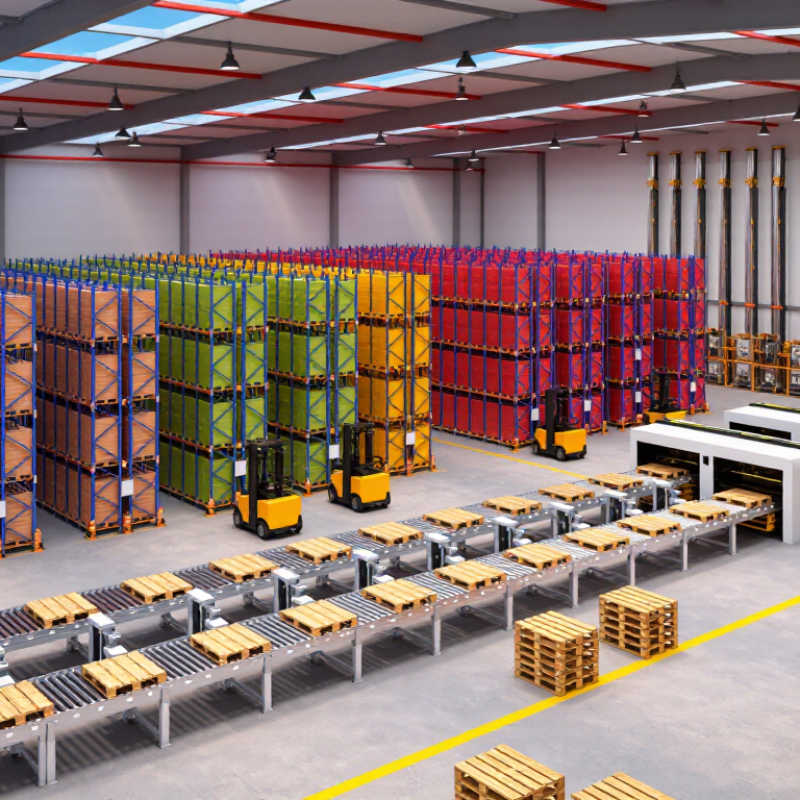
What Are the 2026 Best Types of Pallet Storage Racks?

Definition and Role of Pallet Storage Racks in 2026

Pallet storage racks are engineered steel structures that hold loaded pallets above the warehouse floor.

In 2026, they support safer storage, faster picking, and better use of vertical space. A typical system includes upright frames, horizontal beams, pallet supports, and floor anchors. Each component must match the load weight, pallet size, and building conditions. Small errors matter.

Their role is more than simply storing goods. Selective racks provide direct access to every pallet and suit warehouses with varied inventory. Drive-in racks increase density for similar products, while double-deep racks reduce aisles but require suitable handling equipment.

Push-back racks can improve space use for products with several pallets per item. Automated storage systems may improve accuracy, yet they need reliable software, maintenance, and trained operators.

In practice, rack selection begins with measured facts.

Record pallet dimensions, load weights, aisle widths, ceiling height, and daily movement. A 1,000-kilogram pallet needs a verified beam capacity, not an estimate. Clear labels and visible damage checks help workers identify risks near loading zones.

Regular inspections should examine bent frames, loose anchors, missing safety pins, and impact marks. Real warehouses are rarely perfect. Inventory changes, uneven floors, and rushed loading can weaken an otherwise sound plan.

Engineers and experienced warehouse managers should review the design before installation. Safety depends on disciplined use, not steel alone.

How Pallet Storage Rack Systems Are Classified

What Are the 2026 Best Types of Pallet Storage Racks?

How Pallet Storage Rack Systems Are Classified

Pallet storage racks are classified by access method, storage density, load rotation, and automation level. Selective pallet racking offers direct access to every pallet. It suits warehouses with many stock-keeping units and frequent picking. Drive-in racks increase density by reducing aisles. However, forklifts enter the rack structure, so loading discipline becomes critical.

Push-back systems store pallets on nested carts or rails. They support last-in, first-out handling and faster aisle operations. Pallet flow racks use inclined rollers and gravity. They are better for first-in, first-out products, especially chilled goods or date-sensitive inventory. Automated storage and retrieval systems add software-controlled movement. The 2024 MHI Annual Industry Report found that 89% of supply chain professionals expect to increase technology investment within five years. That trend does not make automation suitable everywhere. High installation costs and imperfect inventory data can weaken the result.

Tips: Measure pallet weight, height, turnover, and forklift reach before selecting a system. Leave clearances around beams and uprights. EN 15635 recommends regular rack inspections by a competent person. A small impact may bend a frame without obvious warning. I have seen layouts optimized for capacity, then slowed by poor aisle visibility. Density is useful, but access still pays the bills.

The Main Types of Pallet Storage Racks and Their Uses

Choosing the best pallet storage rack in 2026 starts with the product, not a catalog photo. Selective pallet racking suits warehouses needing direct access to every load. Forklifts reach each pallet from an aisle. It supports mixed stock, frequent picking, and clear inventory checks. This is the practical default. However, it uses more floor space than dense systems. Measure beam levels, aisle width, pallet weight, and building height before ordering. A small measurement error can disrupt daily traffic.

Drive-in rack stores uniform pallets in deep lanes, making it useful for cold storage or large batches. It reduces aisles but follows a last-in, first-out pattern. Double-deep rack places two pallets behind each other. It improves density, though rear pallets need planned access. Push-back rack uses nested carts and works well for several pallets per stock-keeping unit. Operators should check cart movement and load stability during training. It can feel efficient until product variety rises.

Pallet flow rack uses rollers and gravity to move pallets toward picking faces. It supports first-in, first-out rotation for dated goods. Cantilever rack serves long, awkward items better than standard beams. In real facilities, hybrid layouts often perform best: selective racks near dispatch, dense racks in reserve zones, and flow lanes for fast-moving stock. The imperfect part is unavoidable. Demand changes. A layout that worked last year may create congestion this year. Review damage records, travel time, and empty locations every few months. Let measured use guide the next adjustment.

What Are the 2026 Best Types of Pallet Storage Racks?

The best pallet rack depends on access requirements, storage density, inventory rotation, and available floor space. The chart compares representative pallet positions stored in depth for common rack systems.

Selective racks provide direct access to every pallet, while drive-in, push-back, pallet-flow, and automated systems generally increase storage density by storing pallets deeper. Actual capacity varies with pallet size, rack height, aisle width, building structure, and warehouse operating conditions.

How to Compare Pallet Rack Capacity, Access, and Safety

What Are the 2026 Best Types of Pallet Storage Racks?

How to Compare Pallet Rack Capacity, Access, and Safety

The best pallet rack depends on inventory flow, not appearance. Selective racks provide direct access to every pallet, making them practical for many stock-keeping units. Push-back racks increase storage density, but operators must manage pallet depth and product rotation carefully. Drive-in racks use fewer aisles and suit uniform, high-volume loads. Access becomes limited, though.

Capacity needs more than a supplier’s headline number. Check beam capacity, upright-frame rating, pallet weight, load center, floor strength, and anchoring requirements. ANSI MH16.1-2023, referenced by the Rack Manufacturers Institute, emphasizes engineered design and proper rack use. A six-level layout may look efficient, yet uneven loading can reduce its real working capacity. I would not trust a spreadsheet without an on-site measurement.

Safety should be compared as seriously as storage density. OSHA’s Powered Industrial Trucks eTool reports approximately 85 forklift-related fatalities and 34,900 serious injuries annually in the United States. Clear aisle widths, visible load plaques, guarded uprights, and routine inspections matter every day. Damaged frames need isolation, not a quick repaint. In practice, access and safety often compete with density. That trade-off deserves honest review.

What Are the 2026 Best Types of Pallet Storage Racks? — How to Compare Pallet Rack Capacity, Access, and Safety

Comparison of common pallet-storage rack systems using typical planning ranges. Actual capacity and compliance depend on rack design, pallet dimensions, load characteristics, seismic conditions, equipment, and local regulations.

Rack Type Typical Capacity per Pallet Position Storage Density Direct Pallet Access Forklift Access Inventory Selectivity Main Safety Considerations Best-Fit Applications
Selective Pallet Rack Approx. 450–3,000 kg (990–6,615 lb) Low to medium 100% direct access Very good; aisle width commonly about 2.7–3.7 m (9–12 ft), depending on truck type Excellent Protect uprights and frames with guards; maintain beam-lock engagement, load plaques, safe clearances, and regular inspections. Warehouses with many SKUs, mixed pallet loads, and frequent picking or replenishment.
Double-Deep Pallet Rack Approx. 450–2,500 kg (990–5,510 lb) Medium to high About 50% direct access without moving the front pallet Requires a reach truck or suitable telescopic handling equipment; deeper operating clearances are needed Good for fewer SKUs with multiple pallets per SKU Use compatible double-deep equipment; control pallet placement, back-to-back clearances, load stability, and beam deflection. Medium-turn inventory where additional density is needed without sacrificing all selectivity.
Drive-In Pallet Rack Approx. 500–1,500 kg (1,100–3,307 lb) Very high Limited; typically one entry side for last-in, first-out storage Forklift enters the rack tunnel; operating speed and visibility are more restricted than in selective systems Low; best for batch storage Install entry guides and upright protection; control forklift speed, tunnel traffic, pallet quality, rail condition, and load overhang. High-volume, low-SKU inventory such as seasonal goods or products stored in batches.
Drive-Through Pallet Rack Approx. 500–1,500 kg (1,100–3,307 lb) Very high Access from both sides; supports first-in, first-out workflows when properly managed Forklift operates through the rack from either side; requires disciplined traffic control Moderate, depending on lane management Provide clear entry and exit routes, rack-end protection, traffic controls, and inspection of rails and guide components. Higher-throughput buffer storage where two-sided access is valuable.
Push-Back Pallet Rack Approx. 500–1,500 kg (1,100–3,307 lb) High Front access; multiple pallets can be stored in depth Forklift loads and unloads from the aisle without entering the rack tunnel Moderate; generally last-in, first-out by lane Check carts, rollers, stops, and lane alignment; load pallets evenly and avoid exceeding cart or beam ratings. Medium-turn products requiring higher density and faster access than drive-in storage.
Pallet Flow Rack Approx. 500–1,500 kg (1,100–3,307 lb) High Usually separate load and pick faces; supports first-in, first-out rotation Forklift loads from the replenishment aisle while operators pick from the opposite face Very good for date-sensitive or rotation-controlled inventory Inspect rollers, speed controllers, lane dividers, pallet stops, and back protection; use pallets compatible with the flow lanes. Food, beverage, pharmaceutical, and other products needing controlled stock rotation.
Mobile Pallet Rack Approx. 450–2,500 kg (990–5,510 lb) High to very high One or a limited number of movable aisles; access depends on aisle position Forklift access is available after the required aisle is opened; movement controls are essential Good to very good Use interlocks, emergency stops, floor-load verification, obstacle detection, and controlled access to moving aisles. Cold stores, archives, and facilities where floor space is expensive and access frequency is moderate.
AS/RS Pallet Storage Often engineered for approximately 500–1,500 kg (1,100–3,307 lb) per pallet position Very high System-controlled access; operators normally do not enter storage aisles Automated stacker cranes or shuttles handle pallets; forklift use is concentrated at input and output areas Very good when warehouse-control software is properly configured Require guarding, restricted access, emergency procedures, machine safety controls, fire protection, and preventive maintenance. High-throughput operations needing space efficiency, traceability, and reduced manual travel.

Planning note: Rack capacity must be calculated from the actual beam, upright, connector, floor, and anchorage design—not from a generic table value. Confirm pallet weight, dimensions, load distribution, rack height, aisle layout, forklift characteristics, fire-protection requirements, and applicable local standards before installation.

How to Choose the Best Pallet Storage Rack for Your Warehouse

For 2026, the best pallet storage rack is the one matching your inventory, building, and handling process. Selective pallet racking suits many SKUs and frequent access. Drive-in racking increases density for uniform products. Push-back systems support better selectivity, while pallet flow racks help manage first-in, first-out inventory. A perfect rack rarely exists.

Start with measurable facts. Record pallet dimensions, load weights, daily movements, aisle width, clear height, and forklift turning space. Then compare storage density with picking speed. In practical warehouse audits, overestimating ceiling height is common. Floor strength and column locations can quietly limit your design.

Rack frames, beams, anchors, and protection should follow the Rack Manufacturers Institute’s 2024 specification and applicable local engineering requirements. The 2025 MHI Annual Industry Report surveyed nearly 1,000 supply-chain professionals. It reported that 55% currently use artificial intelligence, with adoption expected to reach 86% within five years. This supports racks with location tracking and accurate inventory data, but technology cannot fix poor measurements.

Tips: Keep fast-moving pallets near dispatch areas. Use selective racks when access matters more than density. Choose drive-in storage only when products have consistent dimensions and longer runs. Label every location clearly. Inspect damaged uprights immediately. Leave space for safe load placement, even when capacity pressure feels urgent. Review the design after seasonal peaks; demand assumptions can be wrong.

FAQS

How are pallet storage rack systems classified?

They are classified by access, storage density, load rotation, and automation level. The main types include selective, drive-in, push-back, pallet flow, and automated systems.

Which rack suits warehouses with many product types?

Selective pallet racking usually works best for many stock-keeping units. Every pallet remains directly accessible. It supports frequent picking and varied inventory.

When should a warehouse choose drive-in racking?

Choose drive-in racking for uniform products and longer storage runs. It increases density by reducing aisles. Forklifts enter the rack, so loading discipline matters.

What is the difference between push-back and pallet flow racks?

Push-back racks use nested carts or rails and usually support last-in, first-out handling. Pallet flow racks use inclined rollers and gravity. They suit first-in, first-out inventory, including date-sensitive goods.

What measurements should be taken before selecting a rack?

Measure pallet length, width, height, and weight. Record daily movements, aisle width, ceiling height, and forklift turning space. Check floor strength and building columns, too.

Is the densest rack always the best choice?

No. High density can slow picking and reduce aisle visibility. Access still matters. A crowded design may look efficient, but operations can suffer.

When does automated storage make sense?

Automation can help with location tracking, repeated movements, and accurate inventory data. It requires high installation costs and reliable measurements. Technology cannot repair poor data.

How can pallet racks remain safe during daily operations?

Leave clearance around beams, uprights, and load placements. Protect rack frames from forklift impacts. Inspect damaged uprights immediately and arrange regular checks by a competent person.

Where should fast-moving pallets be stored?

Keep them near dispatch areas to shorten travel time. Label every storage location clearly. Keep it visible. Seasonal demand can change, so review the layout afterward.

Conclusion

In 2026, Pallet Storage Racks remain essential warehouse systems for organizing goods, maximizing vertical space, and supporting efficient inventory handling. These systems are commonly classified by loading method, access level, storage density, and operational requirements. The main options include selective racks for direct access to individual pallets, drive-in systems for high-density storage, double-deep racks for improved space utilization, push-back racks for efficient last-in, first-out storage, and gravity-flow racks for organized first-in, first-out movement.

Choosing the right pallet rack requires a balanced evaluation of capacity, accessibility, safety, and available floor space. Warehouse managers should consider pallet dimensions, load weight, inventory turnover, handling equipment, ceiling height, and future expansion plans. A suitable system should provide stable support, clear operating paths, reliable protection features, and efficient use of both horizontal and vertical space. By comparing these factors carefully, businesses can select a pallet storage solution that improves workflow, inventory control, safety, and long-term warehouse performance.

Evelyn

Evelyn

Evelyn is a professional marketing specialist and a trusted voice behind the company’s educational content. With a strong understanding of the company’s products, customer needs, and industry trends, Evelyn transforms complex information into clear, practical, and valuable insights for readers.......