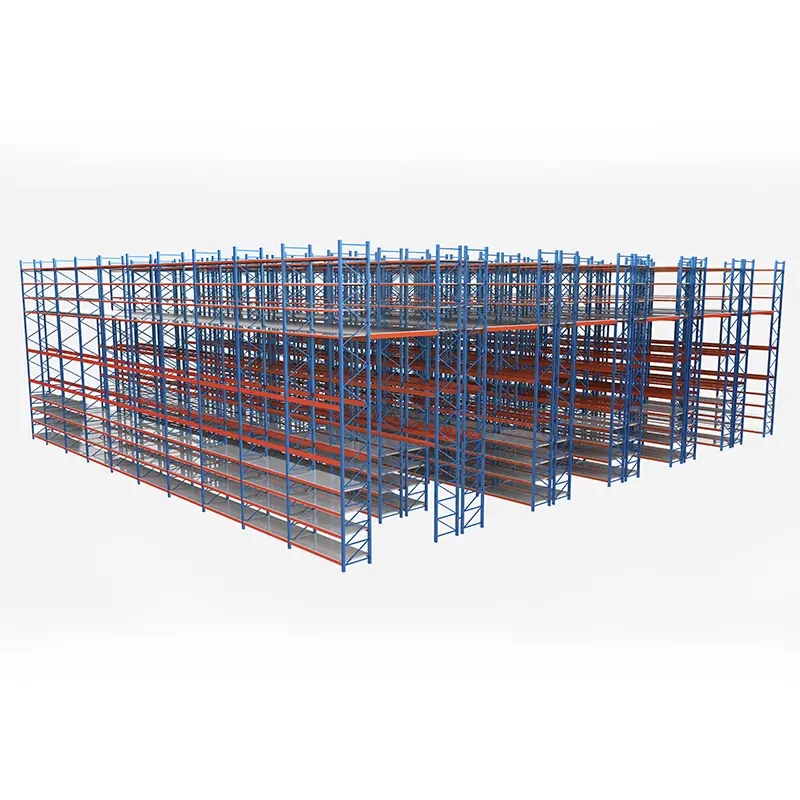
Push Back Pallet Rack: High-Density Warehouse Storage, Working Principles & Global Sourcing Guide
Unlock up to 90% higher storage density without driving into racks. Guangzhou Heda Shelves Co., Ltd. manufactures heavy-duty 2 to 6 deep push back pallet racks engineered for harsh environments, heavy loads, and continuous multi-SKU logistics.
2 to 6 Pallets Deep Lane Storage
Standard Forklifts Operated (No Special Reach Trucks)
What Is a Push Back Pallet Rack and Why Are Global Buyers Choosing It?
As industrial real estate costs rise worldwide, logistics managers face a fundamental dilemma: standard selective racking wastes over 50% of floor space on operational aisles, while drive-in racking often results in structural collisions and slow pallet access. Push Back Pallet Rack systems solve this challenge through a precision-engineered gravity dynamic design.
How the Push Back Cart System Works
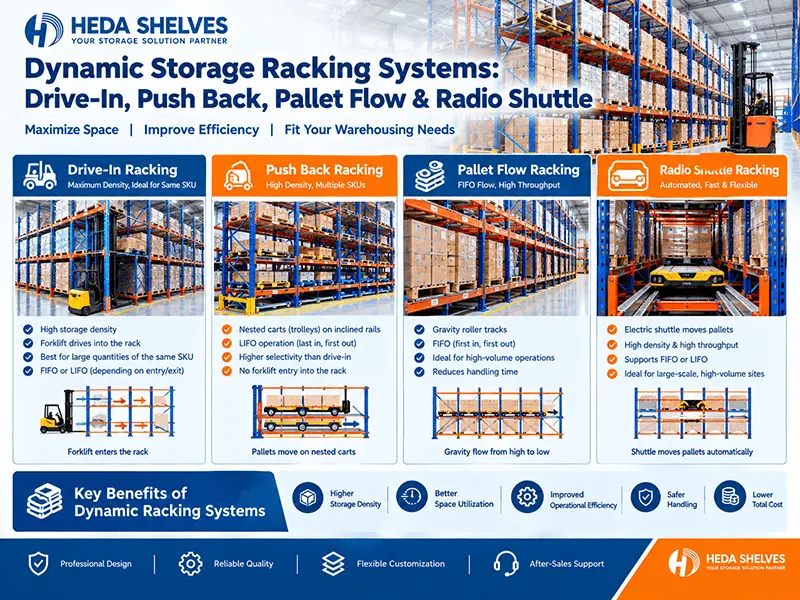
A push back pallet rack utilizes a series of nested rolling steel carts set on structural inclined rails (typically set at a slope of 1.5% to 3%). When placing the first pallet, the forklift operator positions it directly onto the uppermost nested cart. To load the second pallet, the forklift pushes the first pallet backward, exposing the subsequent cart underneath.
This nested arrangement continues for 2, 3, 4, 5, or 6 pallet depths. When discharging stock, the front pallet is picked up, and gravity gently glides the trailing pallets forward into the pick face position at a controlled velocity. Because all loading and retrieval take place entirely from the front aisle, forklift trucks never enter the racking channels. This eliminates rack upright impacts, speeds up loading cycle times by 30% to 45%, and creates a robust Last-In, First-Out (LIFO) storage system with independent SKU access on every individual beam level.
Precision bearings, heavy gauge structural rails, and nested steel carts prevent jamming, misalignments, or pallet hang-ups even under irregular floor conditions.
Technical Benchmarking
Push Back Pallet Rack vs. Alternative Storage Systems
Warehouse planners must match racking dynamics to SKU counts, warehouse roof clearances, and throughput velocities. The following engineering comparison illustrates where push back systems outperform other racking formats.
Storage Criteria
Push Back Pallet Rack
Drive-In Racking
Selective Pallet Rack
Pallet Flow (FIFO)
Space Utilization
Up to 85% – 90%
Up to 80% – 85%
40% – 50% (Wide Aisles)
85% – 90%
Inventory Rotation
LIFO (By Lane Level)
LIFO (By Entire Bay)
100% Direct Selectivity
Strict FIFO (First-In, First-Out)
Forklift Rack Damage
Extremely Low (No in-rack entry)
High (Forks drive into uprights)
Low
Low
SKU Accessibility
Different SKU per beam level
Single SKU per lane/bay
Every pallet accessible
Different SKU per lane
Operating Equipment
Standard Counterbalance / Reach
Narrow aisle / Specialized
Any standard forklift
Standard counterbalance
Operating Power Need
100% Mechanical Gravity (Zero kW)
Zero kW
Zero kW
Zero kW (Gravity)
Engineering Excellence
Push Back Pallet Rack Technical Configurations
Guangzhou Heda Shelves Co., Ltd. custom engineers each push back rack system based on finite element analysis, certified steel grades, and bespoke warehouse dimensions.
Refrigerated warehouse space carries the highest energy cost per cubic meter. Our cold-rated push back pallet rack configurations feature low-temperature lubricants and specialized thermal expansion tolerances for blast freezers down to -30°C.
Finishes: Hot-dip galvanized or epoxy coating
Lubrication: Cold-resistant aviation grade grease
Energy Savings: Increases freezer capacity by up to 70%
Heavy Uprights & Beam Profiles
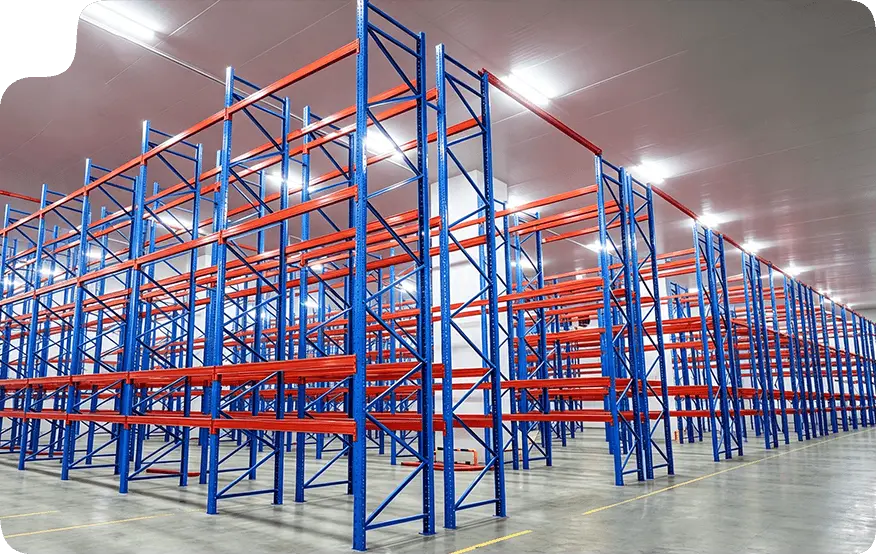
Uprights are continuously roll-formed with omega profile geometry for superior torsional stiffness. Every connector is locked with heavy-duty safety pins to ensure total structural stability under continuous seismic or dynamic fork loads.
Heights: Up to 12 meters custom engineered
Pitch: 50mm / 75mm beam adjustability
Safety: Structural end stops and push-through safety guards
Future Procurement Trends for Push Back Pallet Rack Systems
Enterprise procurement professionals and international EPC contractors are reshaping how dense storage assets are sourced, specified, and operated globally.
Market Shift 01
Urban Micro-Fulfillment & 3PL Expansion
With industrial land values surging near metropolitan regions and seaport distribution corridors, warehouse operators are moving away from horizontal floor sprawl. Logistics providers are demanding high-density racks that do not rely on proprietary, expensive material handling machines. Push back pallet racks allow logistics hubs to retrofit standard facilities into 4-deep and 5-deep high-density centers using their existing forklift fleets.
Market Shift 02
Energy Resilience & Mechanical Reliability
As grid instability, peak power surcharges, and rising industrial electricity rates impact emerging economies across Africa, Southeast Asia, and Latin America, supply chain directors are actively choosing fully mechanical storage. Because push back pallet rack systems operate entirely on gravity and rolling friction, they require zero electrical infrastructure, eliminating blackout risks and costly battery replacements.
Market Shift 03
Cold Chain Capacity Upgrades
Pharmaceutical distribution regulations, fresh meat processing, and refrigerated agricultural exports require maximum thermal volumetric efficiency. Modern cold storage projects are standardizing on 3-to-5 deep push back pallet racks because they eliminate up to 50% of the chilled aisles required by selective setups, significantly lowering operating refrigeration expenditure (OPEX) per stored pallet position.
Innovation Roadmap
Technological Evolution in Push Back Racking Engineering
How structural engineering, robotics, and advanced surface metallurgy are transforming push back pallet racking durability and real-time operational safety.
Direct AGV & AMR Integration: Automated guided vehicles equipped with dynamic push-face sensors are now programmed to push and extract pallets from push back lanes automatically.
Anti-Slip Diamond Pattern Cart Decks: Welded safety plates prevent defective or splintered wooden pallets from shifting during acceleration and deceleration cycles.
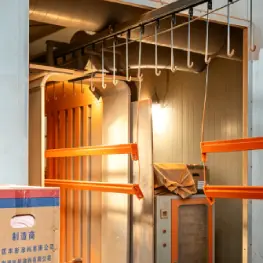
Pretreatment Powder Metallurgic Coating: Automated 10-stage phosphating and electrostatic baking withstands chemical mist, seaside coastal salinity, and humidity variations.
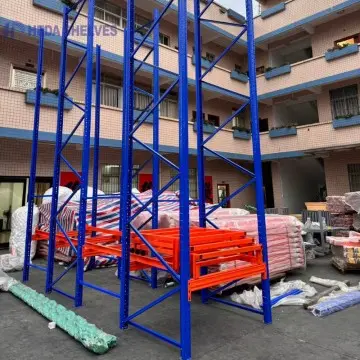
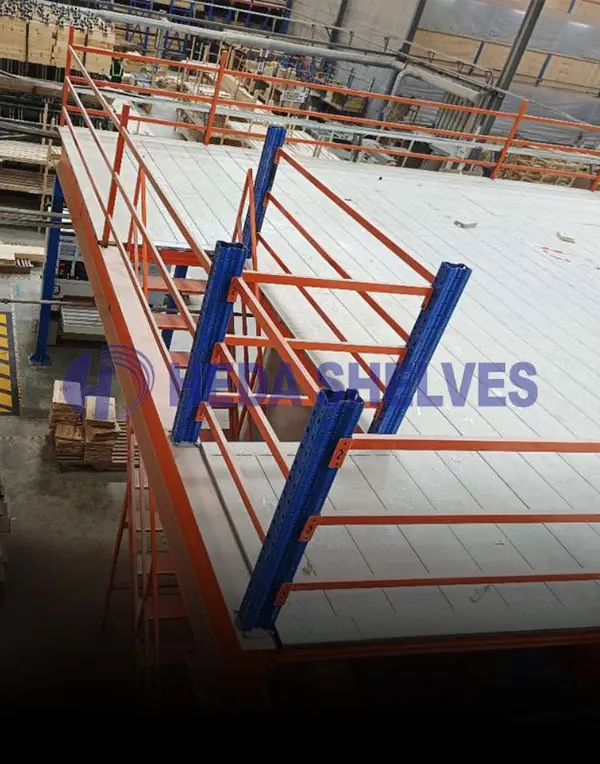
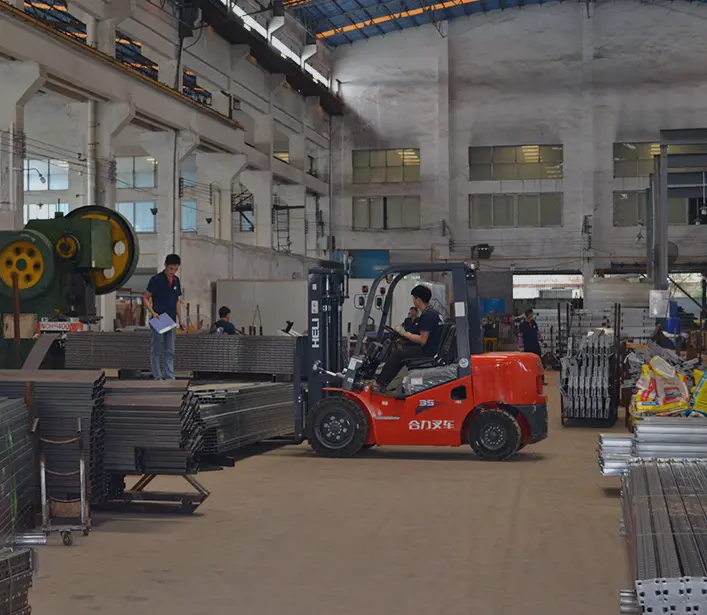
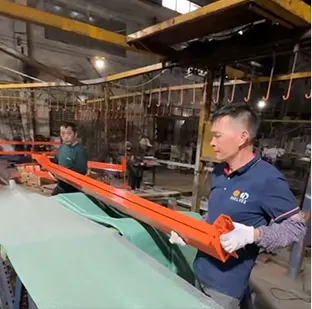
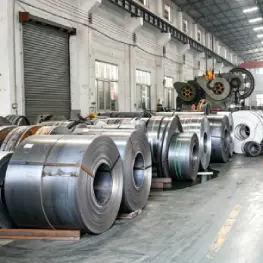
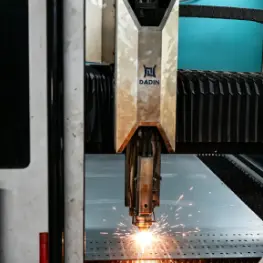
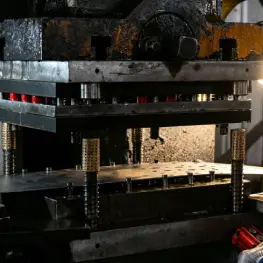
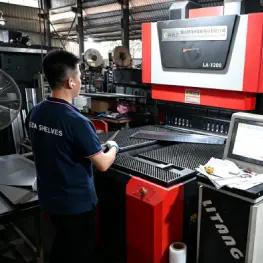
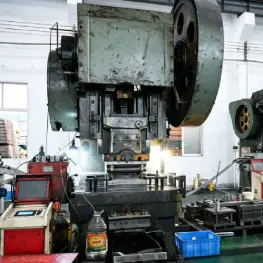
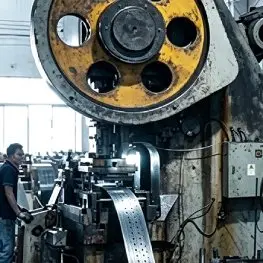
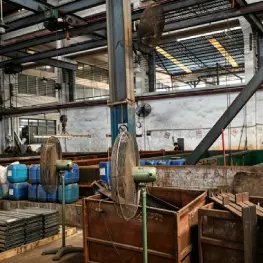
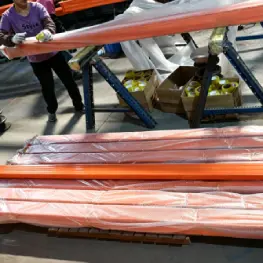
Guangzhou Heda Shelves Co., Ltd. designs and manufactures push back pallet racks, heavy-duty warehouse storage systems, and multi-tier mezzanines in our own 30,000 m² modern manufacturing complex in Guangzhou, China. Every dynamic structural component—from cold-rolled upright columns and load beams to nested dynamic carts and inclined steel guides—is cut, punched, formed, welded, and electrostatic powder-coated under one roof. This integrated factory control guarantees structural reliability from raw steel coil to finished export shipping container.
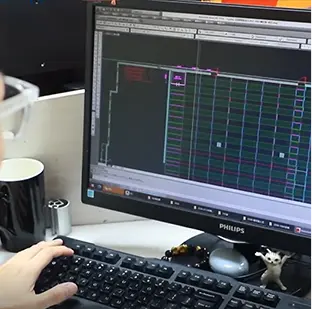
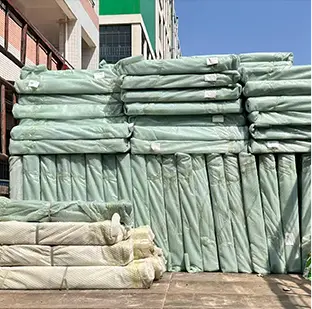
For international buyers and logistics EPC contractors, partnering with Guangzhou Heda Shelves Co., Ltd. ensures a direct manufacturer relationship: our structural engineers produce customized 3D CAD drawings, calculate finite element load capacity, optimize ocean container cube utilization, and support your on-site warehouse installation teams until every lane operates seamlessly.
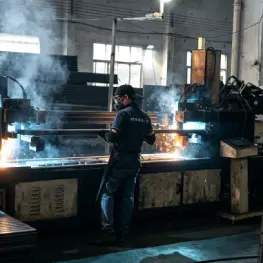
Inside Our FactoryWatch the production line in 2 minutes
Service Process
From Floor Plan to Finished Warehouse in 4 Steps
A transparent and accountable engineering lifecycle engineered for global warehouse buyers.
01
Consultation
Share your building dimensions, pallet sizes, weights, and forklift specifications with our engineers.
02
Design
Receive comprehensive CAD layouts, 3D renderings, and structural load calculations free of charge.
03
Manufacturing
Rigorous in-house production with continuous quality checks across cutting, forming, welding, and powder coating.
04
Shipping & Support
Container-optimized bundle loading, full export documentation, and step-by-step installation guides.
Inside Our Production Line
Ten controlled manufacturing stages transform raw steel coils into certified, heavy-duty push back racking systems capable of withstanding industrial operating demands.
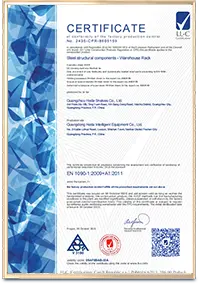
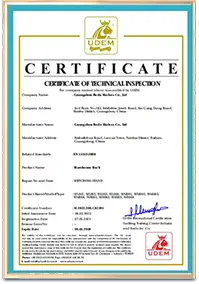
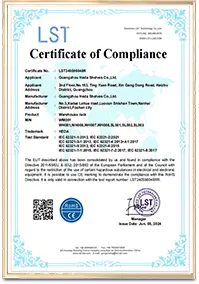
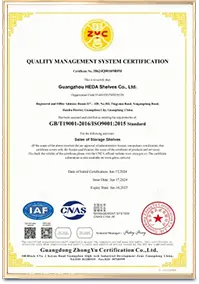
Engineers, logistics consultants, and municipal inspectors require documented structural proof. Guangzhou Heda Shelves Co., Ltd. operates under audited international quality certifications that can be verified online.
CE CertificationStandard EN 1090 / No. 2435-CPR-8605159
ISO 9001:2015 Quality ManagementRegistration No. 18624Q00169R0M · Valid until June 2027
Trusted by global logistics leaders and industrial brands
How many pallets deep can a push back pallet rack system be configured?
Push back pallet rack systems are engineered from 2 to 6 pallets deep per lane. The most common commercial installations are 3-deep and 4-deep, which provide an optimal balance of forklift push force and pallet density. Systems beyond 5 deep require strict pallet uniformity and specialized heavy-duty nested cart configurations engineered by Guangzhou Heda Shelves Co., Ltd.
What type of forklift is required to operate push back racking?
Push back racking works with standard counterbalance, reach trucks, and articulated forklifts. Unlike drive-in racks that demand narrow chassis, or VNA racks requiring guided wire tracks, push back racks require no specialized mast attachments. The forklift only needs sufficient lifting capacity to push the combined weight of the rearward pallets up a gentle 1.5% to 3% slope.
Can push back pallet racks handle varying or irregular pallet sizes?
Yes. Because the pallets sit securely atop solid steel welded carts rather than balancing on narrow lane rails, push back systems accommodate wooden Euro pallets (800x1200mm), standard industrial GMA pallets (1000x1200mm), plastic pallets, and skid runners without danger of falling between rails. Full steel decking can also be fitted onto the carts to handle weak or split pallets safely.
What maintenance is required on push back carts and rails?
Push back pallet racks are low-maintenance mechanical systems. Because carts use heavy-duty sealed bearing steel wheels, no regular greasing is needed under normal indoor ambient warehouse conditions. Maintenance is primarily visual: regular inspection of rail cleanout channels for debris, checking safety end-stops, and ensuring that beam safety locking clips remain securely seated.
Can push back racks be used in refrigerated and cold storage environments?
Yes. Push back systems are one of the most cost-effective cold chain storage solutions available. Guangzhou Heda Shelves Co., Ltd. manufactures low-temperature push back racks using specialized bearings, cold-rated grease capable of operating down to -30°C, and hot-dip galvanized or high-adhesion anti-corrosive powder finishes to resist defrost condensation.
How does push back racking prevent pallets from rolling forward too fast?
During retrieval, the forklift operator controls the forward motion of the trailing pallets with the pallet on the forks. As the front pallet is slowly reversed out, the rear pallets roll forward by gravity against it. In deep lanes (4 to 6 deep) or lanes handling dense heavy loads over 1,200 kg, dynamic centrifugal speed controllers or mechanical friction dampeners can be integrated into the rails to govern maximum rolling speeds.
What data is required to design and quote a custom push back rack layout?
To produce a compliant CAD design and engineering quotation, provide: (1) warehouse layout with clear building height and column positions; (2) pallet width, depth, overall height, and maximum weight; (3) desired lane depth (e.g., 3-deep or 4-deep); (4) forklift model and maximum mast lift height; and (5) destination sea port for CIF/FOB freight calculation.
Consult Directly with Racking EngineersGet structural finite element calculations, custom CAD floor plans, and factory-direct export proposals within 24 hours.
Factory Direct Sourcing
Accelerate Warehouse Efficiency with Push Back Pallet Racks
Provide your building dimensions, pallet load requirements, and logistics throughput targets. Guangzhou Heda Shelves Co., Ltd. delivers turnkey layout designs, load calculations, and global ocean container fulfillment.