Why Choose Pallet Racking for Warehouse Storage?
A warehouse rarely fails because it lacks floor space alone. It often fails because available space is poorly organized. Pallet Racking creates vertical storage levels, allowing businesses to use height instead of expanding their footprint. This structure can turn crowded aisles into clearer travel routes and make individual pallets easier to locate.
F. Edward Frazelle, a respected warehousing and logistics expert, wrote, “The warehouse is the heart of the supply chain.” His observation explains why storage decisions affect more than inventory. A well-planned Pallet Racking system supports faster picking, safer handling, and more consistent stock rotation. Workers can identify pallet positions quickly, while forklifts follow defined access paths. That practical order matters during busy receiving periods.
The benefits are not automatic. They depend on load weight, pallet dimensions, ceiling height, forklift reach, and daily movement patterns. Selective racking may provide direct access to every pallet, but it can consume more aisle space. Drive-in systems improve density, yet they may reduce selectivity. The wrong design can create delays instead of efficiency. That is an uncomfortable point, but it deserves attention.
Measure first.
Warehouse teams should review damaged pallets, blocked locations, and repeated travel before choosing a configuration. Professional installation, routine inspections, and clear load signage also support safer operation. Pallet Racking is valuable because it combines structure with flexibility, not because one design fits every warehouse. A thoughtful system leaves room for growth, correction, and occasional human error.
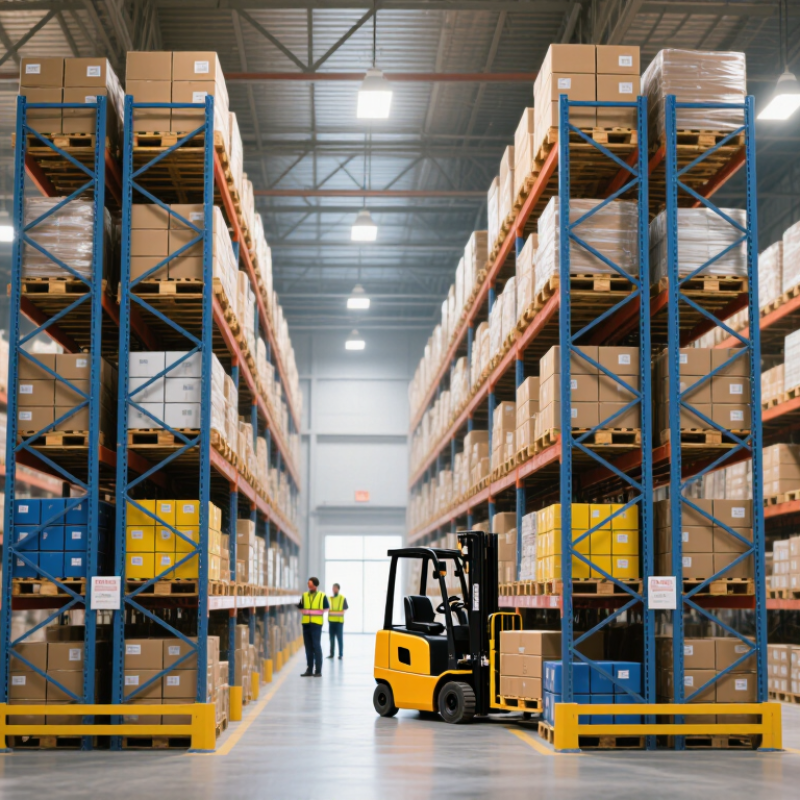
Pallet racking is a steel storage system built from upright frames, horizontal beams, and decking. It stores palletized goods in vertical levels, rather than across the floor. A forklift places each pallet into a beam-supported location. The load then travels through the decking, beams, and uprights into the floor. Simple physics. Important consequences.
Selective pallet racking gives forklifts direct access to every pallet. This suits warehouses with many stock-keeping units and frequent picking. Drive-in systems increase density, but reduce access and usually work better with fewer product types. According to the 2024 Annual Industry Report by MHI, 55% of supply-chain professionals expected to adopt robotics and automation within two years. Racking layouts must therefore allow clear travel paths, consistent pallet positions, and possible future automation. A cheap layout may become expensive when equipment changes.
Safety depends on more than strong steel. The Rack Manufacturers Institute’s ANSI MH16.1 standard addresses structural design, while OSHA requires stable storage and controlled material handling practices. Operators should verify pallet weight, beam capacity, floor condition, and impact protection before loading. Real warehouses are rarely perfect. Bent uprights, uneven pallets, and rushed forklift movements create hidden weaknesses. A competent engineer should review unusual loads, seismic conditions, and modifications. Capacity labels help, but they do not replace inspections.
Why Choose Pallet Racking for Warehouse Storage?
How Pallet Racking Improves Warehouse Space Utilization
In warehouse planning work, I have seen unused vertical space become a costly problem. Pallet racking turns that empty height into organized storage. Instead of spreading pallets across the floor, teams can stack loads on several safe levels. This creates clearer aisles and preserves valuable operating space.
Adjustable beam heights help match the rack to different pallet sizes. Fast-moving products can stay near dispatch areas, while reserve stock moves higher. A forklift can reach selected pallets without shifting an entire row. This reduces handling time and supports more accurate inventory counts. Measure twice.
Good space utilization still requires careful planning. Rack depth, aisle width, ceiling height, and floor strength must work together. Load labels should show the permitted weight for every beam level. Regular inspections can reveal bent frames, loose components, or overloaded positions before they cause disruption. A qualified professional should verify the layout and loading requirements.
Pallet racking is not magic. Poor placement can create congestion, even in a tall warehouse. I have also seen plans focus on maximum capacity while ignoring picking speed. That trade-off deserves honest review. A slightly wider aisle may improve daily productivity more than one extra storage level. Clear location codes, visible labels, and disciplined housekeeping make the available space perform better. Safety barriers around vulnerable corners add practical protection where forklifts operate frequently.
Pallet racking helps warehouses use vertical space while keeping stored goods visible and accessible. Selective pallet racking is the most common option. It gives operators direct access to every pallet and suits warehouses with many product lines. Drive-in racking stores pallets in deep lanes, reducing aisles and increasing density. However, it provides less access flexibility. Push-back racking uses nested carts, allowing several pallets to occupy one lane. It works well for products with limited variations.
Pallet flow racking uses rollers to move pallets from loading to picking faces. This supports first-in, first-out stock rotation, especially for dated goods. Double-deep racking increases density, but workers may need extra handling equipment. Cantilever racking is better for long items, such as pipes, timber, or metal sections. Mobile racking can reduce unused aisle space, although movement may slow picking during busy periods. No system fits every aisle. That matters.
Tips:
Check pallet dimensions, load weights, and forklift clearance before choosing a layout.
Keep heavier pallets on lower levels.
Install protection near corners and driving lanes.
Inspect beams, braces, and uprights regularly.
Mark damaged parts immediately.
A practical review should compare storage density with daily access needs.
In some warehouses, maximum capacity looks impressive but creates slower picking and more handling errors. Test one section first, then adjust the design using real operating data.
Pallet racking can turn vertical warehouse space into organized, accessible storage. Its safety depends on more than steel frames and load capacity. Each bay should display a clear load rating, while pallets must sit evenly on sound beams. Damaged components need immediate isolation and inspection. A small oversight can create a serious hazard.
Accessibility begins with practical aisle design. Forklifts need enough turning space, and pedestrians need clearly marked routes away from moving equipment. Bright lighting helps workers read labels and spot damaged pallets. Frequently handled goods should stay between knee and shoulder height. Heavy items belong on lower levels. This reduces awkward lifting and improves daily workflow.
In real warehouses, conditions change faster than planned layouts. A new product may be heavier, or a pallet may not fit as expected. I have seen teams focus on storage density and overlook visibility around corners. That mistake deserves honest review. Regular inspections should check upright frames, beams, anchors, floor damage, and missing safety locks. Workers also need practical training, not only a signed procedure. A short demonstration beside the rack often reveals unsafe habits sooner. The layout should be reviewed after equipment changes, seasonal stock increases, or near-miss incidents. Following equipment specifications, documented risk assessments, and applicable workplace requirements keeps decisions consistent and easier to verify.
Pallet racking can improve warehouse accessibility by creating organized storage lanes and predictable forklift routes. The chart shows typical clear aisle-width planning ranges for common handling equipment. Wider aisles generally support easier maneuvering and safer access, while narrow-aisle systems can increase storage density when compatible equipment and controls are used.
Typical planning ranges shown in metres; final aisle dimensions should be verified against the selected truck, pallet size, rack height, turning radius, load characteristics, floor conditions, and applicable local safety requirements.
Choosing the right pallet racking system starts with warehouse facts, not catalog photos. Measure clear height, aisle width, floor capacity, pallet dimensions, and forklift turning space. In practice, small measurement errors can reduce storage density or create unsafe contact points.
MHI’s 2024 Annual Industry Report found that 55% of supply chain leaders planned to increase technology investment. This trend makes adaptable racking more valuable. Select adjustable systems when pallet sizes or inventory levels change often. Choose drive-in racking for high-volume, uniform goods. Select selective racking for varied products and direct access. For strict stock rotation, pallet flow racking may support first-in, first-out handling. Rack design should also follow recognized guidance, including ANSI MH16.1 requirements and local load calculations.
Tips: Record the heaviest pallet, not the average one. Confirm beam capacity with a qualified engineer. Leave enough clearance for damaged pallets and uneven floors. Review forklift height and mast reach before ordering.
A perfect layout rarely survives daily operations. That is the part many plans miss. MHI’s report also highlights ongoing pressure to improve warehouse efficiency, but density alone is not efficiency. A crowded aisle may hold more pallets while slowing every retrieval. Test one rack bay with real equipment before expanding the full installation.
Selective racking gives direct access to every pallet. It suits warehouses with many product types. It may use more aisle space.
Drive-in racking suits large quantities of similar goods. It stores pallets in deep lanes. Access is less flexible.
Pallet flow racking uses rollers to move pallets toward picking faces. It suits dated goods and regular stock rotation. Keep the rollers clear.
Measure pallet size, load weight, clear height, aisle width, and forklift turning space. Check floor capacity too. Small errors matter.
Display clear load ratings on each bay. Keep pallets level on sound beams. Isolate damaged parts immediately and arrange an inspection.
Place heavy pallets on lower levels. Keep frequent items between knee and shoulder height. This reduces awkward lifting and improves access.
Mark pedestrian routes away from forklift traffic. Install protection near corners and driving lanes. Use bright lighting to reveal labels and damage.
No. A crowded aisle may hold more pallets but slow retrieval. It can also increase handling errors. Test one rack section with real equipment first. A perfect plan rarely survives daily work.
Pallet Racking is a practical warehouse storage solution designed to organize goods on horizontal beams supported by sturdy upright frames. By storing pallets vertically, it makes better use of available floor space and ceiling height while creating clear aisles for forklifts and workers. A well-planned system can improve inventory visibility, reduce handling time, and support more efficient warehouse operations.
Common options include selective, drive-in, push-back, and adjustable systems, each suited to different storage volumes, access requirements, and inventory rotation methods. Safety and accessibility should always be considered through proper load ratings, stable installation, protected frames, sufficient aisle width, and regular inspections. When choosing the right Pallet Racking system, businesses should evaluate pallet dimensions, product weight, storage capacity, turnover frequency, equipment needs, building height, and future expansion plans. The best solution balances space efficiency, accessibility, safety, and long-term operational flexibility.