Warehouse space is expensive, and the wrong rack can turn a busy aisle into a daily bottleneck. Pallet Warehouse Racking helps businesses use vertical space while keeping stored goods accessible to forklifts and pallet trucks. But no single system fits every building. Clear height, load dimensions, inventory turnover, floor condition, and handling equipment all shape the right choice.
The demand behind these decisions is measurable. The U.S. Census Bureau’s fourth-quarter 2024 E-Commerce Report estimated online sales at $352.9 billion, or 16.1% of total retail sales. MHI’s 2024 Annual Industry Report also found that 55% of surveyed supply chain leaders planned to increase investment in innovation. These figures do not prove that every warehouse needs new racks. They do show why storage capacity and efficient product access remain important planning concerns.
Fit comes first. This guide compares 10 pallet racking systems for 2026, including selective, drive-in, push-back, and pallet-flow designs. It considers access, density, rotation, and operational trade-offs—not just advertised capacity. Actual performance depends on site conditions and qualified design review. A ranking can simplify the decision, but it cannot replace a facility-specific assessment. Some comparisons are imperfect; rack labels alone rarely reveal the full cost of changing aisle layouts, equipment, or work practices.
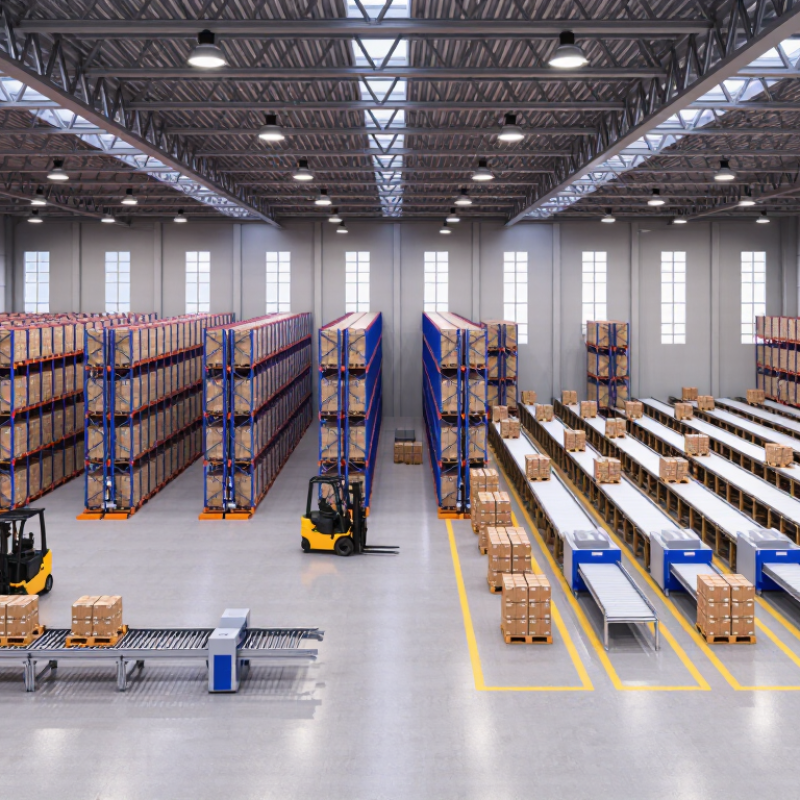
What Pallet Warehouse Racking Systems Are and How They Work
Pallet warehouse racking is a steel structure that stores palletized goods above the floor. Upright frames carry horizontal beams, creating bays where forklifts place and retrieve loads. In selective racking, each pallet position remains directly accessible. Denser systems may use deeper lanes, but access becomes less flexible. That trade-off matters. A warehouse storing many product types may value quick access more than maximum density.
Operators place pallets according to the rack’s rated capacity and the site’s handling plan. Clear load labels, sound pallets, and unobstructed aisles help reduce risks. MHI’s 2024 Annual Industry Report found that 55% of surveyed supply-chain professionals planned to increase technology investment. Racking must therefore work alongside inventory and warehouse-management systems, not apart from them. A layout can look efficient on paper, yet a poorly placed cross-aisle may slow replenishment. I would question any design that adds storage positions without testing forklift turning space, floor conditions, and changing product sizes. The steel is only part of the system.
How to Evaluate Pallet Racking Systems for 2026
A reliable pallet racking evaluation starts with the inventory, not the aisle diagram. Record each pallet’s dimensions, loaded weight, and handling method. Include the heaviest load, not just the average. Then compare those figures with beam capacities and the proposed bay layout. Small details matter. A few extra inches can affect forklift turning space, sprinkler clearance, and usable storage positions.
Check the building slab, column locations, aisle width, and floor condition before selecting a system. Ask for drawings that show frame heights, beam levels, and specified load limits. Have a qualified professional review structural requirements, especially where seismic forces or unusual loads may apply. Also consider daily work: Can operators see load labels? Is damaged equipment easy to spot? Will replenishment block picking? The cheapest layout may create slow, awkward movements. That trade-off is easy to miss on paper. Leave room for changing pallet sizes, too, but avoid buying capacity that the operation cannot safely use. Recheck the design against real traffic patterns before installation.
Ten Leading Pallet Racking Systems and Their Uses
Selective pallet racking gives forklifts direct access to every pallet, making it practical for warehouses with varied stock. Double-deep racking stores pallets two positions deep, improving density but requiring compatible reach trucks. Drive-in and drive-through systems let forklifts enter storage lanes; they suit large batches with fewer product types. Drive-in usually works from one end, while drive-through allows access from both. Push-back racking keeps several pallets deep on inclined carts. Space comes at a cost. Pallet-flow racking uses rollers to move pallets toward the picking face, helping high-turnover goods rotate efficiently.
Pallet-shuttle systems use powered carts to move loads within deep lanes, reducing forklift travel inside the rack. Mobile racking places rows on powered bases, opening aisles only where needed; access can be slower during busy periods. Narrow-aisle racking increases storage capacity but depends on specialized trucks and precise floor conditions. Cantilever racking supports long, awkward loads such as timber or pipe, rather than standard pallet-only inventory. Structural pallet racking uses heavy-duty framing for demanding loads and operating conditions. No layout is perfect. Before choosing, verify pallet dimensions, load weights, forklift clearances, and sprinkler space with qualified warehouse professionals. Small site details can change the best option.
How the Systems Compare in Space, Access, Cost, and Safety
Selective pallet racking offers direct access to every pallet, but uses more aisle space. Narrow-aisle layouts reclaim floor area, though they require compatible lift trucks and careful driver training. Double-deep racks store more pallets per bay; access to rear loads is less convenient. A small drawback, often overlooked.
Drive-in and drive-through racks pack pallets tightly, making them useful for uniform products with fewer stock-keeping units. Drive-in usually follows last-in, first-out access, while drive-through can support access from both ends. Push-back systems also increase density, but each lane limits access to specific pallet sequences. Pallet-flow racks use gravity for first-in, first-out movement; rollers need regular checks for debris and damage.
Pallet-shuttle systems reduce forklift travel within deep lanes, while mobile racks move to open an access aisle. Both can save space, but add equipment, controls, and maintenance considerations. Structural pallet racks may support a building design, yet require close coordination with engineering plans. Across all ten systems, installed cost depends on site conditions, load requirements, fire protection, and operating equipment—not rack price alone. Safety needs equal attention: verify load ratings, protect vulnerable uprights, keep aisles clear, and inspect connections. Even a dense layout can disappoint if workers cannot retrieve the right pallet safely.
How to Select a Racking System for a Warehouse
Select a rack around the work, not a catalogue photo. Record pallet dimensions, loaded weight, overhang, ceiling height, sprinkler clearance, and forklift turning radius. Then map aisle widths and daily pallet movements. Selective racks offer direct access to each pallet; double-deep and drive-in layouts trade access for density. Pallet-flow systems suit high-turnover stock, but need compatible pallets and disciplined loading. Density is not everything.
A common planning miss: measuring the pallet but overlooking load overhang. Check beam and upright capacities against the actual stored load, and confirm floor conditions with a qualified professional. OSHA’s materials-handling standard requires stored materials to remain stable and secure against sliding or collapse. MHI’s 2024 Annual Industry Report found that 55% of surveyed organizations planned to increase investment in supply-chain innovation. That trend makes future equipment compatibility worth checking, even if automation is not in this year’s budget.
Use a scaled layout to test clearances and forklift paths before ordering. Model peak inventory, not just an average Tuesday. The U.S. Census Bureau’s fourth-quarter 2024 report put e-commerce at 16.1% of U.S. retail sales, underscoring why some operations face sharper demand peaks. Measure twice. Still, a model cannot capture every awkward pallet or rushed shift; validate the plan on site with operators and installers.
FAQS
Record pallet dimensions, loaded weight, overhang, and handling method. Include the heaviest load, not only the average.
A few inches can affect forklift turns, sprinkler clearance, and usable storage positions. Measure twice.
Selective racks provide direct access to each pallet. Double-deep and drive-in layouts save space but reduce access.
Check ceiling height, slab condition, columns, and aisle widths. Have a qualified professional review structural requirements.
Use a scaled drawing to check clearances and forklift paths. Validate it on site with operators and installers.
No. Model peak inventory and daily pallet movements. An average day can hide a crowded aisle.
Check visibility of load labels and whether replenishment blocks picking. The cheapest layout may cost time. I might overlook a rushed shift on paper.
Leave room for changing pallet sizes and check equipment compatibility. Avoid buying capacity the operation cannot safely use.
Conclusion
Pallet Warehouse Racking systems store goods on pallets in structured rows, allowing forklifts and other equipment to place and retrieve loads safely. For 2026, choosing the right setup means looking beyond storage capacity: warehouse teams should assess inventory turnover, pallet dimensions and weight, aisle width, equipment access, available floor space, and plans for future growth. Common system types serve different needs, from direct access to every pallet to high-density storage that prioritizes capacity over immediate access.
This guide compares ten leading racking configurations by how they work and where they are most useful. It also considers their relative space efficiency, accessibility, cost, and safety requirements, helping readers understand the trade-offs between each option. By matching the racking design to inventory patterns, building constraints, handling equipment, and operational priorities, warehouse managers can make a practical selection that supports efficient workflows and reliable storage.