China’s pallet storage system industry has developed rapidly, serving warehouses, factories, and distribution centers worldwide. This article examines ten notable Chinese manufacturers and the capabilities behind their market reputation. The selection considers product quality, engineering experience, manufacturing capacity, customization, certifications, and after-sales support.
A reliable Pallet Storage System must fit real operating conditions. A cold-storage warehouse needs corrosion-resistant finishes and materials suited to low temperatures. A high-throughput facility may require narrow aisles, selective pallet racking, drive-in systems, or automated shuttle solutions. Load capacity matters. So do beam deflection, upright protection, floor conditions, forklift dimensions, and installation accuracy.
Details reveal expertise.
Strong manufacturers usually provide layout drawings, load calculations, installation guidance, and inspection support. Their factories may use automated welding lines, powder-coating equipment, and controlled quality checks. However, factory scale alone proves little. A large supplier may still misunderstand a warehouse’s workflow or expansion plans.
This overview therefore avoids treating “top” as an absolute label. Rankings can change with project size, export experience, service quality, and technical specialization. That limitation deserves attention. Buyers should verify certifications, reference projects, material specifications, warranty terms, and delivery records before making decisions.
The following manufacturers represent different strengths within China’s storage equipment sector. Some focus on traditional rack systems. Others emphasize automation, heavy-duty applications, or integrated warehouse solutions. Comparing them carefully can help logistics managers choose safer, more efficient, and more adaptable storage infrastructure.
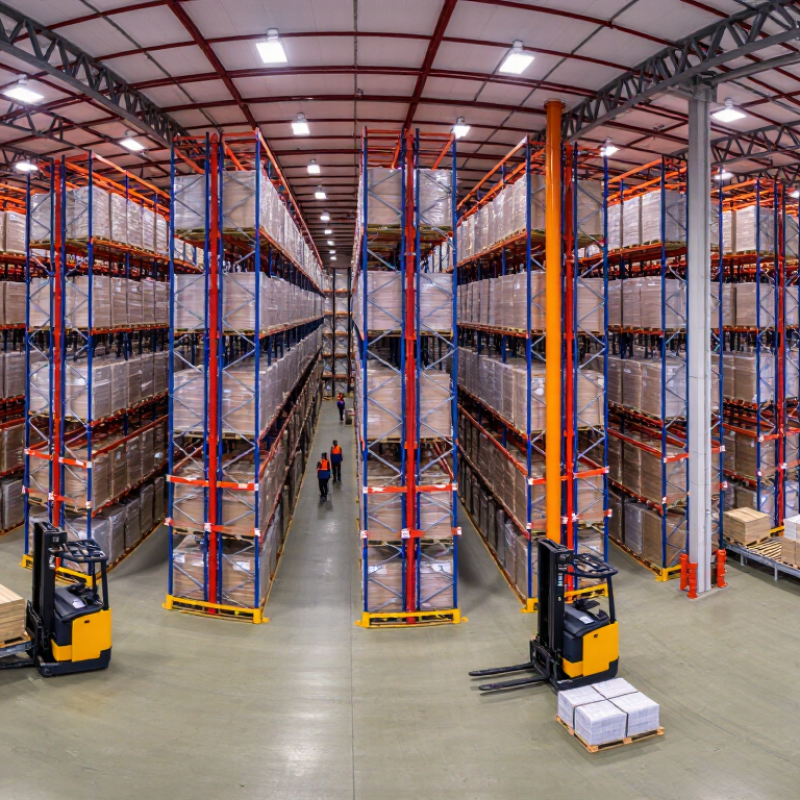
A pallet storage system is a warehouse structure designed to hold palletized goods safely and accessibly. It usually includes upright frames, horizontal beams, decking, guards, and aisle spaces. Forklifts place pallets into selected positions, while operators manage stock through location codes and inventory software. The system is not simply metal shelving. Load capacity, pallet dimensions, ceiling height, floor quality, and forklift turning radius must work together.
According to the 2024 MHI Annual Industry Report, 55% of surveyed supply chain professionals planned to increase technology and innovation investment. This pressure makes storage design more important. A well-planned pallet system can improve vertical space use and reduce unnecessary travel. Selective racking offers direct access to every pallet. Drive-in designs provide higher density but reduce selectivity. Automated solutions may improve consistency, yet they require accurate data and disciplined maintenance. The cheaper layout is not always the safer one. That point deserves more attention.
Confirm the heaviest unit load before choosing beams. Keep clearances around sprinklers, doors, and fire equipment. Inspect frames, anchors, and beams regularly for impact damage. Use clear labels at eye level. Consider seasonal inventory changes, not only today’s stock. A practical site survey should include forklift speed, aisle width, pallet condition, and operator habits. No layout is perfect. Reflect, measure, and adjust it.
China’s pallet storage industry has changed sharply over the past two decades.
Early systems focused on welded steel frames, fixed beams, and manual forklift access. Today, leading manufacturers develop adjustable pallet racking, mobile storage, shuttle systems, and automated warehouses. This shift reflects rising land costs, faster order cycles, and stricter safety expectations.
In practical projects, design now begins with pallet dimensions, load weight, turnover rate, and building height. Engineers may use digital layouts before installation, then verify beam deflection and anchoring on site. Sensors and warehouse software can improve inventory visibility. However, automation is not always the best answer. Some facilities still need simple selective racking because operators value easy repairs and flexible access. The industry is advancing, but unevenly. That is worth remembering.
Tips:
Compare load ratings, not only prices. Ask for material certificates, installation records, and test data. Check whether the supplier understands local fire codes and seismic conditions. Leave enough clearance for forklifts, sprinklers, and damaged pallets. A small measurement error can affect an entire aisle. For buyers reviewing China’s top ten pallet storage system manufacturers, factory audits and completed project references provide stronger evidence than polished catalogs. Photograph welds, labels, floor anchors, and beam connections during inspection. Also, request a maintenance plan before signing. Shelving rarely fails because of one dramatic decision; neglected checks often create the problem.
Selecting China’s top pallet storage system manufacturers requires more than comparing catalog prices. MHI’s 2024 Annual Industry Report found that 55% of supply chain professionals planned to increase technology investment. This signals stronger demand for measurable performance, not attractive brochures. Ask for load calculations, steel-grade records, weld inspection results, and independent testing documents. A serious supplier should explain beam deflection, anchoring, seismic conditions, and forklift clearance in plain language.
Factory capability matters. Review production capacity, laser cutting accuracy, coating thickness, and batch traceability. Request a recent project list with storage height, pallet weight, and operating environment. The China Federation of Logistics and Purchasing reported continued pressure to improve logistics efficiency, while labor and land costs remain important operational concerns. That makes layout design, picking access, and future expansion practical selection criteria. Not just tonnage.
Service quality is often underestimated. Confirm drawing approval procedures, installation supervision, spare-part availability, and response times. ISO 9001 certification supports process control, but it does not guarantee every project will perform well. Visit a working warehouse when possible. A polished factory tour proves little. In my experience, the best comparison uses the same technical brief for every bidder, including corrosion exposure, rack height, pallet dimensions, and five-year expansion plans. Even this method has limits; site behavior can change after installation. That weakness deserves honest discussion before signing.
This procurement framework prioritizes safety and load performance, followed by system customization, durability, delivery reliability, installation support, and total cost of ownership. Buyers can use these weighted criteria to compare qualified manufacturers consistently without relying only on price.
These profiles examine ten leading Chinese pallet storage system manufacturers through practical capabilities, not advertising claims. One focuses on selective pallet racking for general warehouses. Another develops drive-in systems for high-density cold storage. A third combines carton flow with pallet lanes for faster order preparation. One specializes in automated storage and retrieval equipment, integrating conveyors, sensors, and warehouse software. Another produces heavy-duty racks for steel, machinery, and construction materials. A sixth serves e-commerce warehouses with adjustable layouts and short installation cycles. One manufacturer emphasizes seismic design and reinforced frames. Another offers mobile pallet systems where floor space is limited. The ninth develops shuttle-based storage for high-volume operations. The tenth provides customized platforms, mezzanines, and pallet support structures.
Reliable evaluation requires more than comparing catalog prices. Engineers should review load calculations, beam deflection data, welding quality, coating thickness, and anchoring methods. Factory audits can reveal production discipline. Sample inspections may expose uneven welds or inconsistent paint coverage. Ask for installation records and maintenance guidance. Good suppliers explain limitations clearly. That matters.
These manufacturers differ in export experience, testing resources, and after-sales response. Some offer impressive automation but limited local service. Others provide simpler equipment with easier maintenance. Buyers should match the system to pallet dimensions, forklift routes, building height, and turnover rates. A design that works beautifully in one warehouse may fail in another. Independent structural review remains wise, especially for tall racks, seismic regions, and changing inventory loads.
Comparing Chinese pallet storage manufacturers requires more than checking load capacity or export volume. MHI’s 2024 Annual Industry Report found that 55% of supply chain leaders planned to increase technology investment. This supports demand for shuttle systems, automated storage and retrieval systems, and warehouse management software.
The stronger manufacturers combine engineering depth with practical integration. Their solutions may include selective racking, double-deep storage, pallet shuttles, stacker cranes, barcode tracking, and real-time inventory control. However, automation alone is not proof of quality. A polished demonstration can hide weak software interfaces or slow spare-part delivery. Buyer audits should examine seismic calculations, fire protection coordination, rack testing, and local installation experience.
Global reach is visible in service, not only shipping records. Look for multilingual documentation, remote diagnostics, trained regional technicians, and clearly defined response times. The World Robotics 2024 report recorded 276,288 industrial robot installations in China during 2023, showing a strong automation ecosystem. Yet pallet storage projects involve heavier loads and different risks. A low quotation may exclude commissioning, software customization, or maintenance training. I would compare total cost over ten years, not the first invoice. Mistakes remain possible, especially when warehouse data is incomplete. Performance claims should therefore be checked against reference sites, acceptance tests, energy use, and measured order accuracy.
Request load calculations, steel-grade records, weld inspection results, and independent test documents. Ask for clear explanations of beam deflection and anchoring. Brochures are not enough.
Review production capacity, laser-cutting accuracy, coating thickness, and batch traceability. Sample inspections can reveal uneven welds or thin paint coverage. Visit the production floor if possible.
Consider pallet dimensions, pallet weight, storage height, forklift routes, and turnover rates. Corrosion exposure also matters. Small layout errors can slow daily work.
No. They suit warehouses needing direct access to many pallets. High-density operations may need drive-in, shuttle-based, or mobile systems instead.
Review conveyors, sensors, software integration, maintenance access, and local technical support. Automation can improve speed. It can also become difficult to repair.
Tall racks, seismic regions, and changing inventory loads create extra risks. An independent review can test assumptions before installation. It may expose a weak design.
Give every bidder the same technical brief. Include pallet size, rack height, operating conditions, corrosion exposure, and five-year expansion plans. Otherwise, price comparisons become misleading.
Confirm drawing approval, installation supervision, spare-part availability, maintenance guidance, and response times. Ask for recent installation records. Promises can sound better than practice.
No. Certification supports process control, but it cannot guarantee site performance. Warehouse behavior may change after installation. That weakness deserves honest discussion.
A Pallet Storage System is a structured warehouse solution designed to store, organize, and retrieve palletized goods efficiently. This article explains the main system types, including selective, drive-in, shuttle, and automated solutions, while outlining how China’s pallet storage industry has developed through advances in manufacturing, engineering, automation, and quality control. It also introduces practical criteria for evaluating leading manufacturers, such as product reliability, customization capabilities, safety standards, production capacity, technical support, and after-sales service.
The article profiles ten prominent Chinese manufacturers without focusing on brand promotion, highlighting their different strengths in design, technology, project delivery, and international service. It compares their storage technologies, software integration, automation options, installation support, and global reach to help readers understand which factors matter most when selecting a suitable supplier. By combining industry background with a clear comparison framework, the article provides useful guidance for businesses seeking efficient, scalable, and dependable warehouse storage solutions.