Choosing a Warehouse Racking System in 2026 starts with the work your warehouse actually does. A rack that suits uniform pallets may frustrate a site handling mixed cartons, long items, or frequent replenishment. Map your inventory, pallet dimensions, load weights, and daily order patterns before comparing layouts. Measure clear ceiling height, aisle widths, doorways, and floor conditions. Details matter.
Automation may influence the decision, but it should not lead it. Compare selective, drive-in, pallet-flow, and other configurations against access needs, storage density, and equipment compatibility. A narrow aisle can add capacity, yet it may require different trucks and tighter operating practices. Ask suppliers to document rated loads and confirm that the proposed design fits the facility. Small mismatches add up.
A reliable selection also accounts for installation, inspections, maintenance, and future changes in inventory. Request drawings and clear capacity information, then have qualified professionals review the design for your specific building and operations. In 2026, warehouse software and automation options are evolving quickly, but not every facility benefits from the newest system. Sometimes a simpler layout performs better. That is worth questioning. This guide explains the practical criteria, trade-offs, and questions that help teams choose a Warehouse Racking System with confidence, while recognizing that no single configuration works for every warehouse.
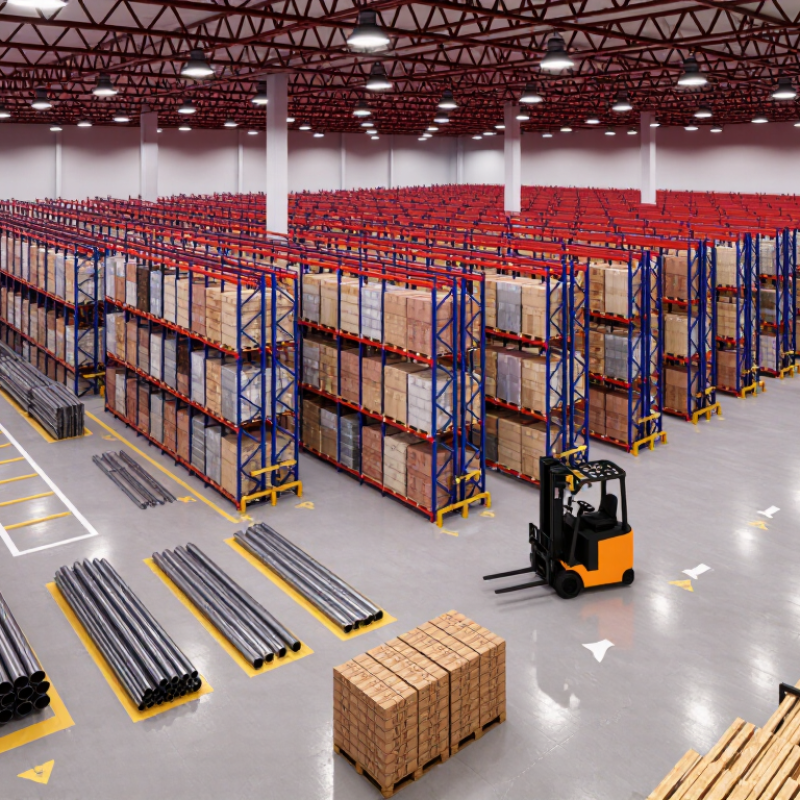
Map SKU Velocity and Use the 48 × 40-Inch GMA Pallet as a Baseline
How to Choose a Warehouse Racking System in 2026?
Map SKU Velocity and Use the 48 × 40-Inch GMA Pallet as a Baseline
Start with a slotting map, not a rack catalogue. Export 12 months of order lines and rank each SKU by picks per week, cube, weight, and replenishment frequency. Mark fast movers near dispatch, but check their case sizes and handling needs before assigning locations. A compact carton may turn quickly yet fit poorly on a deep pallet position. Small detail. It matters.
Use the 48 × 40-inch GMA pallet as your planning baseline, then measure actual loads, including overhang and wrap. The Grocery Manufacturers Association pallet footprint is widely used in North American distribution, but your inventory may not match it. The 2024 WERC DC Measures report benchmarks warehouse performance, including order-picking accuracy; use such measures alongside your own travel time, congestion, and replenishment data. Benchmarks are context, not a rack design.
Compare selective pallet rack, double-deep, and high-density options against your velocity map. Selective access can suit many fast-moving SKUs; denser storage may reduce access for slower stock. MHI’s 2024 Annual Industry Report found that 55% of surveyed supply chain leaders planned to invest at least $1 million in supply chain technology over the following two years. That points to growing interest in data tools, not guaranteed savings. Test your layout with peak-season volumes and real pallet dimensions. A clean spreadsheet can still miss a crooked load or an aisle that feels tight on a busy shift.
How to Choose a Warehouse Racking System in 2026? - Map SKU Velocity and Use the 48 × 40-Inch GMA Pallet as a Baseline
Baseline: A 48 × 40-inch pallet has a nominal footprint of 13.33 square feet. Confirm pallet condition, load dimensions, overhang, loaded weight, rack configuration, and local design requirements before specifying a system. The velocity bands below are relative planning categories, not universal industry thresholds.
| SKU velocity / profile | Access and selectivity needs | Racking systems to consider | Fit with 48 × 40-inch pallets | Main trade-off / check |
|---|---|---|---|---|
| High velocity Frequent picks or replenishment; typically a small share of SKUs drives a large share of activity. |
Fast access to individual pallets; short travel paths; frequent replenishment. | Selective pallet rack; pallet-flow lanes for suitable, repeatable product flows; carton-flow shelving for case picking. | Selective rack can provide direct access to each pallet position. Flow systems require lane, roller, load, and pallet-condition checks. | Selective rack offers high selectivity but uses more aisles than dense storage. Flow lanes may need replenishment space and compatible loads. |
| Medium velocity Regular picks, but less frequent than the fastest-moving SKUs. |
Balance direct access with floor-space use; consider pick frequency and replenishment effort. | Selective rack; double-deep rack where equipment and inventory rotation support it; push-back rack for grouped products. | A 48 × 40-inch pallet is a common planning baseline, but rack depth, clearances, orientation, and handling equipment must be verified. | Double-deep storage reduces immediate access to rear pallets. Push-back typically stores multiple pallets deep per lane and reduces access selectivity. |
| Low velocity Infrequent picks; longer storage duration may be acceptable. |
Higher density may be worthwhile if retrieval frequency, rotation rules, and product characteristics allow it. | Drive-in rack for compatible, often similar products; selective rack where direct access remains essential. | Check pallet condition and dimensional consistency, plus truck clearance and rack-entry tolerances, before using deep-lane storage. | Drive-in is less selective than selective rack and can constrain access and stock rotation. Confirm loading and unloading procedures. |
| Many SKUs, few pallets per SKU Broad assortment with a need to reach individual pallet positions. |
Direct access to each SKU is usually more important than maximum storage density. | Selective pallet rack; narrow-aisle configurations where the building, truck fleet, and operating practices allow. | Verify bay width and depth against the actual loaded pallet, including any overhang and required clearances. | Aisle width is equipment- and site-dependent; confirm it with the truck manufacturer and a qualified rack designer. |
| High pallet quantities per SKU Several pallets of the same product are stored together. |
Evaluate storage density against pallet access, replenishment flow, and inventory rotation. | Drive-in; push-back; pallet-flow rack for appropriate first-in, first-out lane operation. | Confirm loaded pallet dimensions, weight, rigidity, and base-board condition against the chosen system’s specifications. | Dense systems generally reduce access to individual pallet positions. Select the lane and rotation method to match product and operating needs. |
| Case-pick or split-case activity Orders are picked by case or each rather than by full pallet. |
Keep active pick faces accessible and plan a separate replenishment process. | Carton-flow shelving or case-flow lanes, often paired with pallet rack for reserve inventory. | The GMA pallet is useful for reserve pallet storage; case-pick dimensions and carton characteristics determine the pick-face design. | Confirm carton size, weight, bottom surface, replenishment frequency, and ergonomic requirements before specifying flow equipment. |
Selection workflow: Rank SKUs using actual order-line or pallet-movement history, identify access and rotation requirements, map those needs to rack types, then validate the layout against building constraints, material-handling equipment, loaded-pallet data, and applicable rack-design requirements.
FAQS
Selective racks give direct access to every pallet. They suit mixed picking and frequent replenishment, but use more aisle space.
They store larger quantities of fewer SKUs in deep lanes. Forklifts enter those lanes, so loads and traffic need careful control. A specific pallet may take longer to retrieve.
Push-back racks usually follow last-in, first-out handling. Pallet-flow racks use rollers for first-in, first-out movement. Check pallet compatibility and roller condition.
Record each loaded pallet’s weight and dimensions, then confirm the number of pallets per beam level. Measure the real load. Guessing from old records can mislead.
Beam capacity depends on span and load distribution. Upright capacity depends on frame height, bracing, and beam spacing. The stronger-looking part may not be the limiting one.
Recheck rated capacity, floor conditions, anchors, and the rack layout. Keep load signs visible. Have uncertain or unusual configurations reviewed by a qualified professional.
Measure the forklift, loaded turning path, widest pallet, and any overhang. Include rack guards, columns, and door swings. There is no single aisle width for every site.
Mark aisles clearly and keep them free of pallets, wrap, and cables. Check clearances with a loaded truck. A tape measure alone can miss turning behavior.
Conclusion
Choosing a Warehouse Racking System in 2026 starts with understanding what you store and how quickly each SKU moves. Use the standard 48 × 40-inch GMA pallet as a planning baseline, then assess pallet weights, inventory patterns, and order-picking requirements. Survey the building’s clear height, floor load capacity, seismic conditions, and equipment aisles before selecting a layout, since these factors determine which rack configurations are practical and safe.
Match rack type to the access and storage density you need: selective racks provide direct access to each pallet, while drive-in, push-back, and pallet-flow systems can support denser storage with different retrieval patterns. Size uprights and beams for the actual pallet loads and applicable ANSI/RMI MH16.1 requirements. Finally, review OSHA 29 CFR 1910.176 provisions for safe storage and material-handling clearances, and allow suitable space for equipment movement and day-to-day operations.