Recommended High-Performance Racking Systems
Explore heavy-duty, certified industrial storage setups factory-engineered for extreme weight capacities, seismic stability, and custom facility layouts.
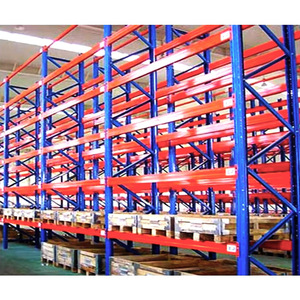
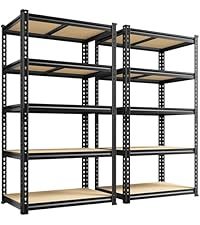
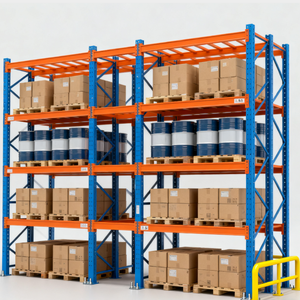
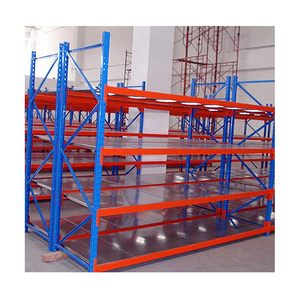
Technical Whitepaper: Certified Adjustable Cantilever Systems for Heavy & Irregular Inventory
Cantilever racking constitutes the engineering backbone for storage environments characterized by unstandardized, linearly expansive inventory. Unlike conventional pallet racks constrained by frontal upright columns, an adjustable cantilever racking framework delivers an uninterrupted, horizontal profile. This makes it indispensable for structural steel sections, PVC conduits, timber bundles, automotive sub-assemblies, and heavy plate steel.
Structural Anatomy and Load Bearing Characteristics
The core structural integrity of an adjustable cantilever system relies upon three critically engineered elements:
Continuous Vertical Columns
Engineered from heavy-duty rolled I-beams (IPE profiles) or proprietary double cold-formed steel sections, perforated with high-precision CNC punch patterns at standard 75mm to 100mm pitches.
Pivoting & Bolted Arm Assemblies
Designed with intentional 2° to 4° upward deflection angles under zero-load conditions, compensating precisely for deadweight bend when loaded to capacities up to 3,000 kg per arm.
Horizontal & Diagonal X-Bracing
Formed structural tension rods and channel profiles interconnect adjacent columns, absorbing horizontal seismic drift and lateral deflection along the entire warehouse aisle length.
Technical Engineering Specifications Overview
Procuring certified cantilever solutions demands verification against standardized steel metrics to safeguard worker safety and facility longevity:
| Structural Parameter | Light to Medium Duty Standard | Heavy-Duty I-Beam (IPE) Standard | Compliance Reference |
|---|---|---|---|
| Steel Grade Classification | Q235B (Cold-Rolled Section) | Q355B / S355JR (Hot-Rolled Structural) | EN 10025-2 / GB/T 1591 |
| Arm Load Carrying Capacity | 250 kg – 800 kg per arm | 1,000 kg – 3,000 kg per arm | FEM 10.2.02 / ANSI MH16.3 |
| Column Height Boundaries | 2,000 mm – 5,500 mm | 4,000 mm – 12,000 mm | ISO 9001 / CE Certified |
| Standard Arm Lengths | 600 mm – 1,200 mm | 800 mm – 2,000 mm | Factory Tolerance ±1.5mm |
| Surface Coating Process | Electrostatic Powder Coated (60-80μm) | Hot-Dip Galvanized (ISO 1461, 85μm+) | ASTM A123 / EN ISO 12944 |
Enterprise Manufacturing Dominance & Quality Assurance
Operating a dedicated 30,000 m² state-of-the-art facility in Guangzhou, China, our manufacturing line integrates end-to-end metallurgical fabrication with certified engineering accountability. By retaining total oversight across every station—from raw structural coil reception to high-temperature powder curing—we eliminate subcontracting variance and guarantee strict adherence to project specifications.
Ten-Stage Closed-Loop Production Ecosystem
Each custom cantilever upright and structural arm undergoes a ten-stage protocol configured to guarantee resilience in harsh environments:
1. Precision Robotic Welding & Punching
Continuous CNC automated punch platforms ensure column pitch accuracies within fractions of a millimeter. Automated multi-axis robotic welders bond arm brackets with zero slag and complete metallurgical fusion.
2. Chemical Pretreatment Wash
Components undergo an immersion acid pickling and zinc-phosphating sequence that removes hot-mill scale, rust, and surface oils. This promotes an optimal substrate bond for surface coatings.
3. Electrostatic Powder Curing
Thermosetting polymer resins are applied at automated spray stations and cured at 200°C. The resulting finish resists impact, chemicals, chipping, and coastal moisture.
For port developments, open-yard logistics terminals, and sub-zero storage chambers, components can be specified with hot-dip galvanization per EN ISO 1461, yielding over 25 years of maintenance-free service under corrosive exposure.
Procurement & Engineering Trends for 2026–2030
Global warehouse footprints are adapting to volatile inventory cycles, supply chain disruptions, and rising industrial real estate costs. Industrial storage procurement is evolving rapidly along three dimensions:
1. Automated & Guided Forklift Interoperability
Warehouses are moving away from manual, wide-aisle cantilever configurations. Modern cantilever designs integrate ground-level mechanical guidance rails or inductive wire systems for Narrow Aisle (VNA) multidirectional and sideloader forklifts. This compresses aisle clearances down to 2,200 mm, boosting cubic volumetric storage efficiency by up to 45% without compromising safety.
2. Seismic-Resistant Dynamic Simulation
In earthquake-prone belts across the Pacific Rim, Mediterranean, and African Rift valleys, generic structural assumptions are obsolete. Engineering teams now utilize finite element analysis (FEA) to verify the behavior of flexible arm linkages under dual horizontal and vertical seismic shear forces. This ensures certified racking systems withstand ground acceleration without catastrophic progressive collapse.
3. Circular Steel & Decarbonized Specifications
Multinational industrial operators increasingly measure embodied carbon in structural infrastructure. Sustainable procurement practices favor manufacturers utilizing scrap-fed electric arc furnace (EAF) steel and zero-VOC powder coating lines. This enables facility designs to satisfy BREEAM, LEED, and local green building certification criteria.
Frequently Asked Questions: Global Procurement & Engineering
How do we verify CE compliance for cantilever export orders?
Every shipment is supported by a Declaration of Performance (DoP), structural calculations aligned with EN 1090-1 / EN 15635, and raw material traceability mill test certificates (MTC 3.1) stamped with official CE identification numbers (2435-CPR-8605159).
What is the standard engineering safety factor for cantilever arms?
Our heavy-duty cantilever systems are engineered with a minimum safety factor of 1.5 to 1.65 based on yield point strength, fully compliant with FEM 10.2.02 and ANSI MH16.3 code guidelines for static material storage.
How do you optimize container loading to minimize international ocean freight?
We deploy custom 3D container bundling software. Heavy upright columns, detachable cantilever bases, and cantilever arms are packed nested in high-tensile steel banding on dedicated skids. This maximizes volume within 40ft HQ ocean containers, bringing space utilization above 92%.
What parameters are needed for a free structural CAD layout design?
Our engineering team requests warehouse dimensions with clear height limits, floor slab thickness and concrete compressive capacity (PSI / MPa), pallet or bundle specifications (length, width, weight), and your forklift turning radius or equipment type.