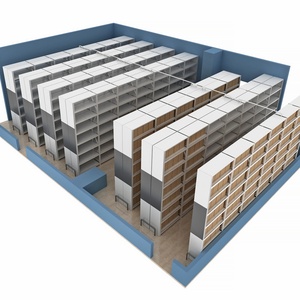
Steel Archives Mobile Shelving & Movable Compactor Filing System
Mechanical high-density mobile compactor units reducing archive floor requirements by 60%. Equipped with anti-tilt tracks and central multi-bay locking.
In modern industrial storage economics, structural safety, volumetric utilization, and total cost of ownership (TCO) converge on precise engineering. As an ISO 9001:2015 and CE-certified manufacturer operating across a 30,000 m² advanced fabrication plant, we supply over 30,000 tons of precision-formed adjustable racking monthly to logistics hubs, 3PL providers, cold chains, and FMCG centers across Africa, Europe, the Middle East, and the Americas.
Mechanical high-density mobile compactor units reducing archive floor requirements by 60%. Equipped with anti-tilt tracks and central multi-bay locking.
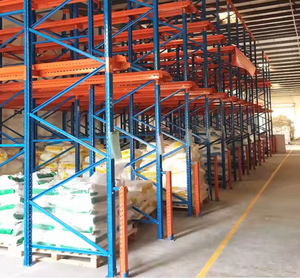
Continuous lane storage maximizing cubage by eliminating operating aisles. Built with unyielding Q235B steel arms for cold storage and batch FMCG.
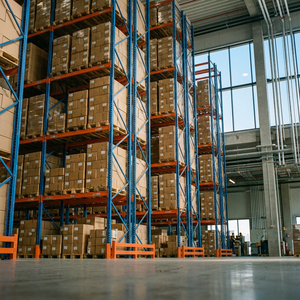
Versatile selective pallet rack engineered for 1,000 kg to 5,000 kg per beam level. 50mm/75mm pitch adjustability with integral 5-hook connector claws.
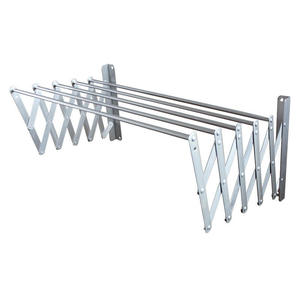
Precision-extruded corrosion-proof telescopic sliding rack system engineered for specialized utility, modular workshop tool organization, and high moisture areas.
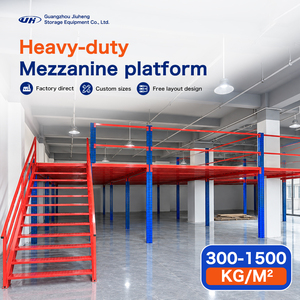
Engineered structural steel and rack-supported mezzanine floors multiplying vertical warehouse clear height into 2 to 3 usable industrial working decks.
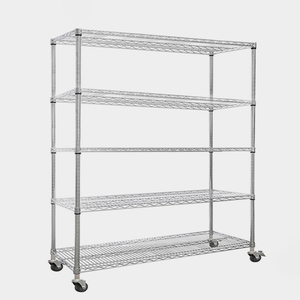
Reinforced steel wire mesh decking units designed for ventilation, overhead sprinkler compliance (NFPA standards), and small-box SKU fulfillment.
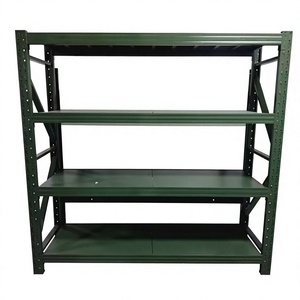
Anti-corrosion powder-coated continuous entry frame structure. Equipped with entry guide rails and heavy column impact protectors for forklift dynamics.
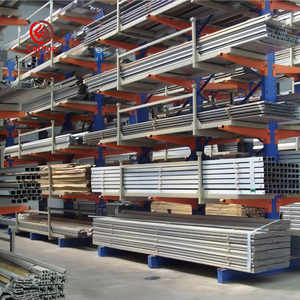
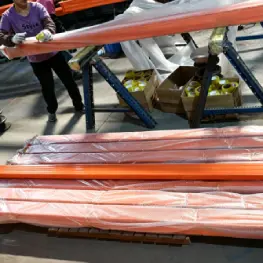
Unobstructed frontal horizontal loading for extrusions, long timber, rebar, and tubular profiles in restricted clear-height distribution facilities.
Founded in 2001, Guangzhou Heda Shelves Co., Ltd. has grown into an international engineering authority specializing in the turnkey design, static calculation, finite element structural analysis (FEA), and automated manufacture of heavy industrial storage systems. Holding official CE Certificate No. 2435-CPR-8605159, certified under ISO 9001:2015 (No. 18624Q00169R0M), and adhering strictly to European Racking Code EN 15512 and FEM 10.2.02, we deliver fail-safe intra-warehouse racking configurations tailored to extreme environmental conditions.
Every industrial project begins with structural CAD drafting and parametric 3D simulation. Our senior structural logistics engineers model dynamic floor live loads, concrete slab capacity, seismic zones (PGA), and wind shears free of charge before metal is cut.
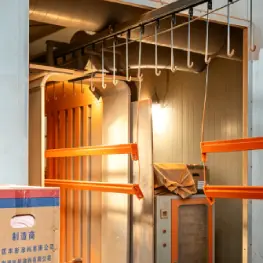
Tropical humidity, coastal port salt air, and cold room condensation compromise standard coatings. Heda employs a 10-stage automated surface treatment: alkaline degreasing, ultrasonic rust removal, zinc pickling, phosphating, and electrostatic powder coating baked at 200°C.
Shipping air across intercontinental lanes erodes profit margins. Our patented modular boltless frames and nesting upright geometries enable exceptional container packing factors in standard 20GP and 40HQ ocean containers to ports worldwide.
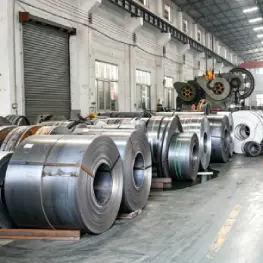
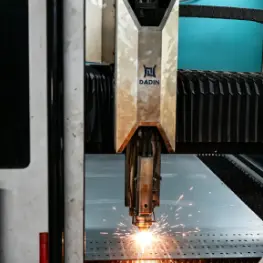
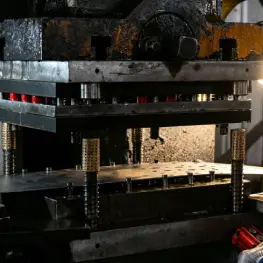
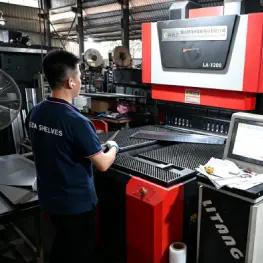
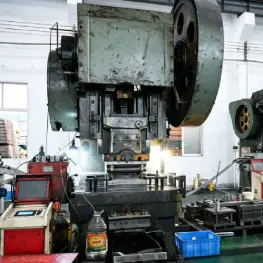
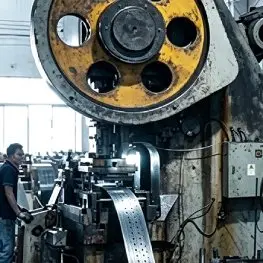
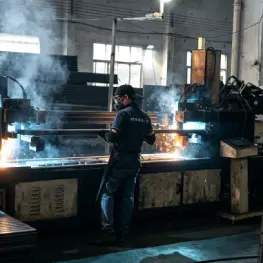
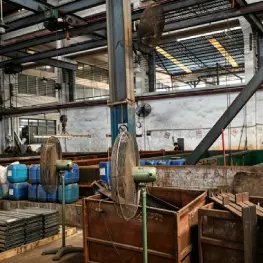
True structural reliability is forged through uncompromising precision. Our Guangzhou plant integrates high-tonnage cold roll-forming lines, automated CNC punch stamping, and robotic welding matrices.
Supply chain leaders, industrial park developers, and commercial EPC contractors are re-evaluating intralogistics procurement. What trends dictate warehouse racking selection over the next decade?
Global disruptions have elevated buffer inventories. In emerging industrial hubs across West Africa, Latin America, and Southeast Asia, volatile power grids demand mechanically self-sustaining high-density systems. Buyers are pivoting from high-maintenance fully automated cranes toward radio-shuttle carts backed by gravity-flow pallet racks that maintain uninterrupted operations through power outages.
Steel pricing and decarbonization benchmarks are driving the shift toward thinner yet structurally superior cold-formed profiles. Modern adjustable racking utilizes micro-alloyed Q355B steel, yielding 30% higher load-bearing limits with 15% less deadweight, directly lowering international freight tariffs and total carbon footprints.
Rising land costs and urban leasing fees prevent horizontal footprint expansion. Modern supply chain procurement favors multi-tier rack-supported platforms that convert warehouse air space into pallet slots below and manual pick-pack e-commerce processing mezzanines above without requiring new construction permits.
| Racking Architecture | Space Utilization | Stock Access (FIFO/LIFO) | Load Capacity (Per Level) | Optimal Industry Application |
|---|---|---|---|---|
| Selective Pallet Racking | 40% - 50% | 100% Direct Access (FIFO) | 1,000 kg – 4,500 kg | General Retail, Multi-SKU Distribution, 3PL |
| Drive-In / Drive-Through | 75% - 85% | LIFO / FIFO by Lane | 1,000 kg – 2,000 kg / pallet | Cold Storage, Beverage, Seasonal Agricultural Crops |
| Radio Shuttle System | 80% - 90% | Flexible FIFO / LIFO | 500 kg – 2,000 kg / pallet | Deep Freeze, High-Throughput Food, Pharmaceuticals |
| Rack-Supported Mezzanine | Up to 250% Cubage | Manual Carton & Pallet Access | 300 kg – 1,000 kg / m² deck | E-commerce Fulfillment, Automotive Aftermarket Spare Parts |
| Heavy Cantilever Racks | 60% - 70% | Direct Unobstructed Access | 1,000 kg – 3,500 kg / arm | Steel Tubing, Timber, Rebar, Extrusions, PVC Pipes |
Warehouse racking is evolving from static steel members into digitally monitored, seismic-active intralogistic infrastructure. Three core engineering disciplines define this transition.
Next-generation racking profiles feature pre-engineered sensory integration slots. Fibre-optic strain gauges and wireless displacement sensors detect forklift micro-impacts, deflection anomalies, and unbalanced overloads in real time, alerting facility managers via SCADA/WMS dashboards before catastrophic structural collapse can occur.
Conforming to the latest European seismic codes (EN 16681), upright base-plates are transitioning from rigid anchoring to energy-dissipating elastomer mounts. These damp harmonic ground accelerations during seismic events, preventing vertical upright buckling and beam disconnection.
Autonomous Mobile Robots (AMRs) and Automated Guided Vehicles (AGVs) demand rack fabrication tolerances tighter than standard ISO limits (±0.5mm across upright vertical spans). Our CNC automated punching ensures true vertical plumbness and zero-clearance alignment for robotic pallet interfaces.
Critical considerations when importing and deploying certified adjustable racking systems worldwide.
CE marking under EN 15512:2020 dictates rigorous limit state structural testing: full-scale stub column crush testing, beam end connector moment rotation tests, and strict beam deflection limits (not exceeding L/200). Non-certified racking typically cuts steel thickness and omits safety lock pin retention testing, creating severe liability risks under industrial occupational safety audits.
For upright frame loads of 8 to 20 metric tons, concrete floor slabs should have a minimum compressive strength of 25–30 MPa (C25/30 or 3,500–4,000 PSI), with a reinforced thickness of 150mm to 200mm. The floor must conform to DIN 18202 Table 3 flatness standards to ensure vertical column plumbness within ±10mm.
Standard solvent coatings peel under high humidity or temperature cycling. HEDA executes a 10-stage pre-treatment featuring chemical phosphating followed by an electrostatic thermo-cured TGIC-free polyester powder coat (60–80 microns thickness). For sub-zero cold rooms (-30°C) or open-sided maritime warehouses, continuous hot-dip galvanizing (HDG) conforming to ISO 1461 is available.
Yes. Every HEDA project ships with an itemized bill of materials (BOM), color-coded layout blueprints, and 3D step-by-step assembly guides. All components are boltless and slotted for interlocking pin alignment. Our senior structural engineers also provide real-time video installation support or can deploy on-site site supervisors for large projects.
We require: (1) Warehouse architectural drawings showing clear heights, columns, and roll-up doors; (2) Pallet dimensions (Width × Depth × Height including cargo overhang); (3) Gross load weight per pallet; (4) Forklift model, minimum turning aisle width, and max lift reach; and (5) Ambient operating temperature profile.
Standard fabrication runs take 15 to 22 business days for 100 to 500 tons. Upright frames are nested, banded with structural steel straps, and isolated with corrugated corner guards. Beams are stacked in custom palletized bundles for rapid forklift ground de-stuffing at destination ports under FOB, CFR, or CIF delivery terms.