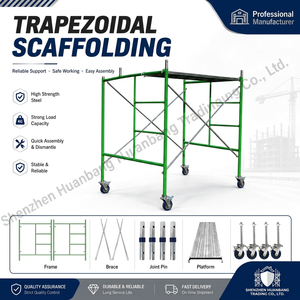
Adjustable Movable Aluminium Steel Scaffold Platform Cargo Storage
- Aircraft-grade alloy & steel
- Integrated safety locking casters
Explore our certified range of pallet racking, dynamic flow systems, and warehouse platforms built from premium Q235B/Q355B structural steel to maximize cubic capacity.
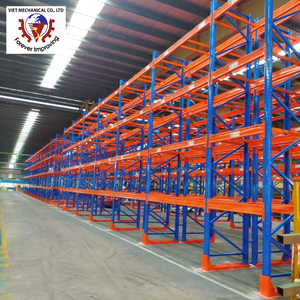
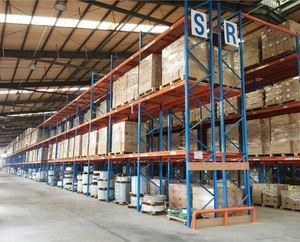
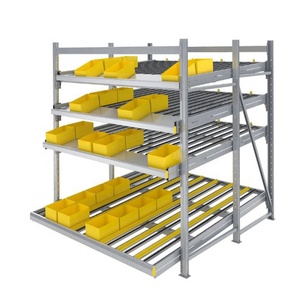
In modern industrial intralogistics, space optimization directly dictates operational profitability. Standard selective pallet racking configurations allocate approximately 55% to 65% of the total warehouse floor footprint purely to forklift access aisles. When dealing with homogeneous product inventories, seasonal distribution buffers, cold storage facilities, or bulk manufacturing runs, conventional aisle-heavy layouts generate unacceptable operational overhead. CE Certified Drive-In and Drive-Through Racking Systems solve this structural bottleneck by eliminating operational access corridors, transforming empty airspace into high-density storage cubes capable of achieving volumetric storage densities exceeding 80% to 85%.
While both frameworks utilize unbroken storage lanes supported by cantilever load arms, their logistical throughput topologies serve diametrically opposed operational strategies. Drive-In Racking operates on a First-In, Last-Out (FILO) discipline, utilizing a single entry/exit face per lane. It delivers optimal capital return for long-shelf-life goods, bulk raw materials, and cold storage applications. Conversely, Drive-Through Racking incorporates dedicated entry and exit portals on opposite ends, establishing a continuous First-In, First-Out (FIFO) flow channel crucial for perishable pharmaceuticals, time-sensitive food manufacturing, and high-velocity transit buffers.
| Parametric Vector | Standard Selective Racking | Drive-In Racking (FILO) | Drive-Through Racking (FIFO) |
|---|---|---|---|
| Spatial Footprint Efficiency | 40% – 45% (Aisle Intensive) | 75% – 85% (High-Density Cube) | 70% – 80% (Dual Access Cube) |
| Stock Rotation Logic | 100% Random Access | First-In, Last-Out (FILO) | First-In, First-Out (FIFO) |
| Aisle Redundancy Factor | High (Aisle per double rack) | Zero Internal Aisle (Single Face) | Minimal (Entry + Exit Aisle Only) |
| Cold Chain Energy Conservation | Low (Air pocket dispersion) | Extreme (Dense thermal mass) | High (Continuous cold cycle) |
| Structural Deflection Standards | FEM 10.2.02 / EN 15512 | EN 15512 / Cantilever Arm ≤ L/200 | EN 15512 / Symmetrical Bracing |
Unlike standard cross-beam racks where horizontal beams provide continuous structural moment frames, Drive-In and Drive-Through systems lack intermediate horizontal load beams along the forklift travel corridors. Lift trucks must navigate physically inside the steel superstructure. To preserve absolute structural integrity under multidirectional lateral forces, our engineering teams deploy heavy-duty top cross-bracing portals, rear diagonal truss networks (in Drive-In arrays), and heavy-gauge rolled-steel support arms.
Pallets rest upon continuous, cold-formed pallet guide rails featuring tapered entrance guides. These precision formed steel profiles guide forklift operators smoothly into the storage bays while offering flared lead-in edges that prevent dangerous pallet snagging. Critical to operational safety is the integration of heavy structural steel guide rails anchored into the warehouse floor slab. These floor-mounted tracks guide the counterbalanced or reach forklift safely along the center of the bay, shielding the vertical upright columns from direct vehicle collision impacts.
Manufactured strictly with high-tensile hot-rolled steel coils, guaranteeing documented yield strengths (≥355 MPa) and certified micro-alloy metallurgy resistant to low-temperature brittle fracture.
Reinforced floor-anchored bull-nose column protectors and heavy floor guide channels isolate the main vertical columns from forklift mast shocks, preserving building structural safety.
Every bay array undergoes Finite Element Analysis (FEA) simulating static loads, dynamic braking moments, and seismic acceleration matrices complying fully with EN 15512 and RMI specifications.
Operating a vertically integrated 30,000 square meter intelligent manufacturing base, we eliminate trading intermediaries, guaranteeing verified engineering traceability from raw steel coils to loaded ocean containers.
Founded in 2001, providing two and a half decades of specialized warehouse racking calculation, metallurgical profiling, and intralogistics supply excellence worldwide.
Massive automated cold roll-forming lines, computerized continuous punching units, and robotic welding cells handling extensive industrial-scale turnkey projects on rapid deadlines.
Over 10,000 storage projects engineered across 120+ countries, spanning extreme climates from sub-zero refrigerated cold rooms to hot and humid coastal shipping hubs.
Fully certified under CE Certification No. 2435-CPR-8605159 and ISO 9001:2015 Certification No. 18624Q00169R0M (valid through June 2027), plus RoHS compliance.
Corrosion resistance in cold storage and high-humidity maritime warehouses is non-negotiable. At HEDA Shelves, structural steel profiles do not simply receive quick topical paint. Every component undergoes an automated 10-stage process: Raw Material Quality Assay → CNC Precision Punching → Cold Bending Roll-Forming → Shot Blasting → Acid Pickling → Phosphating Conversion Coating → Pure Water Cascade Rinsing → Electrostatic Polyester Powder Deposition (70–90 μm) → High-Temperature Polymerization Curing (200°C) → Ultrasonic Coating Thickness & Adhesion Cross-Hatch Testing. Hot-dip galvanization is systematically deployed for sub-zero freezer installations.
How automation readiness, cold chain expansion, and lifecycle total cost of ownership (TCO) are reshaping heavy-duty warehouse racking specifications.
Historically, the operational bottleneck of deep drive-in racking has been forklift transit velocity inside narrow bays. Skilled operators must drive cautiously within enclosed upright columns, lowering retrieval speeds per pallet. The defining procurement trend of 2025–2030 is structural hybrid compatibility. Modern global buyers increasingly specify Drive-In steel profiles designed to accept both standard forklift pallet rails and autonomous battery-powered radio shuttle tracks.
This "automation-ready" design philosophy protects capital investment: operations begin with traditional, low-CAPEX counterbalanced forklifts, and later transition to high-throughput semi-automated radio shuttles without replacing upright columns, anchorages, or top-portal framing.
With global cold chain logistics expanding across fresh produce, vaccine distribution, and pre-packaged foods, the energy cost per cubic meter of chilled or frozen space has escalated by over 42% over the last triennium. Standard selective racking wastes millions of BTUs maintaining chilled air within wide empty aisles. Drive-In racking has become the default structural standard for cold logistics hubs globally. By packing pallets in dense blocks, cold air circulation paths are concentrated around the goods, cutting refrigeration energy dissipation per stored pallet by up to 35% compared to open-aisle warehouses.
Given volatility in ocean freight tariffs, the true landed procurement cost of warehouse racking is heavily determined by packing geometry. Leading engineering suppliers no longer ship bulky welded frames that consume container volume without meeting weight limits. HEDA Shelves leads the industry with container-optimized knock-down design. Uprights, bracing chords, cantilever arms, and rail tracks are nested with millimeter precision, maximizing 40-foot High Cube (40HQ) container payloads to near the 26-ton payload ceiling. This cuts ocean freight expenditure per pallet position by 22% to 38% compared to conventional packing methods.
Insurance underwriters and municipal building regulators globally now demand verified structural finite element analysis under seismic acceleration. The days of uncertified steel fabrication are over. Contemporary procurement specifications mandate full adherence to EN 16681 (Seismic Design of Steel Racking Systems) and RMI MH16.1. HEDA Shelves provides stamped structural calculations, full chemical heat-lot certificates for every steel batch, and certified load deflection testing under both ultimate limit state (ULS) and serviceability limit state (SLS) criteria.
Clear, technical, and verifiable answers to the critical structural, operational, and commercial questions raised by warehouse directors and procurement officers.