High-Efficiency Gravity Flow & Roller Track Racking Systems
Explore our industrial-grade, CE-certified flow-through systems. Built from cold-formed Q235B high-tensile structural steel, featuring centrifugal brake rollers, magnetic speed dampeners, and ergonomic picking lanes tailored for heavy distribution centers.
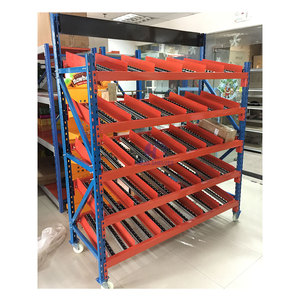
Customized Warehouse Storage Rack Pallet Flow Rack Shelving Lineside Roller Flow Rack
- Load Rating: 500 – 1,500 kg / pallet
- Incline Angle: 2.8° – 3.5° self-lubricating
- Application: Assembly lineside & buffer
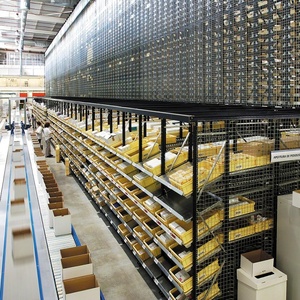
High Efficiency Durable Heavy Duty Adjustable 5-Layer Carton Gravity Flow Rack CE Certified
- Layer Capacity: 150 – 500 kg / shelf
- Track Material: High-density Fluolog tracks
- Feature: Tool-less 50mm pitch adjustment
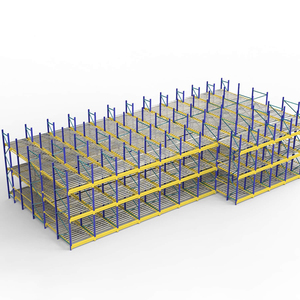
Mracking Heavy Duty Metal Gravity Flow Racks Customizable Gravity Flow Racking System
- Lane Depth: Up to 20 pallets deep
- Safety Device: Integrated pallet separator
- Structure: Heavy duty 90x68 structural upright
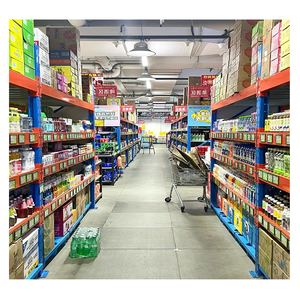
Guichang Ebb And Flow Vertical Rack Pallet Flow Track Customized Gravity Carton System
- Roller Specs: Zinc-plated steel rollers Ø50mm
- Flow Bed: Full-width roller or 3-track bed
- Customization: Anti-collision end stop
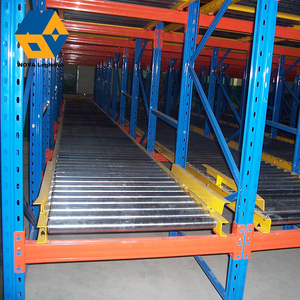
NOVA Cold Room Heavy Duty Steel Rack Warehouse Gravity Pallet Flow Racking
- Operating Temp: Down to -30°C cryo-safe
- Finish: Hot-dip galvanized or zinc primer
- Brake System: Low-temp viscous brake drums
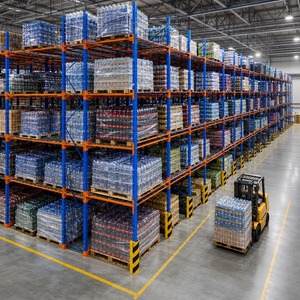
Palettenregal Racks Industriales Pallet Flow Racking Q235B Steel For Bulk Chemical Plants
- Chemical Duty: Acid-resistant powder coating
- Unit Weight: 1,200 – 2,000 kg drums / IBCs
- Guide Rails: Integrated entry funnels
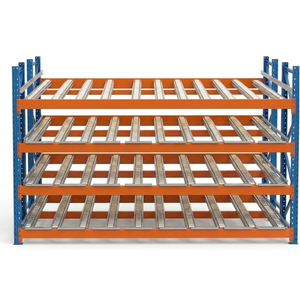
Heavy Duty Flow Rack Gravity Flow Q235 Steel OEM Main Rack 1,000–2,000kg/Pallet
- Steel Grade: Certified Baosteel Q235B
- Profile: Box-welded high moment beams
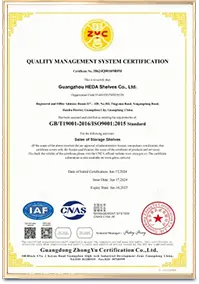
- Certification: CE CPR & ISO 9001:2015
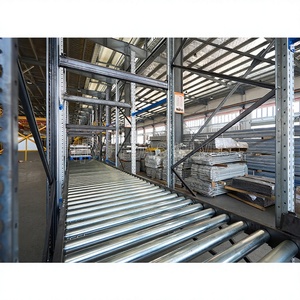
Hot Sale Gravity Flow Roller Racking Systems Customized Heavy Duty Carton Flow Racks
- Roller Options: Steel / Polymer alloy roller
- Turnover Speed: Up to 350 picks / operator / hr
- Application: E-commerce, Pharma, Retail
Structural Mechanics, Kinetic Energy Dissipation & Dynamic FIFO Architecture
In modern automated intralogistics and high-throughput distribution hubs, flow-through racking (commonly classified across global material handling sectors as pallet dynamic live storage or gravity roller flow racking) represents the apex of self-powered mechanical handling. By transforming ambient gravitational potential energy into controlled linear translational motion, dynamic flow racks completely eliminate internal access aisles, boosting net floor-space volumetric storage density by upwards of 65% compared to conventional selective pallet racking.
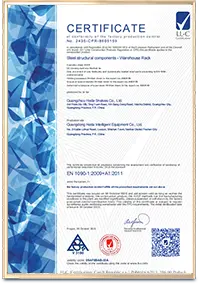
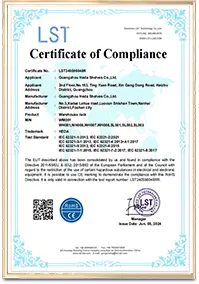
However, engineering a safe, highly repetitive flow rack goes far beyond simply angling steel beams. In deep-lane systems running anywhere from 4 to 25 pallets in depth, uncontrolled pallet acceleration creates catastrophic kinetic impact hazards. As an accredited manufacturer certified under CE Certificate No. 2435-CPR-8605159 (governed by European EN 15512 structural design codes and the Construction Products Regulation 305/2011/EU), Guangzhou Heda Shelves Co., Ltd. incorporates multi-stage kinetic mitigation systems directly into the roller architecture.
The Anatomy of Controlled Gravity Dynamics: Gradient, Braking & Separation
Every industrial gravity flow bed manufactured in our 30,000 m² facility is calibrated to precise load friction coefficients. The four critical components governing safe gravity conveyance include:
Calculated Geometric Pitch (Gradient)
Our structural engineers configure inclination slopes between 2.5% and 3.5% (approx. 1.5° to 2.2°). This precise range guarantees reliable startup inertia for bottom-runner pallets without inducing runaway terminal velocities or jackknifing.
Centrifugal & Viscous Brake Rollers
Strategically installed every 1.2 to 1.5 meters along the conveyor track, our internally geared brake rollers mechanically engage proportional counter-torque. As pallet descent velocity exceeds 0.25 m/s, the centrifugal shoes damp excessive velocity.
Automatic Pallet Separation Mechanisms
Positioned at the discharge picking face, the mechanical load separator physically locks backpressure from trailing pallets. The frontline pallet can be lifted without friction wedging, protecting forklifts, racking uprights, and personnel.
Material Metallurgical Integrity: Certified Q235B Cold-Formed Steel
Structural reliability in high-capacity pallet flow racking requires strict material verification. Guangzhou Heda Shelves uses certified Q235B cold-rolled structural steel coil with certified yield strengths exceeding 235 MPa and elongation ratings over 25%. Our upright upright posts are roll-formed using specialized 24-station continuous rolling mills, ensuring precise section geometries (such as 90x68x2.0mm and 120x95x2.5mm profiles). Every batch is tracked back to metallurgical origin, verifying chemical composition (Carbon ≤ 0.20%, Manganese ≤ 1.4%, Sulfur ≤ 0.045%, Phosphorus ≤ 0.045%) for optimal weldability and crack resistance under cyclical dynamic loading.
High-Density Storage Systems Performance Comparison
Evaluate flow-through racking against other industrial storage configurations across density, power consumption, FIFO discipline, and long-term operating costs.
| Storage System Type | Space Utilization | Inventory Rotation | Energy / Power Demand | Forklift Cycle Time | Structural Complexity |
|---|---|---|---|---|---|
| Gravity Pallet Flow Through | Very High (85%+) | Strict FIFO (100% Guaranteed) | Zero (100% Passive Gravity) | Ultra-Low (Dedicated In/Out Aisles) | High (Rollers, Brakes, Separators) |
| Selective Pallet Racking | Low (35% – 45%) | Random / Manual Access | Zero | Moderate (Extensive Travel Aisles) | Simple (Beams & Uprights) |
| Drive-In / Drive-Thru Racking | High (65% – 75%) | Strict LIFO (Drive-In) | Zero | High (Forklifts Must Enter Lanes) | Moderate (Support Cantilevers) |
| Radio Shuttle Automation | Very High (85%+) | Configurable FIFO / LIFO | Medium (Battery Recharging) | Low (Automated Shuttle Carriage) | Very High (Lithium Carts + Racks) |
| Push Back Cart Racking | Moderate-High (60% – 70%) | Strict LIFO | Zero (Gravity Return) | Moderate (Front-Aisle Push In) | Moderate (Nested Rolling Carts) |
Future Procurement Trends in Flow-Through Racking Systems
Driven by e-commerce SKUs, tightening cold-chain food security standards, and global decarbonization mandates, corporate supply chain directors are shifting from static, space-wasting racking toward dynamic flow-through systems. Key procurement trends shaping operations worldwide include:
1. Autonomous AGV / AMR Handshake Integration
Procurement teams increasingly specify dynamic flow picking bays engineered for direct integration with automated guided vehicles (AGVs) and autonomous mobile robots (AMRs). Gravity beds buffer pallet delivery directly to automated guided forks without waiting for driver synchronizations.
2. Zero-Carbon Passive Warehousing Mandates
With volatile electrical grid costs and corporate ESG zero-emission targets, warehouse planners rely on gravity flow systems as power-free high-density solutions. Unlike fully electrified ASRS crane warehouses, flow racking operates uninterrupted during local brownouts.
3. Cold Chain Cryogenic Metallurgy
Cold storage logistics for perishable food and biopharma demand specialized steel that resists low-temperature hydrogen embrittlement. Certified galvanized flow racks with low-temperature synthetic lubricants provide smooth 24/7 FIFO rotation at down to -30°C.
Carton Flow Racking Evolutions in E-Commerce Micro-Fulfillment
Beyond palletized cargo, carton live storage (gravity carton flow) has become critical for split-case fulfillment, fast-fashion picking, and pharmaceutical logistics. Recent engineering shifts focus on adjustable aluminum roller tracks and high-impact polymer wheels arranged in drop-in track sections. Pickers achieve up to 350 lines per hour with clear visual stock separation and ergonomic pick trays angled directly toward order pickers.
End-to-End Precision Manufacturing Pipeline
Every structural member of HEDA flow through racking undergoes rigorous processing in our Guangzhou industrial center—from certified steel raw coils to multi-stage pickling, robotic welding, and automated powder coating.
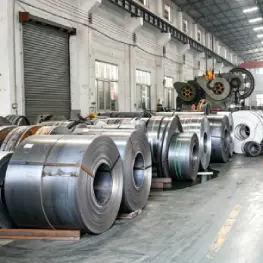
Certified Steel Coils
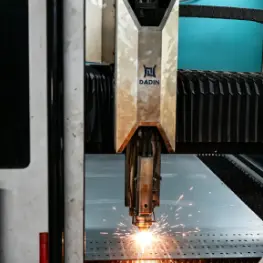
Precision CNC Slitting
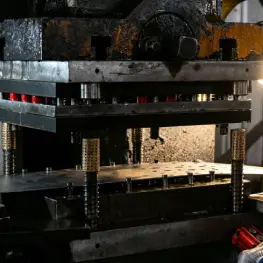
CNC Upright Punching
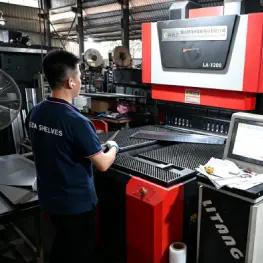
24-Station Roll Forming
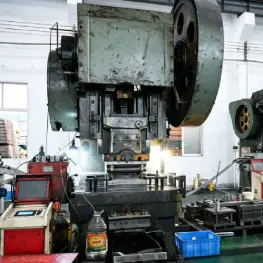
Beam Box Forming
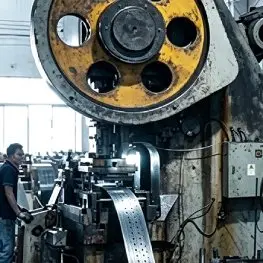
Automated Polishing
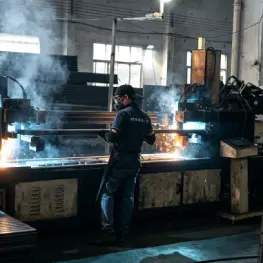
Robotic CO2 Welding
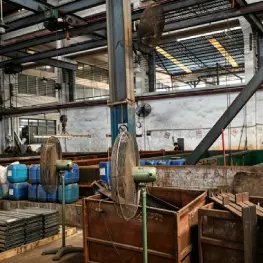
9-Step Acid Pre-Treatment
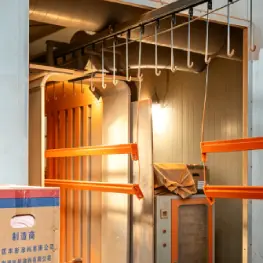
Powder Electrostatic Curing
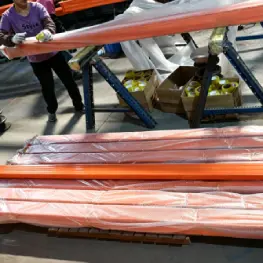
QC & Container Stuffing
Why International Buyers Trust HEDA Shelves
Founded in 2001 in Guangzhou, China, Guangzhou Heda Shelves Co., Ltd. has grown into a leading manufacturer and exporter of heavy-duty warehouse racking and storage systems. With an operational footprint spanning more than 30,000 m² and a dedicated team of over 300 experienced engineers and production technicians, our monthly export capacity exceeds 30,000 metric tons.
Every international order benefits from our full lifecycle engineering protocol: free CAD 2D floor plans, 3D parametric renderings, structural load calculations per EN 15512 codes, and export container bundling designed to prevent transit damage to precision roller tracks.
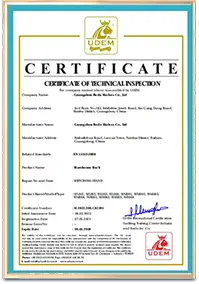
Verified Certifications & Conformity Reports
Frequently Asked Questions on Flow-Through Racking
Direct answers from our chief structural and logistics engineers to help you evaluate load profiles, safety configurations, and international shipping parameters.
How do you calculate lane slope, roller spacing, and brake roller frequency for mixed pallet weights?
+
The standard design gradient for industrial pallet flow tracks is between 2.8% and 3.5% (a descent of roughly 35 mm per meter of lane depth). Roller spacing is governed by bottom pallet construction: to prevent sagging and ensure smooth rotation, a minimum of three rollers must support the pallet's bottom runners at all times.
For standard Euro-pallets (1200x800mm) or US industrial pallets (40x48 inch), rollers are typically spaced at 150mm or 200mm centers. When pallet gross weights vary significantly within the same lane (e.g., from 400 kg to 1,200 kg), our engineers install speed-sensitive centrifugal brake rollers every 1.5 meters. These automatically adjust braking resistance to keep descent speeds within a controlled 0.15 to 0.25 m/s window regardless of pallet load.
What pallet bottom runner designs are required for gravity roller beds?
+
Pallet bottom configuration is the most important factor in flow bed reliability. High-performance pallet flow systems perform best with three-runner wood or plastic pallets, full-perimeter base pallets, or flat-bottom steel skids oriented along the direction of flow.
Pallets with damaged, warped, or missing bottom deck boards should not enter dynamic flow lanes, as runner deflections over 4mm can cause point-load catching between rollers. For facilities handling varied or low-grade pallets, we supply full-width steel roller beds or full-lane slave pallets to eliminate hang-ups and protect goods from transit damage.
How does CE Certification (2435-CPR-8605159) verify structural safety?
+
Under European Union Construction Products Regulation (CPR 305/2011/EU) and harmonized standard EN 15512:2020, industrial storage racks installed in commercial warehouses are classified as structural load-bearing building systems. Our CE certification confirms that our upright columns, beams, bracing, and anchor points have passed rigorous finite element analysis (FEA) and physical testing.
This includes verified ultimate limit state (ULS) load capacity, serviceability limit state (SLS) beam deflection under full loading (≤ L/200), and seismic ductility under regional earthquake accelerations. Holding this documentation protects facility owners, operations directors, and international logistics contractors from structural compliance liabilities.
Can flow through racking operate reliably in sub-zero cold room environments down to -30°C?
+
Yes. Gravity flow through racking is ideal for blast freezers and cold storage facilities because cold room cubic space is expensive to operate. Removing operating aisles significantly reduces refrigeration energy loss per pallet position.
For sub-zero cold environments (-10°C to -30°C), HEDA provides: (1) hot-dip galvanized or zinc-rich epoxy coated steel components to prevent condensation corrosion; (2) specialized low-temperature synthetic lubricants inside sealed roller bearings to prevent grease thickening; and (3) cold-rated viscous fluid dampeners within the speed-controller rollers to ensure consistent descent speeds at freezing temperatures.
How do you manage pallet backpressure in deep-lane systems over 10 pallets deep?
+
In deep lanes (10 to 25 pallets deep), cumulative gravity backpressure from trailing pallets can create high lateral force against the discharge pallet (easily exceeding 1,500 to 2,000 kg of forward thrust). This force makes it dangerous or impossible for forklifts to safely lift the frontline pallet without damaging the rack beam or tearing pallet runners.
To prevent this, HEDA equips all flow lanes deeper than 5 pallets with our patented mechanical pallet separator. As the lead pallet reaches the picking face, it triggers a foot-pedal lever that locks a mechanical stop plate behind it, holding back the entire line of trailing pallets. Once the forklift removes the front pallet, the separator automatically resets, letting the next pallet roll safely forward to the front stop.
How are components packaged to prevent damage during long-distance ocean shipping?
+
Gravity flow racks include precision roller tracks and speed controllers that must arrive in alignment. We package all export shipments in knock-down modular assemblies optimized for 40HQ and 20GP maritime containers.
Upright frames and beams are nested on heavy-duty timber dunnage and strapped with steel banding, with protective cardboard corners and waterproof PE stretch wrap. Pre-assembled roller tracks are securely crated in steel-reinforced wooden cases, keeping roller axles, internal bearings, and dampeners free from vibration impact or salt-air exposure across ocean routes to African, European, and American ports.