Verified Lightweight & Dynamic Pallet Racking Units
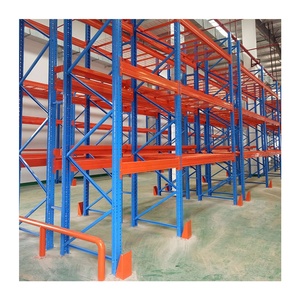
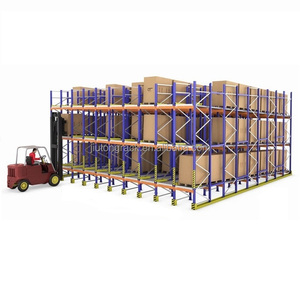
Configured using high-tensile cold-rolled steel profiles, optimized for seamless pallet access, high turnover, and modular vertical expansion across multi-category logistics centers.
2001
Year Established
30,000 m²
Integrated Plant Area
30,000 t
Monthly Processing Capacity
10,000+
Industrial Projects Completed
120+
Global Export Destination Ports
Engineering Standards for CE-Certified Lightweight Pallet Racking
Lightweight industrial pallet racking bridges the engineering gap between light manual shelving and heavy structural racking, balancing high dynamic load safety factors with low deadweight for modern, agile fulfilment hubs.
EN 15512 & CE CPR Compliance
Structural reliability requires rigorous cold-formed thin-gauge steel compliance. Our structural racking frames adhere directly to EN 15512 structural analysis standards, EN 15620 operational tolerances, and CE Construction Products Regulation (CPR 305/2011/EU) under Certification No. 2435-CPR-8605159. This ensures verified deflection limits (1/200th beam span deflection ceiling) and strict structural buckling safety coefficients under combined stress models.
Q235B Cold-Formed Steel Metallurgy
Every lightweight and medium-density upright is cold-roll formed from certified prime continuous-cast coils (yield strengths exceeding 235-355 MPa). Optimized cross-sectional geometry with multi-bend profiles achieves superior section modulus and radius of gyration. This provides resistance against torsion, lateral impact, and local column crippling while reducing gross deadweight by up to 22% compared to standard hot-rolled structural sections.
Precision Pretreatment & Thermoset Finish
Durability in high-humidity regional microclimates depends on surface conditioning. Our production line incorporates an integrated 10-stage automated finishing cycle: high-pressure spray alkaline degreasing, ultrasonic water rinsing, zinc-phosphate micro-crystalline conversion coating, and electrostatic powder application baked at 180°C-200°C. The resulting cross-linked polymer coating exceeds ASTM B117 salt spray ratings, eliminating corrosion risks in ambient or coastal environments.
Future Procurement Trends in Lightweight Warehouse Racking
Market dynamics, automated sorting shifts, and supply-chain pressures are changing how procurement directors source pallet infrastructure globally.
1. Rise of Hybrid Manual-to-Autonomous Integration
Modern distribution warehouses are transitioning toward semi-automated topologies. Lightweight racks now feature pre-punched web channels for optical guidance strips, retroreflective LiDAR positioning plates, and load-sensing sensors. Procurement contracts increasingly specify compatibility with Autonomous Mobile Robots (AMRs) and automated shuttle carriers to avoid costly rip-and-replace cycles as facilities scale.
2. Decoupled Modularization & Flat-Pack Volumetric Shipping
With volatile maritime container freight rates across Asian, African, and European corridors, procurement teams prioritize nesting density. Our boltless, knockdown lightweight configurations use precision-nested teardrop and slotted profiles, allowing over 26 metric tons to fit inside standard 40-foot High Cube (40HQ) ocean containers. This significantly reduces landed shipping costs per pallet position.
3. Circular Steel Sourcing & Lifecycle Carbon Accountability
Cross-border supply chains require clear environmental documentation. International buyers require verified Life Cycle Assessments (LCA) and RoHS-compliant coatings free of heavy metal stabilizers. High-yield, lightweight steel racking meets these sustainability requirements by using less raw material per pallet location without compromising structural safety under dynamic forklift impacts.
Product Evolution: From Static Storage to Dynamic Systems
Traditional static warehouse storage is giving way to dynamic, intelligent load-bearing infrastructure. Key industry shifts include:
Continuous High-Speed Roll-Forming Lines
Next-generation racking production uses continuous CNC roll-forming lines with in-line punch tracking. Beam connectors, drop locks, and column pitches are cut with laser precision under +/-0.2mm tolerances. This ensures rapid field installation and tight structural connection lock-in without field drilling or welding.
Dual-Purpose Mezzanine Platforms
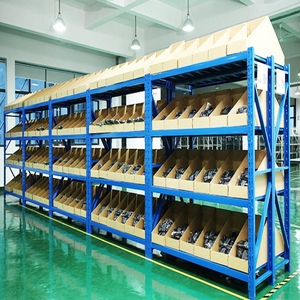
Urban industrial rents require better vertical space utilization. Modern lightweight racks are designed from the ground up to support suspended catwalks, two-tier mezzanine floors, and integrated gravity carton-flow tracks. This converts unused vertical air space into active order-picking zones without expanding physical building perimeters.
FEA Dynamic Load Simulation
Every non-standard racking system is verified using Finite Element Analysis (FEA) software. Structural simulations evaluate seismic resistance, frame sway stability under uneven loading, and dynamic fork entry impact stresses. This balances optimal material thickness with tested load-carrying performance.
Frequently Asked Questions on Lightweight Pallet Racking
Technical and commercial answers for project engineers, supply-chain leaders, and overseas procurement specialists.
What defines a "Lightweight Pallet Racking" system compared to standard heavy-duty selective racks?
Lightweight pallet racking is engineered for uniformly distributed loads ranging between 300kg and 1,500kg per bay level. It uses cold-formed profiles optimized to eliminate excess steel weight while maintaining structural safety factors under EN 15512 standards. This makes it ideal for fast-moving consumer goods (FMCG), light manufacturing, e-commerce, and picking operations.
How are components protected against rust and corrosion during maritime ocean shipping and in humid regional climates?
All cold-rolled components undergo industrial chemical pickling and phosphating to remove micro-scale mill scale and oils, followed by an electrostatic thermosetting polyester powder coating cured at high temperatures. For extreme humidity, coastal applications, or cold storage facilities, hot-dip galvanized or high-adhesion zinc-rich finishes can be specified.
What details are required to generate an engineering CAD layout and structural quotation?
To produce an optimized CAD proposal, our structural team needs: overall warehouse dimensions (clear ceiling height, clear column grids, and floor levelness), pallet metrics (width, depth, height including cargo, and maximum gross weight), dynamic handling equipment specifications (forklift mast height and turning radius), and required SKU inventory turnover patterns (FIFO or LIFO).
Can racking components be customized to fit existing European or American profile specifications?
Yes. Guangzhou HEDA Shelves specializes in OEM and ODM fabrication. Our roll-forming lines can adjust punch patterns (50mm, 75mm, or 76.2mm pitch standards) and custom section profiles to ensure backward compatibility with your existing selective, teardrop, or hook-in warehouse storage installations.
How are structural safety and beam deflection inspected prior to global dispatch?
Our quality control program inspects every batch across raw material tensile yield, weld seam penetration, coating thickness, and uniform load deflection tests. We verify deflection ratios below the critical L/200 threshold under full design load, in compliance with CE standard EN 15512 and ISO 9001:2015 protocol #18624Q00169R0M.
What documentation is provided to support customs clearance and on-site assembly?
Every overseas shipment includes an authenticated packing manifest with piece-marked item numbers, certified mill test reports, CE declarations of performance, structural load calculation certificates, and detailed 3D step-by-step assembly drawings for local installation teams.