Precision Heavy-Duty & Industrial Shelving Units
Tested for dynamic deflection, dynamic shear stress, and extreme working environments. Explore our top industrial configurations certified for global import.
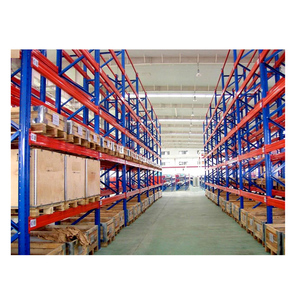
HEDA Guangzhou Steel Pallet Racking System Heavy Duty
High-load selective pallet racking designed with omega-shaped vertical uprights and box beams for versatile warehouse palletizing.
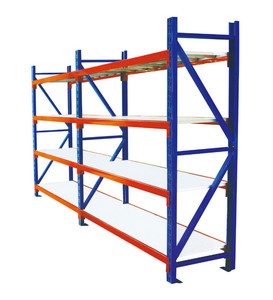
Custom Duty Corrosion Protected Industrial Stacking Shelves
Modular card slot assembly engineered with pickling and phosphating pre-treatments for humid regional industrial zones.
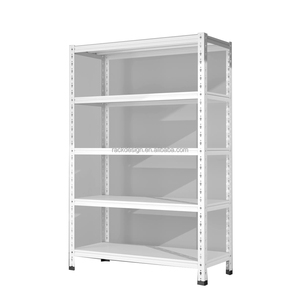
5-Level Boltless Corner Logistics Storage Racks
Slotted angle precision construction intended for manual order picking, bin packing, and maximizing footprint density in tight corners.
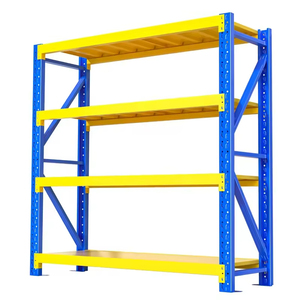
Industrial Boltless Medium Duty Warehouse Shelving
Snap-in horizontal beam design enabling effortless height adjustments on 50mm pitches without complex tooling or downtime.
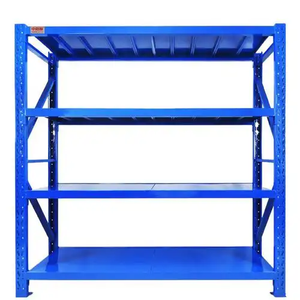
Corrosion-Resistant Longspan Warehouse Shelving
Extended horizontal profile spacing built for archive boxes, retail distribution centers, and lightweight bulk package sorting.
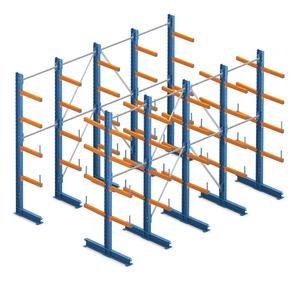
Heavy Duty Assemble Cantilever Structural Rack
Open-front architectural configuration built specifically for timber beams, PVC tubing, steel rebar, and uneven long loads.
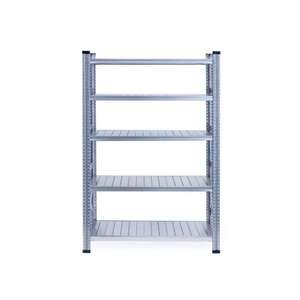
5-Tier Modular Galvanized Boltless Racks
Hot-dip and cold-galvanized finishes ensuring corrosion immunity in damp cold storage facilities and outdoor staging areas.
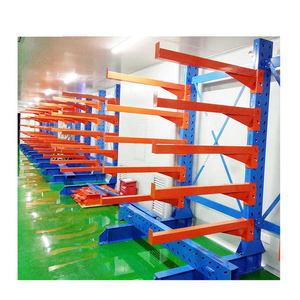
1000kg/Arm Heavy Duty Cantilever Racking
Cold-rolled I-beam structural vertical posts fitted with adjustable retaining pins to ensure maximum safety under heavy mechanical loading.
Technical Benchmark: Engineering Rigor Behind CE Certified Racking
As international supply chain nodes become increasingly sophisticated, storage infrastructure can no longer be viewed as merely assembled steel beams. Industrial racking represents a crucial static load-bearing structure governed by strict European standards, specifically EN 15512:2020 (Steel static storage systems - Adjustable pallet racking systems - Principles for structural design), alongside EN 15620 and EN 15635. Sourcing directly from verified factory manufacturing lines ensures cold-formed thin-walled steel profiles maintain tight tensile strength tolerances, controlled elasticity modules, and accurate yield parameters.
Structural reliability starts with material selection. Authentic export-grade factories utilize certified Q235B and Q355B structural carbon steel coils, cold-rolled via continuous computer-controlled rolling stations. This prevents micro-fracturing along bend radii, ensuring consistent mechanical behavior across large spans. When specifying warehouse logistics configurations, engineering managers must account for dynamic fork-truck impact allowances, seismic accelerations, upright frame buckling limits, and joint looseness factors across decades of operational life.
| Evaluation Parameter | Certified CE Spec (EN 15512 / ISO 9001) | Unregulated Commercial Grade | Operational Impact |
|---|---|---|---|
| Steel Raw Material | Certified Q235B / Q355B Hot-Rolled Coils | Mixed Scraps / Unverified Recycled Grades | Guarantees rated structural yield strength; eliminates premature metal fatigue. |
| Surface Protection | Pickling, Phosphating + Electrostatic Coating (70-90µm) | Direct Powder Coat without Acid Wash | Prevents under-film corrosion in high-humidity regional transport environments. |
| Beam Deflection Limit | Strictly Span/200 under Maximum Working Load | Exceeds Span/100 under Initial Load | Eliminates structural sagging and operational risks for automated guided forklifts. |
| Safety Factor | 1.5x Overload Coefficient Verified by FEA Modeling | Undefined / Non-Simulated | Safeguards workers against pallet shift during seismic activity or fork impacts. |
Emerging Procurement Trends in Global Material Handling
Procurement heads, supply chain engineers, and third-party logistics (3PL) directors face rapid transitions in global warehousing demands. The standard methodology of buying static racks off a generic shelf list is obsolete. Modern procurement strategies are defined by holistic lifecycle calculations, structural versatility, and environmental resilience.
Optimized Freight Volume
Global sea-freight volatility forces engineering teams to adopt high-density nested knock-down components. Custom pallet designs maximize 40HQ container cube utilization to reduce freight costs per pallet space.
Off-Grid System Resilience
In developing logistics hubs where power reliability fluctuates, operators favor mechanical automation—such as gravity flow lanes and self-balancing push-back systems—over heavy electric automated storage.
Stringent Traceability Audits
Tier-1 multinational importers now require complete digital mill test certificates (MTC), verifiable CE documentation numbers, and ISO 9001:2015 traceability down to the raw coil batch.
Modern procurement focuses on lowering total cost of ownership (TCO). Buyers evaluate whether a supplier's engineering team provides detailed 3D CAD calculations, dynamic FEA load tests, and installation drawings that enable local crews to assemble racks accurately without costly overseas technical dispatch.
Engineering Trends: Next-Generation Racking Architectures
Looking toward future warehouse design, racking frameworks are shifting from passive steel framing to active structural elements within omnichannel logistics. Engineering teams are adapting systems to meet several technical advancements:
1. Structural Transition to High-Bay Automation (ASRS Interfaces): Facilities increasingly transition to dense automated systems. Racking manufacturers must hold cold-forming tolerances within millimeter-level precision across 30-meter high-bay installations. Deflection margins are strictly limited to prevent automated shuttle positioning errors.
2. Advanced Thin-Wall Profile Geometry: Through finite element analysis (FEA), modern uprights feature multi-bend stiffening ribs. These profiles deliver 18% higher torsional resistance while using optimized raw steel thickness, reducing material consumption and lowering deadweight loads on warehouse slab foundations.
3. Severe-Atmosphere Surface Engineering: Expanding cold chains and tropical cross-docking require improved anti-corrosive finishes. High-grade electrostatic polyester powder systems applied over continuous chemical conversion baths provide salt-spray resistance exceeding 500 hours, keeping steel safe from chemical and humidity exposure.
Guangzhou HEDA Shelves: Enterprise Strengths & Capacity
Combining 25 years of specialized metal storage manufacturing with fully integrated global export capabilities.
Verified Certifications
Holding official CE Certificate No. 2435-CPR-8605159, alongside ISO 9001:2015 certification No. 18624Q00169R0M, fulfilling global building and logistics standards.
End-to-End In-House Production
Spanning 30,000m² of shop-floor area with precision roll-forming lines, automated punch systems, robotic welding, and internal continuous powder-coating booths.
Complimentary 3D & CAD Design
Our senior engineers review structural loads, clear building heights, and material flow lines to provide comprehensive layouts and load matrices free of charge.
Container Shipping Protection
Component stacking is optimized for sea freight, protected by anti-scratch wrapping and steel banding to ensure damage-free arrival across global seaports.
Frequently Asked Questions on Heavy-Duty Racking Sourcing
Direct technical answers to common questions about international freight, engineering compliance, and site installation.
Q1: How do you verify load capacities without catastrophic failure?
Every profile geometry is modeled via 3D finite element simulation and verified through physical testing in accordance with EN 15512 protocols. This includes column compression testing, beam-end connector shearing analysis, and joint rotation checks using a 1.5 structural safety factor.
Q2: Can your storage structures handle seismic and uneven slab loads?
Yes. By calculating the base plate area, anchor bolt shear forces, and frame diagonal lacing, our engineers configure baseplates to disperse point loads over structural concrete slabs, ensuring compliance with local seismic codes.
Q3: What surface protections keep steel from rusting in coastal climates?
We use a multi-stage automated pre-treatment system that includes hot alkaline degreasing, acid pickling, rust neutralization, and zinc phosphating. This is sealed with an electrostatic powder coating cured at 200°C, or hot-dip galvanizing for cold storage and humid coastal facilities.
Q4: How does your team support overseas installation without flying engineers out?
We provide full structural CAD blueprints, assembly manuals, and color-coded component tagging. We also supply installation videos and coordinate with local mechanical contractors via remote engineering calls to ensure safe, on-schedule completion.
Plan Your Storage System with Professional Factory Support
Send our engineering team your warehouse dimensions, clear heights, pallet sizes, and lift truck specifications. We will supply full 2D layout blueprints, realistic 3D renderings, and complete structural capacity calculations within 24 hours.
Send an Inquiry