High Density
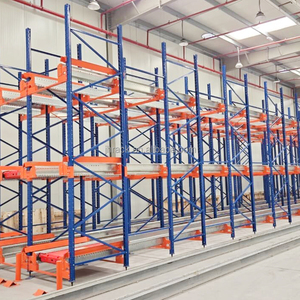
Explore our heavy-duty, factory-engineered radio shuttle and industrial rack configurations. Every configuration undergoes structural FEA calculation and is certified strictly to European Machinery Directive CE standards.
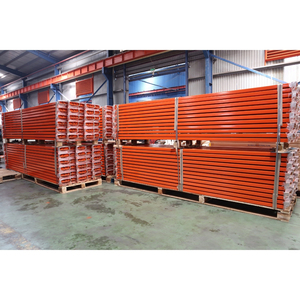
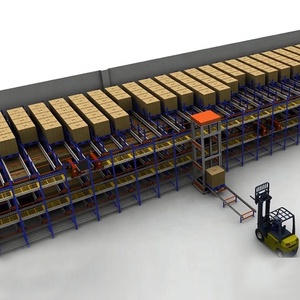
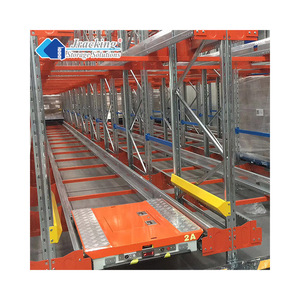
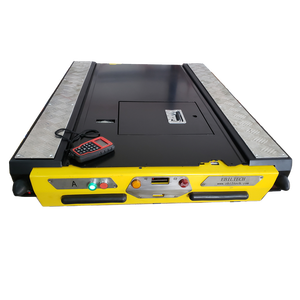
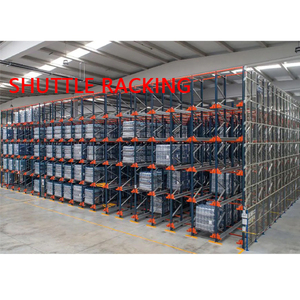
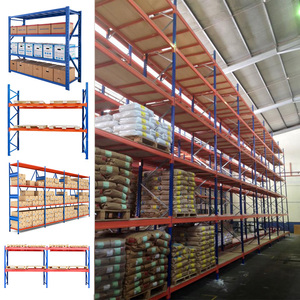
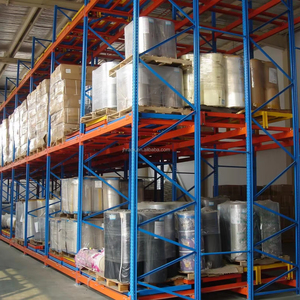
Operating since 2001, Guangzhou Heda Shelves Co., Ltd. provides global logistics operators, distribution hubs, and cold storage chains with end-to-end manufacturing accountability.
In high-density industrial logistics, structural integrity cannot be compromised. As a specialized CE Certified Radio Shuttle Racking Exporter, HEDA controls the entire metallurgical and engineering lifecycle. Unlike regional trading intermediaries or assembly-only contractors, our 30,000 m² Guangzhou production campus handles structural profile roll-forming, automated CNC punching, automated dual-shield robotic welding, comprehensive pickling-phosphating acid pretreatment, and dual-cure electrostatic powder coating in-house.
Every cold-rolled upright and shuttle running rail is precision-engineered from prime structural steel (SS400, Q235B, and Q355B grades) adhering strictly to the EN 15512 standard for steel static storage systems. Certified with European CE Machinery Directive compliance (Certificate No. 2435-CPR-8605159) and ISO 9001:2015 quality management (Registration No. 18624Q00169R0M), our installations guarantee absolute deflection tolerances within 1/1000 under dynamic carrier acceleration loads.
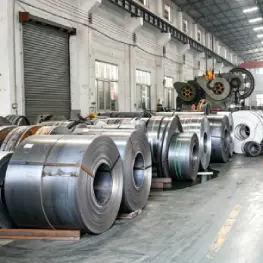
01. Certified Raw Coil
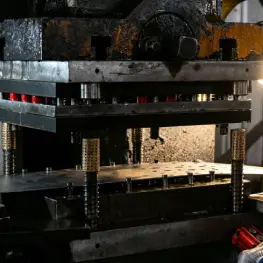
02. CNC Continuous Punching
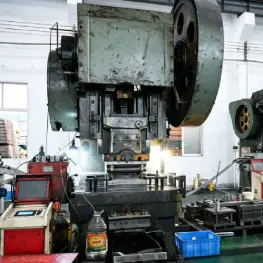
03. High-Tolerance Roll Forming
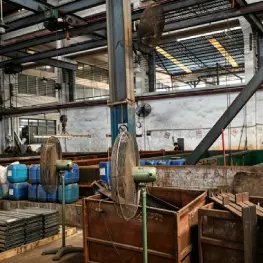
04. Acid Pickling & Phosphating
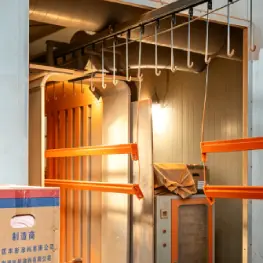
05. Cured Epoxy Powder Finish
A comparative engineering evaluation across spatial density, forklift travel paths, operational throughput, and lifecycle capitalization.
| System Architecture | Space Utilization | Forklift Interaction | Stock Rotation Strategy | Throughput Rate | Structural Complexity |
|---|---|---|---|---|---|
| Radio Shuttle System | 80% – 90% (Maximum) | Exterior aisle only (Zero rack penetration) | Software selectable FIFO or LIFO | High (Automated carrier travel) | Precision cold-rolled sub-tracks |
| Drive-In Racking | 65% – 75% | Deep penetration into structural bays | Strict LIFO (Limited flexibility) | Low (Slow operator navigation) | Cantilever brackets & guide rails |
| Push-Back Racks | 70% – 75% | Exterior aisle face only | Strict LIFO | Medium (Gravity-cart dependent) | Multi-tier rolling steel carts |
| Selective Pallet Rack | 35% – 45% | 100% aisle travel for all bays | Unrestricted 100% SKU Access | Standard (Limited by vehicle speed) | Standard beams & upright columns |
From an operational standpoint, Radio Shuttle Racking completely decouples manual material handling equipment (forklifts) from high-density storage lanes. In conventional drive-in setups, forklift masts enter deep into structural aisles, introducing frequent structural impact risks to lower uprights, decreasing column fatigue life, and restricting vertical clear heights due to mast sway. In contrast, shuttle systems utilize high-speed, self-powered cart runners moving smoothly over specialized steel guidance extrusions at rates up to 1.2 m/s empty and 0.8 m/s loaded.
This decoupling not only virtually eliminates upright rack collisions—slashing ongoing facility maintenance budgets by up to 85%—but also allows racking structures to safely extend up to 25–30 meters high. This enables enterprises to optimize total building cubic capacity, rather than just square footage.
How automation, battery chemistry, and architectural integration are reshaping procurement standards for warehouse directors through 2030.
Traditional lead-acid and heavy gel shuttle batteries are rapidly being phased out by high-cycle Lithium Iron Phosphate (LiFePO4) and rapid supercapacitor arrays. Modern runners deliver fast charging (80% charge in 25 minutes) and operate reliably in cold chain storage temperatures down to -30°C without thermal degradation.
The global warehousing industry is moving from traditional 2-way linear shuttles toward multi-directional 4-way shuttle technology. By integrating autonomous vertical lifters and lateral rail tracks, 4-way systems eliminate dedicated forklift aisle dependencies, enabling fully automated, lights-out pallet operations.
Standalone radio frequency (RF) handheld remotes are rapidly giving way to bi-directional industrial Wi-Fi and industrial 5G mesh networks. Shuttle microcontrollers now interface directly with enterprise Warehouse Management Systems (WMS) for dynamic slotting, predictive maintenance alerts, and live battery telemetry.
Critical engineering considerations, shipping specifications, and site prerequisites addressed by our chief project engineers.
Consult directly with our racking project engineers. Provide your building dimensions, pallet specs, and handling volumes for a comprehensive structural layout, dynamic simulation, and detailed export quotation within 24 hours.
Contact Us