Certified High-Density Pallet Racking & Industrial Storage Systems
Engineered for harsh industrial duty cycles, automated picking hubs, and high-throughput cold chains. Explore our primary product lines certified for European, African, and global distribution logistics.
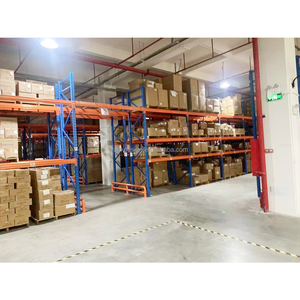
Warehouse Industrial High Bay Selective Heavy Duty Racking Systems Industrial Storage Shelves 24" Pallet Rack Upright
- Profile: Heavy Cold-Rolled Q235B/Q355B
- Capacity: 1,000–4,500 kg per beam level
- Finish: Anti-Corrosion Electrostatic Powder
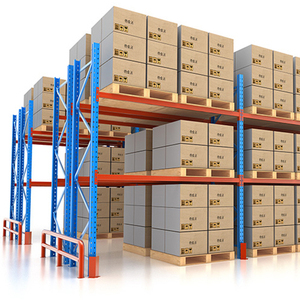
Heavy Duty Steel Single-Depth/Double-depth Selective Pallet Racks CE Certified Corrosion Protection Standard Wide Aisle Full
- Access: 100% Direct Selective Rotation
- Standard: FEM 10.2.02 / CE Certified
- Corrosion Protection: Multi-Stage Phosphated
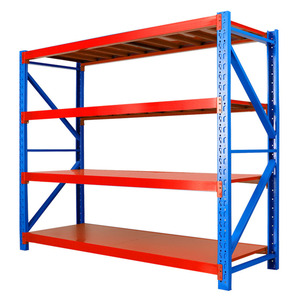
Maobang Heavy-Duty 4-Level Boltless Storage Rack Industrial Steel Multi-Level Shelvi Metal Racking System for Bulk Storage
- Assembly: Quick Knock-Down Boltless Setup
- Tier Payload: Up to 800 kg per shelf layer
- Configuration: Multi-tier mezzanine convertible
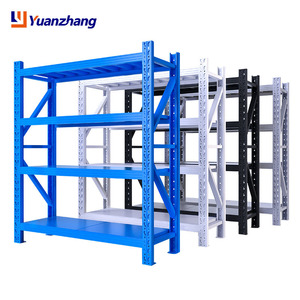
Warehouse Rack Shelf Medium Duty Industrial Racking Shelves Spare Auto Parts Longspan Shelving Heavy Duty Storage Shelves
- Application: Spare Parts & Manual Picking
- Adjustability: 50mm Pitch Step Beams
- Decking: Steel Panels or Heavy Mesh Infill
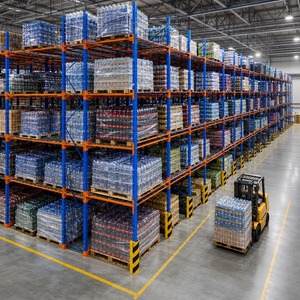
Palettenregal Racks Industriales Pallet Flow Racking Steel Storage Rack Q235B Steel For Bulk Chemical Plants
- Mechanism: Roller Tracks with Speed Retarders
- Rotation: Strict FIFO Chemical & Barrel Storage
- Safety: Pallet Separation Brake Mechanism
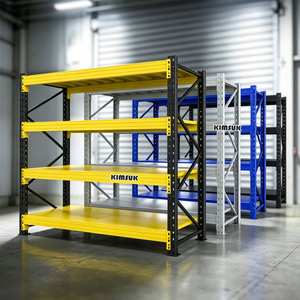
Rack De Stockage 4-Layer Boltless Adjustable Rack Etagere De Rangement Garage Warehouse Heavy Duty Racks Shelving Units
- Structure: 4-Tier Heavy Gauge Uprights
- Deployment: Logistics Staging & Garage Hubs
- Surface: Dual Polymer Scratch-Resistant Coat
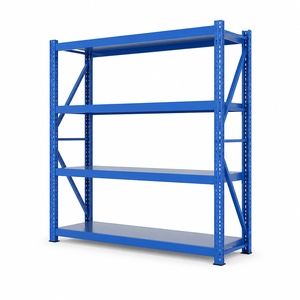
Superior Quality 4-Layer Steel Adjustable Boltless Rack Shelf Warehouse Storage Medium Duty Powder Coated Corrosion Protection
- Feature: Snap-in Locking Structural Upright
- Corrosion: 500-hr Salt Spray Tested
- Capacity: 300–600 kg Uniform Distributed Load
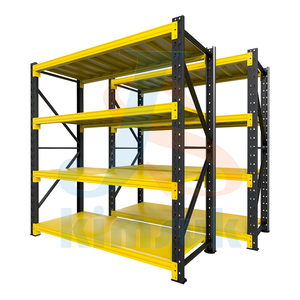
2000*600*2000mm Longspan Display Steel Shelving Medium Duty Stacking Racks & Shelves for Garage Storage
- Dimensions: 2000 x 600 x 2000 mm Standard
- Decking: Heavy Galvanized or P2 Infill Board
- Modularity: Infinite Add-On Bay Integration
Engineering Architecture of CE Certified Roller Pallet Racking Systems
As a specialized CE certified roller pallet racking systems exporter, Guangzhou Heda Shelves Co., Ltd. manufactures heavy-duty gravity-driven intralogistics structures designed under European standard EN 15512:2020 (Steel static storage systems — Adjustable pallet racking systems — Principles for structural design) and execution standard EN 1090-2 (Execution of steel structures). Roller pallet racking, commonly referred to across modern material handling sectors as pallet flow racking or gravity flow dynamic storage, operates on an unpowered inclined roller bed principle, leveraging natural gravitational force to achieve seamless First-In, First-Out (FIFO) stock rotation.
In high-volume storage facilities such as chemical plants, FMCG cold storage facilities, pharmaceutical distribution nodes, and export logistics transshipment centers, conventional selective pallet racking introduces excessive transit aisles, elevated forklift travel distances, and high energy emissions. Our gravity flow roller beds eliminate internal operational aisles entirely, consolidating storage density by up to 65% over conventional wide-aisle systems. The operational bed features an engineered slope gradient precisely tuned between 3.0% and 4.0% (1.7° to 2.3°) depending on bottom pallet board geometry, pallet material (raw wood, molded composite, or injection-molded HDPE plastic), and gross unit weight variations from 300 kg to 1,500 kg per pallet position.
Centrifugal Speed Retarders
Self-regulating centrifugal brake rollers engineered with internal planetary gear modules. They autonomously arrest acceleration, maintaining terminal pallet sliding velocities safely between 0.15 m/s and 0.28 m/s down dynamic lanes reaching 30 meters in depth.
Time-Delay Separator Locks
Mechanical separation mechanisms placed at the unloading face. The system mechanically decouples the lead discharge pallet from the cumulative hydrostatic queue pressure of upstream pallets, preventing binding and allowing frictionless forklift extraction.
Cold-Formed High Yield Profiles
Upright columns roll-formed from certified high-strength Q235B and Q355B structural steel coils. Featuring omega-shaped cross-sections with multiple stiffening ribs, engineered for high torsional resistance and elastic limits compliant with CE Certificate 2435-CPR-8605159.
To guarantee structural safety in continuous operation, our engineering design conducts finite element analysis (FEA) on upright column sections, base plate anchors, and load beams. Under maximum structural load conditions, dynamic impact coefficients of 1.25 to 1.40 are incorporated into the load calculation matrices to absorb kinetic shocks generated during pallet deceleration and seismic excitations in compliance with Eurocode 8 (Seismic design of storage structures).
Technical Systems Comparison: Roller Pallet Flow vs. Alternative High-Density Systems
Selecting the optimal intralogistics system requires calculating the trade-offs between initial capital outlay, operating power requirements, space utilization, and stock rotation rules. The data visualization matrix below details key engineering benchmarks between our CE-certified roller pallet racking systems and competing methodologies:
| Storage System Architecture | Stock Rotation Rule | Volumetric Utilization | Electrical Power Demand | Cycle Throughput Capacity | Forklift Collision Risk | Operational OPEX Impact |
|---|---|---|---|---|---|---|
| Gravity Roller Pallet Flow | Strict FIFO (First-In, First-Out) | 80% – 85% | 0 kW (Passive Gravity Driven) | Very High (Simultaneous Load/Pick) | Extremely Low (Aisles Separated) | Lowest (No electronics or batteries) |
| Radio Shuttle Racking | FIFO or LIFO Selectable | 80% – 90% | Medium (Li-Ion Battery Charging) | High (Dependent on Shuttle Count) | Low (Forklift outside channels) | Moderate (Battery replacement & servicing) |
| Drive-In Racking | Strict LIFO (Last-In, First-Out) | 65% – 75% | 0 kW (Manual Truck Drive) | Slow (Forklift enters channels) | High (Frequent upright truck impacts) | Moderate (Continuous rack repairs) |
| Selective Pallet Racking | Random Direct Access | 40% – 50% | 0 kW (Manual Handling) | High (Direct individual picking) | Moderate (Standard traffic aisles) | High (Requires huge real estate footprint) |
Future Procurement Trends in Industrial Storage & Roller Racking (2025–2030)
International supply chain disruptions, fluctuating warehouse lease rates, and escalating net-zero carbon mandates across Europe, North America, and emerging industrial hubs in West and East Africa are fundamentally altering the technical procurement criteria of facility owners. Global procurement managers are transitioning from low-cost static steel shelving toward high-efficiency dynamic gravity systems. Four overarching trends govern the next procurement decade:
1. Passive Net-Zero Material Handling
With industrial carbon taxes and rising electrical tariff structures across European and global distribution grids, logistics operators are heavily prioritizing "passive" kinetic solutions. Gravity-driven roller pallet racking provides 24/7 continuous internal transport within the rack structure using zero kilowatts of electricity, rendering it completely resilient to municipal power outages and grid curtailments.
2. Cold Chain Resilience & Density Maximization
Refrigerated warehouse space costs up to 4.5 times more to cool and construct per cubic meter than ambient temperature facilities. The rapid expansion of frozen food exports, pharmaceutical cold lines, and regional agricultural hubs demands the maximum pallet positions per refrigerated kilowatt. Roller flow racking allows high-density block storage with high air-circulation channels between roller lines, reducing refrigeration losses.
3. Hybrid AGV & AMR Integration
Modern distribution hubs are standardizing on automated guided vehicles (AGVs) and autonomous mobile robots (AMRs). Contemporary roller pallet racking lanes are engineered with high-precision optical laser-guided docking entries and specialized front-end stops, allowing driverless forklifts to deposit pallets seamlessly into loading bays and retrieve separated discharge loads without manual intervention.
Furthermore, in developing logistics corridors across Africa—including major industrial warehousing estates surrounding the ports of Lagos (Lekki Deep Sea), Tema, Mombasa, Dar es Salaam, and Durban—procurement specialists are prioritizing containerized knock-down delivery models. Racking components designed to nest compactly inside standard 40HQ ocean shipping containers allow overseas buyers to amortize shipping container costs across higher gross steel tonnages, dramatically decreasing landed cost per pallet location.
Manufacturing Excellence: The 10-Stage Precision Fabrication Workflow
Every structural component manufactured at our 30,000 square meter factory in Guangzhou undergoes strict quality control protocols from raw steel coil slitting to maritime container lashing. Our certified production infrastructure ensures that every batch delivered meets the stringent load testing, welding ductility, and powder coating adhesion mandates stipulated under CE registration No. 2435-CPR-8605159 and ISO 9001:2015 certification No. 18624Q00169R0M.
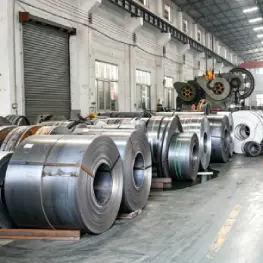
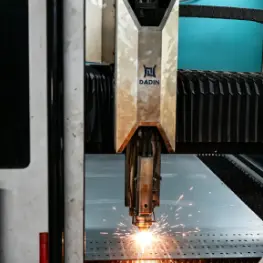
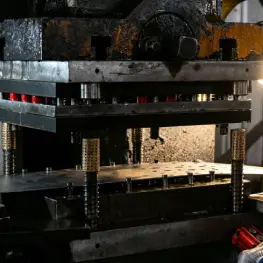
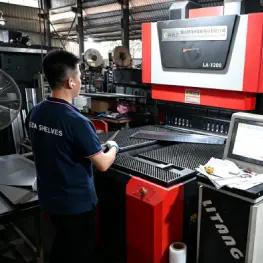
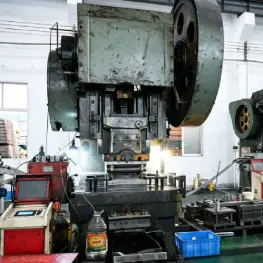
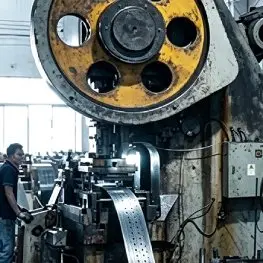
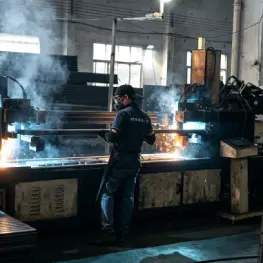
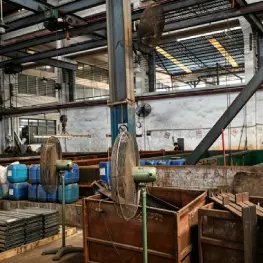
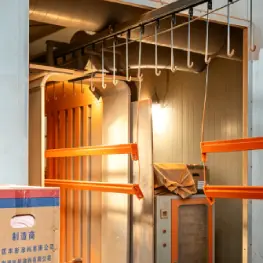

Chemical pickling and phosphating (Stage 08) represent the cornerstone of our tropical and coastal corrosion resistance. Many low-grade exporters bypass pre-treatment tanks, spraying powder directly over mill oil and carbon scales. In humid maritime climates—such as coastal West Africa, the Caribbean, Southeast Asia, or Mediterranean ports—un-pickled steel succumbs to subsurface delamination and blistering within months. Our automated 4-stage immersion pre-treatment cleans oil residues, etches the metal substrate, and deposits a crystalline zinc-phosphate protective layer that guarantees over 500 hours of neutral salt spray resistance (ASTM B117).
Verified International Quality Credentials & Engineering Provenance
International procurement directors, structural engineers, and governmental customs authorities demand certified third-party testing reports. Guangzhou Heda Shelves Co., Ltd. provides fully verifiable documentary proof to accompany commercial export declarations, enabling streamlined import clearance and regulatory safety sign-offs across all global customs regimes.
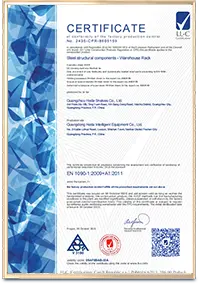 CE EN 15512 Racking Compliance
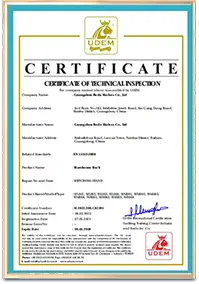 ISO 9001:2015 Quality System
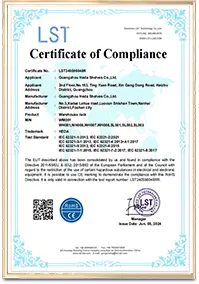 CE 2435-CPR-8605159 FPC
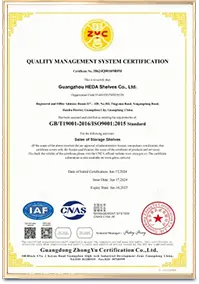 RoHS Hazardous Substance Pass
Frequently Asked Questions (FAQ) for Global Roller Pallet Racking Buyers
Technical answers authored directly by our structural engineering division to clarify common deployment, installation, maintenance, and container shipping queries:
Plan Your Warehouse Racking Project with Factory Engineers
Direct communication with veteran racking design engineers—not third-party trading intermediaries. Submit your warehouse floor plan dimensions and pallet load specs to receive a complimentary custom 3D CAD layout, structural load calculation sheet, and full containerized CIF quotation within 24 hours.
- Free 3D CAD Floor Layout & Rendering
- EN 15512 Structural Safety Calculation
- Factory-Direct Containerized Pricing
- Complete Maritime Shipping Support
Connect Directly with Engineering
Instant online quotation & technical file exchange for worldwide warehouse managers and importers.
Contact Us