300kg / Tier
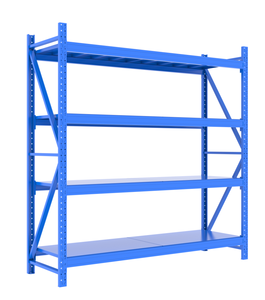
Heavy Duty 4-Layer Garage Stacking Rack Steel Frame 300kg Capacity
- Corrosion-Resistant Powder Coating
- Modular Stacking Footplates
Direct from our 30,000 m² smart manufacturing base: explore high-tensile, load-tested racking structures engineered to conform to EN 15512, ISO 9001:2015, and international safety protocols.
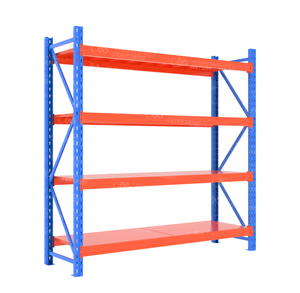
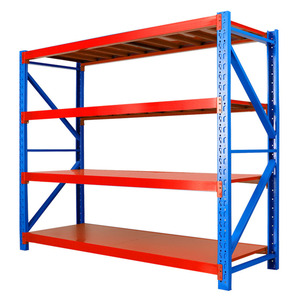
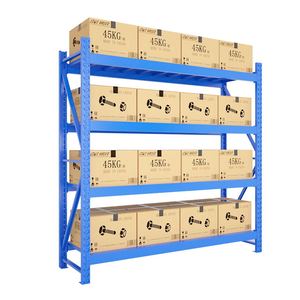
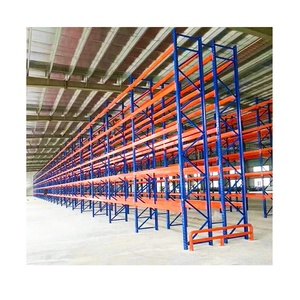
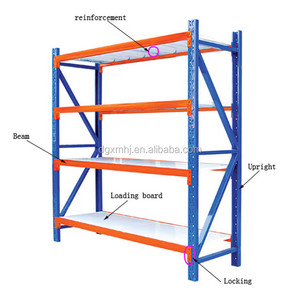
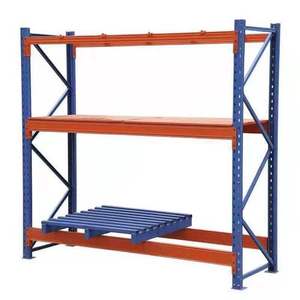
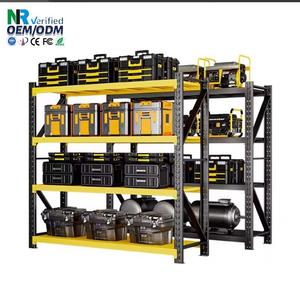
Dedicated structural steel shelving engineering and custom fabrication since 2001.
Fully integrated CNC roll-forming lines, automated punching, and robotic welding cells.
Continuous raw material sourcing and high-throughput automated powder curing tunnels.
Turnkey industrial installations across 120+ countries with zero structural failures.
In modern high-bay and logistics environments, structural integrity is not merely a mechanical metric—it is a critical life-safety baseline. Understanding the structural parameters of CE-certified warehouse shelving protects human capital, high-value inventory, and logistical velocity.
Industrial storage racking systems classified under European Regulation (EU) No 305/2011 (Construction Products Regulation or CPR) mandate third-party conformity validation. The benchmark standard, EN 15512:2020 (Steel static storage systems - Adjustable pallet racking systems - Principles for structural design), governs calculation routines, physical testing protocols, and limit-state analyses.
Unlike conventional architectural steel structures governed purely by static beam theory, warehouse shelving comprises slender cold-formed sections prone to complex coupled instability phenomena: distortional buckling, torsional-flexural buckling, and local web crippling. Under EN 15512 protocols, finite element calculations must be substantiated by physical stub column compression testing, beam-to-column connector shear testing, and rotational stiffness tests to determine the semi-rigid characteristics of connecting beam claws.
Critical Standard Differentiation: Racking fabricated without verifiable CE CPR marking and EN 15512 compliance often assumes perfectly rigid beam-end joints. In real-world seismic or maximum-load operations, unverified claw connections exhibit rotational slippage, escalating second-order (P-Delta) lateral displacement and risking progressive rack collapse under transient forklift impacts.
Our manufacturing facility subjects every structural cold-rolled profile to exhaustive deformation testing under the stringent Serviceability Limit State (SLS) and Ultimate Limit State (ULS) criteria. The maximum vertical deflection of load beams under full rated payload is engineered strictly within the $L/200$ deflection threshold (where $L$ denotes beam clear span), completely eliminating excessive dishing and safeguarding automated shuttle systems and manual forklift forks alike.
| Regulatory & Engineering Domain | CE Certified Standard (EN 15512 / EN 15620) | Sub-Standard / Unregulated Commodity Racks | Direct Impact on Warehouse Operations |
|---|---|---|---|
| Steel Substrate Specification | Certified structural grade Q235B / Q355B (EN 10025 S355JR equivalent), certified mill test sheets. | Re-rolled scrap scrap metal or unstamped commercial hot coils with inconsistent carbon equivalent. | Guaranteed yield strength prevents sudden brittle fracture at stress concentration holes and sub-zero cold rooms. |
| Beam-End Connector Rigidity | 4 or 5-claw interlocking design, robotic precision welded, calibrated rotational stiffness ($C_d$). | 2 or 3-lug loose stampings welded manually without pre-heat, inconsistent weld penetration. | Suppresses sway frame displacement, preserving aisle plumbness and eliminating mast jam in Narrow Aisle systems. |
| Deflection Limit (SLS) | Vertical beam deflection $\le L/200$; upright deflection $\le H/350$ under full designed static load. | Exceeds $L/120$ under actual dynamic storage, causing permanent plastic strain on pallet supports. | Prevents pallet tipping, conveyor line stalling, and load snagging during high-speed turret truck retrieval. |
| Surface Corrosion Passivation | 10-stage immersion: pickling, hot phosphating, deionized rinse, electrostatic polyester cure (60-90μm). | Direct manual solvent wipe followed by thin air-sprayed liquid enamel (<25μm thickness). | Withstands 500+ hours in ASTM B117 salt spray testing; immune to tropical coastal humidity and condensation. |
Additionally, compliance with EN 15620:2021 dictates structural clearances and tolerances for warehouse operations. Whether specifying Class 400 wide-aisle configurations or Class 100 automated storage and retrieval systems (ASRS), precision profile straightness is calibrated through our multi-roll straightening heads to tolerances under 1.0mm per 1,000mm length, ensuring predictable robotic interfacing.
Global supply chain managers, 3PL giants, and industrial developers face shifting logistical pressures: escalating square-meter land values, surging pallet turnover velocities, and net-zero ESG compliance mandates.
Procurement is pivoting away from static wide-aisle shelving toward semi-automated radio shuttle lanes and Autonomous Mobile Robot (AMR)-assisted lower picking tiers. Rack structures now require micro-engineered guide rails, sensor reflectors, and high-flatness flooring integration. Structural columns must feature reinforced baseplate gusseting to absorb localized kinetic vibrations induced by continuous AGV wheel cycles.
To reduce freight emissions, container stuffing weight constraints, and raw material consumption, metallurgical advances allow the deployment of high-yield micro-alloyed steels (such as Q355B with niobium and vanadium trace additions). These alloys deliver an elevated yield strength exceeding 355 MPa while retaining crucial cold-forming elongation (≥22%), enabling thinner wall gauges with superior structural load bearing.
Modern mega-hubs in seismic-prone corridors across Southern Europe, the Pacific Rim, and the African Rift Valley now insist on explicit non-linear dynamic time-history simulations. Racking must be engineered not as rigid storage furniture, but as dissipative structural frameworks equipped with energy-absorbing baseplates that safely flex and dissipate horizontal ground acceleration during a major seismic event.
Corporate supply chains operating under Scope 3 emission targets increasingly demand full material genealogy. Leading buyers verify that steel coils originate from electric arc furnace (EAF) or clean basic oxygen converter routes with audited carbon intensity. Our automated manufacturing line operates closed-loop water treatment systems for all pickling baths and relies on solvent-free, non-TGIC polyester powder chemistries that yield zero VOC emissions during thermal curing.
Furthermore, modular dismantlability has become an imperative procurement metric. Structural racking that supports non-destructive relocation, tier expansion, and interchangeable components minimizes the total cost of ownership (TCO) over a facility's 20-year lease horizon.
Eliminate intermediary trading margins and technical miscommunication. Direct collaboration with Guangzhou Heda Shelves Co., Ltd. connects your project directly to elite production metallurgy, verified CE credentials, and custom industrial manufacturing prowess.
Over 24 continuous cold-forming stations produce custom omega-profile uprights, step beams, and interlocking box beams with zero residual internal twisting.
High-speed hydraulic punching dies execute multi-pitch teardrop, butterfly, and diamond upright patterns with ±0.1mm dimensional precision across 12-meter lengths.
Continuous pickling, degreasing, and zinc phosphating lines remove all mill scale, establishing an impenetrable anchor layer for our electrostatic powder curing process.
Knock-down structural assemblies are bundled with customized protective dunnage, maximizing 40HQ container stuffing volumes and reducing ocean landed cost per pallet by up to 28%.
Our manufacturing complex maintains full system certification under CE Certificate No. 2435-CPR-8605159, certifying that all manufactured steel structural components conform to Construction Products Regulation 305/2011/EU and harmonized standard EN 1090-1 / EN 15512. In addition, our manufacturing protocols operate strictly under ISO 9001:2015 Quality Management (Certificate No. 18624Q00169R0M), governing raw material traceability, weld penetration ultrasonic testing, dry film thickness (DFT) verification, and factory production control (FPC).
From initial structural layout drafting in AutoCAD and 3D Tekla modeling to complete container logistics, our engineering group delivers comprehensive static load analysis calculations and full installation schematic documentation for every industrial order.
Authoritative technical answers to assist structural engineers, logistics planners, and industrial procurement teams.