Engineering Taxonomy & Load Calculation for Industrial Racking
Industrial storage engineering is fundamentally governed by safety margins, elastic deformation limits, and load impact factors. For enterprise supply managers and distribution hub operators, selecting between structural roll-formed profiles and heavy-gauge open-back uprights requires an understanding of the mechanical dynamics established under EN 15512 and RMI standards.
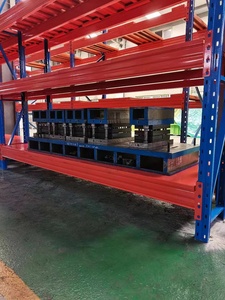
A frequent error in international racking procurement is sizing uprights solely for static downward load capacity while neglecting horizontal seismic forces, dynamic pallet-placement shocks, and out-of-plumb vertical installation tolerances. When cold-rolled steel profiles are stamped with teardrop, diamond, or butterfly connector slots, the net effective cross-sectional area changes along the profile length. Engineering calculations must account for the torsional-flexural buckling index of the slotted column under continuous live loads.
| System Type |
Floor Space Utilization |
Selectivity Ratio |
Pallet Handling Method |
Optimal Industry Application |
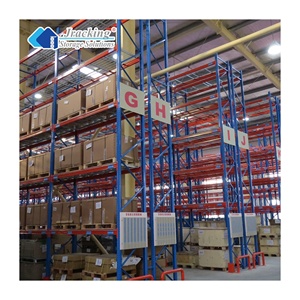
| Selective Pallet Racking |
40% - 50% |
100% (Instant) |
Reach / Counterbalanced Truck |
Retail, FMCG, 3PL Warehouses with High SKU Velocity |
| Drive-In / Drive-Through |
70% - 85% |
Low (Last-In-First-Out) |
Forklift Drives into Storage Bay |
Cold Storage, Seasonal Stock, Homogeneous Bulk Goods |
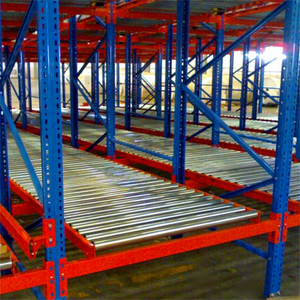
| Gravity Pallet Flow Rack |
75% - 85% |
FIFO High Speed |
Sloped Rollers with Speed Governors |
Perishable Goods, Dairy, Food & Beverage Hubs |
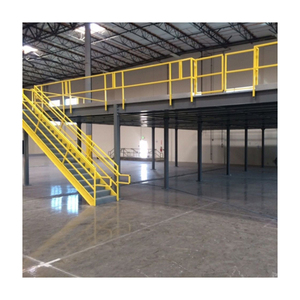
| Rack-Supported Mezzanine |
100% - 200% Expansion |
High (Bin / Box Picking) |
Integrated Stairs, Lifts, Chutes |
E-commerce, Auto Parts, Garments & Light Hardware |
Beyond steel profile gauges, floor anchoring mechanics dictate warehouse survivability. High-tensile expansion anchor bolts (Grade 8.8 or higher) must penetrate concrete floor slabs possessing a minimum compressive strength of C20/25 (25 N/mm²). Floor slab thickness must be verified against punching shear stresses generated at column baseplates under maximum pallet rack bay loadings.
Future Procurement Trends in Industrial Storage Systems (2026–2035)
The global intralogistics landscape is experiencing structural transformation driven by high warehouse real estate costs, labor shortages, and rapid growth in omni-channel e-commerce fulfillment. Over the next decade, industrial storage procurement will shift from static shelving toward integrated, dynamic hardware platforms engineered for rapid reconfiguration and automated robotic interface.
1. Modular AMR & AGV Rack Compatibility
Future-ready racking frameworks are replacing rigid floor-bolted dividers with wide-span, clear-span bottom bays to accommodate Autonomous Mobile Robots (AMRs) and automated pallet runners beneath high-density upper rack storage tiers.
2. Low-Energy Dynamic Mechanical Storage
Rising energy prices and intermittent power grids across emerging markets are driving demand for mechanical FIFO gravity roller beds and push-back rack systems that operate continuously without electric power feeds.
3. Corrosion-Proof Resilient Coatings
Standard industrial paints are increasingly displaced by multi-stage nano-ceramic pickling and phosphating pretreatments paired with thick electrostatic polyester finishes, extending steel service lifespans across coastal, high-humidity, and cold chain environments.
Furthermore, structural tracking through industrial Digital Product Passports (DPP) and laser-etched QR codes is gaining traction. Procurement teams require direct traceability from factory mill test certificates (MTC) through fabrication inspection records to verify load integrity throughout the operational lifespan of the steel racking system.