Featured Racking & Wall Storage Architectural Lines
Certified, load-tested structural configurations designed for high-density warehouses, multi-tier distribution networks, and industrial workspaces.
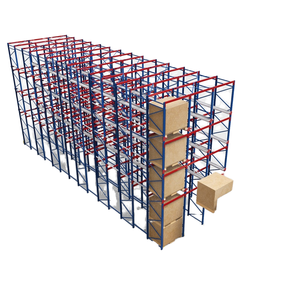
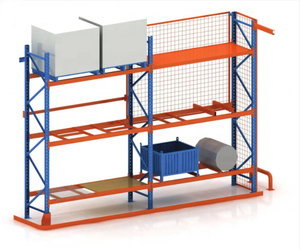
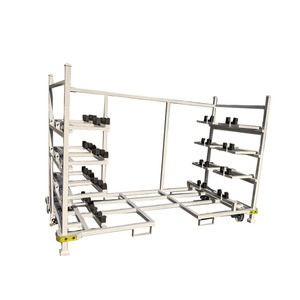
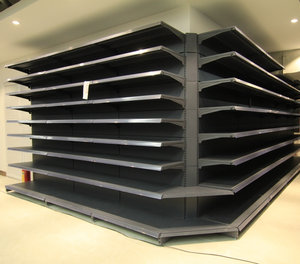
Future Sourcing Trends for Wall-Mounted & Heavy Industrial Racking
A strategic analysis of capital expenditure patterns, engineering mandates, and sustainable logistics practices reshaping storage system procurement through 2030.
Ultra-High-Tensile Cold-Rolled Profiles
Global supply networks are aggressively shifting away from heavy hot-rolled sections toward high-yield cold-formed steel (Q235B to Q355B). This minimizes dead weight by up to 22% while increasing localized moment capacities, directly reducing ocean freight expenditure per cubic meter without sacrificing safe working loads.
Strict CE EN 15512 & Seismic Conformance
Procurement directors now routinely require dynamic limit-state load testing verifications rather than static catalog calculations. Modern industrial wall racks and base-anchored upright systems must exhibit documented ductility under cyclic seismic loading, driven by tightening workplace safety governance throughout Europe, the Americas, and Australasia.
Modularity & Hybrid Storage Cells
Dynamic fulfillment paradigms have blurred the lines between bulk pallet storage and micro-picking zones. Emerging projects demand hybrid structural engineering where wall-mounted brackets, cantilever outriggers, and dynamic carton flow tracks seamlessly bolt into standard teardrop or Omega-punched vertical profiles.
| Structural Aspect | Conventional Racking (Pre-2020) | Modern CE Certified System (Current Std.) | Next-Gen Engineered Outlook (2026-2030) |
|---|---|---|---|
| Raw Material Formulation | Standard Q235 Cold Rolled Strip | Q235B / Q355B with Verified Mill Test Certs | Ultra-high-strength micro-alloyed automotive steel |
| Surface Coating Spec | Single-pass manual spray painting | Phosphatized 80-120μm electrostatic epoxy powder | Graphene-infused anti-scratch self-healing coatings |
| Floor/Wall Load Analysis | Uniform static load assumptions | Finite Element Analysis (FEA) per EN 15512 | BIM integrated digital twins with live sensor monitoring |
| Interchangeability | Proprietary hole pitches | Standard 50mm / 75mm adjustability increments | Universal multi-fit connection slots with lock-pins |
Evolutionary Trajectory of Wall-Mounted & Modular Shelves
From passive metal shelving to integrated, intelligent structural load nodes within semi-automated fulfillment infrastructure.
1. Cantilevered Load Transfer
Early iterations of industrial wall shelving relied upon direct shear on basic wall anchor bolts, causing catastrophic failure under unbalanced live loading. Modern systems utilize vertical torque-distributing uprights that redirect dynamic moment forces down to the slab while maintaining wall ties solely for lateral stability.
2. Cold-Form Optimization
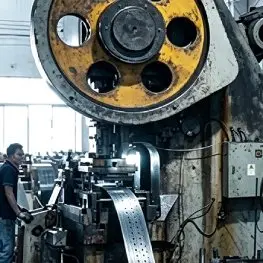
Through specialized continuous roll-forming lines, upright profiles have evolved from simple "C" shapes to multi-bend structural columns featuring up to 12 distinct roll-formed return bends. This cross-sectional engineering provides optimal radius-to-thickness ratios, vastly elevating torsional buckling resistance.
3. IoT Integration Nodes
Emerging storage deployments incorporate embedded structural health sensors directly within high-moment joints. Strain gauges detect overloading in real-time, wirelessly triggering warehouse management alerts before deflection limits (typically 1/200th of span) approach plastic yield points.
4. Eco-Lifecycle Production
Environmental declarations are moving from optional to mandatory. Modern manufacturers utilize closed-loop, zero-discharge phosphating baths coupled with ultra-low VOC thermo-hardened polyester powders, delivering 500+ hours of continuous salt-spray protection while minimizing total embodied carbon.
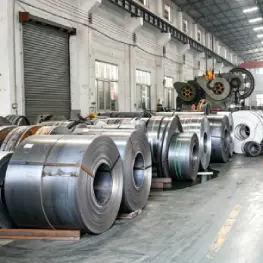
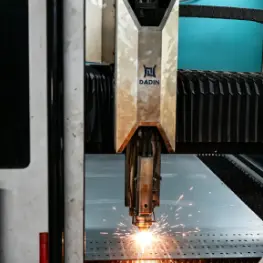
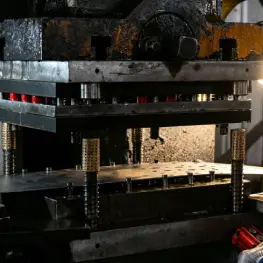
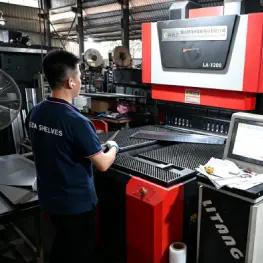
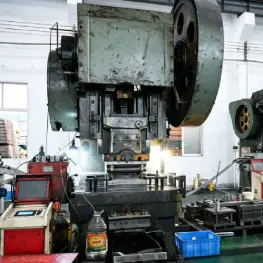
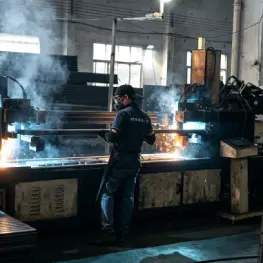
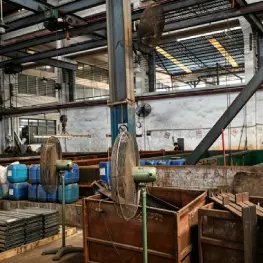
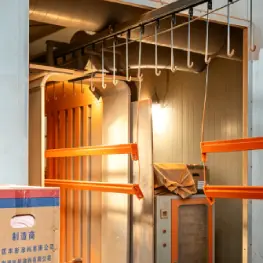
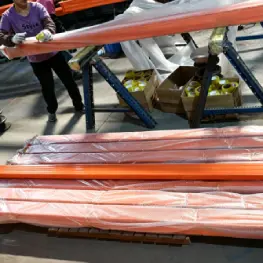
State-of-the-Art In-House Fabrication Workflow
Ten tightly monitored manufacturing operations convert raw coil into structurally certified, export-packaged racking components.
Audited Manufacturing Standards
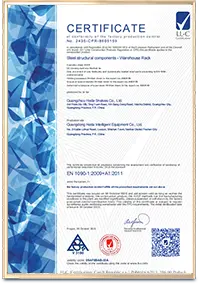
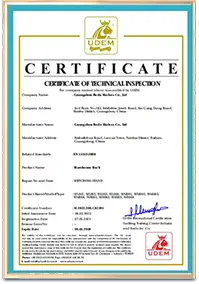
Every shelving and racking system is engineered, manufactured, and documented to withstand rigorous safety audits, institutional tender criteria, and international export certifications.
-
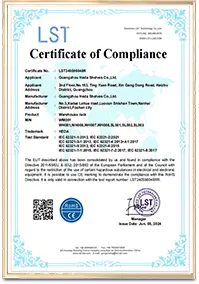
CE Certification (EN 1090-1 / EN 15512) Certificate No. 2435-CPR-8605159 – Structural Steel Conformity
-
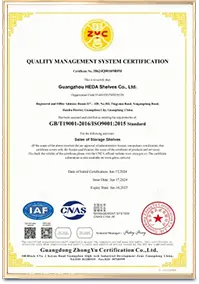
ISO 9001:2015 Quality Management System Certificate No. 18624Q00169R0M (Valid through June 2027)
-
RoHS & Heavy-Metal Free Finish Non-toxic, high-adhesion powder coating verified for consumer goods environments
Frequently Asked Questions on Sourcing Wall & Pallet Racks
Engineering parameters, shipping optimizations, and technical details addressed directly by our senior structural team.
What separates true CE Certified industrial racking from non-certified commercial steel shelves?
How can wall-mounted and wall-tied racking systems be safely engineered on different wall types?
What parameters are required to generate an engineering CAD layout and accurate quotation?
How does container optimization lower landed project costs for overseas buyers?
What surface treatment prevents rust in high-humidity or cold-chain environments?
Can local warehouse staff install your racking systems independently?
Optimize Your Facility Footprint with Certified Storage Systems
Submit your warehouse layout drawings or storage dimensions. Our engineering department will model a free 3D CAD schematic, structural load calculation, and factory-direct quotation within 24 hours.
Send an Inquiry