Engineering Whitepaper: CE-Certified Pallet Racking in Modern Logistics
A comprehensive procurement guide covering structural safety compliance, high-density warehouse automation, and anti-corrosion engineering for international procurement directors.
1. The Value of CE Marking and Structural Certification in Industrial Racking
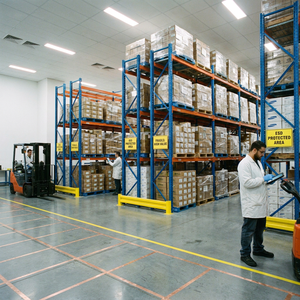
Procuring warehouse pallet racks is not simply an exercise in buying steel components; it represents an investment in critical life-safety infrastructure. A standard structural failure in an overloaded or improperly fabricated racking system leads to devastating catastrophic collapse, operational downtime, and severe legal liability. The European CE marking (Construction Products Regulation EU No 305/2011, EN 1090-1, EN 15512) serves as an indispensable guarantee of structural integrity and traceability.
As a verified CE certified manufacturer holding Certificate No. 2435-CPR-8605159 and ISO 9001:2015 quality control compliance, Guangzhou Heda Shelves Co., Ltd. executes rigorous finite element analysis (FEA) and testing regimens on every steel profile. From raw material inspection of premium grade Q235B and Q355B cold-rolled steel coils to dimensional tolerances in automated punching and continuous roll-forming lines, compliance ensures our load charts reflect real-world safety factors under static, dynamic, and seismic operational states.
2. Future Procurement Trends: Automation-Ready and High-Density Dynamic Systems
The global intralogistics environment is undergoing an accelerated transformation driven by rising industrial land costs, surging labor expenses, and supply chain disruptions. Forward-thinking enterprise supply chain operators are fundamentally pivoting their procurement criteria from traditional selective racking to high-density, dynamic, and automation-compatible storage architecture:
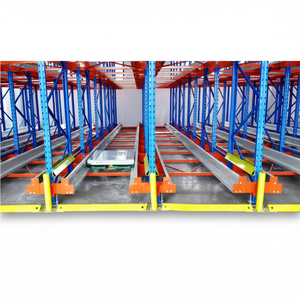
Radio Shuttle Racking
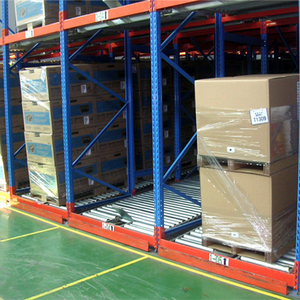
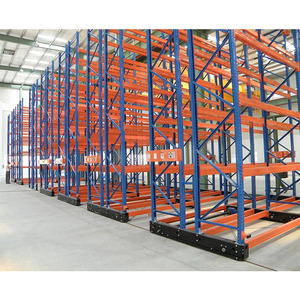
Semi-automated pallet runner carriers traversing deep-lane channels via remote control or WMS interface, maximizing storage density while reducing forklift transit times by up to 60%.
Power-Independent Gravity Systems
Engineered dynamic roller beds that leverage gravity flow for strict First-In, First-Out (FIFO) stock turnover, operating seamlessly without electrical grid dependency in high-throughput food and cold chains.
Multi-Tier Mezzanine Platforms
Utilizing high-strength cold-formed columns to build rack-supported mezzanines, effectively doubling or tripling usable cubic volume without incurring new structural construction costs.
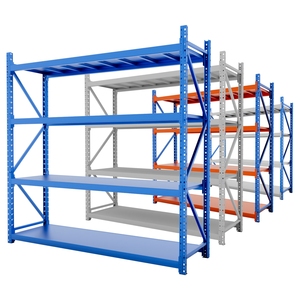
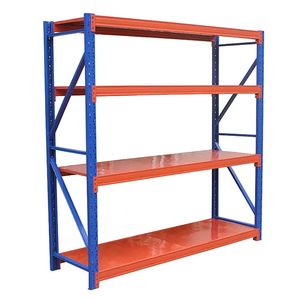
In addition, modular scalability has become the foremost requirement for logistics managers. Rather than purchasing fixed-dimension, welded configurations, multinational procurers demand boltless, fully adjustable interlocking connectors with variable pitch increments (typically 50mm to 75mm). This enables immediate reconfiguration when pallet heights, product lines, or seasonal inventories shift, eliminating future capital redundancy.
3. Structural Performance Specifications Across Racking Configurations
To assist logistics directors in selecting the optimal configuration for their clear ceiling heights, floor slab load constraints, and material handling fleet, the following matrix benchmarks critical engineering parameters across primary industrial racking models:
| Racking Topology | Access Ratio | Volumetric Utilization | Typical Load Capacity | Operational Principle |
|---|---|---|---|---|
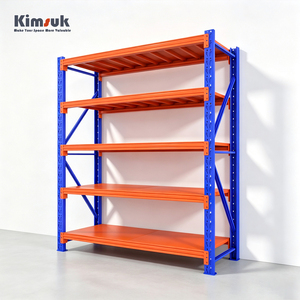
| Selective Pallet Racking | 100% Direct Access | 40% – 50% | 1,000 – 4,000 kg / beam level | Universal FIFO; standard reach/counterbalance trucks |
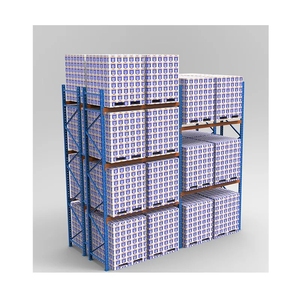
| Drive-In / Drive-Through | Low (Lane-based) | 70% – 85% | 1,000 – 2,000 kg / pallet slot | LIFO/FIFO; mass identical SKUs, beverages, raw bulk |
| Push-Back (Cart/Roller) | Medium (2–6 pallets deep) | 65% – 75% | 1,000 – 1,500 kg / position | LIFO gravity cart nesting; minimal operating aisles |
| Radio Shuttle Automation | Selective per lane | 80% – 90% | 500 – 2,000 kg / pallet slot | Automatic FIFO/LIFO; cold chain & dynamic bulk distribution |
| Heavy Duty Cantilever | 100% Front Unobstructed | Flexible linear | 500 – 3,000 kg / arm | Specialized long goods: steel tubes, timber, aluminum extrusions |
4. Manufacturing Precision: Anti-Corrosion Engineering for Harsh Climates
A frequent blind spot in global pallet rack procurement is environmental resistance. Facilities operating in tropical regions, coastal marine shipping hubs, or extreme cold storage environments experience accelerated corrosion when low-grade coatings are deployed. Premature oxidation degrades the structural cross-section of cold-rolled steel, leading to catastrophic micro-buckling under design load.
Guangzhou Heda Shelves Co., Ltd. incorporates an integrated 10-stage industrial pretreatment line. Every profile undergoes rigorous alkaline degreasing, multi-stage acid pickling, surface conditioning, and zinc phosphating prior to electrostatic powder coating with thermosetting epoxy-polyester formulations. This automated cycle yields superior surface adhesion, impact toughness, and salt-spray resistance exceeding 500 hours (ASTM B117 standards). For deep-freeze environments (-25°C to -40°C) and semi-open maritime port terminals, hot-dip galvanization according to ISO 1461 guarantees lifetime corrosion immunity without micro-cracking.
Frequently Asked Questions on Pallet Rack Procurement
Key technical, commercial, and engineering questions addressed by our warehouse design specialists.
The HEDA Manufacturing Advantage: Direct Manufacturer Accountability
Why logistics operators across over 120 countries rely on Guangzhou Heda Shelves Co., Ltd. for end-to-end storage system reliability.
Full Vertical In-House Production
We eliminate trading margins. Slitting, precision punching, continuous roll forming, automated robotic welding, multi-stage phosphating, and powder coating occur entirely within our 30,000 m² Guangzhou facility.
Massive Scale & Fast Lead Times
With an active monthly output exceeding 30,000 tons of structural steel, we comfortably support extensive multinational warehouse fit-outs within expedited manufacturing windows of 15 to 25 business days.
Complimentary Professional 3D & CAD Design
Before any production commitment, our dedicated engineering team delivers full CAD layout diagrams, photorealistic 3D warehouse renderings, and structural loading calculations tailored directly to your warehouse parameters.
Ready to Optimize Your Warehouse Storage Footprint?
Consult directly with our industrial racking design team. Request our complete product catalog, detailed engineering load tables, and receive a customized 3D layout simulation free of charge.
Get Catalog