Certified Heavy-Duty Pallet Racks & Beams
Precision-rolled load-bearing profiles designed for maximum beam deflection resistance (≤ L/200), corrosive ambient protection, and high-density industrial logistics operations.
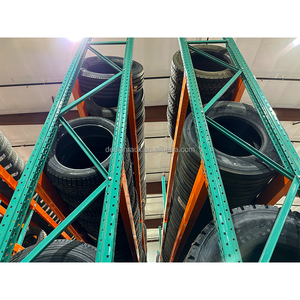
Beam Pallet Rack Q235B Steel Adjustable Heavy Duty Storage
- Load capacity: 1,000kg - 4,500kg / level
- Pitch adjustment: 50mm / 75mm standard
- Safety factor: 1.5 - 1.65 limit design
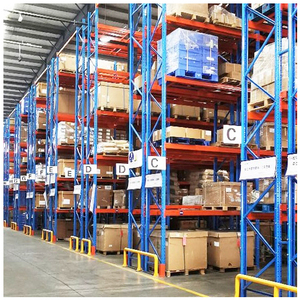
Industrial Storage Rack Cold-Rolled Boltless Racks
- Cold-rolled structural alloy profile
- Layer payload: 500kg - 2,000kg
- Dual safety lock beam pin design
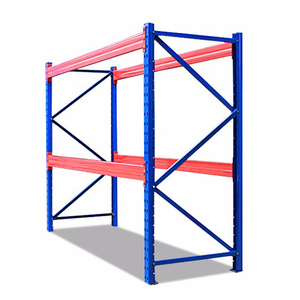
Heavy Duty Steel Multi-Level Warehouse Pallet Rack
- Anti-corrosion powder coating finish
- Compliant with EN 15512 specifications
- Optimum for multi-tier picking aisles
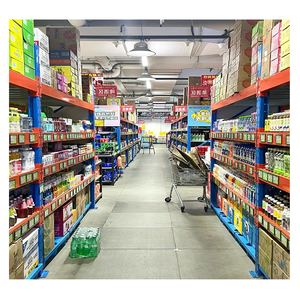
Customized Gravity Pallet Carton Flow Rack System
- Strict FIFO inventory automation track
- Brake roller velocity regulation
- Requires zero operational electricity
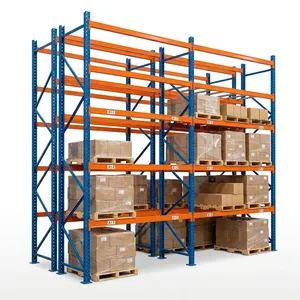
3000kg Adjustable Pallet Rack Heavy Duty Shelving
- High section modulus (Ix/Wx) box beam
- Cold-weather high-impact resilience
- Tested under ISO 9001:2015 QC regime
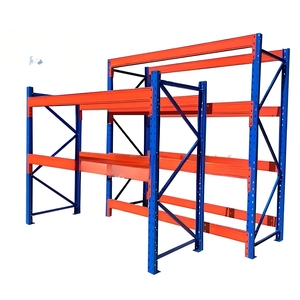
Industrial Heavy Duty Pallet Shelving Rack System
- Freestanding modular integration
- High-grade Q235B structural columns
- Scratch-proof thermoset resin coating
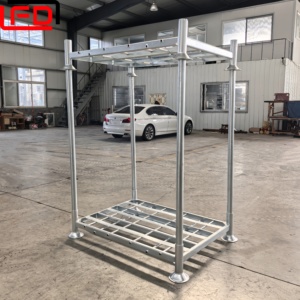
Hot-Dip Galvanized Stackable Post Pallet Rack
- Optimal for humid and cold-storage cells
- Zinc coating thickness > 70-85 μm
- Stackable 4 to 6 units vertically
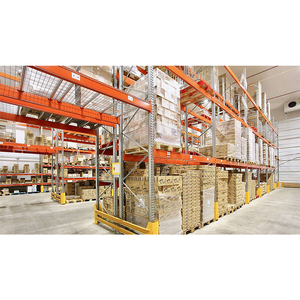
Space-Saving Very Narrow Aisle (VNA) Rack Solution
- Maximizes warehouse cube efficiency by 45%
- Precision guidance rails (Mechanical/Wire)
- Ultra-rigid deflection tolerance (≤ L/300)
Engineering Principles & CE Marking Compliance for Warehouse Racking Beams
In international heavy-duty material handling, a warehouse racking beam is far more than a painted horizontal piece of steel: it is a mission-critical structural member subjected to multiaxial bending stresses, torsional forces, end-connector rotational stiffness variations, and dynamic loading cycles. Sourcing pallet racking beams from certified suppliers guarantees compliance with strict mechanical performance metrics and regulatory European Directives, specifically the Construction Products Regulation (EU CPR No. 305/2011), EN 15512 (Steel static storage systems – Adjustable pallet racking systems – Principles for structural design), and EN 15620 (Tolerances, deformations and clearances).
⚙ Box Beam Geometry vs. Step Beam Profile Mechanics
Structural integrity depends on section modulus ($W_x$) and second moment of area ($I_x$). Two cold-rolled profile architectures dominate modern warehouse storage logistics:
1. Interlocking Continuous Welded Box Beams (C-Profile Enclosure): Formed by mechanically joining two nested cold-rolled C-channels through automated continuous seam welding. This geometry achieves symmetric moment distribution along both the vertical ($X-X$) and lateral ($Y-Y$) axes. The closed rectangular hollow section provides exceptional torsional resistance against lateral-torsional buckling when heavy euro-pallets or industrial steel bins are placed with minor eccentricities.
2. Dual-Step Beams: Designed primarily for drop-in wire mesh decking, steel panels, or drop-over cross ties. Step beams feature an inward stepped flange (typically 20mm to 50mm recessed). While offering versatile composite support for loose cargo and palletised loads, step profiles must be calculated with rigorous torsional warping constants ($I_w$) to prevent premature top flange inward roll-in under point-concentrated leg loads.
📊 CE Certified Beam Profile Standard Specification Matrix
| Profile Designation | Section Depth × Width (mm) | Material Grade | Yield Strength ($f_y$) | Max Span (mm) | Uniform Distributed Load (UDL / Pair) | Deflection Limit (δ) |
|---|---|---|---|---|---|---|
| BB80/40/1.5 | 80 × 40 × 1.5 | Q235B / S235JR | ≥ 235 N/mm² | 2300 | 1,200 – 1,600 kg | ≤ L / 200 |
| BB100/50/1.5 | 100 × 50 × 1.5 | Q235B / S235JR | ≥ 235 N/mm² | 2700 | 2,000 – 2,500 kg | ≤ L / 200 |
| BB120/50/1.8 | 120 × 50 × 1.8 | Q355B / S355JR | ≥ 355 N/mm² | 2700 | 3,000 – 3,500 kg | ≤ L / 250 |
| BB140/50/2.0 | 140 × 50 × 2.0 | Q355B / S355JR | ≥ 355 N/mm² | 3300 | 3,500 – 4,200 kg | ≤ L / 250 |
| BB160/50/2.0 | 160 × 50 × 2.0 | Q355B / S355JR | ≥ 355 N/mm² | 3900 | 4,000 – 4,800 kg | ≤ L / 300 |
| SB110/50/1.8 (Step) | 110 × 50 × 1.8 | Q235B / S235JR | ≥ 235 N/mm² | 2700 | 2,200 – 2,800 kg | ≤ L / 200 |
🔧 Connector Claw Dynamics and Safety Lock Shear Capacity
A critical failure point in low-grade pallet racking installations is the end-connector plate (bracket) welded to the beam. High-tier export manufacturers incorporate multi-claw precision-stamped connector brackets (3-claw, 4-claw, or 5-claw configurations) engineered from thick steel plate (3.0mm to 4.0mm). These claws wedge tightly into teardrop or diamond upright perforations via gravity, establishing partial rotational joint stiffness ($C_d$).
Crucially, every connection must be protected with an electro-galvanized or painted steel safety pin (lock). The safety pin prevents beam dislodgement caused by accidental upward forces from forklift tines (EN 15512 requires resistance against a minimum upward vertical force of 5.0 kN without disengagement).
Why Global Procurement Teams Choose HEDA Shelves
Established in 2001, Guangzhou Heda Shelves Co., Ltd. has evolved into an authoritative international supplier and exporter of heavy-duty pallet racking, cantilever systems, and structural mezzanines. Operating out of a comprehensive 30,000 m² factory with over 300 experienced engineers and technical fabricators, our monthly throughput surpasses 30,000 tons of structural steel storage equipment.
Accredited CE & ISO 9001
Holding CE Certification No. 2435-CPR-8605159, ISO 9001:2015 Certification No. 18624Q00169R0M (valid through June 2027), and RoHS compliance. Fully audit-ready for industrial consultants and multinational enterprises.
Free 3D Layout & FEA Design
Our engineering team translates your warehouse architectural drawing into an optimized CAD system plan, complete with structural load calculation sheets, aisle turn clearances, and 3D realistic renderings within 24 hours.
Container Freight Optimization
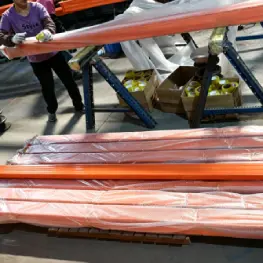
Precision knockdown component design. Profiles are nested, bundled, and wrapped to maximize container stuffing ratios in 20GP and 40HQ units, driving down the landed cost per pallet position to global ports.
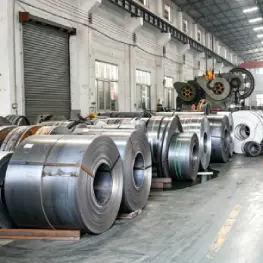
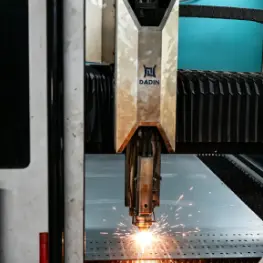
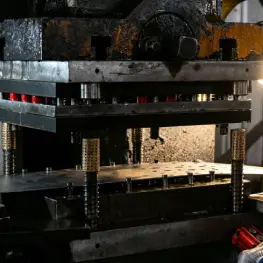
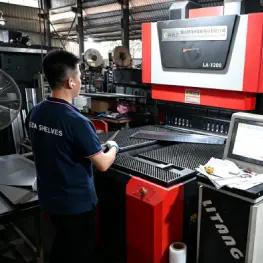
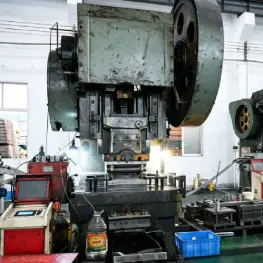
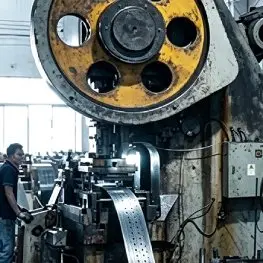
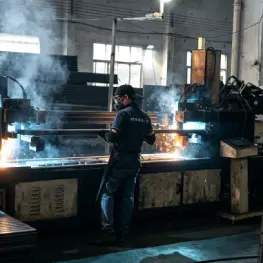
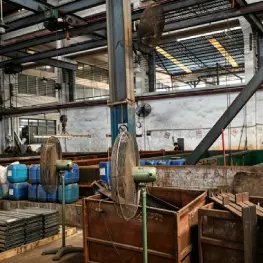
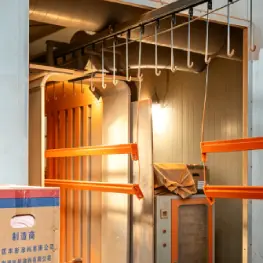
🏭 Standardized 10-Stage Precision Production Architecture
Every beam exported from our Guangzhou factory undergoes ten strictly monitored manufacturing and quality validation phases, preventing structural defects, internal residual stresses, and micro-cracking:
Future Warehouse Racking Procurement Trends (2025–2030)
Global supply chain disruptions, fluctuating freight dynamics, and rapid warehouse automation are transforming how warehouse operations managers, 3PL providers, and EPC contractors procure racking beams. Staying ahead of these market forces ensures long-term operational resilience and lower total cost of ownership (TCO).
Shift to Micro-Alloyed High-Yield Steels
Transition from standard Q235B toward high-strength micro-alloyed grades like Q355B and Q420. Higher yield ratings allow for thinner wall gauges without sacrificing ultimate moment capacity, cutting structural deadweight by 12% to 18% and substantially lowering container freight costs.
Tight-Tolerance AS/RS & Shuttle Profiles
As Autonomous Mobile Robots (AMRs) and automated 4-way radio shuttles become ubiquitous, standard deflection limits are proving insufficient. Procurement contracts increasingly specify beam deflection limits of ≤ L/300 or L/400 to prevent optical sensor misreads and robotic pallet hang-ups.
EPDs & Low-Carbon Steel Powder Resins
Multinational procurement tenders require Environmental Product Declarations (EPDs) evaluating the embodied carbon of steel members. Low-temperature curing electrostatic powder coatings and recyclable packaging are becoming mandatory compliance checkpoints for European and North American buyers.
Standardized Universal Connector Hubs
Warehouse operators are hedging against single-supplier lock-in by moving toward universal 50mm and 75mm European hole-pitch compatible beam connectors. This allows warehouse managers to adjust bay elevations, interchange accessories, and reconfigure layouts dynamically across multi-facility networks.
Technological Advancements in Racking Beam Manufacturing
Modern racking fabrication has advanced beyond rudimentary punch presses and manual MIG welding. Leading exporters maintain competitive advantages through advanced robotics and automated surface engineering:
1. Robotic Continuous Laser Seam Welding: Traditional stitch or intermittent welding along beam connection seams creates stress concentration points susceptible to low-cycle fatigue failure. Modern roll-forming lines integrate continuous fiber-laser seam tracking systems. This produces a monolithic weld bead along the entire overlap joint of box beams, guaranteeing superior shear and torsional transfer across the profile.
2. Multi-Zone Surface Pre-treatment (Nanoceramic Conversion): Corrosion begins at microscopic pinholes in powder coating. Leading manufacturers employ an automated 8-to-10-stage pre-treatment line featuring acid pickling (rust removal), hot alkali degreasing, and zirconium nanoceramic conversion coating. This technology surpasses conventional zinc phosphate coatings by enhancing cross-hatch adhesion and resisting salt spray corrosion up to 1,000+ hours (ASTM B117), critical for tropical port storage and cold storage facilities.
3. Seismic Response Modeling via FEA: In earthquake-prone zones across the Mediterranean, Latin America, and Southeast Asia, racking beams must dissipate kinetic energy through controlled ductile deformation. Modern exporters deploy Finite Element Analysis (FEA) software (ANSYS / Strand7) to simulate cyclic seismic ground accelerations per EN 16681, engineering beam-to-column connector assemblies that act as structural fuses to prevent frame collapse.
Frequently Asked Questions for Industrial Buyers & Importers
Detailed technical, structural, and commercial guidance addressing common cross-border procurement scenarios.
Request Certified Racking Beam Engineering & Factory Pricing
Send your building dimensions, pallet load requirements, and forklift specifications. Our licensed storage engineers will deliver a complete CAD layout, deflection calculation, and competitive factory quotation within 24 hours.