Precision-Engineered Pallet Racking & FIFO Storage Systems
Manufactured using cold-rolled high-tensile structural steel (Q235B/Q355B), robotically welded, and pre-treated with phosphating electrostatic powder coating for maximum operational lifecycle.
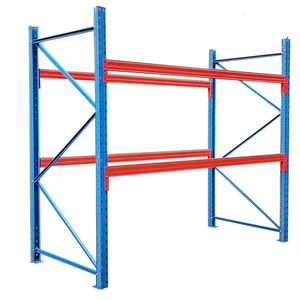
China Warehouse Steel Storage Used Teardrop Pallet Rack Uprights Heavy Duty System Metal Pallet Racking for Sale
- Beam Profile: 50mm–75mm pitch adjustable
- Max Load: 1,000–5,000 kg / layer
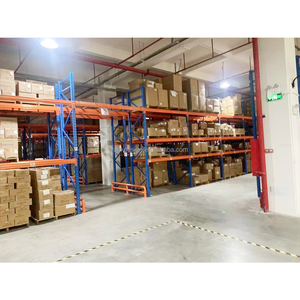
Warehouse Industrial High Bay Selective Heavy Duty Racking Systems Industrial Storage Shelves 24" Pallet Rack Upright
- Upright Frame: Up to 15,000mm height
- Direct Accessibility: 100% pallet selectivity
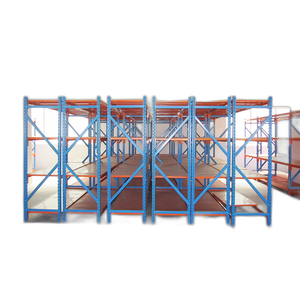
China Factory Steel Heavy Duty Adjustable Warehouse Storage Racks Movable Shelving ESD Protection 5 Layer Efficient SunLi
- Speciality: Anti-static ESD powder coat
- Configuration: Modular 5-tier dynamic flow
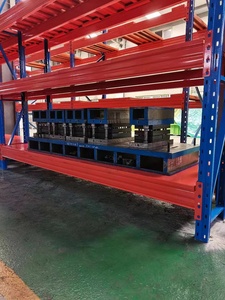
Heavy Duty Pallet Rack with Triple-Upright Frame spray-Coated Steel Decks for Industrial & Retail Storage
- Decking: Rigid spray-coated steel decks
- Structure: Heavy-duty reinforced triple column
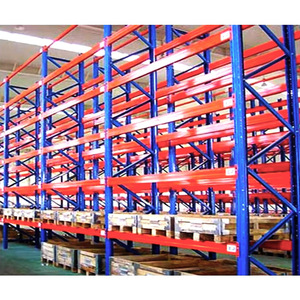
Easy Assembly Heavy Duty Pallet Racking Modular Warehouse Storage System International Standard Industrial Racks
- Certifications: CE, ISO 9001:2015, FEM 10.2.02
- Design: Boltless quick interlock design
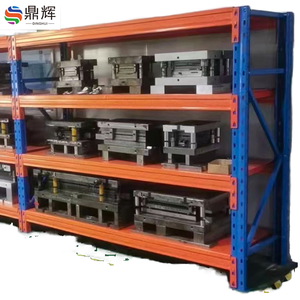
Selective Medium Duty Cold Rolled Steel Pallet Rack Frame System Common Upright Column for Factory Warehouse Expansion Racking
- Material: Premium Baosteel cold-rolled steel
- Application: Expansion bays for existing racks
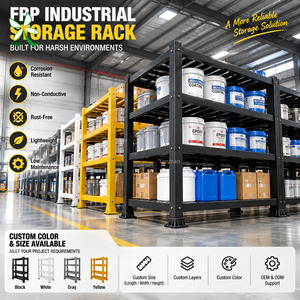
Hot Sale Heavy Duty Anti Rust Water Treatment 1200x750x2400mm 300kg 4 Layer Storage Shelving FRP Storage Rack Warehouse Rack
- Resistance: High moisture, water treatment, salt
- Format: 4-Layer corrosion-proof structure
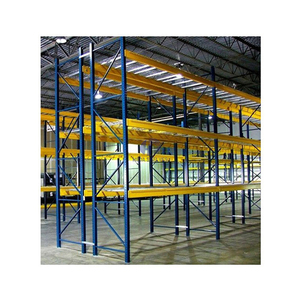
Heda Racking Adjustable Metal Boltless Shelf and Racks Warehouse Storage Medium Duty Metal Rack Shelf Garage Shelves
- Installation: Zero hardware boltless erection
- Load: 150–500 kg per shelf tier
The Engineering Mechanics Behind World-Class FIFO Racking Systems
Gravity Pallet Flow Rollers
Equipped with heavy-duty cold-formed galvanized steel roller tracks engineered at precise incline gradients (typically 2.5% to 3.5% pitch). Every roller is fitted with dual precision-shielded ball bearings, ensuring uninterrupted glide dynamics even under full 1,500 kg pallet payloads across varying ambient conditions from -30°C cold stores to +45°C arid warehouses.
Centrifugal Speed Controllers
Uncontrolled acceleration is the leading cause of structural fatigue and product damage in deep-lane gravity racking. Our engineering incorporates magnetic and centrifugal eddy-current brake rollers positioned at designated lane intervals, governing pallet glide velocity strictly between 0.15 m/s and 0.25 m/s regardless of pallet load variations.
Automatic Pallet Separator Dampers
To protect forklift operators during pallet extraction at the discharge face, HEDA’s proprietary mechanical load separator isolates the lead pallet from the hydrostatic pressure of the trailing pallet queue. Only after the first pallet is completely picked does the mechanical release trigger the subsequent pallet forward with controlled deceleration.
Architectural Comparison: Dynamic FIFO Racking vs. Alternative High-Density Systems
Warehouse directors and supply chain engineers must balance picking selectivity, cycle speeds, and automation CAPEX. Below is the empirical performance comparison calculated across standardized 10,000 m² warehouse facilities:
| System Architecture | Stock Rotation Logic | Floor Space Utilization | Forklift Energy / Travel Cost | Power Outage Resilience | Ideal Industry Use-Cases |
|---|---|---|---|---|---|
| HEDA Gravity FIFO Flow | 100% Strict FIFO | Up to 80% Capacity | Extremely Low (Fixed Aisles) | 100% Operational (Gravity) | Dairy, Beverage, Fresh Produce, Pharma |
| Radio Shuttle FIFO System | Dynamic FIFO or LIFO | Up to 85% Capacity | Low (Shuttle Lane Run) | Requires Battery Power Backup | Deep Freezers, Raw Material Silos |
| Selective Pallet Racking | FIFO Capable (Manual) | 40% – 50% Capacity | High (Aisle Access Required) | 100% Operational (Manual) | High-SKU Retail & Spare Parts Centers |
| Drive-In Racking | Strict LIFO (Last-In, First-Out) | 65% – 75% Capacity | Moderate (Truck Enters Lane) | 100% Operational (Manual) | Homogeneous Non-Expiring Bulk Goods |
| Push Back Racking | Strict LIFO (Last-In, First-Out) | 60% – 70% Capacity | Low-Moderate (Front Access) | 100% Operational (Gravity Carts) | Medium-turnaround staging buffers |
Future Procurement Trends in Industrial FIFO Racking (2026–2035)
Global intralogistics procurement is undergoing a paradigm shift driven by geopolitical supply chain de-risking, carbon-neutral manufacturing mandates, and accelerated warehouse automation. International EPC contractors, tier-one 3PLs, and multinational logistics procurement heads no longer assess racking purely on price per beam; procurement specifications now mandate rigorous metallurgical traceabilities, lifecycle carbon audits, and direct interfaces with automated material handling equipment (AMHE).
1. Near-Zero Deflection Steel Alloys
Procurement teams are shifting from standard structural grades toward micro-alloyed, cold-rolled high yield steel (EN 10149-2 / ASTM A1011 equivalent). By deploying finite element method (FEM) beam modeling, structural weight is reduced by 14% while retaining seismic category D/E structural compliance under heavy FIFO dynamic momentum.
2. Hybrid AMR & AGV Roller Interfacing
Future-ready FIFO racking incorporates optical alignment plates, pallet presence photoelectric sensor brackets, and specialized entry funnel cones designed for automated mobile robots (AMRs) and autonomous guided counterbalanced forklifts, eliminating human driver positioning errors.
3. Zero-Carbon Closed-Loop Finishing
With cross-border carbon border adjustment mechanisms (CBAM) entering enforcement, HEDA operates closed-circuit reverse osmosis rinse lines, heavy-metal-free zirconium conversion pre-treatment, and low-bake TGIC-free epoxy-polyester coatings, lowering embodied product carbon footprints by 22%.
Technological Trajectory: From Passive Gravity to Smart Sensorized FIFO Systems
The technological evolution of China’s FIFO racking manufacturing centers around three distinct generations. Generation 1 (Classical Gravity Flow) relied on purely mechanical friction brakes, which necessitated uniform wooden pallet conditions and suffered higher wear rates under humid or variable timber quality. Generation 2 (Intelligent Radio Shuttle FIFO) utilized wireless lithium-ion powered shuttles traveling on hardened guide rails within deep multi-tier lanes. This eliminated pallet quality dependencies while allowing software-switched FIFO and LIFO modes.
Currently entering commercial scale is Generation 3 (IoT-Integrated Smart FIFO Flow). HEDA’s research division is pioneering roller-integrated micro-piezoelectric sensors that harvest kinetic energy from passing pallets to transmit real-time lane occupancy, speed tracking, and preventative roller bearing health diagnostics directly to tier-one Warehouse Management Systems (WMS). This eliminates phantom bin inventory and ensures instantaneous traceability across multi-temperature distribution centers.
Guangzhou Heda Shelves Co., Ltd. — 25 Years of Global Racking Manufacturing Authority
Founded in 2001 and headquartered in Guangzhou, China, Guangzhou Heda Shelves Co., Ltd. has developed into an internationally respected engineering authority in warehouse storage, industrial mezzanines, and dynamic FIFO racking systems. Operating a massive 30,000 square meter standardized production complex with over 300 skilled structural engineers, welders, and technical specialists, our monthly heavy-duty racking output reaches 30,000 metric tons.
Complete In-House Manufacturing
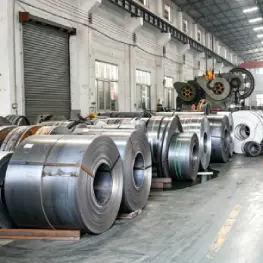
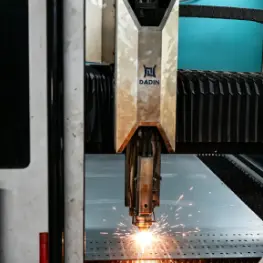
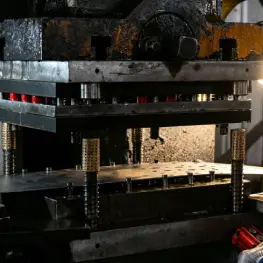
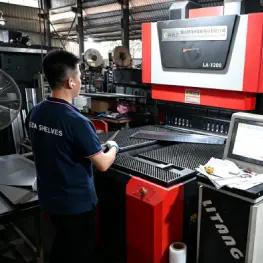
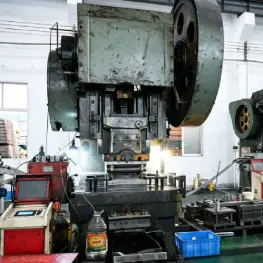
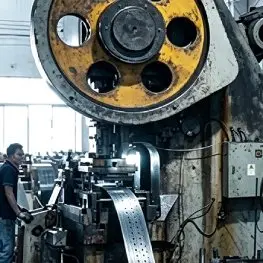
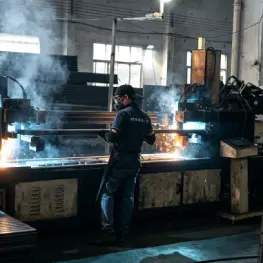
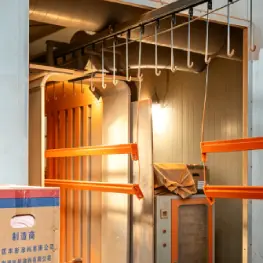
Unlike export trading intermediaries, HEDA controls the entire industrial value chain under one roof: uncoiling, automatic 50-station continuous profile roll-forming, precision column CNC punching, robotic beam welding, and multi-stage automated electrostatic powder coating lines.
Verified Global Compliance (CE & ISO)
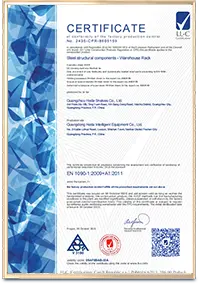
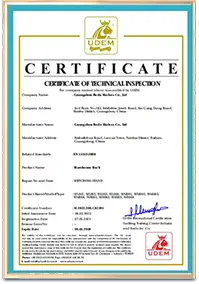
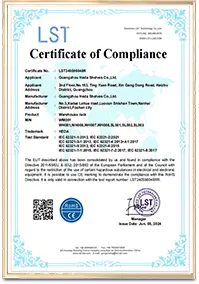
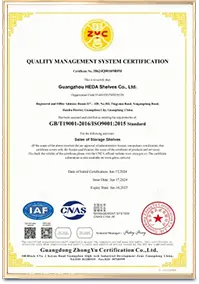
Every structural batch is verified against rigorous European EN 15512, FEM 10.2.02, and American RMI ANSI MH16.1 standards. We hold formal CE Certification (No. 2435-CPR-8605159), ISO 9001:2015 Certification (No. 18624Q00169R0M), and full RoHS compliance.
Turnkey Engineering & Export Logistics
From initial DWG architectural surveys, free 3D CAD simulation, and seismic load calculations to knock-down flat packaging optimized for 20GP/40HQ shipping containers, our overseas engineering team ensures trouble-free installation across more than 120 countries worldwide.
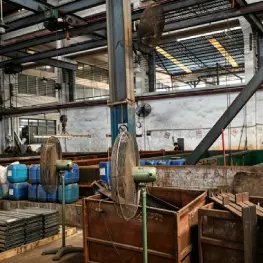
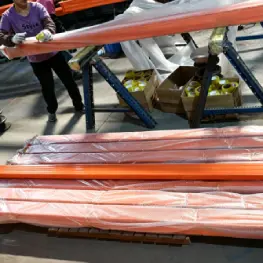
HEDA Rigorous 10-Stage Production & Quality Assurance Workflow
Our multi-stage manufacturing process guarantees dimensional tolerances within ±0.5mm and ensures superior corrosion resistance against maritime transport and tropical warehouse humidity:
Accredited Factory Quality Assurance Documents
Formal international verification documents available for review by industrial engineering consultants and EPC procurement teams:
Frequently Asked Questions: Sourcing & Engineering FIFO Racking from China
Technical guidance compiled directly by HEDA senior project structural engineers to address common design, operational, and commercial questions encountered by overseas logistics managers.
What critical warehouse data is required for HEDA engineers to deliver a complete FIFO racking CAD layout and load calculation?
+
What are the main mechanical failure points in gravity FIFO flow racks and how does HEDA prevent them?
+
How does HEDA protect export racking systems against corrosion during transoceanic shipping and in humid tropical facilities?
+
Can FIFO gravity pallet flow lanes integrate with European (1200x800mm) and American (40x48 inch) pallets simultaneously?
+
What international seismic and structural design codes do HEDA racking systems comply with?
+
How does HEDA handle international container packing, ocean transit protection, and on-site assembly guidance?
+
Accelerate Your Warehouse Intralogistics with HEDA
Send our senior engineering team your warehouse dimensions, pallet configurations, and throughput goals. Receive a complimentary 3D layout, load simulation, and direct factory price quote within 24 hours.