Logistics Grade
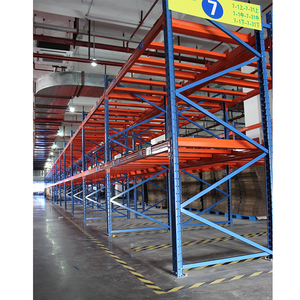
Manufactured using high-tensile structural steel (Q235B / Q355B) in our 30,000 m² Guangzhou production facility. Tested for high seismic loads, automated operations, and maximum container volume optimization.
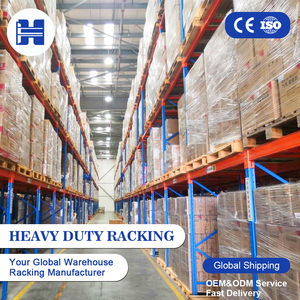
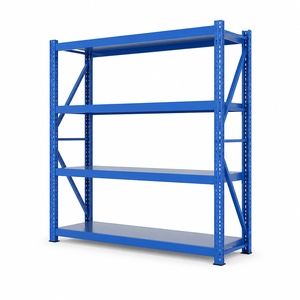
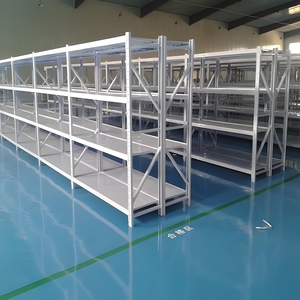
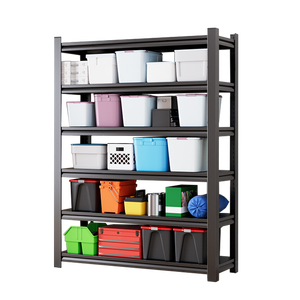
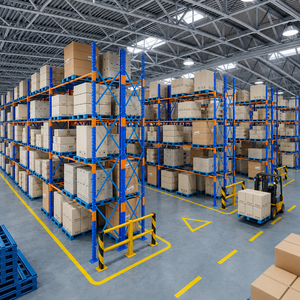
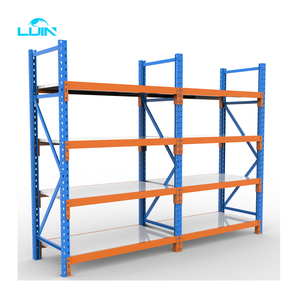
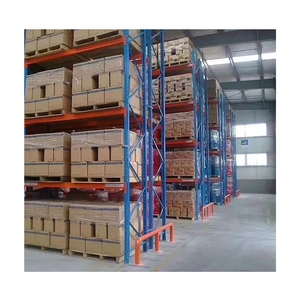
In modern supply chain engineering, gravity flow pallet racking—commonly designated as live pallet storage or roller flow racking—represents the gold standard for high-throughput, high-density warehousing operating under strict First-In, First-Out (FIFO) stock rotation dynamics. As global logistics centers contend with escalating real estate expenditures and the imperative for accelerated fulfillment throughput, gravity-assisted pallet propulsion replaces conventional horizontal transport aisles with compacted, multi-tier roller inclined beds.
Manufactured strictly to FEM 10.2.02, EN 15512, and ANSI MH16.1 specifications by Guangzhou Heda Shelves Co., Ltd., our heavy-duty gravity flow systems exploit gravitational potential energy converted into kinetic deceleration along an engineered 3% to 4.5% downward gradient. This mechanical arrangement decouples loading and unloading traffic into segregated perimeter aisles: replenishment forklifts deposit loaded pallets at the charging (rear) end, while order retrieval forklifts extract mature stock at the discharging (front) face without ever crossing operational lanes.
The functional reliability of an industrial gravity flow racking line hinges upon millimetric precision in component manufacturing and structural rigidity under extreme dynamic loads:
Positioned at engineered intervals along the roller track, internal geared centrifugal brakes engage automatically as pallet velocity exceeds 0.25 m/s. Deceleration friction ensures pallets of disparate tonnages (300 kg to 1,500 kg) descend at a controlled, uniform cruise speed, entirely eliminating catastrophic end-stop impact shocks.
When deep flow lanes accumulate multiple metric tons of pallet mass, the aggregate cumulative hydrostatic thrust against the front pallet can exceed fork lift extraction capacities. Our mechanical floor separator locks behind the primary pallet, holding back the trailing queue until the lead pallet has exited safely.
Heavy-gauge 5mm press-formed steel entry shoes direct misaligned pallets onto the track centerline. At the pick discharge terminal, reinforced structural floor stop cradles with dual rubber dampening buffers arrest kinetic energy while facilitating frictionless forklift tine entry.
Selecting the appropriate storage typology necessitates balancing initial capital expenditure (CAPEX), ongoing operational expenditure (OPEX), handling speed, and pallet accessibility. The data matrix below presents verified engineering metrics compiled across hundreds of logistics implementations:
| Storage Typology | Floor Space Utilization | Stock Rotation Logic | Operational Throughput | Power / Battery Dependency | Accidental Collision Risk |
|---|---|---|---|---|---|
| Gravity Flow Pallet Racking | 60% – 70% (Superior) | Strict FIFO (100% Reliable) | Extremely Rapid (Dual Aisle) | Zero (Passive Gravity) | Low (Forklifts Remain in External Aisles) |
| Drive-In / Drive-Through | 50% – 60% (Moderate) | LIFO (Limited FIFO) | Slow (Maneuvering Inside Bays) | Zero (Passive) | Very High (Frequent Upright Frame Collisions) |
| Push-Back (Cart/Roller) | 45% – 55% (Moderate) | Strict LIFO Only | Moderate (Single Aisle) | Zero (Passive Push) | Moderate |
| Radio Shuttle Automation | 65% – 75% (Maximum) | FIFO or LIFO Programmable | High (Automated Carrier) | High (Lithium Battery Dependent) | Low (Shuttle Operates Internally) |
| Standard Selective Racking | 30% – 35% (Baseline) | 100% Selective (Any Order) | Moderate (Multiple Aisle Transit) | Zero (Passive) | High (High Aisle Traffic Density) |
Rooted in Guangzhou since 2001, Guangzhou Heda Shelves Co., Ltd. has established an integrated manufacturing ecosystem ensuring every upright, beam, dynamic roller, and safety bracket complies with stringent international testing standards.
Over 25 years of specialized manufacturing experience delivering custom industrial pallet storage solutions to logistics contractors and EPC firms across 120+ sovereign nations.
Certified CE compliance under Directive 2435-CPR-8605159, ISO 9001:2015 Quality Management (Cert No. 18624Q00169R0M), and full RoHS compliant environmental certifications.
Automated 9-stage degreasing, ultrasonic cleaning, zinc phosphating, and electrostatic epoxy-polyester powder baking (60-80 microns). Hot-dip galvanization available for sub-zero cold storage.
Our in-house structural engineering office delivers comprehensive AutoCAD floor plans, 3D BIM visualizations, static deflection simulations, and container loading schedules within 24 hours.
Material handling engineering is experiencing unprecedented transformation driven by digital integration, cold chain security, and energy volatility. Procurement directors specifying warehouse storage infrastructure for upcoming facility lifecycles must consider several emerging technological paradigms:
Traditional gravity flow discharge terminals are being re-engineered with specialized sensorized laser reflectors and motorized end-stop gates. Autonomous counterbalanced forklifts and automated guided vehicles (AGVs) can pick pallets directly from live roller terminals without human intervention, closing the loop between passive storage and autonomous logistics.
With pharmaceutical and frozen food cold chains scaling rapidly, standard roller bearings and synthetic grease fail below -10°C due to viscosity thickening. Next-generation procurement mandates specialized low-temperature sealed ball bearings with food-grade fluorosilicone lubricants functioning flawlessly at -35°C, housed in fully hot-dip galvanized upright racks.
Large-scale distribution facilities are piloting self-powered piezoelectric sensor rollers embedded within flow lanes. As pallets roll over, micro-generators report rolling speed, mechanical vibration patterns, and brake degradation directly to the warehouse maintenance dashboard, alerting engineers to friction hot-spots prior to lane blockages.
Under stringent ESG compliance, companies seek alternatives to fully electrified multi-shuttle automated storage systems that consume substantial electrical grid power. Gravity flow systems provide identical storage densities with 100% zero kilowatt-hour consumption, making them the primary candidate for certified carbon-neutral distribution facilities.
Elevated international maritime shipping rates demand structural components pre-engineered for volumetric packing efficiency. Modern gravity flow uprights, horizontal beams, and roller frame modules are designed to nest seamlessly inside 40ft High Cube containers, trimming ocean freight shipping expenditure by up to 38% per pallet position.
Rigorous technical and commercial answers crafted by our senior structural and mechanical engineering staff to guide global warehouse project developers.
The standard decline slope typically ranges between 3.0% and 4.2% (approximately 1.7° to 2.4°). However, the exact gradient calculation depends on multiple variables: total pallet load weight (lighter pallets need steeper angles; heavy pallets require gentler slopes), the quality and deflection of the pallet underside (solid timber vs. plastic runners vs. corrugated bottoms), ambient warehouse temperature (cold environments increase roller grease viscosity), and roller wheel diameter. Prior to factory sign-off, HEDA Shelves conducts physical roll-testing using client pallet samples to establish the precise pitch required for reliable spontaneous start and smooth travel.
Gravity flow systems are most reliable with standard wooden pallets featuring continuous bottom skids parallel to the direction of flow, such as Euro-pallets (800x1200mm), ISO / GMA pallets (1000x1200mm), and perimeter base industrial pallets. The lower deck must be free of missing boards, protruding nails, or severe splintering. For plastic pallets or half-pallets with cross-runners, our engineering team supplies full-width cylindrical steel rollers or triple-track configurations rather than dual wheel tracks to ensure non-deflecting contact.
Our speed control rollers use internal planetary gearboxes coupled with centrifugal friction brake shoes. Because the braking torque is directly proportional to rotational velocity, a heavy 1,200 kg pallet generates higher centrifugal braking force, preventing runaways. Conversely, a lighter 400 kg pallet encounters minimal resistance, allowing it to cruise steadily without stalling mid-lane. Magnetic eddy-current brake rollers are also available for maintenance-free applications where mechanical brake lining wear must be completely eliminated.
To manage exceptional scenarios where a defective pallet stops mid-lane, HEDA flow racks are designed with integrated safety access points. Operators can utilize a "pallet-bump" procedure using the subsequent loading pallet to restart motion. For extended runs exceeding 15 pallets, full-length structural walkways with fall-arrest tie-off cables can be integrated within the racking superstructure, allowing qualified technicians to safely enter the bay and apply manual hydraulic lever jacks to release blocked items.
Yes. In fact, cold storage facilities represent one of the most cost-effective applications of gravity flow racking because refrigerated air space carries steep thermodynamic operating costs. For cold stores operating from 0°C down to -35°C, HEDA specifies low-temperature sealed ball bearings packed with low-viscosity synthetic grease, high-impact nylon or galvanized steel roller housings, and hot-dip galvanized uprights and beams to resist condensation and frost corrosion during air defrost cycles.
Guangzhou Heda Shelves Co., Ltd. provides certified structural calculation sheets signed by licensed structural engineers, mill test certificates for steel raw materials (Q235B / Q355B), CE Certification under Declaration of Conformity No. 2435-CPR-8605159, and ISO 9001:2015 registration No. 18624Q00169R0M (valid through June 2027). All export shipments include detailed container loading plans, numbered assembly drawings, and static deflection verification reports meeting local municipal building codes.
The structural steel racking framework has an operational lifespan exceeding 20 years under normal indoor warehousing conditions. The mechanical rollers and centrifugal brake units are designed for 500,000+ rotational cycles. Annual preventative maintenance involves visual inspection of the roller free-spin, cleaning debris or stretch wrap tangled in axles, checking torque on anchor bolts, and testing the spring-loaded action of the pallet separator levers. Components are fully modular and can be unclipped and replaced within minutes without dismantling the upright bays.
Because flow tracks and upright frames are elongated metal components, careless packing wastes significant container space. HEDA's logistics department utilizes dedicated 3D container packing software to nest upright frames into dense bundles strapped with steel banding, while roller tracks are boxed into custom protective wooden crates sized specifically for standard 20GP and 40HQ container interior door clearances. This precision loading maximizes container gross tonnage, lowering ocean freight expenditures per pallet slot by 30% to 40% compared to loose packing.
Equip your facility with China's leading factory-direct gravity flow pallet racking systems. Connect directly with our structural engineering team to receive an optimized AutoCAD layout, 3D static load model, and itemized CIF/FOB export quotation within 24 hours.