High-Capacity Industrial Racking Systems Portfolio
Engineered with certified high-yield Q235B and Q355B cold-rolled structural steel. Every unit is engineered for ultra-high load capacities, full structural safety redundancy, and automated logistics compatibility.
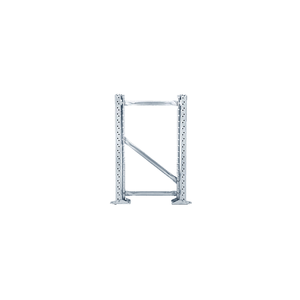 Galvanized Anti-Corrosion
METALSISTEM Superbuild Heavy Duty High Strength Industrial Steel Pallet Rack Shelving System Multi-Level Design Galvanized
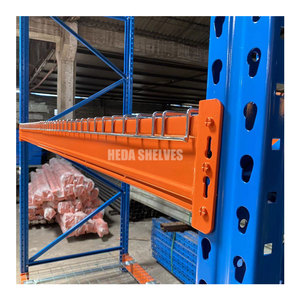 RMI Standard
Teardrop Pallet Rack Wholesale Teardrop Rack Beams Uprights Manufacturer Teardrop Pallet Rack System Solution
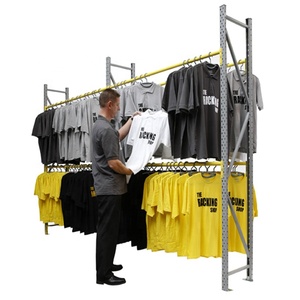 Rapid Assembly
200kg/Layer Q235 Steel Boltless Rack 5-Tier Industrial Warehouse Storage Solution Heavy Duty Clothing Garment Rack System
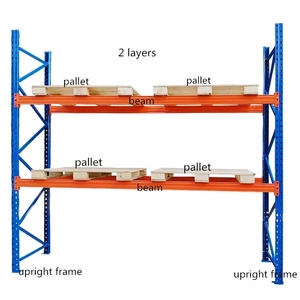 Custom Heavy Duty
Blue And Orange Pallet Racking,metal Hanging Carpet Shelf Rack, Sample Shelf Metal Racks Turkey, Cyprus
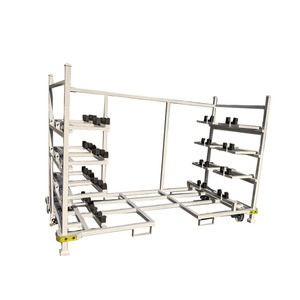 WIP & Automotive
Stacking Racks, Pallets, Turnover Racks, Logistics Trolleys and Molds Dedicated to Automobile Parts Workstations
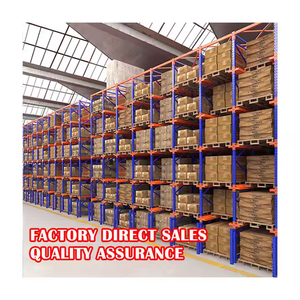 Structural Grade
New Style Industrial Heavy Duty Metal Warehouse Pallet Rack Structural Pallet System Rack
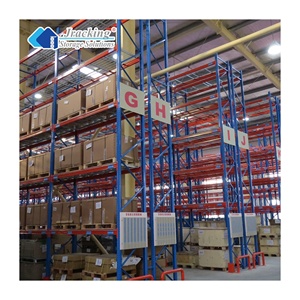 FEM Standard
Jracking EU Standard Warehouse Storage Racks Custom Heavy-Duty Pallet Racking System for Industrial Warehouse
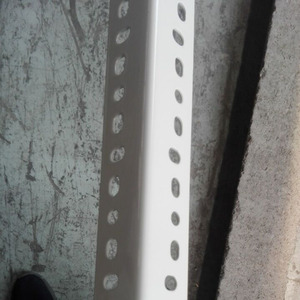 Versatile Modular
Assemble Slotted Angle Rack Affordable Colored Coating Steel Slotted Angle
Structural Engineering & Kinematic Dynamics of High Bay Racking
High Bay Racking Systems (exceeding 12 meters up to 45 meters in clear ceiling height) transition warehouse shelving from passive storage into an active, structural engineering envelope. Here is how modern finite element design ensures zero progressive failure.
Second-Order Non-Linear Structural Analysis
High-verticality frames experience complex second-order P-Delta (P-Δ and P-δ) destabilization moments caused by column flexure and cumulative axial forces. In strict adherence to EN 15512 and RMI MH16.1 guidelines, our structural engineers evaluate the semi-rigid joint behavior of the beam-to-column connector clamps via rotational stiffness testing ($C_d$).
By applying continuous finite element modeling (FEM), cold-formed thin-walled sections undergo post-buckling stress simulation, guaranteeing an absolute factor of safety ($FS \ge 1.65$) under fully loaded dual-pallet operational profiles.
High-Precision Manufacturing Tolerances
In automated stacker crane (AS/RS) or very narrow aisle (VNA) systems, excessive mast sway or millimeter deflections can cause catastrophic crane-fork collisions. Our production line delivers column perforations at a strict $\pm 0.1\text{mm}$ pitch tolerance and a total column straightness tolerance within $1/1000$ of unsupported vertical length.
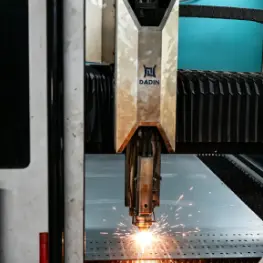
Floor connection anchor plates are CNC laser-cut with dual expansion mechanical or chemical resin anchors, ensuring floor-level shear retention and strict perpendicular alignment complying with VDMA 15251 guidelines.
Seismic Dissipation & Dynamic Damping
High Bay structures in seismically active regions are subjected to severe ground acceleration factors ($S_s, S_1$). We integrate engineered horizontal bracing chords, vertical K-trusses, and moment-resisting portal frame ties across top aisles to dissipate base shear.
Top tie beams and seismic bracing struts distribute longitudinal dynamic seismic oscillations across adjacent upright column banks, preventing harmonic resonant amplification and structural progressive cascading.
High Bay Storage Architectures: Technical Trade-off Matrix
Selecting between manual Very Narrow Aisle (VNA) and automated AS/RS stacker systems requires balancing capital expenditure against vertical volume density and operational throughput.
| Racking Architecture | Max Height Limit | Aisle Clear Width | Storage Density Index | Throughput (Pallets/Hr/Aisle) | Handling Equipment | Capex Investment Level |
|---|---|---|---|---|---|---|
| Selective VNA (Very Narrow Aisle) | Up to 18 Meters | 1,600 – 1,850 mm | Medium-High (65%) | 25 – 35 Pallets | Man-up / Man-down VNA Turret Truck | Moderate (Mechanical Focused) |
| Automated AS/RS Stacker Crane | Up to 45 Meters | 1,350 – 1,550 mm | Ultra-High (90%) | 60 – 110 Pallets | Automated Top-Guided Rail Stacker Crane | High (Full Automation) |
| 4-Way Radio Shuttle High Bay | Up to 24 Meters | Zero Forklift Aisle | Maximum Bulk (95%) | 40 – 80 Pallets | Vertical Lifter + 4-Way Autonomous Shuttle | Medium-High (Scalable Modular) |
| Rack-Supported Clad Building | Up to 50 Meters | Configurable | Total Volume (98%) | 80 – 150+ Pallets | Integrated AS/RS Crane & Shuttles | Optimal (Civil Construction Savings) |
Future Procurement Trends in High Bay Logistics Infrastructure
Global supply chain leaders are re-evaluating intralogistics capital allocation. These four procurement vectors define how enterprise buyers will secure structural racking through 2030.
Tight-Tolerance AMR & Shuttle Synergies
Conventional forklift-driven facilities are actively retrofitting high-bay structures with Autonomous Mobile Robots (AMRs) and 4-way shuttles. Procurement criteria have shifted from static load thresholds to millimetric rail runout tolerances, ultra-flat ground leveling (DIN 18202 Table 3 Group 4), and precise retroreflective positioning targets.
Rack-Supported Clad-Rack Engineering
Industrial land scarcity is forcing facilities to eliminate dedicated structural steel building columns. In rack-supported buildings, the high bay racking frame itself supports the exterior sandwich cladding, roof, wind shear loads, and snow forces. Sourcing the racking factory as the primary structural envelope reduces total building CapEx by 25% to 35%.
Digital Twin & Strain Monitoring
High bay structures are increasingly deployed with strain gauges, 3-axis accelerometer impact pods, and tilt sensor telemetry. Enterprise procurement contracts now demand integration-ready anchor bases that allow real-time monitoring of seismic sway, accidental lift-truck collisions, and structural fatigue tracking via warehouse digital twin dashboards.
Green Steel & Zero-VOC Curing
With multinational corporations enforcing Scope 3 ESG carbon audit baselines, Chinese manufacturing leaders provide Environmental Product Declarations (EPD). Steel produced via electric arc furnaces (EAF) and finished with zero-VOC, heavy-metal-free thermosetting electrostatic powders ensures sustainable, export-compliant industrial procurement.
Direct Factory Engineering Authority & Production Scale
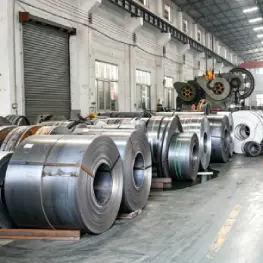
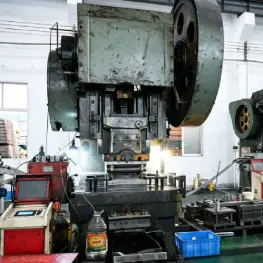
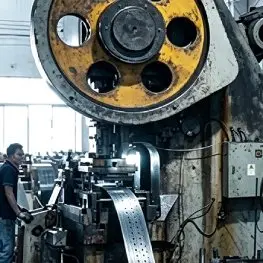
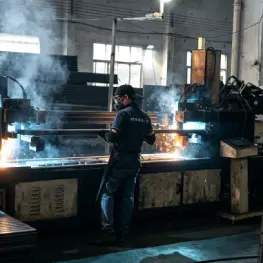
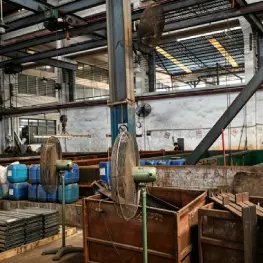
Founded in 2001, Guangzhou HEDA Shelves Co., Ltd. operates a premier 30,000 m² high-precision manufacturing campus in Guangzhou, China. Supplying certified storage infrastructure to over 120 countries, our integrated facility guarantees end-to-end quality control from raw steel coil slitting to overseas container delivery.
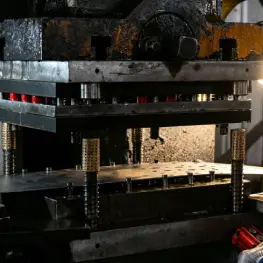
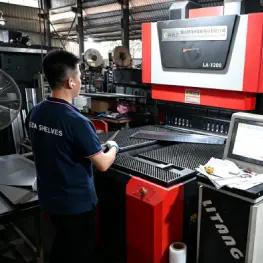
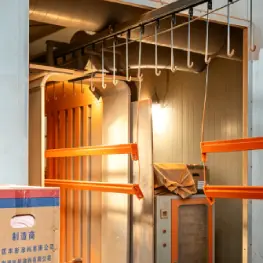
10-Stage High-Precision Manufacturing Flow
Every component undergoes continuous CNC forming, automated robotic welding, and an industry-leading 9-stage chemical pickling and phosphating passivation sequence before electrostatic polyester curing. This guarantees zero under-film corrosion even in harsh coastal marine environments.
High Bay Racking Procurement: Technical FAQ
Straight answers to complex engineering, installation, and international logistics questions for warehouse managers, industrial engineers, and procurement executives.
What fundamentally distinguishes High Bay Racking from standard pallet racks?
How does warehouse floor slab flatness affect high bay installation?
What engineering tolerances are maintained for AS/RS automated stacker crane interfaces?
How does HEDA prevent catastrophic progressive racking collapse during seismic events or forklift impacts?
What surface treatment is utilized to protect structural steel across humid coastal climates and cold rooms?
Can international clients verify engineering calculations, mill certificates, and factory standards?
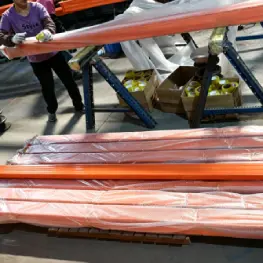
How are knock-down components packaged to maximize container space and prevent sea-freight corrosion?
What specific warehouse information is required to receive a full CAD layout and quotation within 24 hours?
Plan Your High Bay Warehouse with Factory Structural Specialists
Send your warehouse architectural floor plans today. Our senior structural engineers will deliver a comprehensive 3D layout rendering, detailed load calculation analysis, and a transparent factory-direct commercial quotation—free of charge within 24 hours.