Heavy-Duty Warehouse Storage Solutions
Engineered from premium Q235B/Q355B cold-rolled structural steel, compliant with EN 15512, FEM 10.2.02, and RMI standards. Designed for high cubic utilization, dynamic load stability, and seismic resistance.
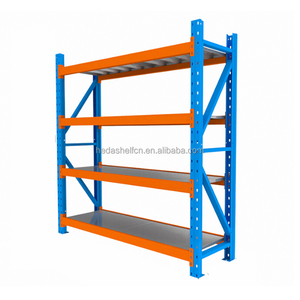
Heda Factory Metal Boltless Stacking Rack Industrial Warehouse Storage Racks Shelves
- Capacity: 300 - 800 kg / level
- Assembly: 100% Interlocking Boltless
- Steel: High-Tensile Q235 Cold-Rolled
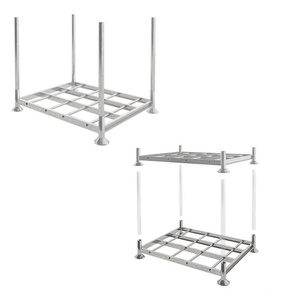
Heavy Duty Steel Pallet Racking System Truck Tire Stacking Storage Rack
- Load: Up to 1,500 kg per pallet base
- Geometry: Modular 4-Way Entry Post
- Finish: Anti-Abrasion Powder Coating
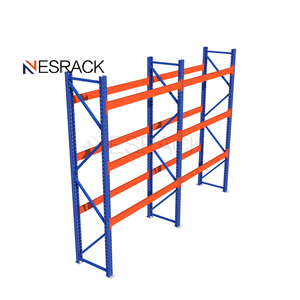
Customized Industrial Selective Pallet Racking Multi-Layer Adjustable Units
- Load: 1,000 - 4,000 kg / level beam
- Selectivity: 100% Direct SKU Picking
- Pitch: 50mm / 75mm teardrop/omega
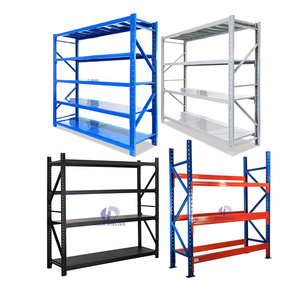
Garage & Light Industrial Adjustable Storage Stacking Steel Shelving
- Load: 200 - 500 kg / level shelf
- Decking: Steel / Wire Mesh / MDF board
- Usability: Compact storage & workshop
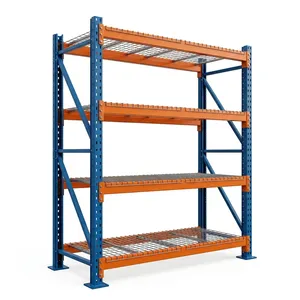
Heavy Duty Steel Pallet Racking Adjustable High-Bay Storage Rack Unit
- Height: Configurable up to 12 meters
- Safety: Spring safety clips included
- Pretreatment: 7-stage acid wash & phosphating
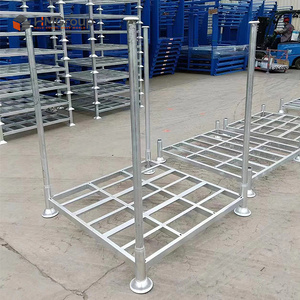
Heavy Duty Galvanized Steel Stacking Pipe Stillage & Bar Post Pallet Racks
- Coating: Hot-Dip Galvanized / Zn-Al-Mg
- Geometry: Post nesting, removable pipe pins
- Application: Outdoor yards & cold stores
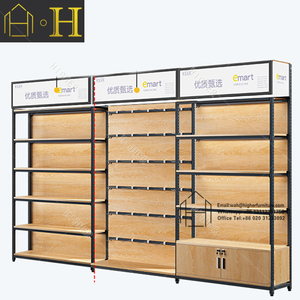
Wholesale Multi-Layer Commercial Display Rack Trade Show Storage System
- Structure: Single / Double Sided Gondola
- Aesthetic: High-gloss powder cured finish
- Use Case: Supermarket, Cash & Carry, Showroom
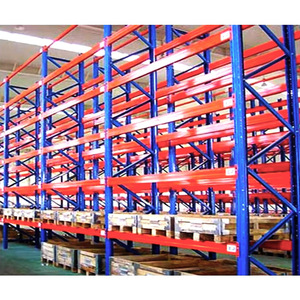
Modular Industrial Warehouse Storage System International Standard Racks
- Standard: AS4084 / FEM 10.2.02 / CE
- Upright Section: 90x70 / 100x70 / 120x95 mm
- Modular: Ready for Mezzanine & VNA expansion
Why Global Supply Chains Partner with HEDA Shelves
Headquartered in Guangzhou, China, Guangzhou Heda Shelves Co., Ltd. has spent over two decades pioneering industrial cold roll-forming, automated robotic beam welding, and turn-key intralogistics system engineering.
Fully Certified Manufacturing Facility
Our complete production ecosystem is audited and certified under international quality governance, including CE Certification (No. 2435-CPR-8605159), ISO 9001:2015 Quality Management (No. 18624Q00169R0M), and strict RoHS heavy metal surface compliance.
Global Engineering Track Record
Delivered more than 10,000 turn-key warehouse installations across 120+ sovereign destinations—spanning high-throughput retail fulfillment in Southeast Asia, heavy industrial yards across the Middle East, and climate-resilient cold chain hubs across Africa and Latin America.
Ten-Stage Controlled Production Process
Steel coil decoiling, continuous automated precision punching, cold bending forming, robotic CO2 shielded welding, 7-stage chemical pickling/phosphating pretreatment, and electrostatic powder curing ensure superior adhesion and long-term rust prevention in tropical humidity.
Engineering Rigor: Standards, Deflection & Steel Chemistry
Warehouse pallet racking is not static furniture; it is an unbraced or semi-braced thin-walled steel structure carrying tens of tons of dynamic kinetic and dead loads. Chinese tier-1 suppliers design under strict international structural limit states.
Metallurgical Chemistry: Q235B vs. Q355B
Standard pallet rack uprights and box beams are roll-formed from primary structural carbon steel coils (Baosteel, Shougang). Q235B delivers a certified yield strength ($f_y$) ≥ 235 MPa with excellent cold-forming elongation (≥ 26%), preventing microscopic fracture lines along bend radii. For seismic regions and high-bay AS/RS systems exceeding 12m, high-strength low-alloy Q355B ($f_y$ ≥ 355 MPa) is deployed to maintain higher buckling thresholds with reduced dead weight.
Deflection Limits (FEM 10.2.02 / RMI MH16.1)
Structural reliability requires strict vertical deflection compliance under full design load. The horizontal beam limit is defined as $\delta \le L/200$ for standard industrial racking and $\delta \le L/300$ for automated reach truck and narrow-aisle (VNA) operations. Cantilever arms adhere to $\delta \le L/250$ to avoid load slippage. Beams utilize welded 3-claw or 4-claw connector plates locked with integrated spring safety pins capable of withstanding a 1,000 kg upward shear disconnect force.
Pretreatment & Anti-Corrosion Micro-Layers
Surface coating failure is the primary cause of premature rack failure in coastal and cold-chain facilities. HEDA utilizes automated 7-stage immersion: alkaline degreasing, water rinsing, acid rust descaling, secondary rinsing, neutralisation, zinc-manganese phosphating, and deionized bath seal. Electrostatic epoxy-polyester powder is cured at 180°C–200°C to achieve a 60–90 $\mu$m dry film thickness passing 500-hour ASTM B117 salt spray tests.
High-Density Storage Typologies: Technical Comparison
Evaluate China’s most popular warehouse racking systems across spatial efficiency, picking throughput, operational equipment costs, and inventory rotation models.
| Racking Topology | Floor Footprint Utilization | SKU Selectivity Ratio | Inventory Rotation | MHE Compatibility | Relative CAPEX / Pallet |
|---|---|---|---|---|---|
| Selective Pallet Racking | 40% – 50% | 100% (Direct Pick) | FIFO / LIFO Flexible | Standard Counterbalance, Reach Truck | Base Benchmark ($) |
| Double Deep Pallet Racking | 55% – 65% | 50% (Two-Deep) | LIFO Priority | Pantograph Double-Reach Truck | 1.25x Baseline |
| Drive-In / Drive-Thru | 70% – 80% | 15% – 20% (Lane-Based) | LIFO (Drive-In) / FIFO (Thru) | Counterbalanced, Standard Reach | 1.5x Baseline |
| Push-Back (Cart / Roller) | 65% – 75% | 25% – 30% (Per Lane) | Strict LIFO Gravity-Fed | Standard Reach / Counterbalance | 2.2x Baseline |
| Pallet Flow (Gravity Roller) | 75% – 85% | 20% – 30% (Lane Flow) | Guaranteed FIFO Batching | Counterbalance at Load/Pick Faces | 2.8x Baseline |
| Radio Shuttle Automation | 80% – 88% | Programmed Multi-SKU | Software Switching FIFO / LIFO | Any Standard Forklift (No Rack Entry) | 3.5x Baseline |
| Rack-Supported Mezzanine | 150% – 200% (Vertical) | 100% Floor & Bin Pick | Custom Operational Flows | Pallet Jacks, Vertical Cargo Lifts | 2.0x – 3.0x Baseline |
Key Technological & Sourcing Shifts Shaping 2025–2030
Global warehouse operators are pivoting from manual pallet racking toward integrated, climate-resilient, and digitally modeled systems. Here are the macro shifts driving Chinese manufacturing innovation.
1. High-Density Radio Shuttle & AS/RS Hybridization
Skyrocketing industrial real estate costs are rendering traditional wide-aisle (3.5m–4.2m) selective racking economically obsolete for large distribution centers. Buyers are adopting semi-automated radio shuttle racking and fully automated storage and retrieval systems (AS/RS). These designs compress forklift aisles, increase vertical clearances up to 24 meters, and interface with smart fleet management systems to eliminate pallet handling damage.
2. Nanotechnology & Zinc-Aluminum-Magnesium Alloys
Cold chain logistics, refrigerated pharmaceuticals, and coastal container terminals suffer from thermal condensation and salty ocean air. Modern Chinese racking producers are transitioning from traditional batch hot-dip galvanizing to continuous roll-formed Zinc-Aluminum-Magnesium (Zn-Al-Mg) coated steel. This alloy exhibits self-healing corrosion protection at cut edges and punched perforations, tripling rack lifespans in tropical or freezing settings.
3. Digital Twin Modeling & Seismic FEA Simulation
Procurement teams now demand finite element analysis (FEA) dynamic loading simulations under earthquake response spectra (IBC / Eurocode 8 / AS 1170.4). Leading manufacturers like HEDA build complete BIM/Revit models of custom racking configurations to detect building column collisions, plan fire sprinkler pipe drops, and verify baseplate anchor pull-out capacities before cutting raw steel coils.
The Enterprise Buyer’s Audit Protocol for Chinese Suppliers
How leading supply chain directors audit mill credentials, verify steel chemistry, manage freight economics, and ensure faultless on-site installations.
1. Metallurgical Traceability & MTC Audit
Always demand Mill Test Certificates (MTC) matching EN 10204 Type 3.1 for every batch of hot/cold rolled steel. Ensure the chemical assay confirms Carbon (C ≤ 0.20%), Manganese (Mn ≤ 1.40%), and low Phosphorus/Sulfur (P, S ≤ 0.045%) to guarantee weld ductility and cold bending integrity without micro-cracking.
2. Container Cubing & Shipping Economics
Structural steel shipping is heavily volume-constrained. Knock-down, nested upright frames and boltless horizontal beams require optimized bundling. HEDA engineering calculates container center-of-gravity and nesting orientation for 40HQ containers, packing 22–26 tons per TEU to minimize landed freight costs per pallet location.
3. Modular Assembly & Field Erection
Overseas projects depend on clear installation logic. Tier-1 manufacturers pre-punch 50mm/75mm upright pitch matrices with computer precision, provide numbered CAD assembly drawings, match-mark all cross-bracing diagonals, and furnish expansion anchor kits tested for minimum 28-day concrete compressive strengths ($f'_c \ge 20 \text{ MPa}$).
Frequently Asked Procurement & Engineering Questions
Exhaustive answers to technical, commercial, and structural inquiries from industrial warehouse planners, consultants, and procurement managers.
What concrete slab specifications are required before anchoring heavy-duty racking?
Industrial pallet racking transfers concentrated point loads through baseplates to the warehouse floor slab. Under standard European and American specifications, the concrete floor slab should have a minimum thickness of 150mm to 200mm, with a compressive strength rating of at least C20/25 (approx. 3,000 to 4,000 PSI). The slab must be reinforced to prevent punch-through failure and level within DIN 18202 standards or FM2 / Superflat tolerance for very narrow aisle (VNA) operations.
How are selective racking aisle widths calculated for various forklift types?
Aisle width is determined by the forklift manufacturer’s specified turning radius ($W_a$) + load length ($l$) + safety clearance ($a$, typically 200mm). As general rules of thumb: Standard 3-wheel electric counterbalance forklifts require 3.2m to 3.5m; standard reach trucks require 2.7m to 3.0m; articulated/bendi forklifts require 1.8m to 2.0m; while wire-guided or rail-guided Very Narrow Aisle (VNA) turret trucks operate within 1.6m to 1.8m aisles, maximizing cubic volumetric utilization.
How does HEDA prevent racking corrosion in high-humidity tropical or cold-storage environments?
We deploy three tiers of surface protection. Tier 1: Automated 7-stage chemical immersion pretreatment (degreasing, acid pickling, zinc phosphating) followed by architectural-grade electrostatic polyester powder coating (60–90 $\mu$m). Tier 2: Pre-galvanized cold-formed sheet components for internal shelving and wire decking. Tier 3: Full hot-dip galvanization (HDG, ASTM A123) with a minimum 65–85 $\mu$m zinc layer, or modern Zinc-Aluminum-Magnesium alloys for blast freezers (−30°C) and tropical coastal warehouses subject to high salt mist.
What is the standard production lead time and FOB/CIF delivery schedule?
For standard project volumes (1 to 5 forty-foot high cube containers), factory production takes approximately 15 to 20 working days following final CAD layout sign-off and deposit receipt. Large projects (10 to 50 containers) are manufactured in scheduled rollouts of 10 containers every 7 to 10 days. Marine transit from Guangzhou/Nansha/Shenzhen ports ranges from 12–18 days to Southeast Asia, 20–28 days to Europe/Middle East, and 28–40 days to the Americas and Africa.
Can HEDA Shelves components retrofit into existing European or American racking systems?
Yes. In addition to our proprietary high-efficiency diamond and omega post profiles, HEDA maintains tooling for standard American Teardrop configurations (fully compatible with Interlake / Mecalux teardrop styles), 50mm pitch European profiles (compatible with Dexion, Jungheinrich, SSI Schaefer), and Australian AS4084 76.2mm pitch standards. Our engineering department can match beam connector teeth and post hole dimensions from customer samples or technical drawings.
What documentation and quality verification is included with shipment?
Every commercial export order includes a full Quality Dossier: (1) Raw material mill test certificates (MTC) proving steel chemical composition and tensile limits, (2) Dry film thickness (DFT) paint adhesion inspection reports, (3) Dimensional tolerance and weld seam QC sign-off sheets, (4) Structural safe working load (SWL) calculation sheets certified by structural engineers, (5) Detailed 2D/3D container packing lists with piece-marked tagging, and (6) Comprehensive installation operation manuals.
Request Custom Engineering Calculations & Layout Drawings
Send our structural engineering team your warehouse dimensions, clear ceiling heights, floor slab specifications, and pallet cargo parameters. We will produce a complete AutoCAD floor plan, 3D visual rendering, and container-optimized bill of materials within 24 hours.