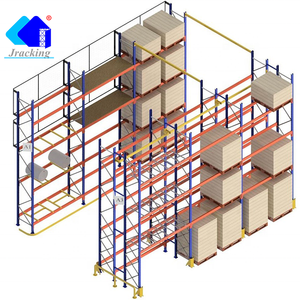
Warehouse Use Shed Metal Storage Shelving Heavy Duty Storage Rack Heavy Duty Pallet Racking for Sale
Application: Shed & Industrial Storage
Design: Modular Heavy Load Profile
Engineered from high-tensile certified structural steel to maximize volumetric utilization, maintain continuous load safety, and ensure seamless material handling across modern supply chains.
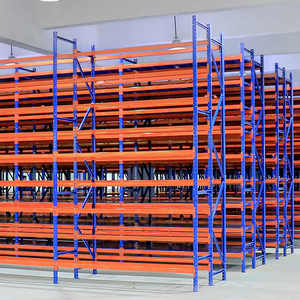
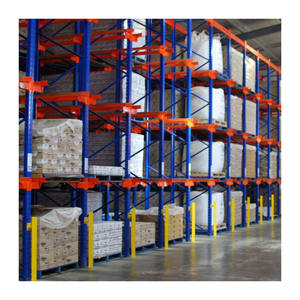
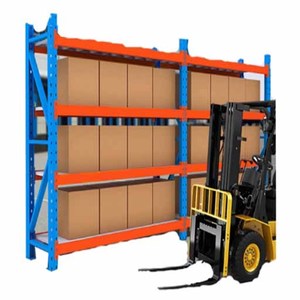
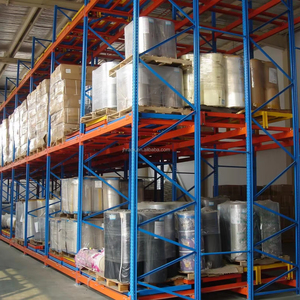
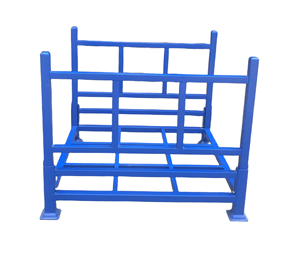
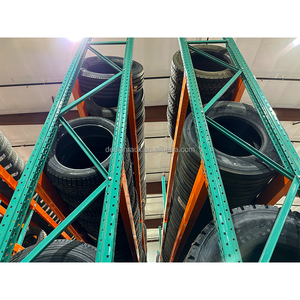
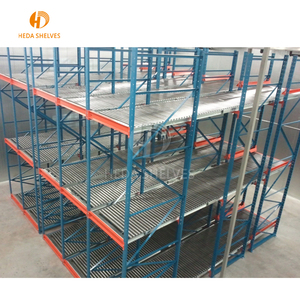
As the international supply chain landscape grapples with escalating commercial real estate prices, industrial warehouse operators must prioritize cubic space optimization over footprint expansion. Sourcing pallet racking systems directly from China's leading manufacturing ecosystems has evolved from a pure cost-reduction tactic into an architectural necessity for logistics enterprises across North America, Europe, the Middle East, Southeast Asia, and Africa. However, selecting a high-performing racking supplier requires navigating complex structural engineering codes, steel metallurgy standards, and cross-border container packing kinetics.
The foundation of structural safety in a multi-tier high-bay pallet racking system resides in the raw steel substrate. Leading Chinese racking manufacturers utilize certified Q235B and Q355B cold-rolled structural steel coils sourced directly from Tier-1 national mills such as Baosteel and Shougang. Q235B delivers a balanced yield strength of 235 MPa with excellent ductility for complex roll-forming profiles, making it optimal for standard beam cross-sections and medium-span uprights. In contrast, high-bay environments reaching heights between 12 and 30 meters require Q355B upright columns featuring a minimum yield strength of 355 MPa to counteract lateral frame deflection and dynamic forklift impact loads.
Structural reliability is heavily governed by strict adherence to international building and racking criteria, specifically EN 15512 (European Racking Code), RMI ANSI MH16.1 (United States Racking Standard), and AS 4084 (Australian Steel Storage Racking Standard). Compliance with these frameworks requires multi-directional finite element analysis (FEA) to confirm resistance against axial compressive loads, torsional buckling, and seismic shockwaves without catastrophic structural collapse.
Achieving dimensional tolerances within ±0.5mm across an 11-meter single upright column demands advanced continuous roll-forming lines integrated with automated online servo-punching stations. In an enterprise-grade Chinese manufacturing plant, coil stock transitions seamlessly through precision leveling, dynamic punching for 50mm or 75mm tear-drop or diamond slot patterns, and progressive 14-to-18-pass cold roll-forming. This cold-forming process work-hardens the steel corners, delivering structural rigidity without introducing thermal brittleness.
Long-term durability against oxidation—particularly for ocean-freight exports exposed to high maritime salinity and tropical storage environments—depends on comprehensive surface pretreatment. High-grade facilities bypass basic single-dip cleaning in favor of an automated 10-stage immersion system comprising hot degreasing, twin water rinses, acid pickling to eliminate scale, zirconium/zinc phosphating to create an inert conversion barrier, and demineralized sealers. Subsequent electrostatic powder coating using thermoset epoxy-polyester formulas cured at 190°C yields an ultra-dense, 60-to-90-micron dry film thickness (DFT). This protective finish withstands over 500 hours of continuous ASTM B117 salt spray testing, preventing corrosive failure across challenging ambient-temperature and cold-room installations.
Global supply chain managers and project engineers are adapting procurement roadmaps to integrate the following macro-level technological and operational shifts.
Procurement is pivoting from static manual racks toward hybrid profiles that can seamlessly transition to automated storage and retrieval systems (ASRS), shuttle carts, and AMR (Autonomous Mobile Robot) interfaces without demanding full structural rebuilds.
With ocean shipping volatility, engineering teams favor knock-down modular components engineered to pack densely within 40-foot High Cube (40HQ) maritime containers, slashing ocean freight expenditure per individual pallet location by up to 28%.
The global surge in temperature-controlled pharmaceuticals and perishables has elevated demand for continuous hot-dip galvanized (HDG) steel racking, rendering structures immune to frost heave, sub-zero embrittlement, and cyclical condensation.
Overseas procurement contracts now mandate comprehensive 3D Building Information Modeling (BIM) files, detailed structural calculation sheets, and verified mill test certificates (MTC) upfront prior to commercial deposit releases.
How structural design, automation convergence, and computational mechanics are redefining modern high-bay facilities.
Modern roll-forming tools leverage parametric profile modeling to engineer upright geometries with multiple stiffening ribs. This maximizes structural radius of gyration, reducing total steel weight while maintaining identical allowable bending moment ratings.
Rather than relying on static base anchoring alone, modern systems incorporate high-elasticity polymer wrap protectors and energy-absorbing floor-level deflectors capable of dispersing forklift collisions without transferring dynamic shear forces to anchor bolts.
To insulate distribution hubs from unpredictable regional electrical power disruptions, warehouses are extensively adopting unpowered gravity flow rollers and spring-assisted push-back carts, maintaining uninterrupted operations around the clock.
Combining complete in-house production control, verified certifications, and full export lifecycle support directly from our Guangzhou industrial hub.
Operating a vertically integrated 30,000 m² Guangzhou production base with 30,000 tons monthly throughput. Punching, roll-forming, robotic welding, pickling, and powder coating are executed under strict ISO 9001:2015 monitoring.
Holding official CE Certification No. 2435-CPR-8605159, ISO 9001:2015 No. 18624Q00169R0M (valid through June 2027), and RoHS environmental compliance, ensuring friction-free customs clearance and local council approvals.
Our dedicated structural engineering department provides complimentary CAD floor plans, comprehensive 3D photorealistic renderings, and precise load calculation reports within 24 hours of your project brief submission.
Over 10,000 completed installations across 120+ countries. Every structural package features export knock-down bundles, color-coded parts numbering, step-by-step structural blueprints, and interactive video guidance for local installation teams.
Essential architectural, metallurgical, and logistics answers compiled by senior structural project engineers.
Selective Pallet Racking offers 100% immediate accessibility to all inventory pallets, making it perfect for facilities handling a high count of diverse SKUs. However, it requires extensive operating aisles, utilizing approximately 35-40% of floor area.
Drive-In Racking removes operating aisles, allowing forklifts to enter storage lanes directly. It increases storage density by up to 75% for uniform SKUs (operating on a LIFO schedule), but introduces a higher risk of rack impact damage.
Radio Shuttle Racking delivers optimal density without requiring forklifts to enter the structure. Semi-automated battery-powered shuttles transport pallets within the channels, maximizing safety, providing both FIFO and LIFO flexibility, and significantly lowering cycle times in cold store and high-throughput distribution environments.