Heavy Duty
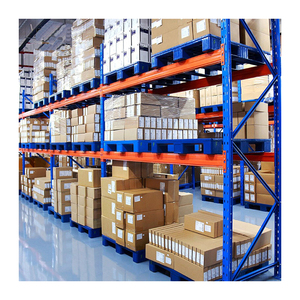
HUAWU 5 Ton Pallet Rack Steel Q235 3-Layer Selective Warehouse Storage Racking System HW-PR33
Rated Capacity:
5,000 kg / Tier
Directly manufactured by Guangzhou Heda Shelves Co., Ltd. Every system is finite-element analyzed, cold-profile rolled or hot-rolled, and finished with electrostatic thermoset powder coating for extreme duty cycles.
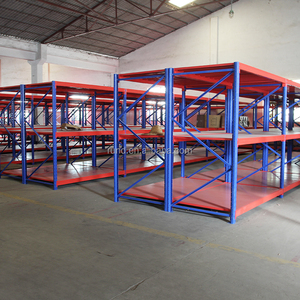
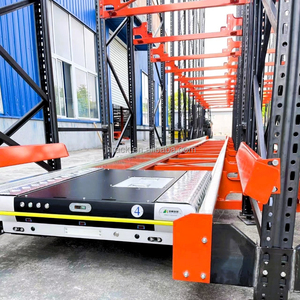
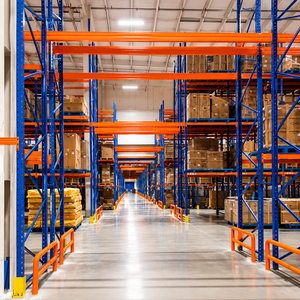
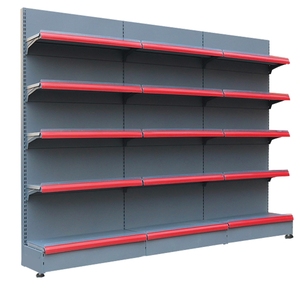
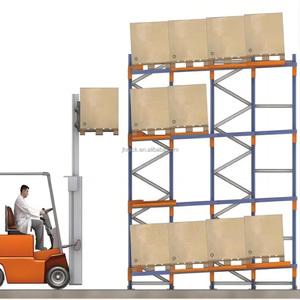
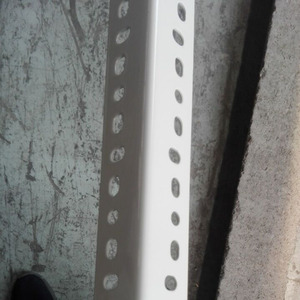
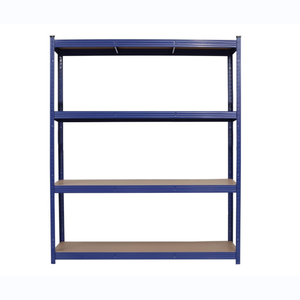
Cantilever racking is fundamentally distinct from standard pallet racking: it relies entirely on rigid moment-resisting column bases and arm-to-tower structural connections without aisle-side front uprights. Selecting the right Chinese manufacturing partner requires an exhaustive understanding of metallurgical standards and mechanical mechanics.
In modern warehouse logistics, the storage of non-palletized, long-span, or irregular inventory—such as extruded aluminum profiles, structural steel beams, PVC piping, architectural timber, and sheet metal packs—presents severe spatial and physical challenges. Standard pallet racks with front vertical uprights create rigid dimensional boundaries that impede continuous horizontal loading. Cantilever racking systems solve this structural bottleneck by employing vertical upright columns connected to single or double-sided central towers, with load-bearing arms projecting forward in pure cantilever bending.
As China’s leading industrial storage manufacturer, Guangzhou Heda Shelves Co., Ltd. analyzes cantilever design under two divergent manufacturing paradigms: Cold Roll-Formed Steel and Hot-Rolled Structural Steel (H-Beam / I-Beam Profiles). Each fulfills specific engineering thresholds according to the FEM 10.2.02 (European Code of Practice for the Design of Cantilever Racking) and ANSI MH16.3 / RMI standards.
A cantilever arm functions as an end-fixed beam subjected to distributed load W. The maximum bending moment occurs at the connection interface with the upright tower:
M_max = (W · L) / 2
Allowable arm vertical deflection (δ) under maximum rated load must never exceed L / 200 for manual forklift operations or L / 300 for automated cantilever AS/RS retrievals, where L is effective arm reach. If sub-standard Chinese mills deliver steel with inadequate yield strength or inconsistent wall thicknesses, the arm experiences irreversible plastic strain at the welded connector pin plate. This causes sag, compromises product containment, and hazards catastrophic structural dislodgement during forklift picking.
| Engineering Parameter | Roll-Formed Cantilever Rack | Structural Steel (H-Beam) Cantilever | HEDA Shelves Engineered Standard |
|---|---|---|---|
| Primary Steel Grade | Q235B Cold-Rolled Strip Coil | Q355B (Equivalent to ASTM A572 Gr 50) | Certified Q235B / Q355B with MTC EN 10204 3.1 |
| Column Section Profile | Double C-profile welded back-to-back | Hot-rolled HEA / HEB or Chinese standard I/H beam | Custom structural IPE/HEA or 305x102 structural beam |
| Arm Capacity Rating | 250 kg – 1,000 kg per arm | 1,000 kg – 4,500+ kg per arm | Up to 5,000 kg / Arm (FEA Strain Certified) |
| Arm Pitch Adjustability | 75 mm / 76.2 mm slotted pin holes | 100 mm / 140 mm high-tensile bolted array | 100mm pitch with 4-lug heavy locking wedges |
| Impact Resistance (Forklift) | Moderate; vulnerable to torsional denting | Exceptional; thick solid flange absorbing impacts | Heavy base column anchor plates + welded floor bumpers |
| Optimal Application Scenario | Furniture, PVC pipe, carpet rolls, light lumber | Heavy steel pipes, structural bar stock, sheet steel | Engineered indoor logistics, lumberyards & outdoor mines |
Precision engineering limits arm upward camber (1.5° to 2.0°) when unloaded, ensuring absolute horizontal plane alignment under full elastic design payload.
Cantilever rows lack horizontal beam framing along the face, transferring all longitudinal forces directly to diagonal X-bracing truss assemblies between towers.
Tower overturning moments (overturning torque = load × arm extension) must be resisted entirely by the column base plate bolted to structural concrete slabs.
Founded in 2001, Guangzhou Heda Shelves Co., Ltd. operates a vertically integrated 30,000 square meter intelligent manufacturing base in Guangzhou, delivering over 30,000 metric tons of certified racking monthly to 120+ countries.
Unlike export brokers or trading intermediaries that outsource production across fragmented regional workshops, HEDA Shelves executes every stage of racking fabrication inside our modern factory. From incoming prime steel coil slitting to automated cold roll-forming, dual-robot submerged arc welding, multi-tank chemical immersion pretreatment, and thermoset powder coating, our manufacturing cycle adheres strictly to ISO 9001:2015 Certification (Certificate No. 18624Q00169R0M) and European Union CE Factory Production Control (FPC No. 2435-CPR-8605159).
For global engineering consultants, EPC contractors, and procurement managers, single-source factory accountability translates to guaranteed steel chemical traceability, dimensional punch-hole consistency, and exact container-loading volume calculations that slash landed ocean freight expenses.
Direct sourcing of Baosteel/Ansteel certified Q235B & Q355B coils verified via spectrometer carbon-yield testing.
High-speed slitting lines cut wide master coils into exact profile widths with continuous optical edge deburring.
Continuous hydraulic multi-die punching lines stamp 75mm/100mm pin holes with +/-0.15mm hole pitch accuracy.
24-pass precision cold roll-forming mills fold heavy upright profiles without residual internal yield stress.
Robotic MAG tandem welding stations bond arm connectors and base plates under argon-rich shielding gas.
Automated shot-blasting and mechanical surface burnishing removes welding spatter, mill scale, and micro-burrs.
Multi-tank chemical dip cycle strips oxidation and deposits a crystalline zinc-phosphate anti-corrosion key layer.
Swiss Gema automatic spray booths coat 60–90µm thermosetting polyester powder across all hidden channels.
Convection bake ovens at 200°C cure the polymer film, guaranteeing high cross-hatch adhesion and impact durability.
Full coordinate measuring machine (CMM) dimensional checks, custom steel bundling, and containerization layout.
Strategic enterprise buyers no longer evaluate cantilever storage by raw EXW purchase price per ton. Modern supply chain procurement is dictated by lifetime structural durability, freight cubing optimization, and climate protection.
Cantilever towers and heavy projecting bases represent notorious "air shipment" risks if improperly engineered. HEDA Shelves utilizes proprietary 3D packing software:
With major industrial expansion across coastal Africa, Southeast Asia, and Middle East ports, ambient salinity rapidly destroys standard single-coat paint:
Volatile international billet indices require transparent mill-gate purchasing contracts. HEDA Shelves implements indexed steel pricing formulas:
Long-material handling is shifting rapidly from manual counterbalanced forklifts to 4-way multi-directional automated shuttles, integrated AS/RS stacker cranes, and IoT structural monitoring.
Traditional cantilever layouts require wide operating aisles (4.5m to 6.0m) to allow conventional forklifts to maneuver long profiles. Modern automated installations integrate twin-mast AS/RS stacker cranes directly between cantilever racks. Operating in aisles as narrow as 1.8 meters, automated telescopic forks or vacuum arm lifters retrieve 6-meter bundle packs up to 30 meters high. This increases volumetric floor capacity by over 300% compared to traditional floor stacking.
Catastrophic rack failures typically result from unnoticed cumulative overload or repetitive forklift impacts to the lower third of the column. HEDA Shelves engineers IoT wireless strain sensors directly into critical arm root fillets and anchor assemblies. If dynamic deflection exceeds structural thresholds or uneven arm loading induces torsional twisting, automated telemetry alerts facility managers via SCADA/WMS dashboards before fatigue failure occurs.
Key structural considerations, concrete foundation specs, and import procedures addressed by Guangzhou HEDA Shelves Co., Ltd.'s senior engineering staff.
Send your building dimensions, clear ceiling heights, load specifications, and material profile lengths. Guangzhou HEDA Shelves provides a comprehensive CAD layout plan, 3D structural render, and load calculation dossier free of charge within 24 hours.