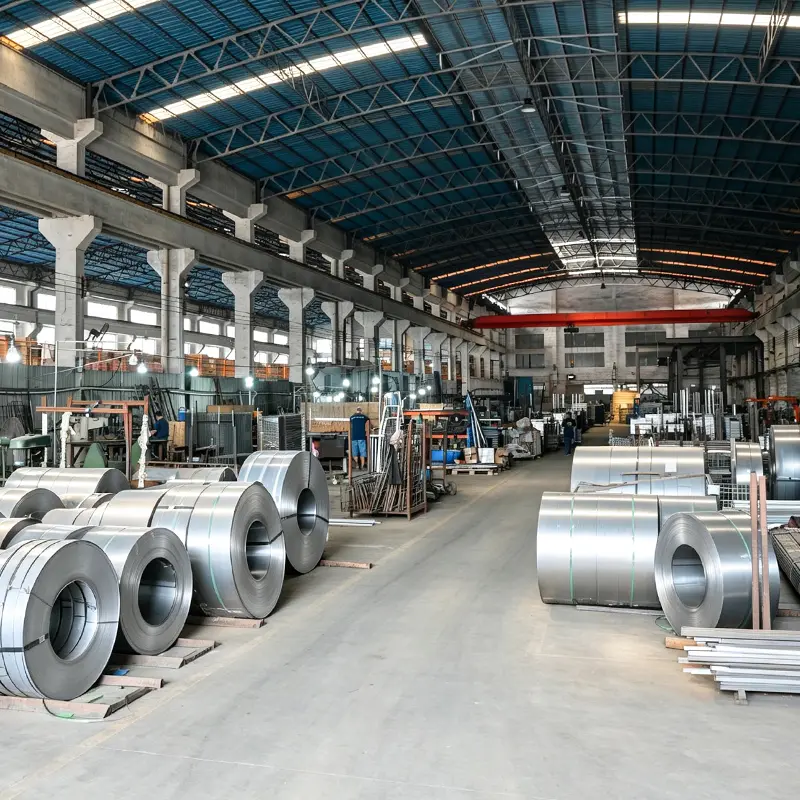
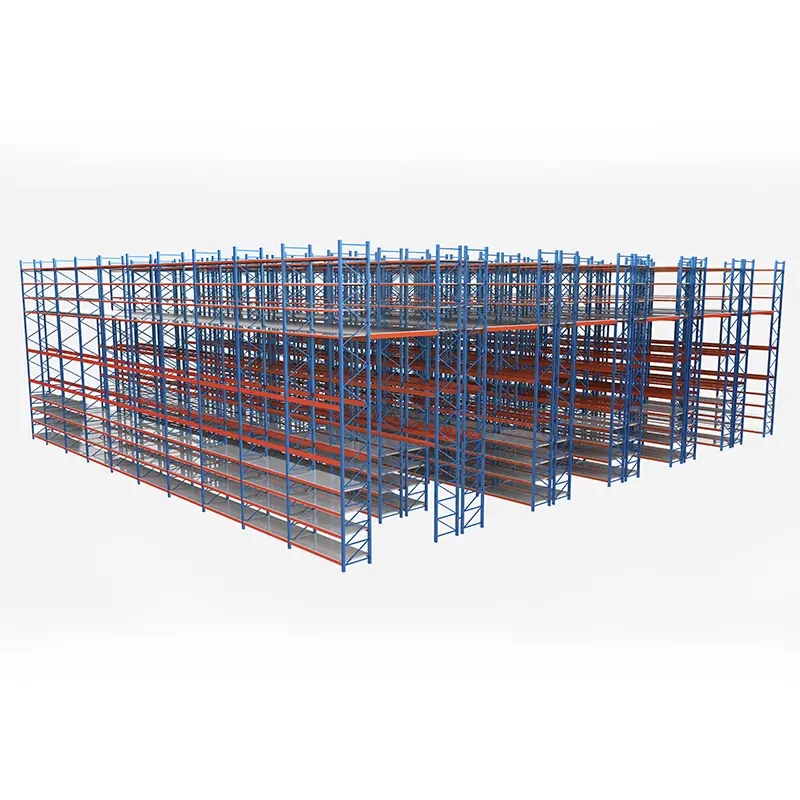
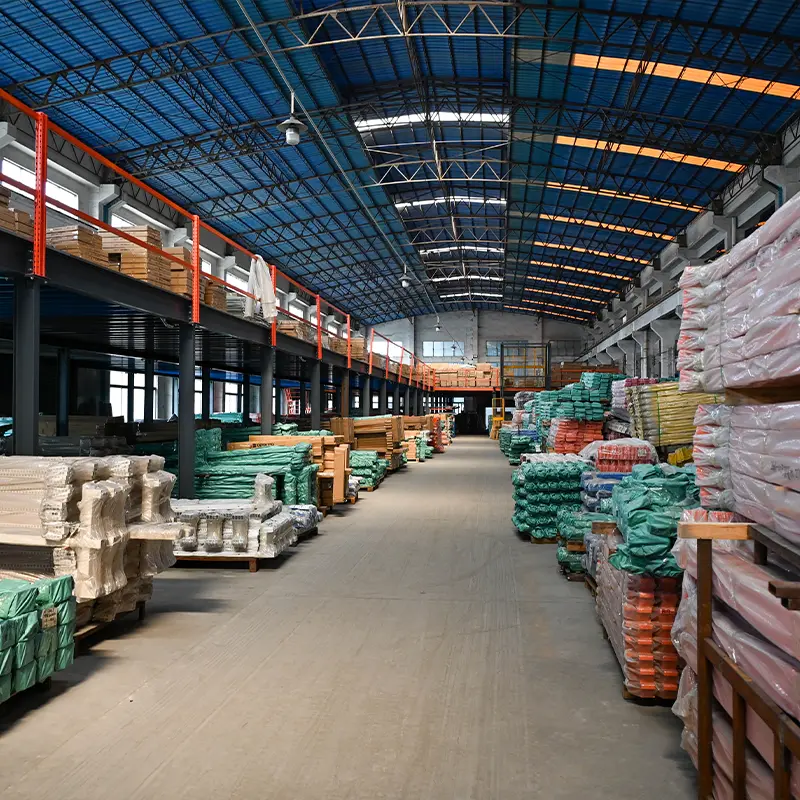
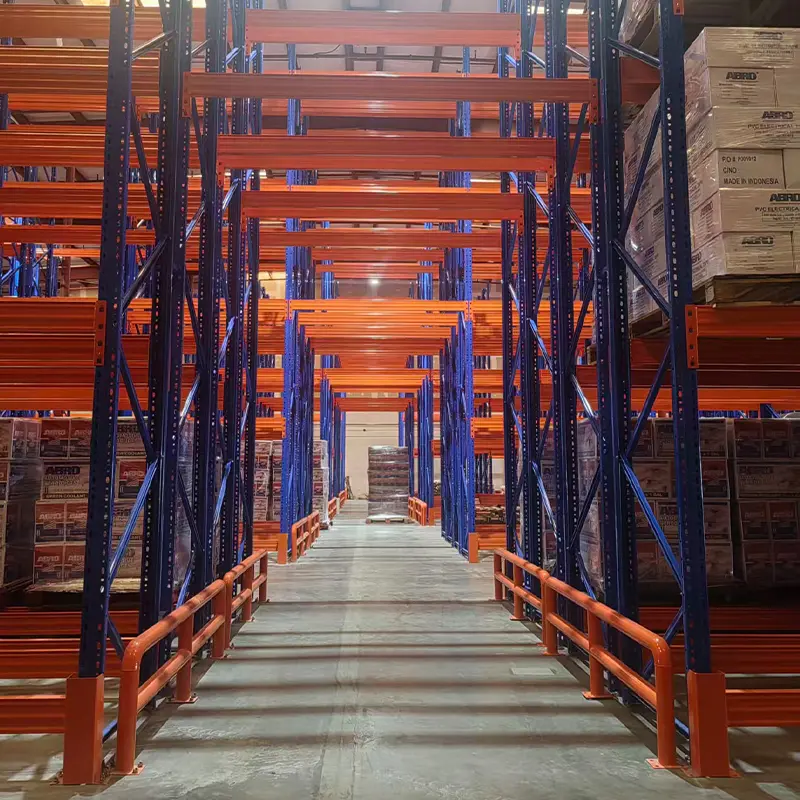
China Top Industrial Shelving And Storage Manufacturers & Factories
The 2026 definitive procurement guide to structural engineering compliance, Q235B/Q355B steel standards, FEA load calculations, and global supply chain integration.
Factory-direct structural steel configurations designed to EN 15512, ANSI MH16.1, and AS 4084 standards. Each system delivers verifiable load-bearing capacities, deflection safety ratios (≤ L/200), and custom surface engineering.
Structural Engineering & Metallurgy Standards in Chinese Storage Manufacturing
When global supply chain executives evaluate China top industrial shelving and storage manufacturers, the procurement calculus has decisively shifted from basic raw material cost-per-kilogram to comprehensive structural reliability, life-cycle durability, and verifiable engineering compliance. Modern industrial warehousing demands rigorous structural safety verification under static load, dynamic material handling impacts, and localized seismic actions. Leading Chinese manufacturers, anchored by specialized clusters in Guangdong, Jiangsu, and Zhejiang, manufacture in accordance with internationally recognized standards including the European Standard EN 15512:2020 (Steel static storage systems – Adjustable pallet racking systems – Principles for structural design), the American RMI specification ANSI MH16.1, and the Australian standard AS 4084-2023.
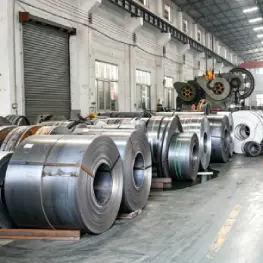
At the metallurgical core of heavy-duty industrial shelving lies primary prime certified carbon structural steel: Q235B and Q355B (conforming to GB/T 700 and GB/T 1591, equivalent to European S235JR and S355JR, or ASTM A36 and A572 Grade 50). The yield strength of Q235B ($f_y \ge 235 \text{ MPa}$) provides exceptional ductile behavior and cold-roll forming performance without micro-cracking along bend radii, whereas high-tensile Q355B ($f_y \ge 355 \text{ MPa}$) is strategically applied to upright frames in high-bay distribution centers exceeding 12 meters in unbraced height. Verifiable Chinese manufacturers mandate certified Mill Test Certificates (MTC 3.1 conforming to EN 10204) for every batch of hot-rolled steel strip, guaranteeing strict control over carbon equivalent (CEV) values to ensure flawless robotic and semi-automated weldability.
Engineering Quality Benchmark: Structural pallet racking upright frames must maintain a global deflection limitation of no more than 1/200th of the clear bay height under design working loads, with beam deflection strictly capped at $L/200$ (or $L/250$ for automated handling systems) in compliance with EN 15512 clauses on serviceability limit states (SLS).
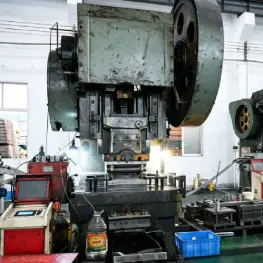
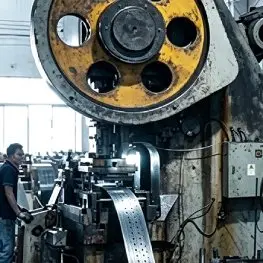
Beyond steel metallurgy, cold-roll forming line precision represents the operational differentiator between Tier-1 industrial storage factories and localized welding workshops. Continuous multi-station roll-forming lines (typically 18 to 26 forming passes) systematically fold high-grade strip steel into complex omega (Ω) and teardrop profile upright columns without introducing residual tensile stresses that induce torsional buckling. Automated CNC punching systems punch column perforation pitches at exact 50mm, 75mm, or 76.2mm (3-inch) intervals with dimensional tolerances tightly held to within ±0.1mm over a cumulative 10-meter column run. This dimensional precision ensures that multi-claw locking beam end connectors engage upright face and side slots seamlessly, creating a semi-rigid frame joint with predictable rotational stiffness ($K_b$).
How industrial automation, environmental decarbonization, automated guided vehicles (AGVs), and modular mechanical design are rewriting the procurement specifications of enterprise warehouse systems.
Automation-Ready Racking Racks
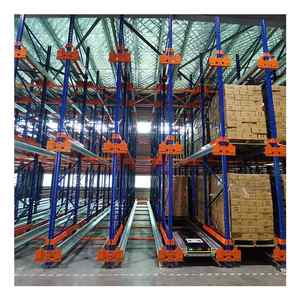
Global fulfillment hubs are shifting from static racks to hybrid AS/RS and AMR-integrated (Autonomous Mobile Robot) structures. Uprights require integrated optical guidance targets, tighter rail tolerances (±1.5mm), and pre-machined sensor brackets for IoT inventory telemetry.
Low-Carbon Green Surface Treatments
Mandated carbon border adjustments (CBAM) are prompting Chinese tier-1 factories to phase out solvent coatings in favor of zero-VOC TGIC-free electrostatic polyester powders, automated dry recovery booths, and low-temperature silane pre-treatments replacing energy-heavy zinc phosphating.
Modular Seismic Dynamic Analysis
Modern EPC project RFQs demand full finite element response spectrum seismic analysis conforming to Eurocode 8 or FEMA-460. Upright baseplates feature oversized floor contact footprints, energy-dissipating ductile anchors, and heavy-gauge diagonal portal bracing arrays.
Container Fill-Rate Engineering
With unpredictable ocean freight volatility, procurement officers require knock-down (KD) nested beam designs, custom steel dunnage frame pallets, and algorithmic loading calculations ensuring 40ft High Cube containers attain 94-98% volumetric space utilization without freight transit damage.
Operating continuously since 2001, Guangzhou Heda Shelves Co., Ltd. operates a vertically integrated 30,000 square-meter production facility in Guangzhou, China. Producing up to 30,000 metric tons per month of certified industrial racking, every stage—from strip coil slitting to electrostatic thermoset finishing—is executed under stringent ISO 9001:2015 and CE quality assurance protocols.
25+ Years Heavy Industry Heritage
Established in 2001, supplying over 10,000 logistics centers, distribution hubs, and cold storage projects across 120+ sovereign markets globally.
Complimentary CAD & FEA Design
Our in-house structural engineering team provides complete warehouse CAD floor plans, static and dynamic 3D visualizations, and FEA calculations within 24 hours.
Third-Party Certified Integrity
Independently certified CE mark (Cert. No. 2435-CPR-8605159), ISO 9001:2015 Quality Management System (Cert. No. 18624Q00169R0M), and full RoHS compliance.
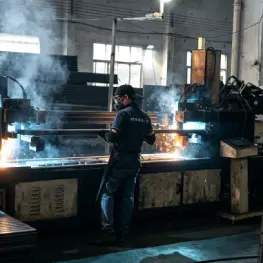
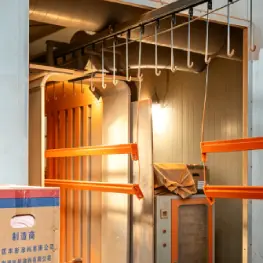
Every beam, column, connector, and shelf follows an unbroken chain of in-factory custody. Surface preparation is particularly paramount: before powder application, components pass through rigorous multi-bath chemical cleaning—degreasing, acid pickling to eliminate mill scale, and manganese phosphating to establish an inert conversion layer preventing sub-surface oxidation under extreme marine or humid tropical operating conditions.
01
Prime Steel Coils
02
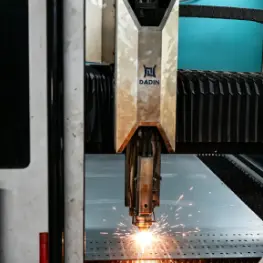
Precision Slitting
03
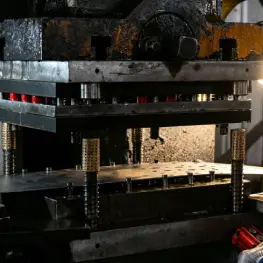
CNC Hole Punching
04
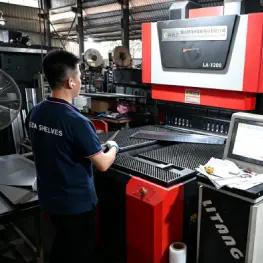
Cold Bend Forming
05
Profile Roll Forming
06
Deburring & Polish
07
Robotic Welding
08
Pickle & Phosphate
09
Powder Coating
10
QC & Container Stow
Procurement Intelligence
Frequently Asked Questions for B2B Industrial Racking Buyers
Authoritative engineering and trade answers addressing material certifications, corrosion testing, seismic structural verification, container optimization, and turnkey logistics.
How do Chinese manufacturers verify that steel grades meet domestic Q235B / Q355B and international standards?
Tier-1 manufacturers such as Guangzhou Heda Shelves source hot-rolled steel strip directly from state-owned and certified primary steel mills (e.g., Baosteel, Ansteel, Shougang). Every coil delivery is accompanied by an EN 10204 Type 3.1 Mill Test Certificate (MTC) documenting precise chemical composition (carbon percentage, manganese, silicon, sulfur, phosphorus) and mechanical properties (yield point $f_y$, ultimate tensile strength $R_m$, and elongation percentage $A_5$). Upon intake, factory metallurgical quality technicians perform optical emission spectrometry and universal tensile testing to confirm actual yield strengths consistently exceed the nominal minimums (Q235B ≥ 235 MPa, Q355B ≥ 355 MPa) before strip material enters the uncoiling and slitting lines.
What surface coating standards prevent corrosion in humid coastal warehouses and cold chain freezers?
Standard indoor warehouse environments receive an electrostatic thermosetting epoxy-polyester hybrid powder coating applied at 60 to 90 microns dry film thickness (DFT). Crucially, corrosion protection is determined by chemical surface pre-treatment: steel members undergo a 6-stage immersion bath encompassing alkaline degreasing, clean water rinse, sulfuric/hydrochloric acid pickling to strip mill scale, surface conditioning, and zinc or iron phosphating to form a non-conductive crystalline barrier layer. For sub-zero cold storage facilities (-30°C) where condensation cycles accelerate flash rust, or tropical coastal facilities subject to saline atmospheric moisture, components are either pre-galvanized (Sendzimir process, Z275 coating mass ≥ 275 g/m²) or hot-dip galvanized to ISO 1461 standards (providing ≥ 85 microns of sacrificial zinc metallurgical protection, surviving ASTM B117 salt spray testing in excess of 1,000 continuous hours).
What engineering inputs are required to calculate warehouse racking layouts and structural load ratings?
To generate an engineering layout, structural calculations, and accurate quotation, supply our design department with:
Architectural building drawings: CAD DWG files showing internal clear column spacing, building height to bottom of lowest ceiling rafter or fire sprinkler line, slab expansion joint locations, and dock door/pedestrian egress paths.
Concrete floor specification: Slab compressive strength ($f'_c$, typically C20/25 to C30/37), slab thickness (mm), reinforcement type, and maximum allowable point load (kN) to verify anchor pull-out resistance.
Pallet Unit Load details: Length × Width × Height including pallet base overhang, gross weight per pallet, pallet entry orientation (fork insertion side), and pallet construction type (Euro 800×1200, ISO 1000×1200, GMA 40×48 inch).
How do Chinese manufacturers guarantee load-bearing capacity and seismic safety compliance?
Static and seismic structural load verification is conducted using Finite Element Analysis (FEA) software (such as ANSYS and SAP2000) modeling second-order ($P-\Delta$ and $P-\delta$) geometric non-linear effects. Upright frames are tested in destructive testing rigs conforming to EN 15512 Annex A, evaluating compressive stub capacity, column global buckling curves, and beam-end connector rotational stiffness ($K_b$). In seismic hazard regions (evaluated according to Eurocode 8, IBC, or NZS 1170.5), dynamic response spectrum calculations dictate the installation of enlarged ductile baseplates, double wedge anchor anchorages, top portal tie beams, and vertical back-to-back cross-bracing bays designed to safely dissipate lateral seismic kinetic energy without progressive rack frame collapse.
What is the deflection limit for racking beams, and what safety factor is engineered into load capacity charts?
Under normal serviceability conditions with a uniformly distributed load (UDL), international design codes (EN 15512, ANSI MH16.1, and AS 4084) stipulate a maximum beam vertical deflection not exceeding $L/200$ (where $L$ represents the clear beam span between columns). For automated applications or sensitive systems, deflection is frequently restricted to $L/250$ or $L/300$ to prevent automated pallet shuttle hang-ups. For ultimate strength limit states, a material and load safety factor of approximately 1.5 to 1.67 is applied against the elastic limit of the steel, ensuring beams and frames maintain substantial reserve capacity against accidental dynamic impacts or minor over-stacking events.
How are ocean freight costs and container packing densities optimized for oversized steel members?
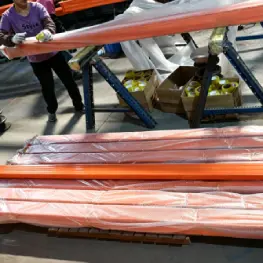
Structural racking components present logistical challenges due to their combination of excessive length (upright frames up to 11.8 meters) and heavy unit weight. Guangzhou Heda Shelves applies container optimization algorithms: upright frames are engineered as knock-down (KD) bolted assemblies rather than fully welded frames, allowing upright columns and horizontal/diagonal bracing channels to be nested densely on automated strapping skids. High-density box beams are bundled in custom timber saddles sized to standard container door apertures. A standard 40ft High Cube (40HQ) container typically achieves an optimal payload density between 24 and 27 metric tons, lowering oceanic freight landed cost per pallet position by 35% to 55% compared to pre-assembled frames.
Can Chinese racking factories customize beam hook designs to integrate with legacy installed systems?
Yes. While standard catalog offerings utilize proprietary 3-claw, 4-claw, or 5-claw connectors engineered for optimum moment transmission with our own column punch profiles, custom OEM/ODM tooling is routinely developed. By supplying our engineering department with physical sample beam brackets or 3D STEP scans of existing upright column slots (whether European teardrop, Australian 76.2mm, or American roll-formed diamond punch patterns), our CNC tool-and-die center can fabricate customized stamping dies to ensure full dimensional interchangeability and seismic lock-pin pin engagement with pre-existing warehouse racking installations.
What documentation is supplied for customs clearance and statutory site building approval?
Comprehensive project export packages include the standard commercial invoice, packing list, and bill of lading (B/L), alongside structural compliance documentation required by municipal building inspectors and insurance underwriters:
Certificate of Origin (Form A, Form E, or RCEP depending on importing country free-trade agreement).
Certified Mill Test Certificates (EN 10204 3.1) identifying chemical and mechanical batch analysis.
Manufacturer CE Certificate of Conformity (No. 2435-CPR-8605159) and ISO 9001:2015 certification.
Full structural static calculation report signed off by a certified structural racking design engineer.
AutoCAD installation drawings with sequenced mark numbers, assembly torque schedules for structural bolts, and maximum load capacity warning safety notices (load plaques).
Request an Engineered Storage Plan & Factory-Direct Proposal
Connect directly with structural application engineers at Guangzhou Heda Shelves Co., Ltd. Transmit your architectural CAD layout or warehouse dimensions to receive a comprehensive 3D storage concept, structural FEA load calculation, and transparent container landed-cost quote within 24 hours.