Certified Warehouse Racking & Heavy-Duty Shelving Systems
Engineered to international design codes (EN 15512, ANSI MH16.1, and AS 4084). Explore our top 8 industrial storage systems optimized for automated integration, high SKU selectivity, and extreme weight capacities.
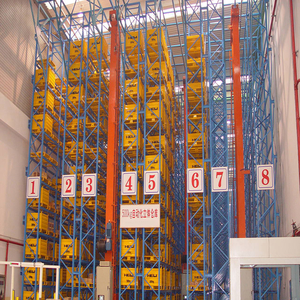
ASRS Automated Warehouse Pallet Retrieval Racks
- Load RatingUp to 2,500 kg/pallet
- Max HeightUp to 40 meters
- System TypeCrane & Shuttle Automated
- Steel GradeQ355B High-Tensile
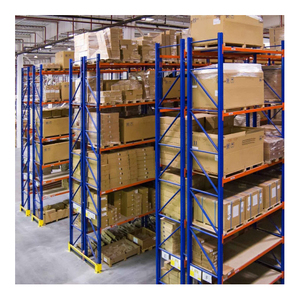
Peterack CE Selective Pallet Racking System
- Load Rating1,000–4,500 kg/level
- Selectivity100% Individual Access
- Pitch Pitching50mm / 75mm Adjustable
- ComplianceCE / ISO 9001:2015
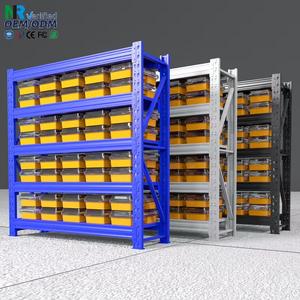
Industrial Single Deep Metal Pallet Racking
- Frame ProfileOmega 80/90/100/120
- Beam SectionBox / Step / Interlock
- Surface TechEpoxy Powder 70μm
- ApplicationsFactory, Van, Garage 3PL
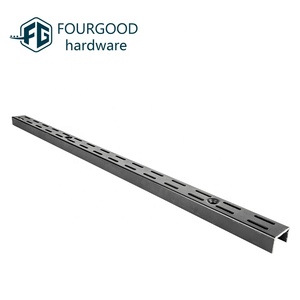
FOURGOOD Single Slot Wall Upright System
- Hole SpacingUniversal 25mm/32mm
- Thickness1.5mm–2.5mm Cold-Rolled
- MountingWall Fix & Stand-alone
- FinishChrome / Matte Coating
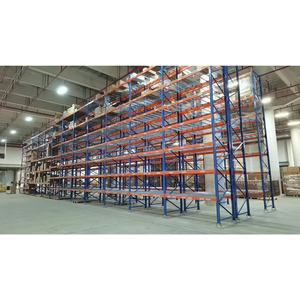
Robust Industrial Longspan Shelving System
- Unit Capacity300–1,000 kg/tier
- Deck OptionsSteel Panels, Wire, Wood
- AssemblyBoltless Teardrop/Butterfly
- AvailabilityReady Stock Standard Spans
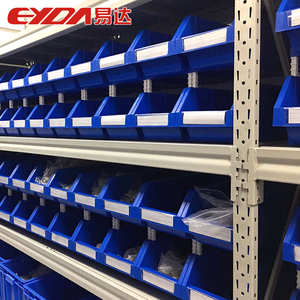
Multi-Level Powder-Coated Steel Shelves
- Layer Loading100–250 kg/shelf
- Corrosion ProofPickling & Phosphating
- ConfigurationUp to 4 Pick Floors
- CustomizationColor, Height, Deck Depth
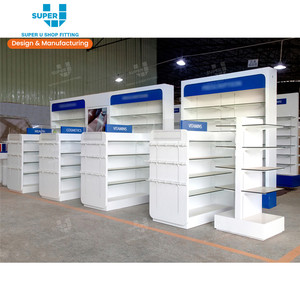
Commercial Retail Gondola Display Shelves
- ConfigurationSingle / Double Sided Island
- Back PanelPegboard, Slatwall, Plain
- Load per Shelf80–150 kg/level
- Market FocusHypermarket, Cash & Carry
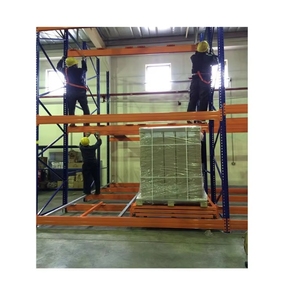
Heavy-Duty Push Back Pallet Rack System
- Storage Depth2 to 6 Pallets Deep
- Inventory RuleFILO (First-In, Last-Out)
- Cart SystemNested Heavy Steel Carts
- Aisle SavingReduces Aisles by 45%
Why Enterprise Logistics Operators Choose HEDA Shelves
Headquartered in Guangzhou, China, Guangzhou Heda Shelves Co., Ltd. has spent over 25 years establishing an integrated end-to-end manufacturing footprint. We eliminate middle-tier markups while ensuring European and American structural safety standards across global supply chains.
Dedicated 30,000 m² Production Base
Unlike trading entities, our primary manufacturing facility controls every cold-roll forming, punching, precision robotic welding, and automated surface treatment process in-house. This centralized control guarantees micro-millimeter beam tolerances, zero structural defect batches, and stable monthly capacity surpassing 30,000 tons.
Certified Structural Compliance (CE & ISO)
Our heavy-duty upright frames and beam connectors are structurally evaluated in strict alignment with CE certification (No. 2435-CPR-8605159), ISO 9001:2015 quality frameworks (Certificate No. 18624Q00169R0M, valid to 2027), and RoHS environmental standards. Every project ships with mill test certificates (MTC) and static load calculation sheets.
Free 3D CAD & Structural Load Engineering
Before any fabrication begins, our team of dedicated warehouse system engineers reviews your architectural drawings, slab load-bearing capacities, material handling equipment (MHE) turning radiuses, and seismic zone factors. We deliver complete 2D layout drawings, 3D photorealistic renderings, and dynamic capacity models at zero preliminary cost.
10-Stage High-Corrosion Pretreatment
Storage structures installed in coastal, tropical, or cold-chain environments face severe electrolytic corrosion. HEDA components pass through a proprietary 10-step immersion line—including degreasing, ultrasonic rust removal, pickling, and dual zinc-phosphating—before electrostatic powder curing, providing over 500 hours of continuous salt-spray resistance.
Container-Optimized Ocean Freight Logistics
Shipping air across oceans destroys procurement margins. Our logistics engineers configure automated knock-down nesting packaging for 20GP and 40HQ maritime containers. Uprights and beams are bundled with high-tensile steel strapping and edge protectors, maximizing container cubing up to 96% and preventing transit distortion on long-haul sea routes.
Global Installation Support & Turnkey Delivery
Having executed over 10,000 projects across 120+ countries—spanning Africa (Nigeria, South Africa, Kenya, Ghana, Egypt), Southeast Asia, Europe, and the Americas—we provide comprehensive color-coded part markings, bilingual erection manuals, and digital 3D video guidance, along with on-site senior installation engineer dispatch for mega-logistics hubs.
Factory Quality Assurance: The 10-Stage Precision Flow
Every structural profile undergoes mechanical testing, precision cold-forming, and non-destructive weld testing from raw coil unrolling to final export packaging.
Raw Material QC
Certified Q235B & Q355B prime hot-rolled strip steel validation.
Automated Punching
Continuous hydraulic stamping for 50/75mm hole pitches.
Roll Forming
18-pass multi-roller cold continuous bending machines.
Robotic Welding
CO₂ shielded automated multi-point beam connector welding.
Surface Pretreatment
Pickling, degreasing, and chemical zinc-phosphating bath.
Electrostatic Powder
Automated Swiss Gema powder application (60–90 μm).
Thermal Curing
200°C curing tunnel ensuring cross-linked polymer bond.
Static Load Testing
Deflection verification within FEM 10.2.02 standard limits.
Protective Crating
Cushioned steel bundle wrapping with barcode serialization.
Ocean Loading
CAD-assisted container stuffing to eliminate transport damage.
Strategic Warehouse Procurement Trends (2025–2030)
In an era of supply chain volatility, raw material fluctuations, and rising cubic-meter real estate costs, industrial procurement leaders must balance structural longevity, automation readiness, and landed freight efficiency.
Vertical Densification vs. Footprint Expansion
Industrial land leasing rates across global logistical gateways have risen sharply. Modern procurement is pivoting away from sprawling single-story floor plans toward ultra-vertical storage. Racking profiles are increasingly specified with 12 to 24-meter upright heights using high-tensile Q355B cold-rolled steel, enabling enterprises to quadruple cubic capacity without acquiring additional land.
Hybrid Semi-Automation (Radio Shuttle & AMR Integration)
Full lights-out AS/RS installations demand immense upfront CapEx that many mid-market distributors cannot justify. The most cost-efficient procurement trend is modular semi-automation: integrating high-density radio shuttle lanes and Autonomous Mobile Robot (AMR) multi-tier mezzanine pick stations with standard roll-formed racking, cutting labor dependency by 60% with half the payback period.
Low-Carbon Steel & Green Warehouse Compliance
Global supply chain tenders increasingly mandate Scope 3 carbon tracking. Progressive buyers now audit manufacturers' energy sources and coating chemistries. In response, tier-1 suppliers utilize electric arc furnace (EAF) steel coils and heavy metal-free, non-toxic TGIC-free polyester powder coats with zero VOC emissions, matching international LEED gold environmental requirements.
Parametric Digital Twins & Dynamic Load Sizing
The traditional approach of purchasing generic beam capacities is being replaced by parametric finite element analysis (FEA). Warehouse planners now request complete digital models to evaluate real-time load distribution, seismic ground acceleration spectra, and live structural deflections. Procuring customized steel profiles matched to exact pallet weights avoids over-engineering costs by 15–22%.
Resilient Near-Grid Outage Immunity
In developing regional hubs across Africa and Latin America where municipal electrical grids experience frequent load shedding, high-density storage procurement is moving decisively toward passive gravity flow rollers, push-back cart cassettes, and solar/generator-buffered shuttle batteries. These systems ensure uninterrupted round-the-clock fulfillment without dependency on active electrical lines.
Container-Optimized Flat-Pack Logistics Architecture
With ocean freight volatility remaining a risk factor, leading B2B buyers now evaluate the packaging geometry of their racking suppliers as heavily as the steel itself. Racks engineered with interlocking nested profiles and boltless modular bases fit up to 26 metric tons into a single 40HQ container, lowering the landed freight cost per pallet position to historical lows.
| Storage System Type | Space Utilization | Selectivity | Handling Equipment (MHE) | Ideal Inventory Velocity | Avg. Investment / Pallet |
|---|---|---|---|---|---|
| Selective Pallet Racking | 40% – 50% Floor Utilized | 100% Direct Access | Standard Counterbalance / Reach | High SKU Variety, Fast Picking | Low / Entry-level CapEx |
| Drive-In Racking | 65% – 75% Floor Utilized | FILO (Last-In, First-Out) | Counterbalance / Reach Forklifts | Bulk Goods, Low SKU Diversity | Moderate |
| Push Back Racking (2–6 Deep) | 70% – 80% Floor Utilized | FILO per Dedicated Lane | Standard Reach Forklifts | Medium Rotation, Multi-pallet SKU | Moderate to High |
| Radio Shuttle Automation | 80% – 88% Floor Utilized | FIFO or FILO Automated | Standard Forklift + Radio Carrier | Beverage, Cold Chain, FMCG | High / High Yield ROI |
| Automated AS/RS Crane System | 85% – 95% High Bay | 100% Computerized Pick | Stacker Cranes / Converyor Hub | 24/7 E-Commerce, Pharmaceuticals | Advanced Industrial CapEx |
Engineering Frontiers: Cold-Formed Steel Innovation
The transition from structural hot-rolled sections to high-yield cold-formed thin-walled steel profiles has revolutionized warehouse racking, enabling higher loading capacities with reduced raw material consumption.
Omega Upright Dynamic Optimization
Our upright profiles feature proprietary multi-flange Omega cold-formed cross-sections with 11–13 distinct bending planes. This geometry relocates the shear center directly in line with applied loads, suppressing torsional-flexural buckling under heavy static stresses and seismic ground acceleration waves.
Cold-Room Thermal Deflection Barriers
In sub-zero cold-chain facilities (-30°C), steel embrittlement and frost condensation present structural hazards. HEDA employs fine-grained normalized micro-alloyed steel formulations with Charpy impact toughness ratings meeting -40°C testing protocols, paired with thermal bridge isolation footplates.
Integrated 4-Point Hook Connectors
Beam-to-column connections are secured by robotic-welded 4-tooth and 5-tooth forged high-tensile hook brackets. Under vertical loading, the tapered tab geometry generates an active mechanical wedging effect that increases connection rigidity, resisting rotational moments and accidental uplift loads.
Planning a Logistics Center or Warehouse Expansion?
Receive certified CAD layout drawings, finite element load reports, and FOB/CIF shipping quotes within 24 business hours.
Enterprise Storage Racking Procurement FAQ
Comprehensive answers from our chief structural engineers addressing steel grades, international testing protocols, container stuffing, and custom overseas installation.
What steel grades are used, and how is tensile performance certified?
We source prime hot-rolled strip steel certified to Q235B (yield strength ≥ 235 MPa, tensile strength 370–500 MPa) for standard beams and shelving components, and high-tensile Q355B (yield strength ≥ 355 MPa, tensile strength 470–630 MPa) for high-bay upright columns. Every production heat is accompanied by an EN 10204 Type 3.1 Mill Test Certificate verify chemical composition and elongation performance.
What structural safety codes do HEDA racking systems comply with?
Our systems comply with European Standard EN 15512 (Steel static storage systems – Adjustable pallet racking systems – Principles for structural design), FEM 10.2.02 design tolerances, American RMI ANSI MH16.1, and Australian Standard AS 4084:2023. Our production is certified under CE No. 2435-CPR-8605159 and ISO 9001:2015, ensuring complete traceability across all manufactured components.
How do you calculate deflection tolerances under maximum pallet loads?
In accordance with EN 15620 class 400 design parameters, the maximum allowable vertical deflection of any pallet rack beam level under full design working load (DWL) is restricted to strictly less than L/200 (where L is the clear span distance between uprights). For automated AS/RS installations, deflection criteria are further tightened to L/300 or L/400 to prevent automated shuttle positioning errors.
What surface treatment is applied for high humidity or coastal locations?
Components undergo an automated multi-stage chemical pretreatment line featuring alkaline degreasing, acid pickling to eliminate scale, and crystalline zinc phosphating. We apply thermosetting TGIC-free epoxy-polyester electrostatic powder coating (60–90 microns thick) baked at 200°C. For open-air yards or acidic environments, hot-dip galvanizing (HDG) to ISO 1461 (>65 microns) is also available.
What specific engineering inputs are required to receive a free 3D design?
To design an optimized layout, our engineering team requires: (1) Building architectural CAD drawings detailing clear roof height, internal column grids, and doors; (2) Pallet dimensions including overhang (Width × Depth × Height) and maximum gross weight; (3) Forklift model, minimum aisle turning radius (AST), and mast lift elevation; and (4) Daily inventory throughput and SKU count.
How are components packaged to prevent ocean freight transit damage?
Uprights and horizontal beams are nested, banded with high-tensile steel banding, and wrapped with heavy moisture-barrier plastic film. Outer edges are reinforced with corrugated and steel corner protectors. Small components, connectors, baseplates, and hardware are crated in heat-treated non-coniferous solid wood or reinforced steel crates, fully optimized for forklift container stripping.
Can our local contractor erect the system, or do you provide supervision?
Both models are supported. Our components feature boltless modular interlocking connectors, and every shipment includes comprehensive engineering drawings, node connection schematics, and component piece marks. Clients can safely utilize local mechanical labor supported by our remote engineering video team, or contract a dedicated HEDA installation manager for on-site execution.
What is the standard manufacturing lead time for full container orders?
Standard selective pallet racking and longspan shelving orders (1–3 containers) average 14 to 21 calendar days from engineering CAD sign-off. High-volume turnkey projects (10 to 50+ containers) or customized radio shuttle systems generally require 25 to 35 calendar days, leveraging our 30,000 m² factory capacity to maintain firm dispatch schedules.
Request Your Customized Warehouse Storage Solution
Connect directly with HEDA senior structural design engineers. We will analyze your warehouse floor parameters, compute optimum bay profiles, and deliver an audit-ready proposal complete with static load calculations, 3D renderings, and transparent FOB/CIF pricing.
- Complimentary 2D CAD & 3D Modeling
- EN 15512 & ANSI Structural Testing
- Container Nesting & Freight Optimization
- OEM/ODM Color & Hole Pitch Flexibility
Immediate Project Inquiry
Our engineering desk is available to assist international warehouse managers, procurement directors, and system integrators worldwide.