Engineered Pallet Racking & Specialized Warehouse Shelving Systems
Direct factory configurations manufactured with Q235B high-tensile steel, robotic weld joints, and certified electrostatic anti-corrosion finishes.
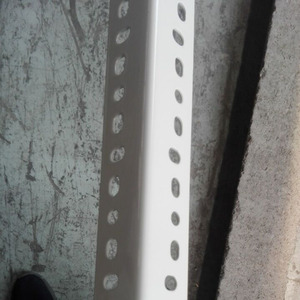
Assemble Slotted Angle Rack Affordable Colored Coating Steel Slotted Angle
- Multi-tier modular assembly
- Load capacity: 80 - 150 kg/shelf
- Pre-treated epoxy powder finish
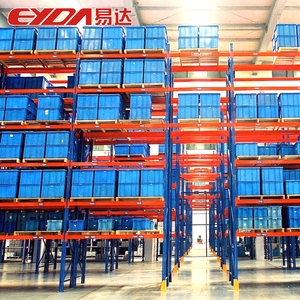
Garage Storage Factory Steel Warehouse Metal Van Rack System Heavy Duty Shelving Single Deep Industrial Pallet Rack Shelving
- Single deep 100% pallet access
- Rated capacity: 1,000 - 4,000 kg/level
- Interlocking cold-rolled box beams
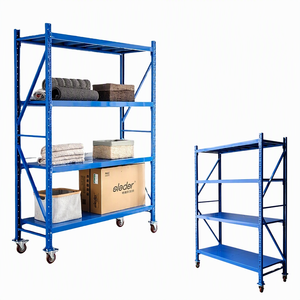
Light Duty Steel 4-Layer Powder Coated Storage Pallet Rack with Wheels 500kg Capacity for Warehouse Storage
- Heavy caster mobile staging
- Rated capacity: 500 kg total payload
- Dynamic lean manufacturing logistics
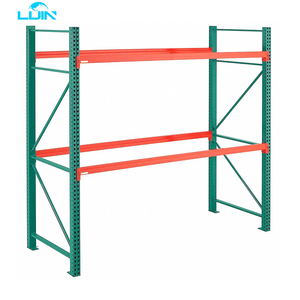
Long Span Adjustable Heavy Weight Warehouse Storage Pallet Shelves System Tear Drop Rack For Industrial
- Standard tear-drop connector profile
- Load capacity: Up to 3,500 kg/tier
- High interchangeable compatibility
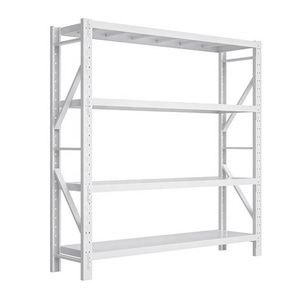
Medium Duty Storage Rack Steel Pallet Warehouse Medium Duty Rack
- Step beam with solid steel decking
- Rated capacity: 300 - 800 kg/level
- Boltless 50mm pitch adjustable
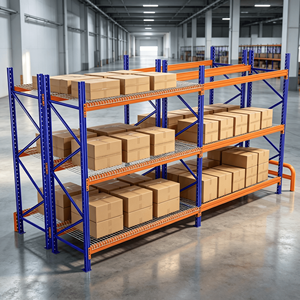
Custom Heavy Duty Industrial Steel Pallet Racking System Adjustable Warehouse Storage Rack Powder Coated
- Tailored structural upright omega profile
- Capacity: 1,500 - 5,000 kg/pair beam
- ISO 9001 certified structural QC
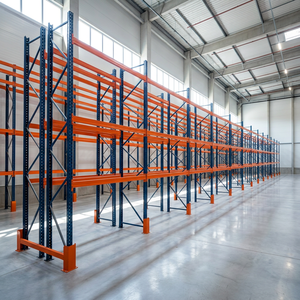
Garage Warehouse Rack Adjustable Storage Stacking Racks Heavy Duty Racking Factory Selective Rack Warehouse Storage Shelving
- Selective racking frame configuration
- Forklift entry guide & column armor
- Capacity: Up to 4,500 kg/tier load
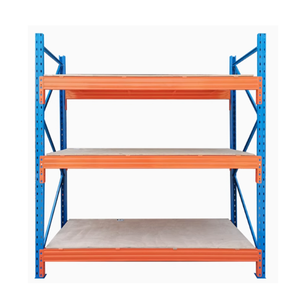
Heavy Duty Widely Used Industrial Warehouse Pallet Rack Heavy Duty Metal Steel Shelves Storage Racks Adjustable
- Heavy duty upright structural profile
- Hot-rolled steel footplate integration
- Continuous CNC precision punch slots
Engineering Authority: Inside the Guangzhou Heda Shelves Facility
Why leading multinational 3PL operators, supply chain directors, and cold-chain builders select our manufacturing infrastructure over commercial brokers.
Prime Certified Steel Substrates
We source certified Q235B and Q355B structural cold-rolled steel coils directly from premier mills (Baosteel, Shougang). Metallurgical inspection reports accompany each batch, guaranteeing a minimum yield strength of 235–355 MPa and strictly controlled elongation rates to avoid structural failure under dynamic loading.
Our upright profiles feature patented omega (Ω) structural folds, multiplying cold-formed load resilience and deflection rigidity without adding unnecessary deadweight to logistics freight calculations.
10-Stage Surface Treatment
Corrosion resistance determines long-term structural safety in coastal logistics hubs and high-humidity climates. HEDA integrates an automated 10-stage preparation cycle including automated degreasing, ultrasonic water washing, acid pickling, and zirconium-based nano-phosphating.
Finished parts receive an electrostatic powder coating cured at 200°C, producing a non-porous 60–90µm barrier layer resistant to impact, chemical spillage, salt mist, and scratch wear conforming to ISO 9227 standards.
CE & ISO 9001:2015 Accreditation
Every beam, upright frame, and connector is built to strict international safety standards. Our plant maintains continuous certification under CE Certification No. 2435-CPR-8605159 and ISO 9001:2015 Quality Management System No. 18624Q00169R0M.
Structural stress simulations comply with FEM 10.2.02 (European Racking Code), EN 15512, and American RMI MH16.1 specifications, ensuring global acceptance for project insurance and safety inspections.
Automated CNC Continuous Punching
Tolerances in tall upright framing dictate seismic resistance and vertical deflection. We utilize continuous high-speed CNC roll-forming and punching lines that maintain a hole-pitch deviation within ±0.1mm across a 12-meter continuous span.
This automated alignment guarantees beam locking pins fit snugly without mechanical jamming, reducing site erection labor costs by up to 25% for international teams.
Container Utilization Optimization
International ocean freight efficiency directly influences procurement viability. Our shipping engineers generate bespoke 3D container packing software manifests for standard 20GP and 40HQ configurations.
Nested packing bundles, steel strap banding, and foam corner armor maximize volumetric capacity to over 92% cube utilization while eliminating transit abrasion across high-seas routes.
Free 3D Layout & Structural Feasibility
We provide full structural engineering design before commercial contracting. Submitting building footprints and material handling equipment (MHE) specs yields comprehensive AutoCAD layouts, 3D renderings, and certified load calculation reports within 24 to 48 hours.
Our engineering proposals factor in building column grids, sprinkler systems, and turning radius clearances to eliminate on-site spatial conflicts.
Warehouse Racking Technological Evolution: From Static Iron to Smart Nodes
How automation, micro-flange roll-forming, and environmental chemistry are redefining industrial pallet racking.
| Technology Dimension | Traditional Racking Standards | Next-Gen HEDA Engineering (2025–2030) | Operational Value Metric |
|---|---|---|---|
| Steel Metallurgy & Profile | Standard commercial grade Q195/Q235 steel; flat C-channel or basic upright profiles. | Micro-alloyed cold-formed high-strength steel with multi-ribbed Ω-shape upright geometry. | 18% lighter structural tare weight with 32% increased resistance to horizontal buckling. |
| Seismic & Impact Resilience | Basic anchor bolts; rigid non-dissipative base plates lacking dynamic absorption. | Dynamic ductile baseplates, internal upright column stiffeners, and laser-slotted shear clips. | Conforms to Seismic Zones 3–4 (UBC/IBC) and reduces floor anchoring failure risk. |
| Automation Interface (ASRS / AMR) | Manual forklift tolerance margins (±5mm to ±10mm deviation). | Precision optical deflection tolerances (max deviation < L/500), integrated sensor rails. | Seamless interfacing with shuttle carts, automated stacker cranes, and AGVs without snagging. |
| Surface Layer Durability | Single-dip solvent enamel or rough single-coat powder finish. | Nano-ceramic conversion + thermosetting polyester powder; hot-dip galvanized option (>75µm). | 1,000+ hours neutral salt spray resistance (ASTM B117); non-peeling in -30°C cold storage. |
Structural Convergence: Racking-Supported Buildings
A notable trend across modern logistics mega-hubs is the transition toward rack-clad structures (rack-supported buildings). Instead of erecting an independent structural steel envelope and fitting pallet racks inside, the heavy-duty racking skeleton itself supports the roof trusses, wall cladding, and sprinkler infrastructure.
This design approach eliminates peripheral warehouse column encumbrances, slashes civil construction lead times by 20–35%, and optimizes volumetric floor-to-ceiling storage ratios beyond 90% utilization.
Micro-Shuttle Electrification & Dense Warehousing
The push for density has led to a transition from deep drive-in racks toward semi-automated radio shuttle pallet systems. By replacing forklift lane access with internal battery-powered shuttle vehicles running on continuous guidance rails, warehouse operators achieve up to 80% higher density than selective racking.
Modern radio shuttle systems feature rapid DC charging, -30°C cold-rated lithium iron phosphate (LiFePO4) power cells, and wireless warehouse control system (WCS) integration, decoupling manual operator speeds from rack retrieval cycles.
Future Procurement Trends: Total Cost of Ownership (TCO) & Supply Resilience
Key risk factors, logistical variables, and compliance shifts reshaping how supply chain executives procure racking systems globally.
TCO vs. Initial Metric Tonnage Cost
Corporate procurement is moving away from judging racking purely on "price per metric ton." Inexperienced suppliers often use low-yield steel with heavier thicknesses, driving up shipping container costs, duties, and crane handling fees without improving real load capacity.
Evaluating price per certified pallet location—factoring in steel yield strength, modular span flexibility, freight packing density, and boltless field erection speed—yields a 15–22% lower lifecycle cost over five years.
Decoupled Logistics & Knock-Down Modularity
Ocean freight rate volatility demands that racking components be designed around standard container dimensions. Modern procurement specs favor knock-down bolted upright trusses over bulky pre-welded frames, allowing upright sides to pack flat alongside nested beams.
This approach increases container load capacity from 14–16 tons up to 25–28 tons per 40HQ container, directly lowering landed shipping costs per pallet position.
Regulatory Auditing & Structural Traceability
Industrial facility insurers and municipal authorities require verifiable structural traceability. Procurement teams now mandate documented mill test certificates (MTC), independent weld inspections, and factory compliance under ISO 9001 and CE directives.
Purchasing from certified manufacturers like HEDA ensures all calculations, materials, and safety factors stand up to official third-party and structural engineering audits.
Warehouse Pallet Racking Procurement FAQ
Engineering recommendations, material criteria, and technical guidelines directly from our senior structural engineering team.
Beam length ($L$) is calculated based on clear pallet dimensions and aisle tolerances: for a typical two-pallet bay with standard 1200mm × 1000mm pallets, beam length equals $(2 \times \text{pallet width}) + (3 \times \text{side clearances of } 75\text{--}100\text{mm}) = 2300\text{mm}$ to $2700\text{mm}$. The safe working load must accommodate the total deadweight of both pallets plus a dynamic deflection limit of $L/200$ (or $L/300$ for automated handling). Every pair of HEDA beams includes engineered safety locking pins withstanding a minimum 5kN upward shear force to prevent accidental dislodgement.
Tear-drop patterns are the primary standard in North America, featuring punch holes shaped like an inverted tear that accept pin-style connectors without bolts, making them broadly interchangeable across regional brands. European slotted profiles (typically 50mm or 75mm pitch) use hook-type claw brackets that wedged securely into precision CNC-punched column slots. Both offer comparable structural integrity when manufactured from high-grade Q235B steel; choice is typically driven by existing facility inventory and localized MHE setup.
Electrostatic epoxy powder coating is the standard cost-effective solution for indoor, climate-controlled, dry distribution centers. Hot-dip galvanization (HDG)—where steel components are submerged in molten zinc to achieve a coating thickness >75µm—is recommended for outdoor storage yards, corrosive chemical storage, high-humidity coastal sites, and sub-zero refrigerated or blast-freezer rooms (-25°C to -40°C), where continuous moisture condensation causes premature rust on standard finishes.
Heavy pallet racks transfer concentrated point loads to the concrete slab through column baseplates. Standard warehouse installations require a concrete slab thickness of 150mm to 250mm with a compressive strength of at least 25–30 MPa (C25/C30). For high-bay racks over 8 meters tall or seismic applications, structural engineers must verify floor flatness (per DIN 18202 or ASTM E1155) to prevent forklift mast lean, alongside geotechnical soil bearing capacity to avoid uneven post settlement.
To provide a fully calculated 3D layout, our team requires: (1) Architectural drawings showing internal building dimensions, clear roof height, and column locations; (2) Pallet dimensions (width × depth × overall height including goods) and maximum unit load weight; (3) Forklift model, minimum turning radius (AST), and maximum mast lift height; and (4) Environmental factors such as local seismic zone classifications and operating temperatures.
Shipping assembled upright frames consumes significant container volume with empty air space, restricting payloads to roughly 12–15 tons per 40HQ container. HEDA utilizes a knock-down (KD) bolted assembly approach where upright columns and diagonal/horizontal bracing are flat-packed in high-density bundles. This method increases payload efficiency up to 26–28 tons per container, effectively cutting per-pallet ocean freight costs by up to 40% on intercontinental routes.
Under FEM and OSHA guidelines, high-risk aisle intersections require heavy-gauge steel column protectors or end-of-row barrier guards to absorb forklift impacts. For open-mesh or non-standard pallet handling, wire mesh decking or steel pallet support bars are required to prevent stock fall-through. Additional safety options include rear pallet backstops, anti-collapse wire mesh wall backing along pedestrian aisles, and high-visibility load capacity placards fixed to every row.
All shipments include stamped engineering elevation drawings, component numbering tags, and comprehensive step-by-step installation manuals. Upright frames are assembled flat on the floor, tipped upright, shimmed with steel leveling plates beneath base assemblies, and anchored with expansion bolts. For complex installations—such as multi-tier mezzanines or radio shuttle runs—our engineering office provides real-time video guidance or dispatches factory installation supervisors to manage local crews on site.
Design Your High-Efficiency Warehouse Storage Facility
Consult with our senior logistics engineers today. Receive a free tailored AutoCAD layout, structural load analysis report, and a detailed landed-cost proposal within 24 hours.
Get Catalog