Featured Industrial Warehouse Storage Racks
From standard selective pallet formats to automated shuttle arrays and parts picking shelves, our certified structural steel systems optimize vertical cubage, improve inventory accessibility, and withstand demanding logistical cycles.
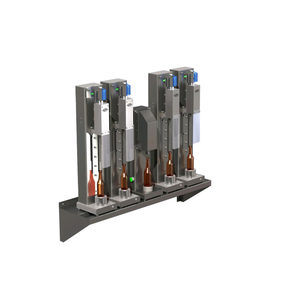
- Integrated drainage channels
- Sanitary cold-chain & cleanroom grade
- Corrosion-resistant electro-coat
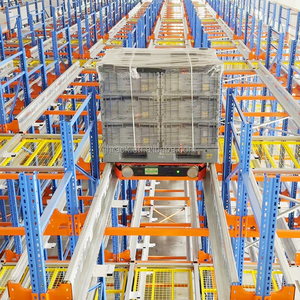
- Fully autonomous multi-directional travel
- Up to 1,500 kg payload per carrier
- High-density WMS/WCS interface
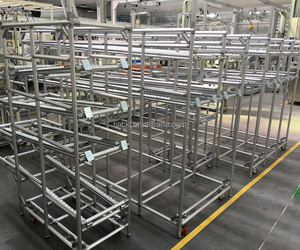
- 50mm/75mm adjustable pitch
- High-tensile Q235B cold-rolled steel
- Heavy structural upright configuration
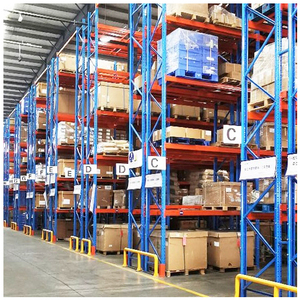
- Rapid boltless interlocking joint system
- Up to 1,000 kg/tier uniform load
- Electrostatic powder-coat finish
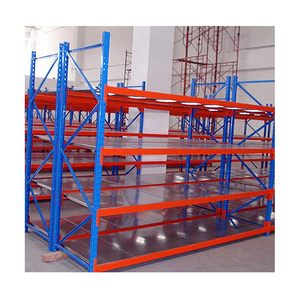
- 100% immediate individual pallet selectivity
- Compatible with all forklift types
- Custom beam lengths and column ties
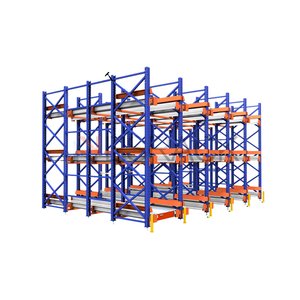
- Maximized deep-lane storage density
- FIFO / LIFO dynamic operational modes
- Low operational wear on forklift mast
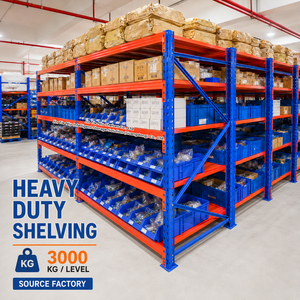
- Heavy solid or wire mesh steel decking
- Engineered for SKU bin classification
- 3,000 kg structural level capacity
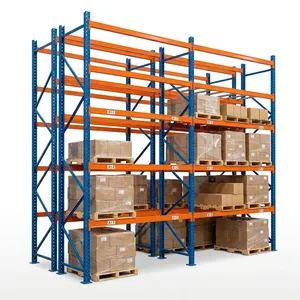
- Reinforced load beams with safety pins
- Multi-tier stackable modular frame
- Dual-coat anti-rust protective treatment
Engineering Integrity, Production Control, and Global Compliance
As a recognized market leader among China warehouse rack exporters, Guangzhou Heda Shelves Co., Ltd. integrates full-lifecycle manufacturing, finite element structural analysis (FEA), and stringent global certification to deliver high-yield storage assets.
10-Stage Precision Manufacturing Chain
Unlike regional trading intermediaries, our 30,000 m² Guangzhou production facility oversees all ten key manufacturing phases internally: prime Q235B/Q355B coil selection, automated continuous slitting, high-precision hydraulic punch profiling, continuous cold-roll forming, robotic laser cutting, multi-axis automated robotic welding, 9-stage acid pickling, automated phosphating, electrostatic powder spray coating (60–90 μm thickness), and cured polymer baking at 200°C.
Every profile undergoes rigorous yield tests, weld ultrasonic testing, and beam deflection calibration under 1.5x working load limits (WLL), fully meeting EN 15512, RMI (Rack Manufacturers Institute), and AS4084 steel storage guidelines.
Free Engineering 3D CAD & Container Logistics Optimization
Procuring warehouse racking internationally introduces engineering and logistical complexities. HEDA Shelves addresses these directly through complimentary engineering design services before production. Our engineering desk uses dynamic structural modeling to calculate floor plate slab loading, seismic acceleration coefficient adaptations, and precise column pitch based on your forklift fleet's turn radius and maximum mast reach.
Furthermore, our dedicated overseas dispatch team engineers container loading plans via specialized nesting algorithms. Beams and upright frames are packed in modular knock-down configurations inside 40HQ high-cube maritime containers, maximizing ocean freight volume and lowering your landed cost per pallet position by up to 28%.
Future Warehouse Racking Trends: Automation, Density, and Cold-Chain
The worldwide intralogistics landscape is experiencing structural disruption driven by escalating land rents, labor scarcity, and e-commerce throughput pressures. Learn how current technical trends are changing racking specifications.
AS/RS & 4-Way Radio Shuttle Synergy
Static pallet storage is shifting rapidly toward semi-automated and fully automated dense storage. 4-way radio shuttles travel longitudinally and laterally within specialized rack rails, drastically shortening travel times and eliminating traditional forklift aisle waste to boost spatial utilization up to 85%.
Sub-Zero Thermal & Anti-Corrosion Resilience
Cold-chain growth demands racks that perform under continuous -30°C conditions without brittle steel fractures. Modern facilities rely on special low-temperature alloy steels, along with hot-dip galvanized or specialized zinc-epoxy powder formulations that prevent micro-cracking from condensation.
Modular Multi-Tier Mezzanine Integration
Rather than funding new commercial construction, global enterprise logistics managers are doubling clear vertical capacity via rack-supported multi-tier platforms. These combine bulk lower-level pallet access with upper-level picking mezzanines for high-SKU items, saving major capital expenses.
Global Procurement Trends: What B2B Buyers Must Know
International supply chain leaders are fundamentally rethinking racking sourcing models. Procurement strategies have evolved beyond ex-factory unit pricing to encompass total landed value, operational flexibility, and localized resilience.
Total Cost of Ownership (TCO) Prioritization
Savvy procurement officers now look past initial FOB quotes to evaluate true TCO: freight packing density, structural life expectancies, maintenance overhead, and field adaptability. Sourcing components with standard 50mm/75mm hole pitches ensures compatibility with future expansions, avoiding premature system replacements when storage needs shift.
Direct Factory Verification via Third-Party Audits
Global enterprises increasingly require verified factory credentials—such as SGS, Bureau Veritas, and TÜV Rheinland certifications—before placing large capital orders. Direct engagement with actual manufacturers like HEDA Shelves removes broker markups, guarantees steel mill test certs (MTCs), and provides transparent factory floor tracking from cutting to shipment.
Frequently Asked Technical Questions
Clear answers to common questions about engineering, ocean freight, material quality, and compliance for warehouse racking imports from China.
We use certified high-grade Q235B and Q355B structural carbon steel sourced directly from premier domestic mills like Baosteel and Shougang. Every production heat arrives with verified Mill Test Certificates (MTCs), verifying tensile strength, chemical composition, and elongation parameters matching international EN 10025 specifications.
Our surface finishing process includes continuous acid pickling to eliminate scale, followed by automated phosphating to create an anti-corrosive chemical anchor. Components then receive electrostatic powder coating (60–90 μm) cured at 200°C. For extreme humidity, coastal facilities, or cold storage, we also provide continuous hot-dip galvanizing per ISO 1461 standards.
To deliver an accurate layout within 24 hours, our engineering desk needs: (1) Architectural floor plan showing clear ceiling height, column grids, and access doors; (2) Pallet specifications (width, depth, overall height including cargo, and maximum pallet weight); (3) Forklift model, turning radius, and lift height; and (4) Warehouse operating temperatures.
Yes. Every export container ships with clear, color-coded CAD assembly elevations, structural torque requirements, component part lists, and sequential video manuals. Our engineering desk provides remote video assistance throughout installation. For large distribution centers or mezzanine projects, we can also dispatch structural installation supervisors on-site.
Upright frames and horizontal beams are bundled using high-tensile steel straps with protective corner guards, supported by custom wooden dunnage blocks that allow forklift tines easy access during discharge. Small accessories like row spacers, base plates, and safety drop pins are packed in numbered, heavy wooden crates to prevent shifting during ocean transit.
Standard selective pallet racking orders (1 to 4 maritime 40HQ containers) typically ship within 14 to 20 working days after CAD sign-off. More complex projects, such as 4-way radio shuttle systems or multi-level structural steel mezzanines, typically ship in 25 to 35 days, including complete pre-assembly inspections and electrical shuttle testing.
Request Your Free CAD Layout & Factory-Direct Quote
Connect directly with our senior warehouse design engineers. We will analyze your warehouse dimensions, evaluate operational throughput requirements, and deliver a comprehensive 3D CAD proposal with static load calculations within 24 hours.