Engineered Warehouse Racking & High-Density Storage Units
Precision-manufactured in our certified Chinese facilities to meet ANSI MH16.1, EN 15512, and ISO 9001:2015 engineering parameters.
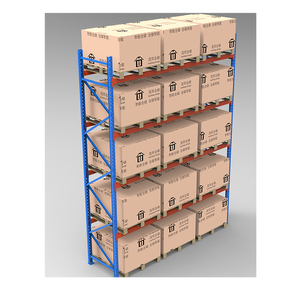
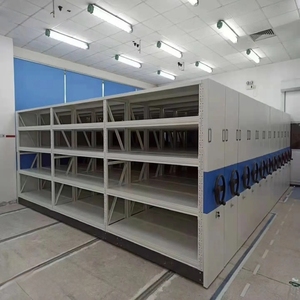
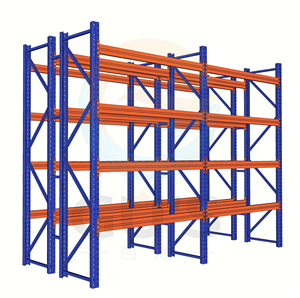
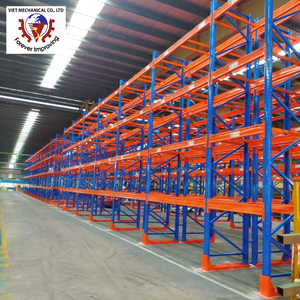
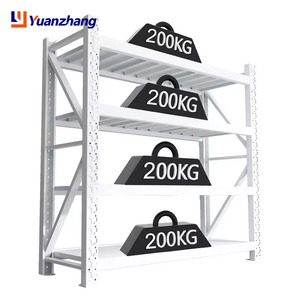
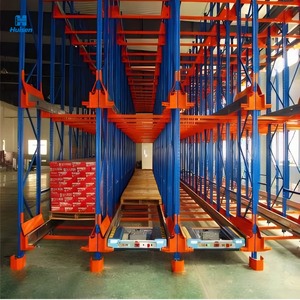
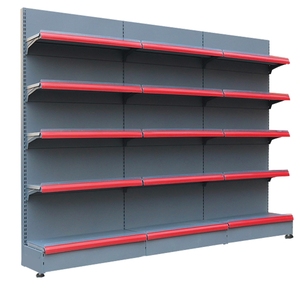
China Wholesale Cantilever Racking: Engineering Architecture & Structural Mechanics
In the heavy industrial storage sector, China wholesale cantilever racking factories have evolved from basic fabrication shops into internationally recognized engineering epicenters. Unlike standard pallet racks that rely on front vertical uprights, cantilever racking is uniquely configured with central structural vertical columns, stable wide bases, and horizontally extending load arms. This distinct open-front architecture eliminates horizontal structural barriers, creating an unhindered horizontal run that is indispensable for storing long, non-standard, or irregularly shaped commodities such as structural steel tubes, PVC conduit, extruded aluminum profiles, structural timber beams, gypsum panels, and automotive chassis components.
From a mechanical engineering perspective, cantilever racks resist extreme overturning moments and cantilever beam bending. When high-tonnage materials are positioned along the cantilever arm, load deflection shifts along the arm beam to the column connection point. Certified Chinese export manufacturers execute rigorous Finite Element Analysis (FEA) to confirm that stress concentrations at the bolt connections, welded beam saddles, and wedge pin locking mechanisms operate comfortably within the elastic limits of high-tensile structural carbon steel (specifically Q235B and Q355B grades).
| Structural Component | Cold-Formed Roll-Bent Profile | Heavy Structural I-Beam (Hot-Rolled) | Primary Industrial Application |
|---|---|---|---|
| Vertical Column Height | Up to 6,000 mm (120-300mm Profile) | Up to 12,000+ mm (H-Beam / IPE) | Structural tubing, light lumber, retail bars |
| Arm Capacity (Per Level) | 200 kg – 800 kg / Arm | 800 kg – 3,500+ kg / Arm | Heavy steel plates, master coils, casting molds |
| System Configuration | Single / Double-Sided (Pin-Connected) | Single / Double-Sided (High-Tensile Bolted) | Indoor industrial facilities & heavy open yards |
| Protective Coating | Electrostatic Polyester Powder (60-80μm) | Hot-Dip Galvanized (HDG ISO 1461, ≥85μm) | Corrosive environments, cold rooms, outdoor ports |
Our manufacturing base incorporates 10 distinct, mathematically verified production stages—spanning uncoiled plate cutting, automated CNC column slot punching, high-precision roll forming, certified robotic welding, 8-stage pickling and phosphating pre-treatments, through to electrostatic powder coating ovens operating at 200°C. This ensures maximum surface adhesion, eliminating structural micro-fissures and providing long-term corrosion prevention across both humid equatorial and sub-zero logistics operations.
Future Procurement Trends in Industrial Cantilever Systems
Global procurement teams navigating international supply chain logistics face evolving constraints including fluctuating ocean freight tariffs, rising warehouse floor real estate costs, and tightening occupational safety standards. As a leading Chinese industrial storage exporter, we observe four transformative procurement trends that are reshaping capital expenditure decisions for global distribution hubs:
1. Accelerated Transition to Heavy Hot-Dip Galvanization (HDG) for Yard Storage: With indoor industrial floor lease costs surging across Europe, North America, and coastal logistics zones in Africa and Southeast Asia, operators are migrating heavy long-stock inventories to outdoor storage yards. Consequently, B2B procurement has shifted sharply toward hot-dip galvanized cantilever structures conforming to ISO 1461. Galvanized zinc bath submersion delivers complete internal and external metallurgical bonding, defending against marine salt spray, extreme humidity, and UV degradation without requiring ongoing paint maintenance.
2. Container-Optimized Knock-Down Modular Design: Ocean freight economics necessitate volumetric efficiency. Future-forward Chinese exporters engineer cantilever systems with fully demountable, bolted base-to-column connections and modular arm cradles rather than bulky welded mono-structures. This flat-pack engineering increases 40-foot High Cube (40HQ) container utilization by up to 38%, lowering the landed freight cost per metric ton of steel delivered to destination hubs.
3. Multi-Tier Mezzanine and Cantilever Hybridization: In distribution sectors dealing with diversified SKU lengths (such as furniture manufacturing, plumbing fittings, and automotive aftermarket logistics), hybrid configurations are replacing isolated single-purpose systems. Facilities combine lower-tier heavy cantilever arms for bundle staging with upper-tier structural mezzanine decks supported directly by the racking columns, converting dead overhead cubic space into active manual picking areas.
4. Strict Compliance with Third-Party Auditing Protocols: Global procurement officers are increasingly requiring verified raw material mill test certificates (MTC) proving steel chemistry, tensile strength, and impact resistance. Third-party testing via international certification bodies (CE EN 1090-1 execution classes, ISO 9001:2015 traceability, and RoHS compliances) has progressed from an optional asset to a non-negotiable procurement baseline.
Technological Development Trends: The Next Generation of Cantilever Engineering
The global materials handling equipment industry is undergoing profound automation. The traditional reliance on counterbalanced forklift operators navigating wide 5-meter cantilever aisles is being superseded by next-generation mechanical and digital innovations:
Automated Guided Sideloaders & Narrow Aisle Guide Rails: High-density cantilever layouts are shrinking operating aisle widths from 4.8 meters down to under 2.2 meters through the deployment of bi-directional articulated reach trucks and inductive wire-guided sideloaders. To support these tighter tolerances, modern cantilever bases are pre-punched during factory fabrication to integrate steel mechanical guide rails or magnetic track floor anchors, eliminating mast collisions and safeguarding structural columns.
Sensor-Integrated Real-Time Load & Deflection Telemetry: Pilot projects across tier-1 logistics facilities utilize strain gauge sensors and ultrasonic beam deflection indicators embedded directly inside heavy cantilever arms. These industrial IoT monitors communicate directly with the site Warehouse Management System (WMS), issuing instant overload alerts if localized loading exceeds certified threshold capacities or if uneven point loading creates dynamic torsional twisting.
Mobile Cantilever Bases (Motorized Electric Carriages): For cold-chain lumber storage, architectural stone facilities, and metal die storage where square footage is at an absolute premium, cantilever racks are mounted atop heavy-duty, floor-embedded motorized mobile bases. With the push of a PLC touch panel or remote crane command, entire blocks of cantilever racks shift along floor rails, opening a single operational aisle exactly where picking occurs. This eliminates dormant aisles, boosting volumetric storage density by up to 80% without forfeiting random access to any SKU.
Guangzhou Heda Shelves Engineering & Export Infrastructure
Direct factory accountability delivering engineering layout optimization, high-yield steel manufacturing, and end-to-end export documentation.
25 Years Manufacturing Prowess
Operating continuously since 2001, our 30,000 m² Guangzhou production complex combines extensive cold-bending roll-forming lines, automated punching, and specialized robotic welding to handle massive multi-bay projects with precision tolerances.
Free 3D Layout & Structural FEA
Send your site dimensions, clear heights, and material load specifications. Our in-house engineering team delivers full CAD floor layouts, photorealistic 3D warehouse renderings, and verified point-load calculations free of charge within 24 hours.
International Certifications
Our facility holds full CE Certification (No. 2435-CPR-8605159) for structural steel construction, ISO 9001:2015 Quality Management accreditation (No. 18624Q00169R0M, valid to June 2027), and verified RoHS chemical compliance across all coatings.
Container-Optimized Packaging
Knock-down structural components are precision-bundled and nested to maximize 20GP and 40HQ container space. This approach protects finished powder surfaces during ocean freight and lowers shipping costs per pallet position.
Severe Environment Engineering
Engineered for tough operating climates—from high humidity in coastal West Africa and Southeast Asia to sub-zero cold stores. We utilize pickling, phosphating, electrostatic coatings, and hot-dip galvanization to ensure decades of structural life.
Turnkey Global Installation Guidance
Every overseas consignment includes numbered components, precise structural shop drawings, and step-by-step 3D manuals. We deliver remote multi-lingual video engineering support and on-site supervisor dispatch for major projects worldwide.
Frequently Asked Questions: Cantilever & Industrial Racking Procurement
Direct, actionable engineering answers addressing structural integrity, ocean freight, custom profiles, and installation management.
Cantilever load calculation assumes a uniformly distributed load (UDL) across each arm level. If an arm is rated for 1,000 kg, that weight must be dispersed evenly along the arm’s length. Concentrating load at the outer tip increases the bending moment significantly, potentially leading to permanent plastic deformation. Certified Chinese factories compute safety factors according to EN 15512 or ANSI MH16.1 guidelines, maintaining a safety margin of at least 1.5 to 1.95 on structural yield points.
Roll-formed cantilever racks are cold-bent from coiled sheet steel (Q235B) into specific C-profiles. They are cost-effective, lighter, and optimal for light-to-medium loads (up to 600-800 kg per arm). Hot-rolled H-beam (structural I-beam) cantilever racks utilize solid mill-rolled structural steel profiles. They provide exceptional rigidity, withstand accidental forklift impacts better, and handle extreme duty cycles (up to 3,500+ kg per arm) typical of steel distribution yards and heavy pipe storage.
Prior to coating, steel members undergo an automatic 8-step chemical pre-treatment comprising acid pickling (to remove mill scale and rust) followed by zinc phosphating (to establish a crystalline anti-corrosive primer layer). We then apply an electrostatic thermosetting polyester powder coat cured at 200°C. For aggressive coastal marine atmospheres, open air yards, or cold refrigeration facilities, hot-dip galvanizing per ISO 1461 is specified, delivering a thick zinc coating (85–100 μm) that seals the steel for decades.
To deliver an exact structural layout and quotation, we require: (1) Total length, depth, and clear stacking height of the building; (2) Commodity details including length, outer bundle dimensions, and maximum weight per bundle; (3) Single-sided (wall-backed) or double-sided (central aisle) preference; (4) Forklift specifications including mast lift height, turning radius, and collapsed height; and (5) Specific environmental or seismic considerations (e.g., coastal outdoor yard, seismic zone rating).
All export shipments are packed knock-down with labeled components corresponding directly to step-by-step CAD installation prints and assembly schematics. Our engineers provide remote support throughout assembly. For larger international operations (over 10,000 m²), we can deploy bilingual installation supervisors to direct local rigging crews, oversee correct floor anchoring torque, and certify final structural alignments.
Our cantilever uprights are stamped with CNC-punched adjustment holes spaced at standard 100mm, 140mm, or 150mm vertical pitches. The arm connectors utilize heavy-duty tapered pin locks or high-tensile bolt saddles. When SKU bundle heights change, warehouse maintenance teams can adjust arm elevations quickly using basic hand tools without structural cutting or field re-welding.