1. Engineering Evolution & Structural Architecture of High Bay Racking
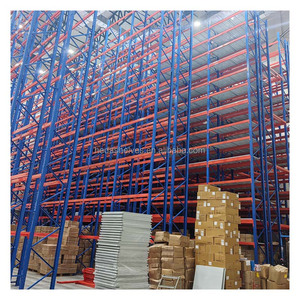
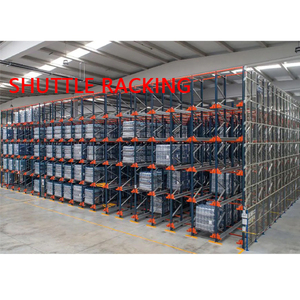
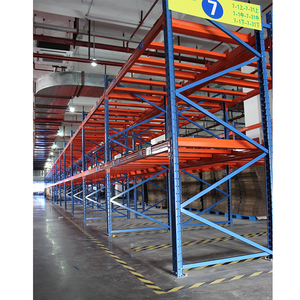
High bay racking represents the pinnacle of static and dynamic structural steel engineering within intralogistics. Unlike standard single-deep floor-standing racks, high bay installations—frequently extending between 15 and 40 meters in clear height—act either as freestanding interior storage grids or as Rack-Supported Buildings (Clad-Rack Structures) where the racking columns directly support the warehouse roof and exterior wall cladding.
The structural mechanics must account not merely for vertical dead loads and live pallet loads (UDL), but critically for dynamic wind loading, snow accumulation, thermal expansions, and horizontal acceleration forces exerted by Automated Storage and Retrieval System (AS/RS) stacker cranes traveling at speeds exceeding 240 m/min. In Chinese state-of-the-art manufacturing plants like Guangzhou Heda Shelves, upright upright columns are manufactured from cold-formed micro-alloyed structural steel (Q355B or ASTM A572 Grade 50) using continuous roll-forming lines featuring up to 30 roll passes to eliminate internal residual stresses.
| Structural Parameter | Standard Selective Pallet Rack | Very Narrow Aisle (VNA) High Bay | Automated AS/RS Clad-Rack High Bay |
|---|---|---|---|
| Operating Height | 3,000 – 9,000 mm | 9,000 – 16,000 mm | 16,000 – 40,000 mm |
| Aisle Width Requirement | 2,800 – 3,500 mm (Counterbalance) | 1,600 – 1,900 mm (Turret Truck) | 1,350 – 1,550 mm (Crane Profile) |
| Deflection Tolerance Limits | Beam: L/200, Upright: H/350 | Beam: L/300, Upright: H/500 | Strict AS/RS: Beam L/400, Lateral < 10 mm |
| Floor Flatness Class | ISO TR 34 Class 4 / Free Movement | TR 34 FM2 / Defined Movement | DIN 18202 Table 3 / Superflat Tolerances |
| Steel Yield Strength ($f_y$) | 235 N/mm² (Grade Q235B) | 355 N/mm² (Grade Q355B) | 355 – 460 N/mm² (High-Yield Microalloy) |
| Seismic Damping Compliance | Static Equivalent Analysis | Dynamic Modal Response (EN 1998) | Full 3D Dynamic FEA Spectrum Analysis |
Sub-Millimeter Tolerances and Cold-Formed Geometry
When operating automated stacker cranes or 4-way radio shuttles inside high bay channels, a lateral deviation of just 2.0 mm at 24 meters can trigger crane sensor shutdowns or load misplacement. Top-tier Chinese high bay factories employ automated optical laser punching to punch 50mm or 75mm pitch teardrop or omega perforations with absolute center-to-center pitch tolerances within ±0.15 mm over an entire 12-meter single column section. Splice joints are laser-milled and reinforced with multi-point high-shear connector brackets rated up to Grade 8.8 or 10.9 structural bolts.
2. Future Procurement Trends in High Bay Logistics & Material Handling
Procuring heavy-duty warehouse infrastructure from China is moving rapidly away from simple commoditized price-per-kilogram purchasing toward integrated engineering system integration. Tier-1 global procurement directors are re-aligning their supply chain sourcing criteria along four major axes:
Direct CAD/BIM to Roll-Forming Integration
Modern supply contracts mandate direct ingestion of Revit, Navisworks, and IFC BIM building models into the factory's CNC roll-forming software. This end-to-end parametric workflow eliminates field modifications, ensuring zero interference with HVAC, fire sprinkler lines, and structural roof trusses.
Clad-Rack Building Envelopes Replacing Conventional Civil Works
Rather than constructing a structural steel building and subsequently installing freestanding racking, developers save up to 25% on total facility capital costs by specifying rack-supported clad-rack facilities. The racking uprights act as the primary building columns, drastically compressing construction schedules.
Decarbonized & High-Durability Surface Metallurgy
Procurement requirements now demand closed-loop chemical pre-treatments, replacing solvent processes with non-heavy-metal zinc phosphating and RoHS-compliant electrostatic polyester powders. For sub-zero cold chain and marine environments, continuous pre-galvanized coils (Z275/Z600) and hot-dip galvanizing prevent micro-corrosion.
3. Core Advantages of Guangzhou Heda Shelves Co., Ltd.
Since its founding in 2001, Guangzhou Heda Shelves Co., Ltd. has established itself as an authoritative leader in heavy-duty racking engineering and customized warehouse logistics equipment. With over 25 years of specialized manufacturing experience, our Guangzhou production center delivers full-scale OEM & ODM capabilities for multinational logistics operators, 3PL distributors, and commercial enterprises worldwide.
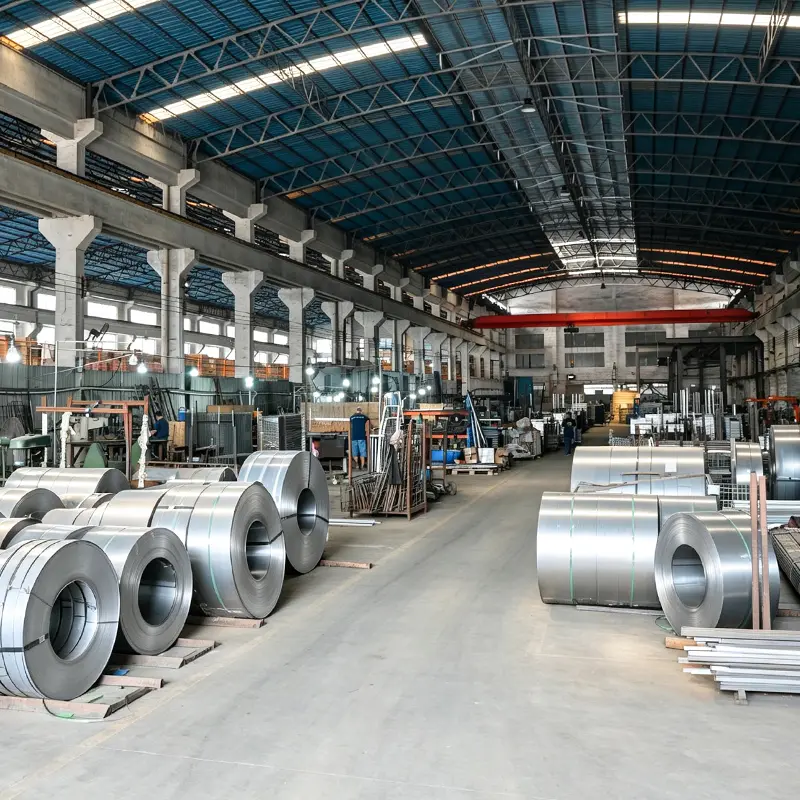
25 Years Industry Expertise
Established in 2001, executing complex structural storage projects across 120+ nations with comprehensive global logistics knowledge.
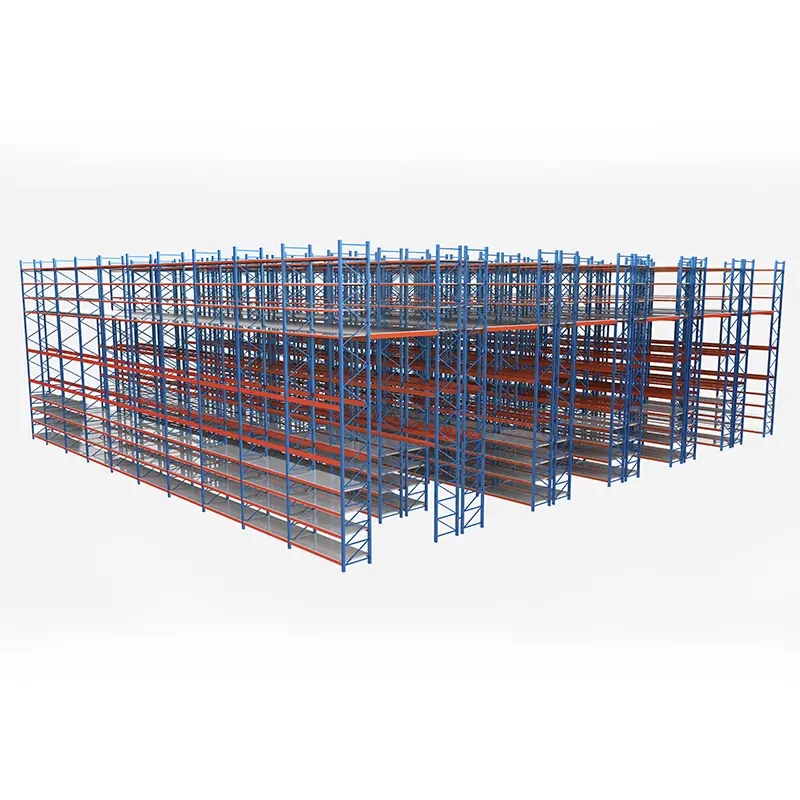
Free 3D CAD & FEA Design
In-house structural engineers provide comprehensive CAD layouts, 3D parametric renderings, and FEA load stress calculations within 24 hours.
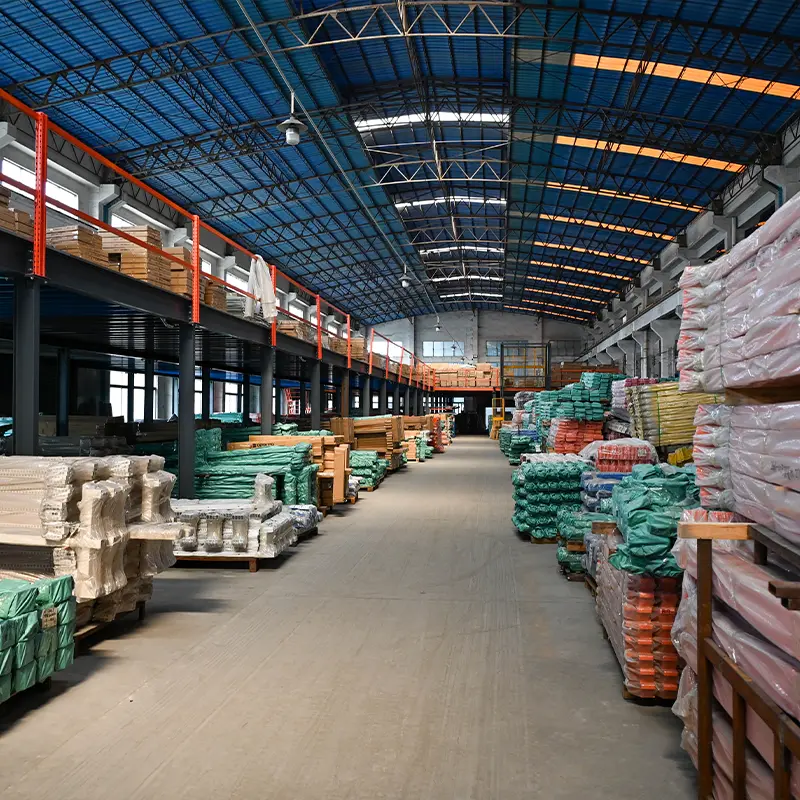
Verified Certified Quality
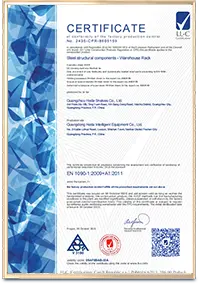
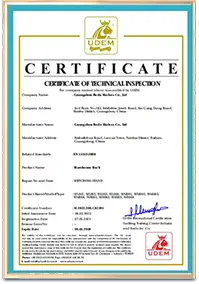
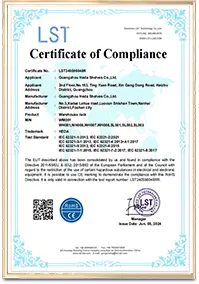
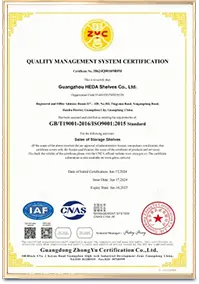
Rigorous multi-stage QC backed by verified CE Certification No. 2435-CPR-8605159 and ISO 9001:2015 Certification No. 18624Q00169R0M.
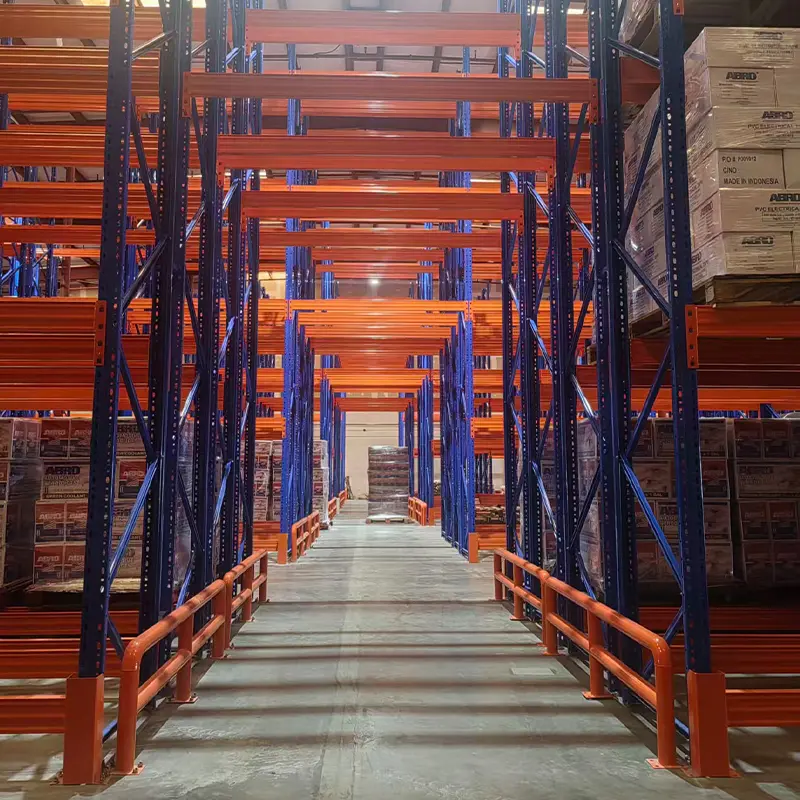
Fully Customized Solutions
OEM/ODM customization of beam sections, upright punch styles, customized RAL colors, and specialized drum, coil, or pallet accessories.
10-Stage Precision Manufacturing Process
True structural durability begins at the metallurgical level. At HEDA Shelves' 30,000 m² factory, raw structural steel coils undergo ten strictly controlled in-house manufacturing steps to ensure consistent yield strength and corrosion resistance:
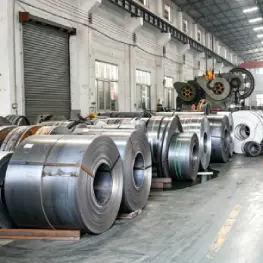 Stage 01
Raw Material Q235B/Q355B
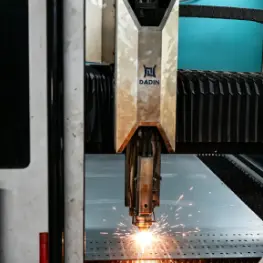 Stage 02
Precision CNC Cutting
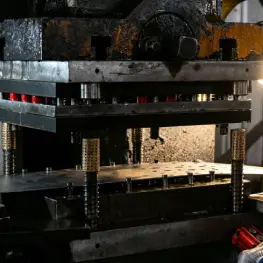 Stage 03
Automated Pitch Punching
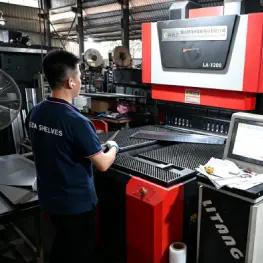 Stage 04
Cold Bending Forming
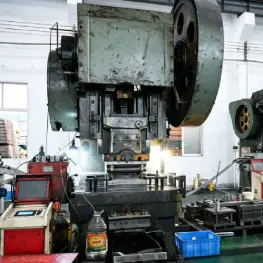 Stage 05
Continuous Roll Forming
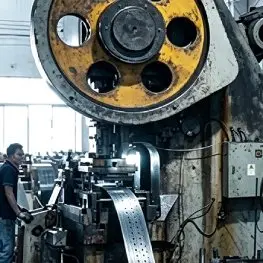 Stage 06
Deburring & Polishing
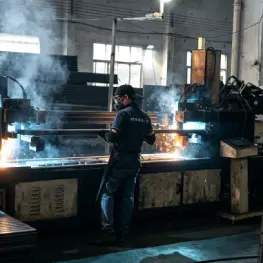 Stage 07
Robotic CO2 Welding
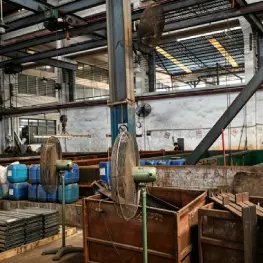 Stage 08
Pickling & Phosphating
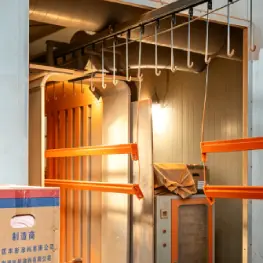 Stage 09
Electrostatic Powder Coat
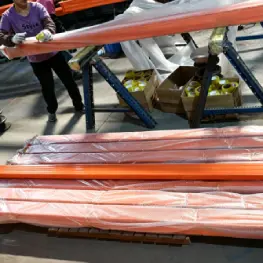 Stage 10
QC & Knock-Down Packing
International Certifications & Quality Compliance
Global engineering compliance requires audited documentation. HEDA Shelves components are manufactured strictly in accordance with European standard EN 15512 (Steel static storage systems), British standard SEMA, and American RMI ANSI MH16.1 specifications:
4. Frequently Asked Questions (FAQ) for High Bay Racking Sourcing
High bay and VNA installations require concrete slabs engineered to TR34 (FM2 or Superflat) or DIN 18202 standards. Compressive strength must typically reach C30/37 or 4,000+ PSI with reinforced steel mesh to absorb high point loads (often 80 to 180 kN per upright baseplate). Floor settlement across aisles must remain strictly under 1.5 mm to prevent column tilt.
We employ advanced Finite Element Analysis (FEA) software modeling dynamic response spectra per Eurocode 8 (EN 1998-1) and US ASCE 7/RMI standards. We compute second-order (P-Delta) sway moments, beam-to-column rotational stiffness, and install horizontal and vertical back-bracing systems with high-tensile turnbuckles to damp seismic shockwaves.
Uprights and beams are knock-down nested with custom steel banding, dense wooden runners, and corner protective foam collars. By bundling upright frames and nesting step beams, container volumetric efficiency regularly reaches 92%–95%, reducing ocean freight costs per pallet position to international ports such as Lagos, Rotterdam, Los Angeles, and Durban.
Yes. HEDA manufactures AS/RS guide rail beams, top crane rail supports, and shuttle running profiles with continuous laser deflection monitoring. We calibrate cross-bay alignment tolerances within ±1.0 mm to guarantee total compatibility with European, Japanese, and American stacker crane grippers and 4-way shuttles.
Thanks to our 30,000 ton monthly capacity and 10 automatic roll-forming lines, production of a 10,000-pallet position high bay system is typically completed within 20 to 28 business days following final approval of the architectural CAD drawings and structural calculation dossier.
For sub-zero refrigeration (-30°C) or tropical marine environments, we recommend continuous hot-dip galvanized steel components (HDG with zinc layer thickness >65–85 μm) or pre-galvanized high-yield steel coils. For standard ambient warehouses, our 10-stage phosphating pretreatment plus electrostatic thermosetting powder coating guarantees >500 hours of neutral salt spray resistance (ASTM B117).