High-Performance Industrial Storage Racks & Systems
Explore our export-certified heavy storage racks manufactured using structural grade Q235B and Q355B cold-rolled steel, designed for maximum load density, dynamic impact deflection control, and rapid containerized maritime deployment.
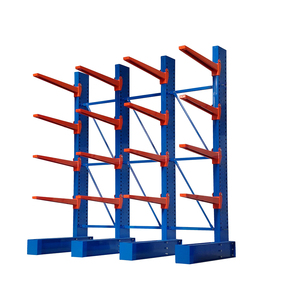
Warehouse Steel Structural Pipe Rack Cantilever Rack for Pipe / Lumber Storage
- 1,000kg to 3,000kg load per arm
- Single & double-sided column configurations
- Unobstructed front for pipe, bar & timber
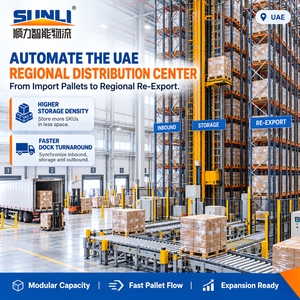
SHUNLI SL-AS004 Heavy Duty Automated AS&RS Pallet Stacking System
- 500kg - 1,500kg unit capacity per pallet
- High-bay vertical clearance up to 30 meters
- WMS/WCS integrated crane interface
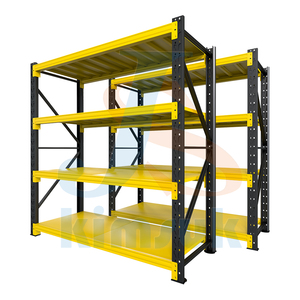
Boltless Adjustable Heavy Duty Load-Bearing 500kg/Tier Industrial Shelving
- 500kg certified uniform distributed load
- 50mm pitch adjustable beam levels
- Riveted / butterfly-hole knock-down design
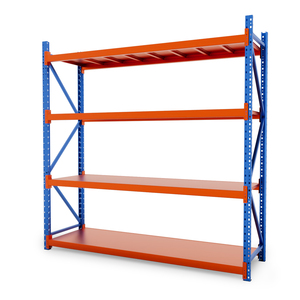
Wholesale Heavy Duty Pallet Rack 3,000kg High Load 4-Tier Selective System
- 3,000kg beam pair loading resilience
- 100% direct access to individual pallets
- High-tensile box beam profile with lock pins
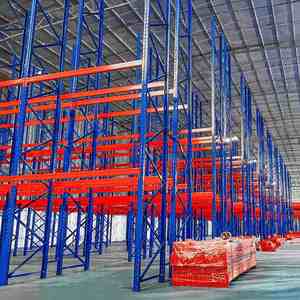
OEM ODM Heavy Duty Pallet Racking System Industrial Warehouse Racks
- Bespoke upright column punching profiles
- ISO 9001:2015 certified welding lines
- Tailored powder-coated RAL branding colors
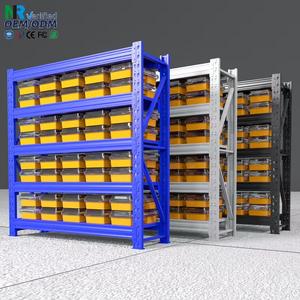
Single-Deep Heavy-Duty Factory & Garage Storage Metal Racks
- Compact footprint with industrial steel gauge
- Scratch-resistant epoxy powder coating
- Rapid modular expansion & repositioning
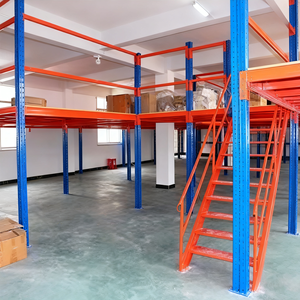
Industrial Multi-Tier Mezzanine Floor Rack System with Integrated Stairs
- 300kg - 1,000kg/m² floor capacity options
- Dual-function: pallet base + upper order pick
- Complete safety handrails & pallet drop gates
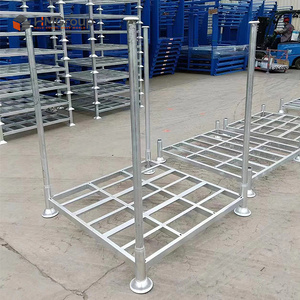
Heavy Duty Industrial Galvanized Stacking Post Pallet Stillages Racks
- Hot-dip galvanized or zinc-plated finish
- 4-high to 6-high stable nesting stackability
- Detachable post design saves return freight
Engineering Foundations: Material Yield Strength, Tolerances & FEM Compliance
Procuring industrial storage racking directly from a Tier-1 Chinese manufacturer requires clear insight into metallurgical standards, structural engineering mechanics, and automated manufacturing precision. Unlike light residential shelving, heavy-duty industrial pallet racking systems bear dynamic static loads exceeding hundreds of metric tons. Modern warehouse racking systems produced by leading Chinese exporters rely predominantly on certified Q235B and high-yield Q355B cold-rolled carbon steel. These alloy steels undergo precise continuous roll-forming processes to form omega-profile upright columns and closed-seam box beams capable of withstanding heavy impact loads while strictly adhering to the deflection criterion of L/200 under full uniform loading conditions.
Under European standard EN 15512:2020 and American standard ANSI MH16.1 (RMI), structural integrity calculation mandates finite element analysis (FEA) to simulate 3D torsion, baseplate uplift under seismic acceleration, and column buckling under eccentric load patterns. When selecting an export partner, the distinction lies in the weld penetration quality of the beam end connectors, the safety locking pin retention shear values (minimum 5.0 kN shear resistance per pin), and the automated precision punching pitch of upright column profiles (typically 50mm, 75mm, or 76.2mm).
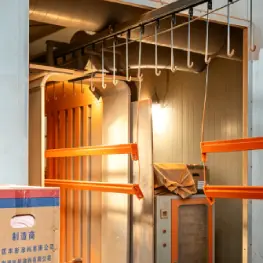
A critical factor for international logistics managers is anti-corrosion chemical passivation. Chinese export manufacturing facilities leverage an automated 10-stage surface pretreatment cycle: beginning with degreasing, multi-stage acid pickling to eliminate iron oxide mill scale, zinc phosphate conversion coating to create microscopic mechanical anchoring crystals, and concluding with electrostatic epoxy-polyester powder thermosetting cured at 180°C - 200°C. For coastal warehouses, marine ports, and sub-zero refrigerated facilities, hot-dip galvanizing according to ISO 1461 delivers coating thicknesses exceeding 65–85 μm, guaranteeing complete galvanic protection against rust, moisture, and saline degradation.
Comparative Engineering Matrix: Industrial Racking Architectures
Comparative performance parameters across standard warehouse storage systems for procurement evaluation:
| Racking Architecture | Direct Selectivity | Floor Space Utilization | Standard Load / Pallet | Primary Forklift Pairing | Typical Applications |
|---|---|---|---|---|---|
| Selective Pallet Racking | 100% Direct | 40% – 50% | 1,000kg – 4,000kg | Counterbalance, Reach Truck | Distribution hubs, multi-SKU retail, FMCG |
| Drive-In / Drive-Through | LIFO / FIFO (20%) | 70% – 80% | 800kg – 1,500kg | Standard Counterbalance | Cold storage, bulk batch goods, beverage bottling |
| Radio Shuttle Cart Racking | Semi-Selective | 80% – 88% | 500kg – 2,000kg | Standard Forklift + Shuttles | Deep lane cold chain, pharmaceutical reserves |
| Heavy Duty Cantilever Racks | 100% Direct Front | 50% – 60% | 500kg – 3,000kg/Arm | Side Loader, Multi-directional | Steel pipes, lumber, extrusions, sheet plates |
| Rack-Supported Mezzanines | 100% Hand Pick | 180% – 250% (Multi-level) | 300kg – 1,000kg/m² | Vertical Reciprocating Conveyor | E-commerce order fulfillment, spare automotive parts |
| Automated AS/RS High-Bay | 100% Automated | 85% – 95% | 500kg – 1,800kg | Stocker Cranes / Transfer Cars | Intralogistics hubs, high-throughput smart factories |
Future Industrial Storage Procurement Trends (2025–2030)
Global supply chain volatility, real estate cost escalation, and aggressive warehouse automation are reshaping how global procurement directors source structural steel storage racks from China.
1. Transition to Ultra-High-Bay Density
With industrial land leasing rates climbing globally, procurement strategies have shifted from horizontal square-meter footprints to cubic-volume optimization. Industrial buyers are prioritizing 12-meter to 30-meter high-bay racking systems compatible with automated guided vehicles (AGVs) and stacker cranes, maximizing storage capacity within existing building perimeters.
2. Decoupled Resilience & Mechanical Continuity
Emerging markets in Africa, Southeast Asia, and Latin America frequently grapple with power grid fluctuations. Global buyers are increasingly procuring hybrid storage ecosystems: combining semi-automated battery-powered radio shuttles with non-electric mechanical gravity flow and push-back rack systems that ensure uninterrupted operational throughput during power disruptions.
3. Cold Chain & Sub-Zero Precision
Global demand for temperature-controlled pharmaceutical distribution and frozen food safety has accelerated procurement of specialized cold-room racking. Buyers require steel formulations that resist low-temperature embrittlement down to -30°C, combined with specialized moisture-draining beam profiles and high-durability zinc coatings that resist condensation frost.
4. Total Lifecycle Costing & Modular Reusability
Corporate ESG directives are reshaping capital equipment selection. Enterprise purchasers are abandoning lightweight, single-use shelving in favor of fully modular, bolted-frame pallet racks with standard pitch adjustability. Standardized boltless connection geometries allow enterprises to dismantle, relocate, and reconfigure structural systems as distribution needs evolve.
Engineering Innovation in Racking Fabrication & Design
Leading Chinese exporters are replacing manual fabrication with advanced Industry 4.0 roll-forming technologies, structural monitoring sensors, and dynamic seismic engineering.
FEA Dynamic Seismic Damping
Modern industrial racks destined for seismic zones (such as South America, Southeast Asia, and the Pacific Rim) integrate specialized energy-dissipating baseplates and non-linear finite element structural simulation models. These configurations prevent catastrophic structural collapse during dynamic seismic wave oscillations.
Continuous Automated Roll-Forming
Chinese advanced manufacturing centers employ high-precision roll-forming lines with multi-station inline CNC punching. This ensures punch center-distance tolerances within ±0.1mm along a 12-meter upright column, eliminating vertical twisting, internal stress concentrations, and uneven field assembly gaps.
Smart Beam Load & Impact Monitoring
The integration of optical fiber Bragg grating (FBG) and acoustic strain sensors directly inside critical load-bearing beams allows smart warehousing operators to monitor structural overload deflection and unauthorized forklift mast collisions in real time, alerting facility managers before micro-fractures propagate.
Eco-Friendly Silane Nano-Pretreatment
Replacing traditional zinc-nickel phosphate chemical wash stages, state-of-the-art Chinese exporters have adopted non-toxic zirconium silane nano-ceramic immersion baths. This delivers superior coating adhesion, passes 1,000-hour neutral salt spray tests (ASTM B117), and complies fully with stringent global RoHS and REACH mandates.
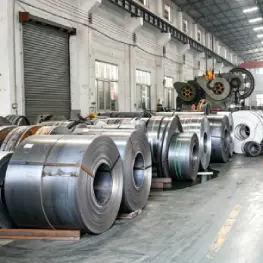
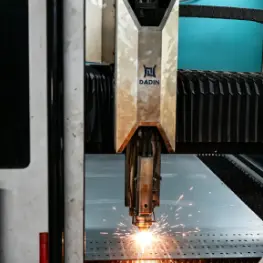
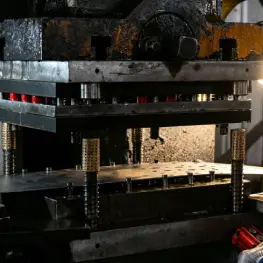
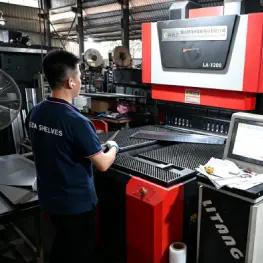
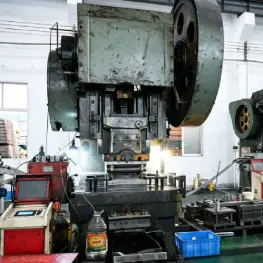
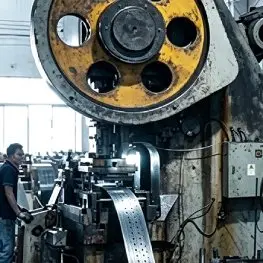
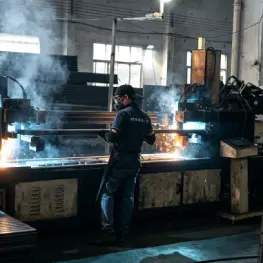
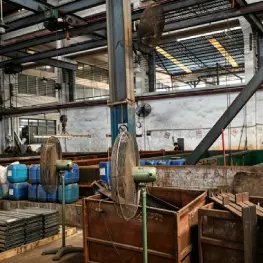
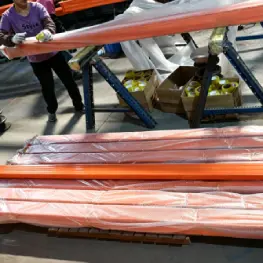
10 Controlled Production Stages: From Raw Coil to Certified Racks
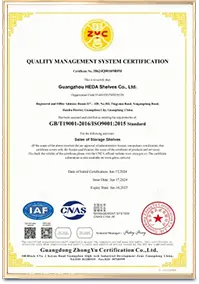
Every structural profile produced by Guangzhou Heda Shelves Co., Ltd. passes through 10 automated manufacturing stages under an audited ISO 9001:2015 quality management system, guaranteeing zero-defect export delivery.
Guangzhou Heda Shelves Co., Ltd. - Corporate Prowess & Export Authority
Serving industrial logistics operators, third-party logistics (3PL) centers, and commercial distributors across 120+ countries since 2001. All exported structural storage components meet certified international building and safety standards.
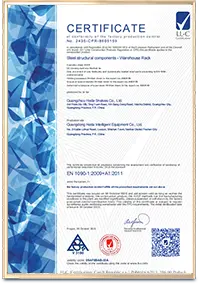 ISO 9001:2015 Audited
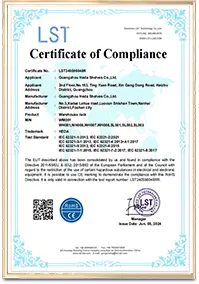
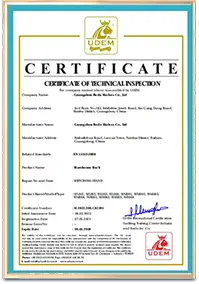 CE Structural Certification
 Mill Steel Verification
 RoHS Environmental Safety
Frequently Asked Questions on Importing Industrial Racks from China
Expert structural guidance directly from our chief project engineers addressing structural calculations, anti-corrosion finishes, logistics packing, and installation compliance.
What technical parameters are required to calculate structural load ratings and generate free 3D CAD layouts? +
How do Chinese steel grades Q235B and Q355B correspond to ASTM and EN European structural standards? +
How does your factory prevent ocean container maritime freight transit corrosion and rust? +
What are the international deflection limits for industrial warehouse racking beams under full load? +
Can non-specialized local crews erect HEDA industrial storage systems safely on site? +
What safety accessories are mandatory to ensure warehouse storage rack code compliance? +
What is the expected service life and structural warranty period for your industrial pallet racking? +
What are the commercial trade terms (Incoterms) and payment methods available for export orders? +
Plan Your Storage Project with Senior Racking Structural Engineers
Eliminate intermediary trading margins. Send us your warehouse architectural floor plans, inventory SKU dimensions, and load requirements to receive an engineered CAD layout, 3D isometric simulation, and complete export FOB/CIF price quotation within 24 hours.