[email protected] Serving West, East, Southern & North Africa
Direct OEM / ODM Engineering · Since 2001

China Wholesale Push Back Pallet Rack System Manufacturer & Suppliers

Precision-engineered nested rolling cart dynamics, heavy-duty structural steel profiles, and turnkey high-density pallet storage architecture designed to maximize warehouse cube utilization by up to 75%.

Direct-from-Factory Storage Solutions

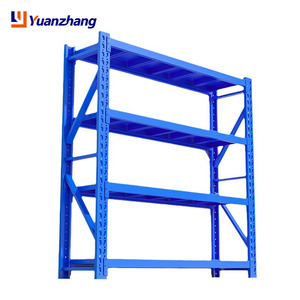
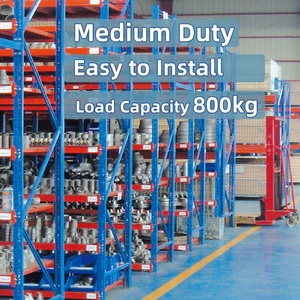
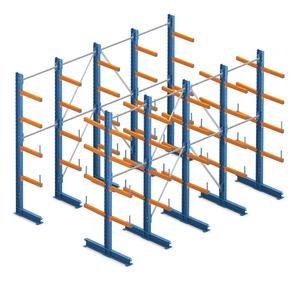
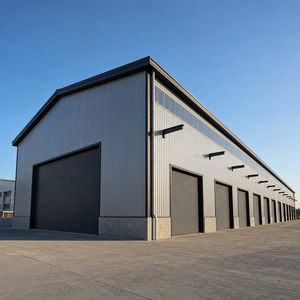
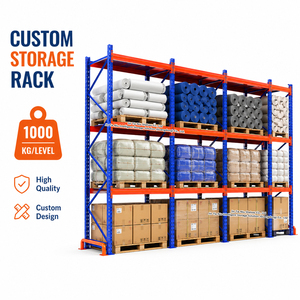
Factory Direct Industrial Pallet Rack Portfolio

Engineered to international structural safety codes (FEM 10.2.02, RMI, AS 4084, and ISO 9001:2015). Explore our core product lineup manufactured for global distribution centers, automated hubs, and intensive freight yards.
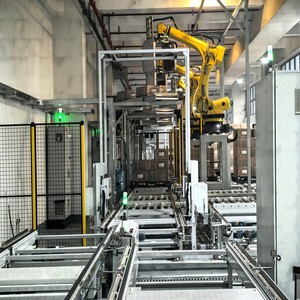
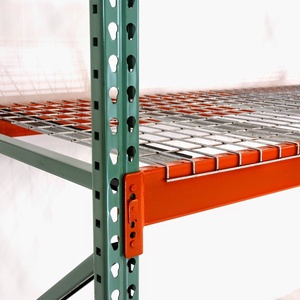
Technical Whitepaper & System Anatomy

Engineering Principles of Industrial Push Back Pallet Rack Systems

A comprehensive examination of nested gravity-cart kinematics, low-profile inclined structural rails, and dynamic load redistribution engineered to maximize floor throughput without forklift aisle intrusion.

In modern industrial warehousing, balance between high-density space conservation and high-throughput pallet accessibility remains a critical optimization metric. Traditional selective racking provides total selectivity at the expense of an expansive floor footprint dedicated to access aisles, typically yielding floor utilization rates below 40%. Conversely, Drive-In racking maximizes floor coverage but introduces severe operational bottlenecks: slow forklift entry speeds, high structural collision liabilities, and "honeycombing" storage inefficiencies. The Push Back Pallet Rack System eliminates this operational compromise by combining high-density block storage with dynamic gravity-fed cart mechanics.

+75%
Storage Density Over Selective
2 to 6
Pallets Deep per Lane
60% Faster
Turnaround vs. Drive-In

Nested Cart Architecture & Kinematics

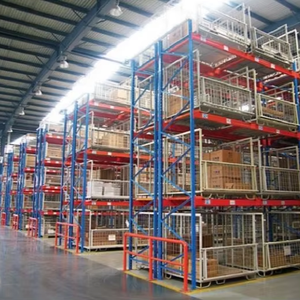
Push back pallet systems manufactured by Guangzhou Heda Shelves Co., Ltd. operate via a series of nested rolling steel carts that travel along precision-graded structural inclined rails. The system operates on a Last-In, First-Out (LIFO) inventory protocol across independent vertical lanes. When loading, the forklift places the initial pallet onto the top nested cart. When the subsequent pallet is introduced, the forklift operator pushes back the first pallet, exposing the underlying second cart. This nesting sequence repeats up to six pallets deep.

During pallet retrieval, the front pallet is extracted, and gravitational force gently pulls the nested rear carts down the inclined track (calibrated at a precise 1.5% to 2.5% gradient) to the forward pick face. Crucially, the forklift operator never penetrates the rack matrix, eliminating 90% of structural frame impact incidents commonly documented in drive-in racking operations.

Structural Channel vs. Roll-Formed Steel Rails

For rigorous logistics operations, rail design dictates long-term structural integrity. HEDA Shelves fabricates push back tracks utilizing continuous high-tensile cold-rolled omega sections or structural structural channel steel:

  • Rolling Friction: Machined steel wheels equipped with sealed, low-temperature dual bearings.
  • Rail Incline Precision: Continuous laser alignment ensures steady descent without runaway velocity.
  • Safety Push Stops: Heavy welded front bumper stops arrest forward movement cleanly at the pick face.
  • Safety Interlocks: Integrated anti-jump safety tabs retain carts within channel channels under uneven loading.

Comparative System Analysis: High-Density Warehouse Paradigms

To assist logistics directors and warehouse planners in selecting optimal capital equipment, the matrix below details the structural and operational differentiators between competing storage systems:

Engineering Attribute Push Back Pallet Rack Selective Pallet Rack Drive-In Pallet Rack Radio Shuttle Racking
Storage Density Very High (75-80% cube) Low (35-40% cube) High (70-75% cube) Maximum (85-90% cube)
Inventory Flow LIFO (Lane Independent) FIFO / LIFO Direct Strict LIFO (Bay Locked) FIFO or LIFO
Forklift Penetration None (Front Face Only) Aisle-based only Full internal drive-in None (Front Face Only)
Forklift Collision Risk Extremely Low Low to Moderate High (Upright strikes) Extremely Low
Electrical / Battery Power None (100% Mechanical) None (Mechanical) None (Mechanical) Required (Li-ion battery)
Loading Cycle Time Fast (30-45 sec/pallet) Rapid (20-30 sec) Slow (90-180 sec/pallet) Fast (automated shuttle)
Capital Cost (CapEx) Moderate ROI ($$) Low initial ($) Moderate ($$) High ($$$$)
Maintenance Requirements Low (Sealed Bearings) Minimal Frequent Upright Repairs Electronic & Shuttle Maintenance
Industry Intelligence 2025–2030

Future Procurement Trends in High-Density Storage Engineering

Strategic demand shifts shaping warehouse capital expenditure, material specifications, and architectural footprint decisions across international trade networks.

Cold Chain Optimization & Energy Densification

Refrigerated cold storage facilities face surging power costs. Because cooling a cubic meter of refrigerated air represents an ongoing OpEx liability, global distributors are replacing traditional selective aisles with 4-to-5 deep push back systems. Compacting the storage zone reduces thermal leakage per pallet position by 35% to 45%, delivering direct electrical savings while maintaining high picking throughput without mechanical sensors vulnerable to frost heave.

Automated Guided Vehicle (AGV) Handshake Interfaces

Modern procurement contracts increasingly demand push back racking engineered for automated guided forklift (AGF) and autonomous mobile robot (AMR) compatibility. HEDA Shelves integrates high-visibility optical targets, hardened fork-guide entry funnels, and millimeter-level rail leveling tolerances. This allows automated forklifts to deposit and push back pallets autonomously without human drivers, bridging the gap between passive mechanical storage and lights-out automated logistics.

Structural Steel Resilience & Seismic Compliance

Seismic zoning revisions across North America, Europe, and the Asia-Pacific region have elevated structural integrity standards. Procurement directors are specifying heavy hot-rolled structural steel channel uprights and baseplates reinforced for seismic accelerations exceeding 0.4g. HEDA Shelves conducts non-linear finite element structural simulations (FEA) to ensure structural rack frames withstand lateral push-back forces combined with ground motion without rail derailment.

Manufacturing Infrastructure

Guangzhou Heda Shelves Co., Ltd. — Engineering Precision Since 2001

For more than 24 years, our 30,000 m² manufacturing base in Guangzhou, China has supplied certified warehouse storage systems to industrial clients, port logistics facilities, and manufacturing plants across 120+ countries.

End-to-End Vertical Manufacturing Integration

Unlike commercial trading intermediaries, Guangzhou Heda Shelves Co., Ltd. controls the complete manufacturing lifecycle from primary steel coil receipt to automated powder finishing and containerized knockdown packaging. Operating with over 300 experienced engineers and skilled fabrication technicians, our facility achieves a monthly throughput exceeding 30,000 metric tons of finished racking products.
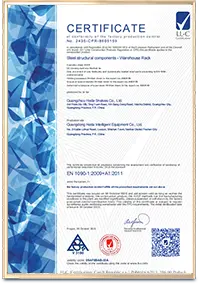
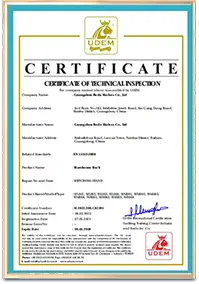
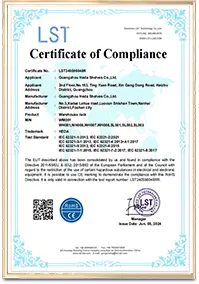
  • CE Conformity Certification Accreditation Identifier: 2435-CPR-8605159 (EN 15512 Racking Standard Compliant)
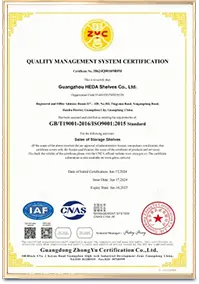
  • ISO 9001:2015 Quality Management System Certification Registration: No. 18624Q00169R0M · Continuous Audit Track Valid Through 2027
  • RoHS Hazardous Substance Protocol Eco-safe electrostatic powder coatings free of heavy metals and toxic resins

10-Stage Precision Production Line Architecture

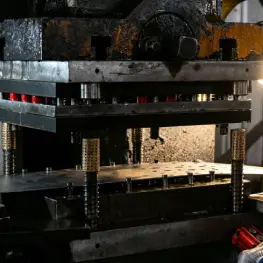
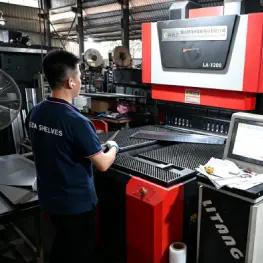
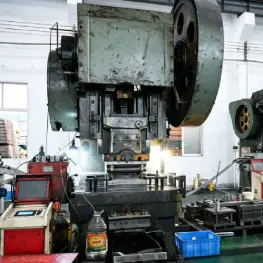
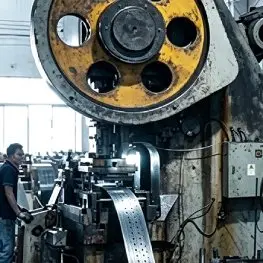
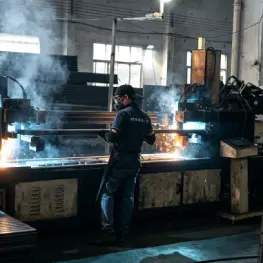
Every push back upright, cart frame, cross beam, and inclined rail passes through automated fabrication stations to guarantee load rating compliance and long-term durability in severe environments.
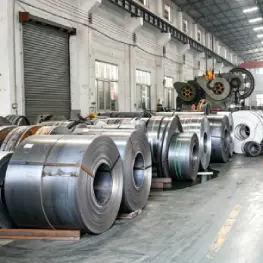
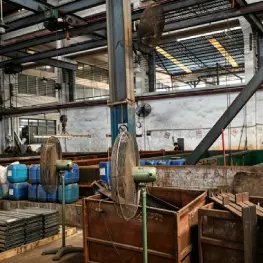
Raw steel material inspection
01

Raw Materials Ingot & Coils

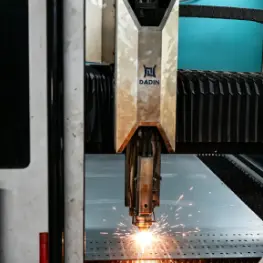
Precision steel cutting
02

Precision CNC Steel Cutting

Automated column punching
03

Automated Column Punching

Cold bending forming
04

Cold Bending & Forming

Profile roll forming line
05

Precision Profile Roll Forming

Component polishing and deburring
06

Surface Polishing & Deburring

Robotic welding of beam connectors
07

Robotic MIG/TIG Welding

Pickling and phosphating pretreatment
08

Pickling & Phosphating

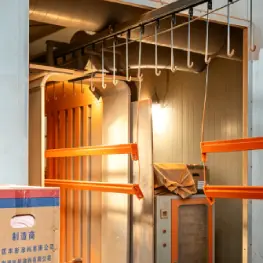
Electrostatic powder coating line
09

Electrostatic Powder Coating

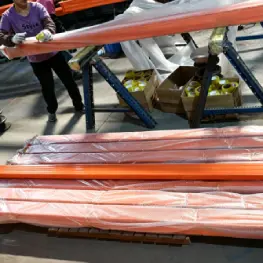
Quality inspection and export packing
10

QC Inspection & Pallet Loading

Global partner logistics client logo
Manufacturing partner brand logo
Supply chain partner logo
Industrial warehousing client logo
International distribution enterprise client logo
Procurement FAQ

Technical & Commercial Clarifications

Detailed engineering guidelines on load calculations, cold storage tolerances, freight packing, and seismic engineering for warehouse procurement officers.

What is the maximum functional depth for push back pallet systems, and what limits lane capacity?
Standard engineering layouts accommodate depths from 2 to 6 pallets per lane. Depth is governed primarily by forklift pushing capacity and mast tilt geometry. Pushing 5 nested pallets backward requires the forklift mast to exert sufficient horizontal thrust to overcome gravity on the inclined track (typically 1.5% to 2.5% slope) plus wheel rolling friction. Most standard 2.5-ton to 3.5-ton counterbalance forklifts handle 4-deep and 5-deep systems easily without engine strain or tire slippage. For 6-deep configurations, our engineering team specifies heavy-duty roller bearings with lowered friction coefficients (under 0.02) and checks mast thrust metrics against your forklift fleet specifications.
How does HEDA prevent cart binding, derailment, and pallet jamming during push back operations?
Cart binding and wheel jump are eliminated through three precision-engineered mechanical fail-safes. First, our carts feature heavy flanged steel wheels riding inside an inverted structural rail channel that physically restrains lateral wheel wander. Second, every cart is equipped with integrated steel anti-jump retention pins that prevent vertical lift if an operator pushes unevenly. Third, nested carts utilize interlocking perimeter stops that physically connect to the cart beneath it, preventing over-travel beyond its designated lane position. Each lane is factory tested for smooth gravity return before shipment.
Can push back racking accommodate irregular, damaged, or plastic pallets safely?
Yes, which represents a key mechanical advantage over pallet flow or drive-in systems. In push back systems, the pallet never rolls directly on wheels or rails; instead, it rests entirely supported on the welded structural steel cart bed. Because the cart carries the pallet frame directly, variations in bottom-deck board orientation, missing wooden runners, plastic pallet bottom lip variations, or Euro vs. GMA dimensional differences (1200x800mm vs. 1200x1000mm vs. 48x40 inch) do not impede rolling mechanics. Full perimeter steel tubing or wire decking inserts can be added to the cart surface to support weak or soft pallets safely.
How are push back rack systems protected when operating in -30°C deep freeze cold storage?
In cold chain environments, ordinary bearing grease solidifies, causing cart seizure. HEDA Shelves equips all freezer-rated push back systems with low-temperature synthetic polyalphaolefin (PAO) lubricants rated down to -45°C, sealed inside shielded bearing races. Structural uprights and carts utilize high-impact Q355D steel formulations tested for low-temperature Charpy V-notch toughness to prevent brittle fracture under frost stress. Furthermore, components can be specified with hot-dip galvanized finishes (65–85 μm zinc thickness) to eliminate corrosion caused by defrost condensation cycles.
How does HEDA optimize export shipping container utilization for ocean freight?
Industrial racking involves heavy, bulky steel profiles where improper container stuffing can double ocean freight costs per pallet position. HEDA employs dedicated CAD 3D container packing software to nest structural uprights, carts, and rail beams into modular, high-density bundles designed for 40-foot High Cube (40HQ) maritime containers. Upright frames are knock-down designed with bolted bracing rather than full shop welds, allowing 26 to 28 metric tons of structural steel components to fit into a single container without wasting cubic volume. This lowers landed freight cost per pallet position to global destinations.
What engineering data is required from the buyer to generate a free layout and static calculation?
To supply an accurate CAD floor plan, 3D visualization, and structural load calculation within 24 hours, our engineering office requires: (1) Architectural warehouse drawings indicating clear building height under truss, concrete slab thickness, column grid spacing, and egress door positions; (2) Pallet specifications including width, depth, height including cargo overhang, and maximum pallet gross weight; (3) Forklift fleet details indicating model, mast type, maximum lift height, and minimum right-angle stacking aisle requirements; (4) Local seismic acceleration parameters (Ss / S1 values) or geographical project location.

Optimize Your Warehouse Density with Factory-Direct Engineering

Connect directly with HEDA Shelves structural design engineers. We deliver complimentary warehouse layout planning, structural load certifications, dynamic 3D CAD modeling, and transparent container-optimized FOB/CIF cost estimates within 24 hours.

  • Zero-cost CAD layout & structural engineering design
  • CE No. 2435-CPR-8605159 & ISO 9001:2015 certified
  • Over 10,000 completed storage projects worldwide
  • Factory direct wholesale pricing with container optimization

Direct Engineering Desk

Receive your project layout and structural estimate reviewed by qualified racking engineers.

Send an Inquiry