High-Efficiency Warehouse Racking & Industrial Pallet Systems
Engineered to international FEM 10.2.02, EN 15512, and RMI standards. Each industrial storage system is precision-fabricated using cold-rolled structural steel, optimized for container stowage cubage, and customized to your facility footprint.
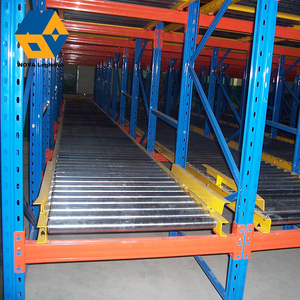
- Steel Specification: Cold-Formed Q355B
- Load Capacity: 500 – 1,500 kg/Pallet
- Roller Gradient: 3.0% – 3.5% Controlled
- Braking System: Centrifugal Speed Controller
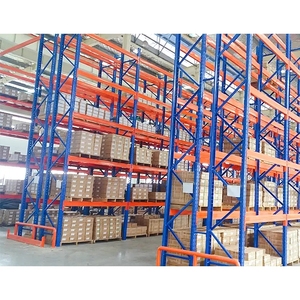
- Bay Loading Limit: Up to 24,000 kg Frame
- Beam Pitch Adjust: 50mm / 75mm Increments
- Surface Coating: Electrostatic Epoxy 80µm
- Standard Height: Up to 12,000 mm
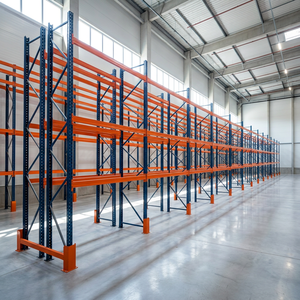
- Structure Type: Interlocking Post / Selective
- Layer Capacity: 1,000 – 3,000 kg/Tier
- Forklift Ingress: 4-Way Access Base
- Safety Standard: ISO 9001:2015 Verified
- Aisle Width Target: 1,600 mm – 1,900 mm
- Space Utilization: +45% Over Conventional
- Guide Options: Mechanical Rail / Wire Guide
- Corrosion Proof: Pre-Galvanized Finish
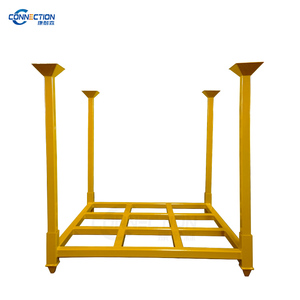
- Post Configuration: Removable Tubular Steel
- Stacking Rating: 4 Tiers Static Loaded
- Tare Portability: Demountable Nested Base
- Protection: Thermal Bonded Powder Coat
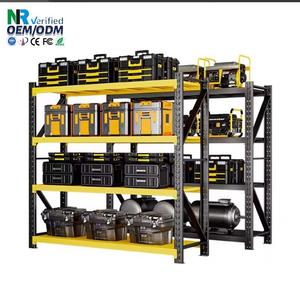
- Capacity / Level: 200 – 800 kg UDL
- Deck Type Options: Steel Plates / Wire Mesh
- Assembly Method: Boltless Rivet Lock
- Application: E-Commerce Fulfillment
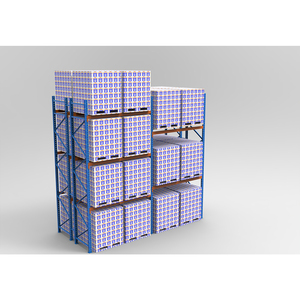
- Storage Density: +30% Selective Pallet
- Mast Requirement: Pantograph Reach Truck
- Frame Heights: Customized to 11.8 Meters
- Deflection Ratio: Strictly Under L/200
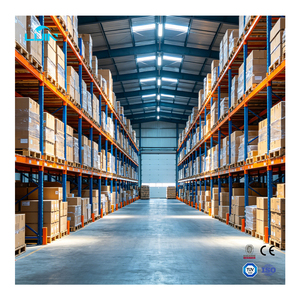
- Beam Section: Box-Welded Step Profiles
- Safety Connector: 4-Claw Locking Connector
- Impact Guarding: Anchor-Bolted Upright Shoes
- Load Certification: CE 2435-CPR-8605159
Engineering Rigor: Metallurgy, Finite Element Analysis & Compliance
In wholesale industrial racking procurement, nominal load ratings must be supported by certified cold-rolled coil chemistry, structural roll-forming precision, and verified elastic deflection tolerances under seismic dynamic load conditions.
Q235B vs. Q355B Steel Metallurgy
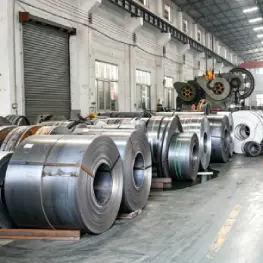
We source prime cold-rolled coils from Tier-1 domestic mills (Baosteel, Shougang). Uprights subjected to high axial compression leverage high-yield Q355B steel (yield strength ≥ 355 MPa, elongation ≥ 21%), resisting buckle failure under heavy vertical loads, while beams use optimized Q235B box-profile configurations.
- Mill Test Reports (MTR) provided with each batch
- Chemical analysis: C ≤ 0.20%, Mn ≤ 1.40%, S ≤ 0.045%
- Non-destructive ultrasonic thickness validation
Seismic Design & FEA Simulation
High-bay installations must withstand horizontal shear forces and torsional resonance. Utilizing ANSYS Finite Element Analysis (FEA), we calculate dynamic natural frequencies, semi-rigid connection stiffness (K-factor), and baseplate anchor shear per European EN 15512 and American RMI MH16.1 codes.
- Maximum horizontal drift restricted within H/200
- Beam deflection engineered to L/200 under full load
- Certified for Seismic Zones SDC C through SDC F
Corrosion Barrier: Pretreatment & Coating
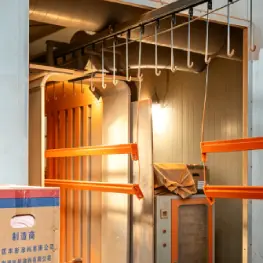
Long-term structural reliability depends on eliminating under-film oxidation. Our multi-stage automated treatment line applies acid pickling, zinc-iron phosphating, dynamic deionized water rinsing, and a 60–90 µm thermosetting epoxy-polyester powder layer, rated for over 500 hours of continuous salt-spray testing.
- ISO 9227 salt spray and cross-hatch adhesion ASTM D3359
- Hot-Dip Galvanizing (ISO 1461) for high-humidity and sub-zero chillers
- Zero VOC emission and RoHS compliant chemistry
Guangzhou HEDA Shelves: Enterprise Manufacturing Scale
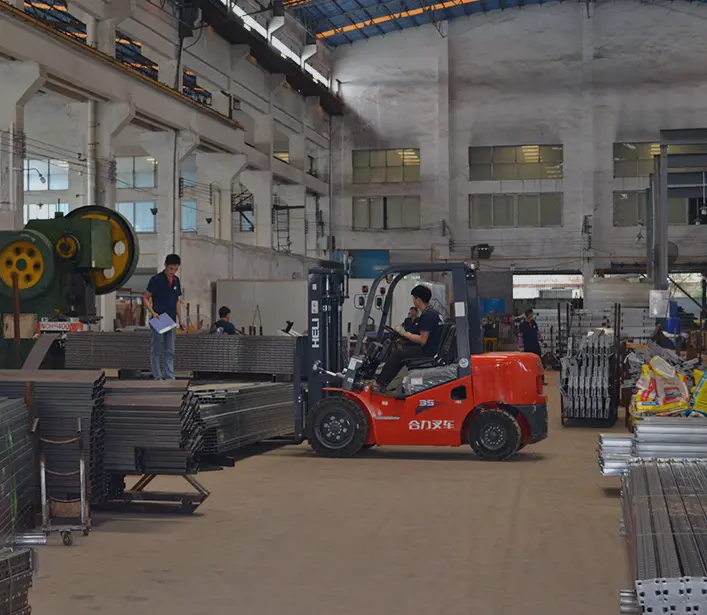
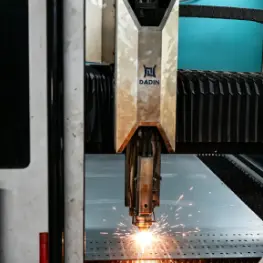
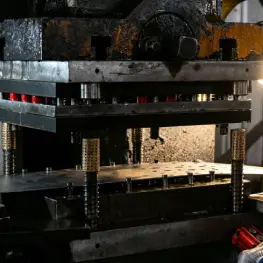
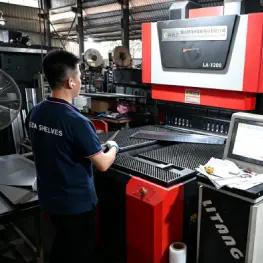
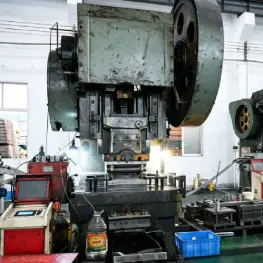
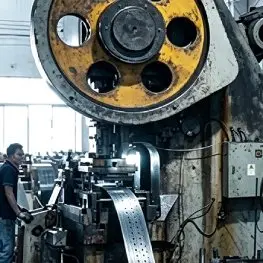
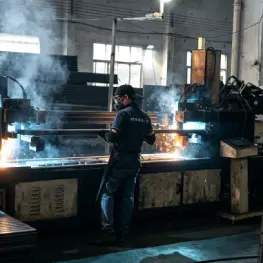
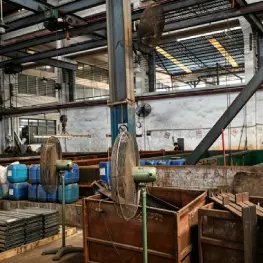
Operating since 2001, Guangzhou Heda Shelves Co., Ltd. controls 30,000 square meters of specialized heavy fabrication infrastructure. We engineer, profile, punch, weld, coat, and assemble storage racks with certified traceability from raw coil to global container port delivery.
Direct Manufacturer, Zero Trading Intermediaries
Procuring racking directly from our manufacturing base eliminates trading markups, shortens design iterations from weeks to hours, and gives procurement teams direct access to our 300+ technical personnel and structural design engineers.
- 25 Years Structural Manufacturing
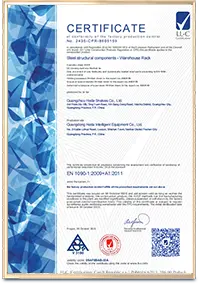
- CE EN 1090 Structural Approval
- Free 3D CAD & Load Calculations
- 30,000 Tons Monthly Output
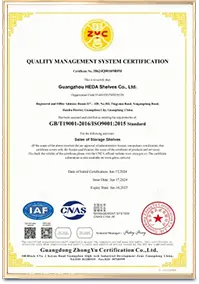
- ISO 9001:2015 Quality Management
- Container Packing Optimization
Future Procurement Trends: Modernizing Global Racking Supply Chains
Global supply chain directors are shifting from transactional spot buying to long-term architectural partnerships. Key trends shaping procurement decisions through 2030 include automation compatibility, freight efficiency, and sustainability targets.
ASRS & 4-Way Radio Shuttle Synergy
Warehouses are shifting rapidly from static selective aisles to automated 4-way shuttle lanes and crane-based ASRS. Pallet racks require tighter manufacturing tolerances (±1.0 mm cumulative over 10 meters) and integrated sensor rails to support AGVs and autonomous lift equipment without mechanical interference.
Micro-Alloy High Strength Steel
By transitioning from traditional thick-gauge Q235B to micro-alloyed, cold-rolled Q355B and high-yield grades, modern racking reduces component tare weight by 18% to 24% while maintaining structural load ratings. This lowers ocean shipping deadweight and reduces embedded carbon footprints.
Knock-Down Nesting & Freight Cubing
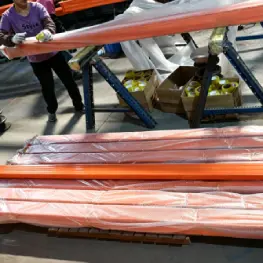
Rising marine freight costs make loading volume optimization a key procurement metric. Modern frames use bolt-together designs with slotted diagonal bracings that pack flat in 40HQ containers, increasing container payload to over 24-26 metric tons and reducing ocean shipping cost per pallet position.
Digital Twin & Structural Monitoring
Next-generation logistics facilities integrate structural health monitoring using acoustic sensors and base-mounted strain gauges. Rack designs incorporate factory-drilled conduit paths and pre-punched mounting tabs for direct integration with Warehouse Management Systems (WMS).
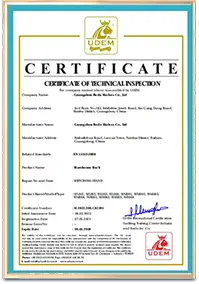
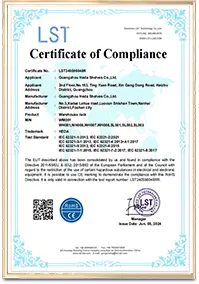
Internationally Verified Factory Certification
Our facilities, structural welding procedures, and quality management systems are independently audited and certified by international notified bodies to support your local permitting and municipal structural audits.
Engineered Storage Installations Around the Globe
From high-capacity chemical pallet racks to multi-level picking platforms, our engineering team manages turnkey storage projects from initial CAD modeling to on-site assembly guidance.
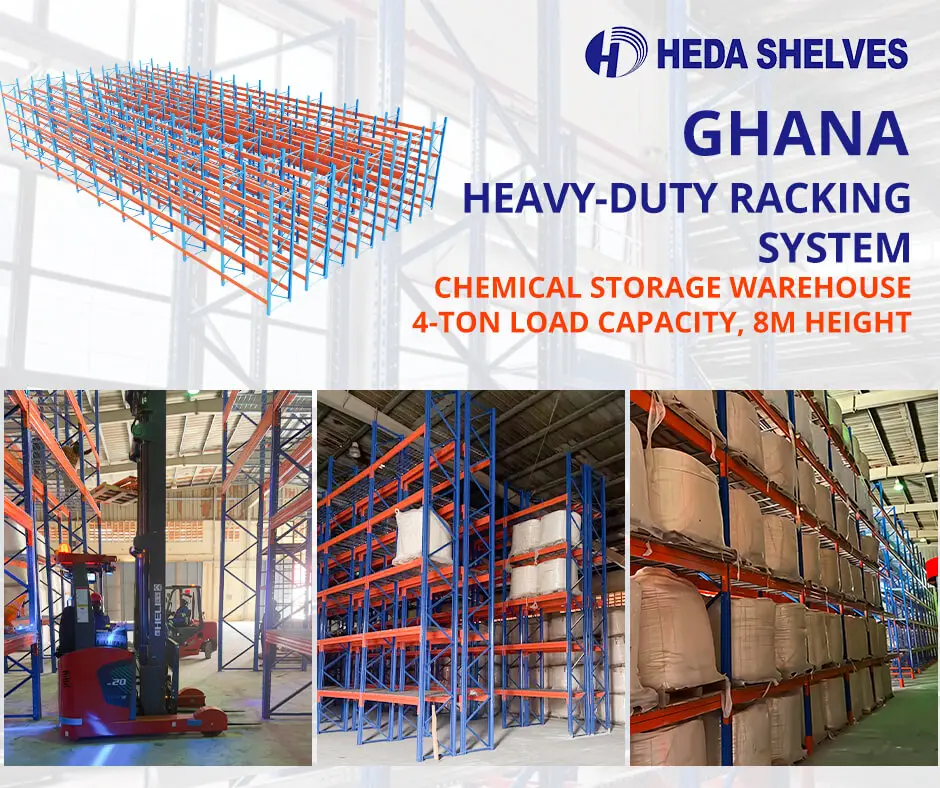
Corrosive Environment Heavy Pallet Racking
Configured with heavy-duty box beams, drop-in drum supports, and zinc-rich undercoats to securely store liquid containers and bulk chemicals with 3,000 kg per shelf bay capacity.
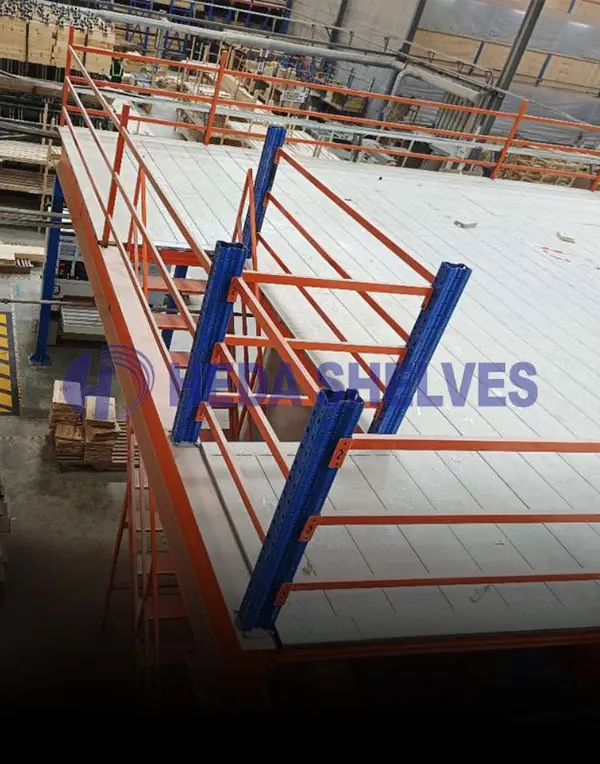
Multi-Tier Rack-Supported Mezzanine
Integrated selective pallet storage on the ground floor with an elevated picking level above, doubling usable square footage without structural building modifications.
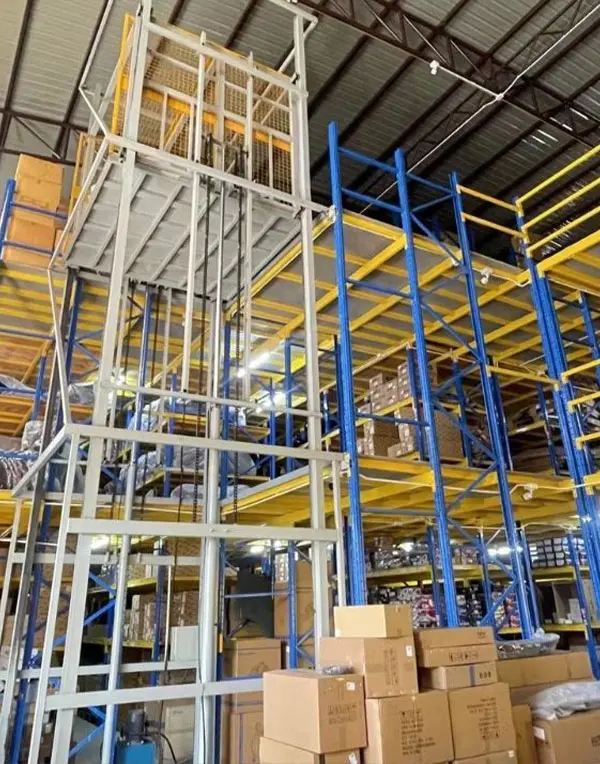
High-Density Longspan Parts Platform
Engineered with perforated galvanized steel planking, integrated staircase towers, and safety swing gates, providing picking access for more than 15,000 active SKU lines.
Industrial Racking Sourcing: Technical FAQ
In-depth technical answers addressing steel standards, seismic load verification, anti-corrosion protection, and container shipping calculations for industrial supply chain buyers.
How do Q235B and Q355B steel grades compare to European and US standards?
Chinese GB/T 700 Q235B is functionally equivalent to European EN 10025 S235JR and American ASTM A36, offering a minimum yield strength of 235 MPa. It provides balanced ductility and weldability, making it well-suited for roll-formed step and box beams. GB/T 1591 Q355B corresponds to European S355JR and American ASTM A572 Grade 50, with a 355 MPa minimum yield strength. We specify Q355B for high-load upright frames to improve axial compressive strength while reducing column gauge thickness.
How does electrostatic powder coating protect against tropical coastal humidity?
Untreated steel corrodes rapidly in warm, humid coastal air (ISO 12944 C3/C4 marine environments). Our process uses a continuous conveyorized line that applies acid descaling, iron phosphating, and deionized water rinsing to create a passivating chemical conversion layer on the steel. We then electrostatically apply thermoset epoxy-polyester powder, curing it at 190°C–210°C to achieve a 60–90 µm dry film thickness (DFT). This non-porous finish resists blistering, chipping, and rust-creep under extreme temperature and humidity conditions.
How is container loading calculated to minimize freight cost per pallet position?
Ocean freight is billed by container unit, so maximizing cargo density directly lowers the landed cost per pallet position. Racking uprights are shipped knocked down (unbolted), allowing vertical columns, horizontal braces, and diagonal channels to be tightly bundled. Pallet beams are cross-stacked with alternating connector orientations to eliminate void space. A standard 40-foot high cube (40HQ) container holds 68 m³ and up to 26,000 kg of product. Our engineers run 3D container packing simulations for every order to ensure full cube and weight utilization.
What structural safety factors are engineered into beam and frame ratings?
We engineer systems in accordance with European standard EN 15512 and RMI MH16.1 specifications. Beam load limits are based on a 1.5 safety factor against structural yield, with vertical deflection strictly limited to 1/200th of the clear beam span (L/200) under Uniformly Distributed Load (UDL). Upright frames incorporate a 1.65 to 1.85 safety factor on axial capacity, which accounts for combined vertical pallet loads, horizontal placement impact forces, frame out-of-plumb allowances, and local building code seismic acceleration parameters.
How do gravity flow and mechanical systems perform without facility electricity?
Pallet flow and dynamic gravity systems operate entirely via mechanical gravity, requiring no electrical power. Lanes are pitched at a calibrated 3.0% to 3.5% decline. Internal centrifugal brake rollers automatically govern pallet descent speeds to a safe, steady 0.2 to 0.3 m/s, regardless of ambient power conditions. For semi-automated radio shuttle systems, pallet runners use 24V/48V lithium iron phosphate (LiFePO4) battery packs with 8 to 10 hours of runtime, allowing seamless operation across shifts when supported by backup power or solar-charged swap stations.
What quality documentation and testing certificates are provided with shipments?
Every commercial export order includes a full Quality Assurance dossier. This contains raw coil Mill Test Reports (MTRs) certifying yield strength, tensile limits, and chemical composition; dry film thickness (DFT) inspection records; cross-hatch coating adhesion test reports (ASTM D3359); and Certificate of Conformance documentation under CE standard EN 1090 (Execution Class EXC2) and ISO 9001:2015. Third-party visual and destructive testing (SGS, TÜV, or Bureau Veritas) can be coordinated prior to factory gate release.
Plan Your Warehouse Storage Layout With Our Structural Engineers
Send us your building dimensions, clear ceiling heights, pallet load requirements, and forklift specifications. Our engineering team will supply an architectural CAD floor plan, 3D structural renderings, and an export quotation within 24 hours.
- Facility Length, Width & Clear Height
- Pallet Dimensions (W x D x H) & Max Weight
- Forklift Type, Mast Height & Turning Radius
- Target Pallet Capacity & Operating Temp
Request Engineering Support
Factory-direct pricing, custom CAD layouts, and load calculations with zero obligation.
Send an Inquiry