Engineered Heavy-Duty Pallet Racking & High-Density Storage Racks
High-performance structural steel racking and modular storage assemblies manufactured directly in our Guangzhou production hub. Certified for high seismic resistance, maximum vertical clearance utilization, and seamless material handling integration.
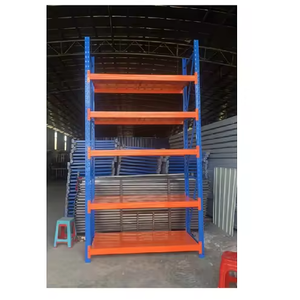
Light Medium Heavy Duty Storage Rack Pallet Shelf Selective Shelving Pallet Storage Rack Metal Pallet Rack
- Payload: 1,000 – 4,500 kg / Tier
- Structural Steel: Q235B Cold-Rolled
- Upright Pitch: 50mm / 75mm Adjustable
- Access Factor: 100% Immediate Selectivity
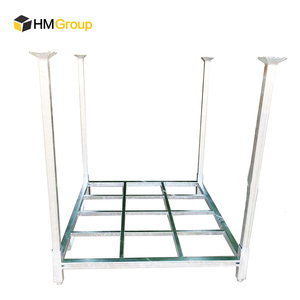
OEM Heavy Duty Galvanized Steel Stacking Racks for Warehouse Stack Pallet
- Payload: 800 – 2,000 kg / Unit
- Surface: Hot-Dip Galvanized / Zinc
- Stacking: Up to 4-5 Tiers High
- Deployment: Cold Rooms & Bulk Staging
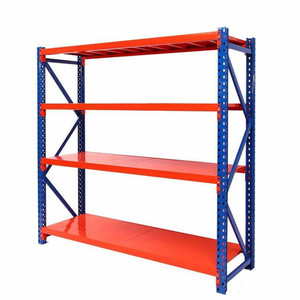
Custom Heavy-Duty Metal Rack Storage Shelf High Quality Iron Warehouse Racking Cargo Storage Equipment Customized Heavy-Duty
- Payload: Up to 5,000 kg / Level
- Profile: Omega Column Cross-Section
- Configuration: Tailored Span & Clear Height
- Compliance: FEM 10.2.02 / EN 15512
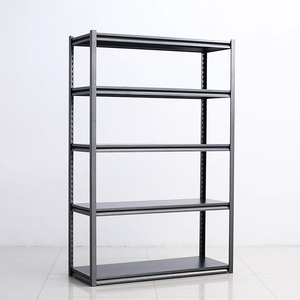
5 Tier Heavy Duty Adjustable Racks Steel Storage Shelf Warehouse Garage Metal Shelving Units Shelves
- Payload: 300 – 800 kg / Shelf
- Decking Type: Steel Pan / Wire Mesh / MDF
- Assembly: Boltless Rivet Lock
- Application: Parts Depots & E-commerce
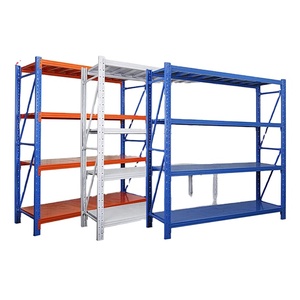
Wholesale Steel Light & Medium Duty 5 Layer Pallet Rack Warehouse Storage Racking Industrial
- Payload: 500 – 1,500 kg / Layer
- Finish: Epoxy Powder Coat (60-80μm)
- Bracing: Bolted K-Braced Upright Frame
- Safety Factor: 1.65 Structural Standard
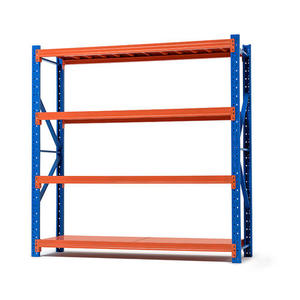
Xinmiao Industrial Light Duty Steel Pallet Racking System Adjustable Layers Electrostatic Powder Coating Corrosion Protection
- Payload: 200 – 600 kg / Level
- Pretreatment: Pickling & Phosphating Wash
- Pitch Adjustment: 50mm Interval Modular
- Usage: Finished Goods Staging
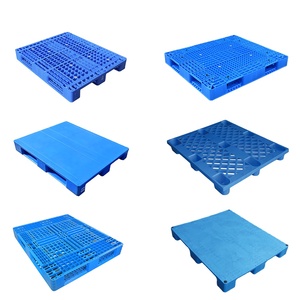
Wholesale Enlightening Pallet 1200x1000x150mm Cheap Heavy Duty Industrial Warehouse Racking Hdpe Plastic Euro Pallets Prices
- Dynamic Load: 1,500 kg (Reinforced)
- Racking Load: 1,000 – 1,200 kg on Beams
- Polymer Grade: 100% Virgin HDPE / Recycled
- Sanitary Spec: Food & Pharmaceutical Safe
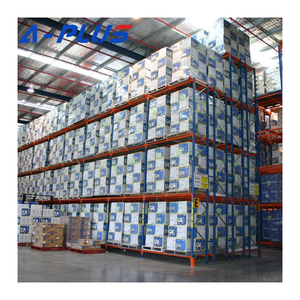
Warehouse High Density Metal Steel Pallet Rack Customize Double Deep Racking System
- Floor Space Gain: +30% over Standard Selective
- Reach Mechanism: Deep-Reach Pantograph Fork
- Profile Form: Closed-Box Interlocking Beam
- Max Height: Up to 12.8 Meters Clear
Precision Production Architecture from Coil to Container
Operating out of our 30,000 m² state-of-the-art facility in Guangzhou, China, Guangzhou Heda Shelves Co., Ltd. controls the complete vertical manufacturing spectrum. With strict adherence to CE Certification (No. 2435-CPR-8605159), ISO 9001:2015 Quality Management (No. 18624Q00169R0M), and full RoHS compliance, our structural members undergo rigorous quality gate checkpoints before global export dispatch.
Certified High-Tensile Steel
We source prime, certified hot-rolled and cold-rolled Q235B and Q355B structural steel directly from top-tier state mills. Yield strengths and metallurgical certificates accompany every production batch, ensuring dependable structural calculation integrity under static and dynamic loading.
Automated Multi-Stage Forming
Continuous CNC-controlled roll-forming lines bend uprights and beams with dimensional tolerances tighter than ±0.5mm. Punching dies execute 50mm and 75mm teardrop, diamond, and hexagonal pitches without introducing micro-fractures along structural edges.
Corrosion-Barrier Surface Treatment
A rigorous 10-stage preparation wash, including alkaline degreasing, ultrasonic rust stripping, and zinc phosphating, guarantees superior coating adhesion. Electrostatic powder coating is cured at 180°C–200°C, producing an impenetrable 60–80 micron film resistant to chemical fumes and salt mist.
Container CBM Optimization
Over-the-road and ocean freight economics require smart knock-down packaging. We bundle interlocking beams and nested upright frames using custom steel banding and shockproof corner protectors, delivering up to 98% space utilization inside standard 40HQ maritime containers.
Our 10-Stage Precision Fabrication Workflow
Engineered quality assurance is built into every step of conversion from incoming raw coil stock to packaged export containers.
Raw Materials
Spectrographic analysis of prime Q235B/Q355B coils for yield, elongation, and carbon content.
Precision Cutting
High-speed uncoiling, automatic laser and shear blanking to precise longitudinal tolerances.
Automated Punching
CNC progressive stamping presses cut pitch holes at exact 50mm/75mm intervals.
Cold Bending
Multi-station cold roll-forming presses upright profiles into multi-bend omega shapes.
Profile Forming
Continuous twin-C seam welding forms box beams with exceptional torsional rigidity.
Automated Polishing
De-burring, robotic surface seam grinding, and edge beveling prevent stress concentration points.
Robotic Welding
CO₂ shielded automated robotic welding fuses 3-claw/4-claw connector plates to beam ends.
Pretreatment Bath
Continuous automated submersion in hot degreasing, acid pickling, and phosphating tanks.
Powder Coating
Electrostatic spray guns deposit 60-80μm non-toxic epoxy-polyester powder, baked in gas ovens.
QC & Palletizing
Deflection load checks, cross-cut adhesion tests, barcode bundling, and ocean export packaging.
Warehouse Storage Systems Technical Selection Matrix
Selecting the ideal pallet racking topography requires balancing land footprint constraints, capital expenditure per pallet position, SKU selectivity, and material handling cycle velocities.
| Racking System System | Direct Selectivity | Floor Space Utilization | Aisle Width Req. | Forklift Asset Compatibility | Throughput Velocity | Relative Cost / Pallet |
|---|---|---|---|---|---|---|
| Selective Pallet Racking | 100% (Immediate) | 35% – 45% (Standard) | 3.0m – 3.8m (Counterbalance) | Standard Counterbalance, Reach Truck | Maximum / Continuous Picking | Baseline Economy ($) |
| Double Deep Pallet Racking | 50% (Two-Deep Pallets) | 55% – 65% (High) | 3.0m – 3.4m (Narrow Aisle) | Deep-Reach Pantograph Truck | Moderate (FMCG Batch Sorting) | Low-to-Medium ($$) |
| Drive-In / Drive-Through Rack | Low (Last-In First-Out LIFO) | 70% – 85% (Very High) | Forklift Drives into Lane | Narrow-Chassis Counterbalance / Reach | Batch / Seasonal Dispatch | Medium ($$) |
| Push Back Pallet Rack | Low (2 to 5 Pallets / Lane) | 65% – 75% (High) | Standard Reach Truck Aisle | Standard Counterbalance, Reach Truck | Fast Gravity-Return Action | Medium-High ($$$) |
| Radio Shuttle Cart Racking | High Density FIFO / LIFO | 80% – 90% (Ultra High) | Front Access Aisle Only | Standard Forklift + Radio Carrier | Semi-Automated Rapid Transfer | High Initial CapEx ($$$$) |
| Rack-Supported Mezzanines | 100% Tiered Hand Picking | 150% – 200% (Vertical Cube) | Human Walkway (0.9m – 1.2m) | Conveyors, Vertical Lifts, Hand Trucks | Concurrent Multi-Floor Picking | Structural Dependent ($$$) |
Yield Calculations & Elastic Buckling
Under international EN 15512 and FEM 10.2.02 codes, vertical upright frames are subject to complex compressive and torsional forces. Our structural engineering department utilizes advanced Finite Element Analysis (FEA) to simulate wind, floor point loads, and seismic shear.
Custom Beam-to-Column Interlock
Racking stability relies fundamentally on the connector engagement. Our proprietary 3-claw and 4-claw stamped connector plates wrap around the column profile, utilizing safety locking pins that resist accidental dislodgement from upward forklift tines.
Foundation Anchoring & Floor Integrity
Every upright baseplate is custom-sized according to concrete slab compressive strength (usually 20-30 MPa). We engineer base shims and double-expansion M12/M16 chemical or mechanical anchor bolts to isolate seismic energy and prevent slab spalling.
Key Trends Shaping Global Pallet Racking Sourcing (2025–2030)
Procurement executives and supply chain directors are shifting from transactional spot buys to total lifecycle value optimization. Here are the macro dynamics dictating industrial warehouse procurement over the next decade.
Decoupling Intermediate Brokers for Margin Recovery
Global distributors and 3PL providers are bypassing third-party trading intermediaries in favor of direct engineering partnerships with Tier-1 Chinese manufacturers. Direct mill sourcing yields a 22% to 38% reduction in equipment expenditure while eliminating communication noise regarding complex engineering load specifications. Factory-direct engineering teams deliver turnkey CAD floor plans, load calculations, and BIM models within 24 to 48 hours of building survey completion.
Maximizing Clear Heights to Defeat Land Scarcity
With prime logistics real estate rates climbing globally, expanding the horizontal footprint is no longer commercially viable. Modern procurement briefs prioritize high-cube vertical designs that push usable storage to 12m, 16m, or 24m clear heights. Buyers are specifying hybrid structures that combine multi-tier rack-supported mezzanines with heavy-duty lower-bay pallet storage, effectively doubling or tripling internal storage capacity within existing building perimeters.
Container Cube Optimization & Knock-Down Packaging
Volatile container shipping rates demand that structural steel racking systems be engineered for shipping efficiency as much as structural strength. Modern uprights feature detachable bolted trusses (bracing) that pack flat, enabling manufacturers to ship disassembled frames. This increases container weight density from 14 tons up to 26 tons per 40HQ container, dramatically lowering the landed cost per pallet position in export markets.
The Technological Evolution: Smart Racking & Automation Synergy
Industrial racking is transforming from static structural steel frames into active, intelligent nodes within digital supply chain ecosystems. Explore the innovations driving structural efficiency and material handling safety.
AS/RS Integration & Shuttle Carrier Automation
The boundary between structural racking and machinery has dissolved. Semi-automated radio shuttle racking systems and full Automated Storage and Retrieval Systems (AS/RS) require tighter structural tolerances (often less than ±1.5mm deflection over a 12-meter run). Our manufacturing lines feature CNC profile-rolling and precision robotic welding that ensure guided vehicle rails interface smoothly with laser-guided shuttles, eliminating operational friction and rail binding.
Cold Chain Thermal & Anti-Corrosion Metallurgy
Refrigerated and frozen food logistics demand specialized structural engineering. Standard powder coating can become brittle and micro-fissure at -25°C to -30°C temperatures, exposing base steel to condensation corrosion. Advanced procurement trends now mandate structural steel treated with hot-dip galvanization (minimum 65-85μm zinc layer thickness) or specialized cold-tough elastic polyester coatings that accommodate steel expansion and contraction cycles.
Structural Health Monitoring & IoT Sensor Arrays
Accidental forklift impact is the primary driver of progressive warehouse racking collapse. Next-generation installations are incorporating embedded piezoelectric impact sensors and strain gauges onto corner column protectors. These IoT nodes transmit real-time telemetry to warehouse management software (WMS), issuing alerts the instant structural yield thresholds or micro-deflections are exceeded, enabling pre-emptive maintenance.
Frequently Asked Structural Engineering & Procurement Questions
In-depth technical answers prepared by our senior engineering and export logistics departments to assist purchasing directors, civil engineers, and warehouse operations managers.
Q: What structural steel grades and standards are used in your factory?
Q: How is safe working load (SWL) calculated, and what safety factor is applied?
Q: What warehouse information is required to generate a custom 3D CAD layout?
Q: How do your finishes protect against rust in humid or coastal environments?
Q: What is the difference between welded and bolted upright frames for overseas shipping?
Q: Can your racking systems accommodate seismic loading and wind loads?
Q: What documentation and quality certificates accompany export shipments?
Q: What is the production lead time and ocean shipping turnaround?
Request Free 3D Warehouse Layout & Engineering Load Calculation
Consult directly with our structural engineering team. We prepare CAD floor plans, structural deflection analyses, bill of materials (BOM), and container loading plans with factory-direct pricing tailored to your logistics facility.
- Full EN 15512 & CE 2435 Compliance
- Fast 24-Hour Layout Turnaround
- Container CBM Packing Optimization
- Direct Factory Pricing (No Middlemen)
Connect with Project Engineers
Direct communication with structural racking designers. Zero sales pressure.
Inquire Now