2001#
Established Manufacturing Legacy
30,000m²
Smart Automated Production Base
30,000Tons
Monthly Cold-Formed Steel Capacity
10,000+
Global Industrial Systems Delivered
Precision Heavy Equipment
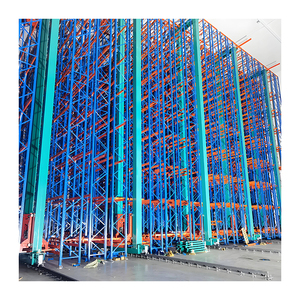
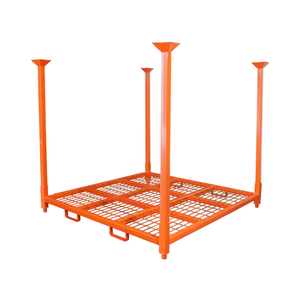
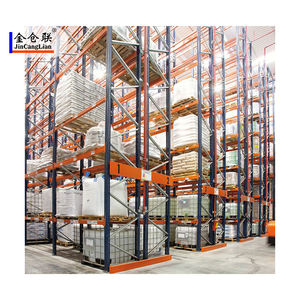
High-Performance Storage Racking Systems & Logistics Units
Manufactured using cold-rolled high-tensile Q235B/Q355B structural steel. Each system is custom-configured to accommodate clear ceiling heights, specialized material handling equipment, and precise SKU velocity demands.
Engineering Whitepaper & Strategic Evaluation
Structural Integrity & Mechanics of Industrial Cantilever Racking
Unlike conventional selective pallet racks that rely on front and rear upright frames tied with diagonal bracing, warehouse cantilever racking systems are fundamentally open-front structures. By eliminating the front vertical column barrier, cantilever racking resolves the primary operational bottleneck associated with storing non-standard, linear, and oversized profiles such as structural steel I-beams, extruded aluminum conduits, lumber bundles, sheet rock, piping, and industrial machinery castings.
In our Guangzhou manufacturing facility, every cantilever configuration begins with finite element structural modeling (FEM) in compliance with international standards, including ANSI MH16.1 and European Standard EN 15512. The structural stress transfer mechanism of a cantilever arm involves intense bending moments transmitted directly through the arm-to-column connector pin or high-tensile grade 8.8 bolted collar. Consequently, our engineering team distinguishes strictly between roll-formed profiles (optimized for medium duty loads up to 1,000 kg per arm) and structural hot-rolled I-beams (engineered for severe heavy-duty duty cycles exceeding 3,000 kg per arm).
Structural Specification Matrix: Roll-Formed vs. Heavy-Duty Structural Cantilever
A granular engineering comparison to empower global logistics directors, procurement managers, and civil consultants with verifiable data for facility planning:
| Engineering Attribute | Cold Roll-Formed Cantilever System | Hot-Rolled Structural I-Beam System | Standard Testing Protocol / Compliance |
|---|---|---|---|
| Primary Raw Material | High-Yield Cold-Rolled Q235B / Q355B Steel | Structural Grade Hot-Rolled H-Section / I-Beam | GB/T 700-2006 / EN 10025-2 Certified |
| Individual Arm Rating | 250 kg – 1,000 kg per arm level | 1,000 kg – 3,500+ kg per arm level | Deflection tested at 1.5x nominal design limit |
| Maximum System Height | Up to 6,000 mm clear vertical bay | Up to 12,000 mm (High-Bay Narrow Aisle Compatible) | Laser-plumb verticality within ±1.5 mm tolerance |
| Upright Connection | Keyhole / Wedge boltless adjustment (75mm pitch) | High-tensile Grade 8.8 / 10.9 structural bolt collars | Cyclic shear stress & dynamic torque evaluation |
| Forklift Impact Resistance | Moderate; requires base column floor deflector guards | Extremely High; hot-rolled steel flange absorbs minor shocks | ISO 14122 industrial safety boundary certified |
| Anti-Corrosion Surface Finish | Electrostatic Epoxy Powder Coat (60–80 μm) | Pickled, phosphated, powder-coated or Hot-Dip Galv (85 μm) | ASTM B117 salt spray endurance > 500 hours |
| Optimal Storage Application | PVC piping, light timber, plastic extrusions, conduit | Heavy rebar, steel bar stock, timber packs, heavy coils | FEM calculation & seismic zone rating (Zone 1-4) |
Enterprise Pedigree & Manufacturing Capability
Why Direct Global Importers Partner with Guangzhou Heda Shelves
Founded in 2001, Guangzhou Heda Shelves Co., Ltd. operates a premier manufacturing footprint spanning over 30,000 square meters with an integrated monthly throughput surpassing 30,000 metric tons. Unlike commercial trading intermediaries, we execute the entire manufacturing chain under one single roof—from high-precision steel uncoiling and CNC computer-controlled punching to robotic arc welding, 9-stage phosphate pre-treatment, and electrostatic architectural powder coating.
25+ Years Proven Experience
Over two decades of structural racking innovation across 120+ destination countries, providing proven, field-tested safety standards for commercial ports, mining, and manufacturing.
Free 3D CAD & Structural Sizing
Complimentary certified layout planning, load deflection simulations, forklift aisle optimization, and 3D renderings delivered within 24 hours of technical brief submission.
Verified Certifications (CE & ISO)
Officially accredited under CE Certification No. 2435-CPR-8605159, ISO 9001:2015 Management System No. 18624Q00169R0M, and rigorous RoHS chemical safety compliances.
Container-Optimized Logistics
Engineered knock-down packing and tailored bundle nesting profiles engineered to hit maximum 20GP/40HQ volumetric payloads, reducing per-unit ocean freight dramatically.
Precision Manufacturing Traceability
Inside Our 10-Stage Precision Production Line
Every cantilever column, cantilever arm, and structural X-brace assembly undergoes rigorous dimensional and metallurgical testing throughout our controlled in-house manufacturing process:
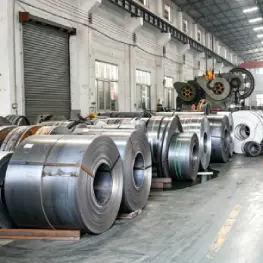
01
Raw Material Ingot & Coil QC
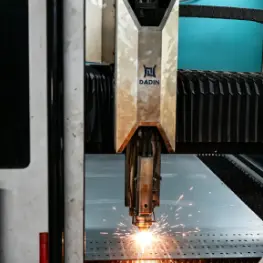
02
High-Precision CNC Laser Cutting
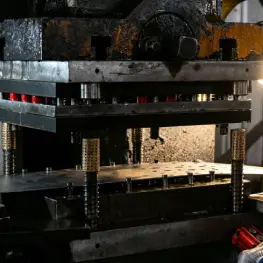
03
Automated Column Pitch Punching
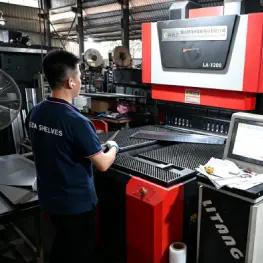
04
Multi-Pass Cold Bending & Forming
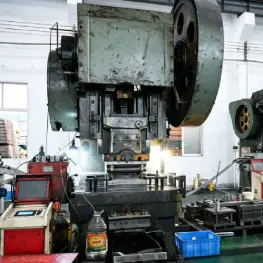
05
Heavy Profile Continuous Rolling
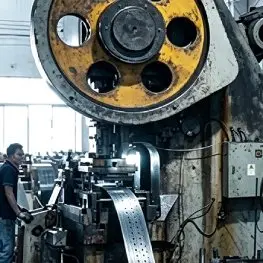
06
Shot Blasting & Mechanical Polishing
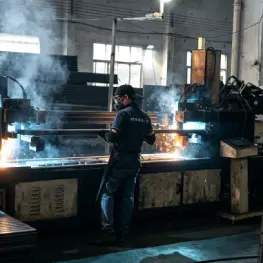
07
Robotic Structural Shielded Arc Welding
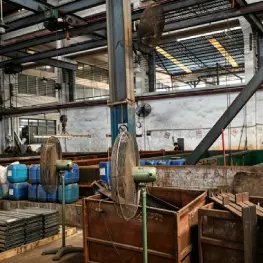
08
Multi-Stage Pickling & Phosphating
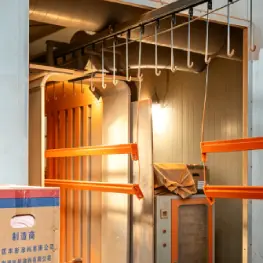
09
Electrostatic Thermal Powder Polymerization
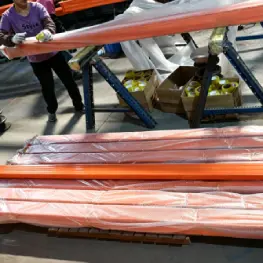
10
Ultrasonic Defect QC & Export Stacking
Future Industry Outlook
Key Technological & Procurement Trends Shaping Cantilever Racks
Global warehousing economics demand that enterprise storage transition from static steel fixtures into agile, data-interfaced capital assets. Logistics operators investing in warehouse cantilever storage across Europe, the Americas, the Middle East, and Africa must prepare for three distinct shifts in storage architecture:
Automation Convergence
Integration with Autonomous Guided Forklifts (AGFs)
Traditional wide-aisle cantilever configurations consume significant real estate due to large forklift counterweights. The transition toward side-loading automated guided vehicles and laser-guided turret cranes requires custom cantilever arm designs with tapered front profiles, optical sensor reflectors, and millimeter-level upright tolerances to enable lights-out, unmanned handling of heavy long materials.
Material Resilience
Hybrid Protective Coatings for Extreme Microclimates
Standard indoor powder finishes often suffer premature failure in coastal warehouses, open-air timber lumberyards, and high-salinity ports. The industry is rapidly adopting duplex anti-corrosion protection: hot-dip galvanization conforming to ISO 1461 combined with an electrostatic polyester top-layer. This provides over 25 years of corrosion resistance in tropical humidity, outdoor yards, and chemical-heavy environments.
Safety & Compliance
Structural Health Monitoring & Dynamic Impact Sensing
Modern procurement specifications increasingly mandate integrated impact sensors and strain-gauge telemetry on critical cantilever bases. Because cantilever arm deflection directly stresses the root connection weld, IoT strain monitoring units alert warehouse operators before structural fatigue or forklift micro-impacts lead to catastrophic arm dislodgement or structural failure.
Procurement Intelligence
Frequently Asked Questions: Purchasing Cantilever Racks Directly from China
Clear, unedited technical guidance prepared by our chief engineering department to address critical questions regarding calculations, container packing, surface durability, and international site installation:
How do engineers determine whether a project requires roll-formed or structural cantilever racks?
The decision hinges on three primary criteria: the total weight per arm, the rigidity of the stored commodity, and the risk profile of forklift impacts. Roll-formed cantilever racks utilize high-tensile cold-rolled coil steel punched with modular connection holes. They are cost-effective and flexible for lightweight to medium applications (250 kg to 800 kg per arm) such as plastic pipes, aluminum moldings, and light furniture. For heavier loads exceeding 1,000 kg up to 3,500 kg per arm (such as solid steel billets, structural rebar bundles, structural tubing, or rough timber), hot-rolled structural steel I-beams (such as UB or IPE profiles) are essential. Structural steel offers superior ductile properties and substantially higher resistance to catastrophic shear strain under heavy dynamic loading.
What specific warehouse building parameters are required to generate an accurate 3D CAD design?
To generate a safe structural layout and accurate cost quotation, our engineering department requires:
- Building Clearances: Floor length, width, and clear height under the lowest obstruction (sprinklers, HVAC ducts, roof trusses), along with column locations.
- Commodity Dimensions: Length, width, height, and unit weight of the stored materials (including minimum and maximum bundle lengths).
- Material Handling Equipment: Make, model, chassis width, mast collapsed/extended heights, and turning radius of the forklift or side-loader.
- Environmental Conditions: Concrete slab thickness and compressive strength (e.g., minimum 20 MPa / 3,000 PSI), seismic zone requirements, and indoor or outdoor storage conditions.
How are cantilever racks protected against maritime salt spray and tropical humidity during ocean transit and local deployment?
Corrosion mitigation starts with a comprehensive 9-stage pre-treatment line. Raw steel parts undergo alkaline degreasing, hot acid pickling to eliminate mill scale, and chemical phosphating to create a microscopic zinc phosphate conversion layer on the steel. Following pre-treatment, components receive an electrostatic polyester powder coating (cured at 180°C–200°C) with a minimum dry film thickness of 70 to 90 microns. For harsh exterior yards, high-humidity coastal ports, or cold storage settings, we supply hot-dip galvanized finishes certified to EN ISO 1461, ensuring lasting rust prevention even if surface scratches occur during daily operation.
How do knock-down designs optimize ocean freight costs inside 20GP and 40HQ shipping containers?
Heavy steel racks can easily reach container weight limits before using up available volume if not properly packaged. HEDA engineering designs cantilever upright columns, projecting arm assemblies, and horizontal/diagonal cross bracing as fully bolted, knock-down modular components. Upright bases and columns are shipped unbolted or nested together with custom-machined steel transport skids. Long elements are bundled into pre-squared dimensions using heavy protective corner protectors, heavy-gauge steel strapping, and moisture-sealed polyethylene shrink wrapping. This packing protocol protects powder coatings and ensures containers consistently load close to standard shipping limits (26–28 metric tons in a 40HQ container).
How can local overseas construction crews assemble these racks correctly without on-site factory technicians?
Every shipment includes an engineered project documentation package. Each column, arm, bracing rod, base plate, and hardware pack is identified with clear, weather-resistant labeling that correlates directly with our supplied 2D structural erection blueprints and 3D exploded assembly diagrams. We supply torque specifications for all high-tensile Grade 8.8 structural bolts and anchor studs. Furthermore, our project engineering team provides step-by-step video installation reviews and live technical support during assembly to verify anchor embedment depths and plumb verticality before full live load commissioning.
Factory Direct Technical Consultation
Engineer Your Warehouse Racking Infrastructure with Zero Guesswork
Send your warehouse floor plans, product dimensions, and target capacities directly to our structural engineering team. We deliver custom 2D/3D CAD layouts, structural load deflection calculations, and factory-direct pricing within 24 hours.