High-Efficiency Warehouse Racking & Material Handling Systems
Explore our heavy-duty industrial storage components and specialized logistical units engineered for global distribution hubs, high-density manufacturing plants, and heavy-payload freight operations.
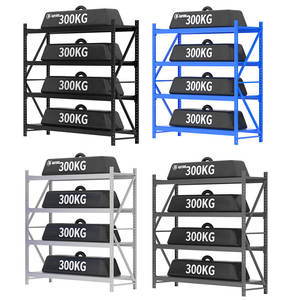
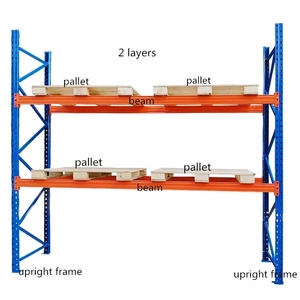
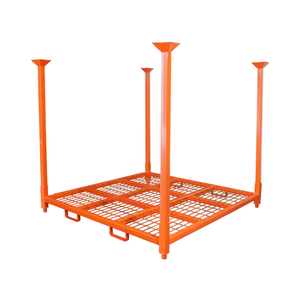
Guangzhou Heda Shelves Co., Ltd. — Engineering Precision Since 2001
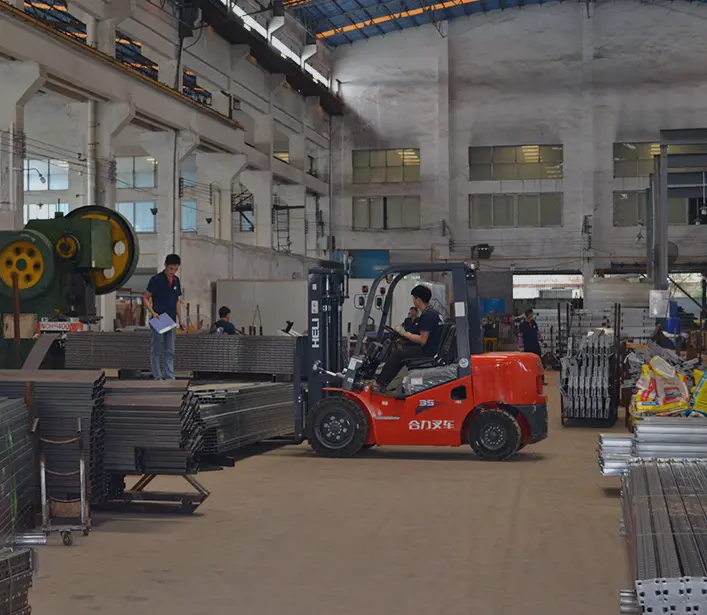
Founded over two decades ago, Guangzhou Heda Shelves Co., Ltd. has grown from a specialized metal fabrication workshop into an international manufacturer of heavy-duty industrial storage systems. Operating from our modern 30,000 square meter production complex in Guangzhou, we engineer high-performance structural and roll-formed cantilever systems, industrial pallet racks, and high-density mezzanines that comply with European CE structural safety mandates and ISO 9001:2015 quality frameworks.
Cantilever systems present unique engineering challenges compared to conventional four-post pallet racks. With unconstrained horizontal loading faces, each arm acts as an isolated cantilever beam subjected to high bending moments, torsional stress, and dynamic forklift impact loads. Our engineering department applies advanced finite element analysis (FEA) to ensure that every upright column, cantilever arm taper, and bolted base connector maintains optimal structural integrity under asymmetrical weight distributions.
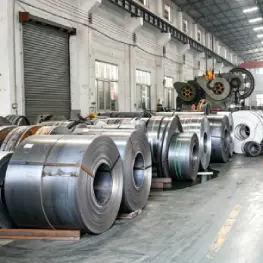
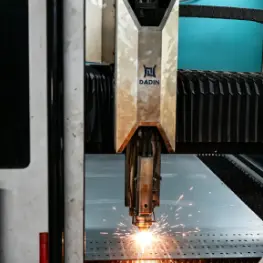
By controlling the complete manufacturing continuum — from raw coil decoiling and CNC plasma cutting to automated robotic welding, multi-stage chemical pretreatment, and dual-layer electrostatic powder coating — Heda Shelves delivers turn-key OEM/ODM precision to logistics providers, steel distributors, and regional importers across 120+ countries, including core markets throughout Africa, Southeast Asia, the Middle East, Europe, and the Americas.
Structural I-Beam vs. Roll-Formed Cantilever: Structural Evaluation
Choosing the correct cantilever configuration requires an empirical assessment of point-load dynamics, warehouse environment, forklift operational speeds, and material length. The comparative matrix below outlines structural thresholds to assist engineering consultants and procurement leads in sizing their systems.
| Evaluation Parameter | Heavy-Duty Structural Cantilever (Hot-Rolled I-Beam) | Medium/Heavy Duty Roll-Formed Cantilever (C/Omega Profile) | HEDA OEM Hybrid Specification |
|---|---|---|---|
| Primary Steel Grade | Q355B / ASTM A572 Grade 50 (High-Yield Structural Steel) | Q235B / Cold-Rolled Structural Coil (Yield ≥ 235 MPa) | Dual-Certified Q235B & Q355B with mill chemical test reports |
| Safe Arm Capacity (UDL) | 1,200 kg to 5,500 kg per arm level | 350 kg to 1,500 kg per arm level | Up to 3,500 kg per arm with gusset-reinforced welded base connectors |
| Column Height Threshold | Up to 12.0 meters free-standing structural column | Typically limited to 6.5 meters before cross-tie bracing | Custom tall-bay heights to 11.5 meters engineered with lateral tie beams |
| Impact Resistance (Forklift) | Extremely High Resists heavy fork impacts without dynamic buckling | Moderate Requires bolt-on column impact guards in heavy aisles | Full structural wrap-around base deflector plates welded as standard |
| Arm Pitch Adjustability | 100 mm or 150 mm bolted flange pitch | 75 mm or 76.2 mm pinned keyhole or hook-in slot pitch | Micro-adjustable 75mm/100mm pin-locking arm with anti-dislodgement cotters |
| Outdoor Yard Performance | Optimal for outdoor steel yards with Hot-Dip Galvanizing (ISO 1461) | Primarily indoor logistics; susceptible to internal condensation rust | Dual anti-corrosion: Pickling, phosphating, plus 80μm thermosetting powder |
| Typical Commodities Stored | Structural H-beams, oil country tubular goods (OCTG), solid rebar, die blocks | Extruded PVC pipes, engineered timber packs, light drywall, conduit tubing | Full spectrum OEM adaptation: timber bunks, sheet metal drawers, roll reels |
Future Procurement Trends for Industrial Racking Systems
Procurement directors and supply chain engineers are no longer purchasing cantilever racks as standalone static steel frames. The ongoing restructuring of global supply nodes, rising urban real estate costs, and automated logistics are transforming technical procurement criteria.
1. High-Bay Narrow Aisle (VNA) Integration with 4D Shuttles
Warehouse owners are replacing wide 4.5-meter forklift lanes with Guided Narrow Aisle (VNA) cantilever corridors reaching 12 meters in height. Modern tenders now demand integrated floor guide rails, wire-guidance channels, and top structural tie-beams designed to accommodate articulated sideloader forklifts and autonomous 4-directional material transporters.
2. Shift to Clad-Rack Warehouse Engineering
Rather than erecting a separate structural steel warehouse building and placing cantilever racks inside, international buyers increasingly procure cantilever clad-rack buildings. In this setup, the heavy structural columns directly support the warehouse roof purlins, insulated wall cladding, and rainwater guttering — cutting civil construction schedules by up to 35%.
3. Life-Cycle Total Cost of Ownership (TCO) & Harsh Environment Finishing
With coastal logistics parks in West Africa, Southeast Asia, and the Arabian Gulf facing high humidity and maritime salt aerosols, single-coat paint finishes are being phased out in global RFPs. Procurement specifications now mandate ISO 12944 C3 to C5 atmospheric corrosivity resistance, achieved via hot-dip galvanizing (≥ 85 μm) or duplex multi-stage thermosetting powder systems.
Next-Generation Cantilever Technological Advancements
Continuous metallurgical research, laser-cutting accuracy, and automated production are driving the transition from manual, high-deflection cantilever systems to high-precision modular architectures.
Laser CNC Precision Arm Incline
Traditional cantilever arms deflected downward under peak loading, risking product slip-off. Next-gen arms incorporate an upward pre-camber of 1.5° to 2.0°, precision-milled using robotic fixtures, so that the arm settles into a dead-level horizontal plane when loaded to maximum UDL.
Pivoting Safety Arm Knuckles
Rigidly welded arms risk tearing the column web if struck upward by forklift operators. Modern OEM cantilever arms utilize high-tensile alloy pivot pins that permit the arm to deflect upward by up to 15° upon impact, absorbing shock energy and dropping back down without column deformation.
Knock-Down (CKD) Flat-Pack Shipping
Rising maritime freight rates demand space-efficient packing. Guangzhou Heda Shelves utilizes completely knock-down base-to-column structural bolt connections (Grade 8.8 and 10.9 structural bolts), increasing sea container cube utilization by up to 45% compared to pre-welded bases.
Integrated Sensor & IoT Ready Channels
Smart logistics operations require weight verification and dynamic inventory tracking. HEDA manufactures cantilever arms with pre-punched internal raceways designed for load-cell strain gauges, RFID locator tags, and visual optical guide sensors for semi-automated crane interfaces.
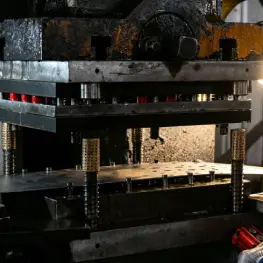
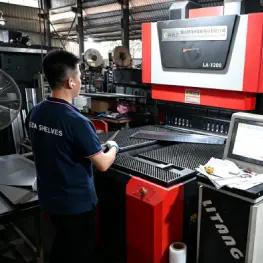
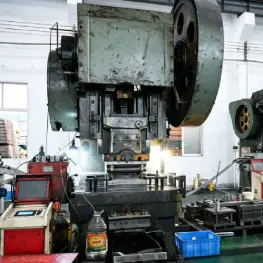
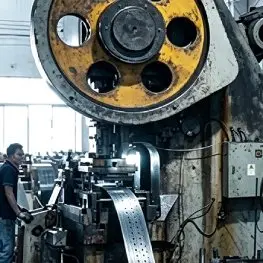
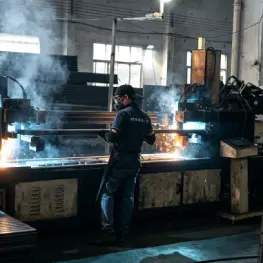
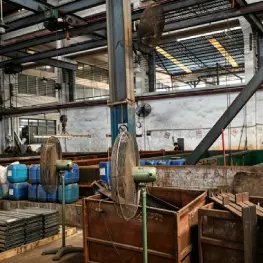
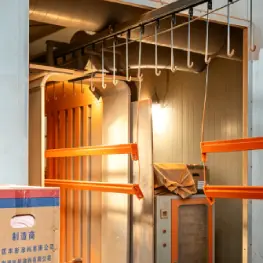
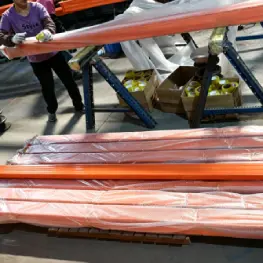
Controlled 10-Stage Industrial Fabrication Process
Every cantilever upright, arm, and cross-bracing component is manufactured under rigid European standard quality management protocols inside our 30,000m² factory to ensure mill-certified compliance.
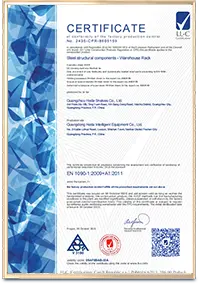
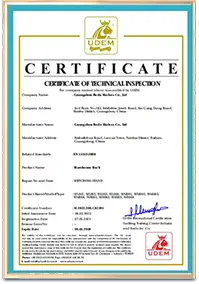
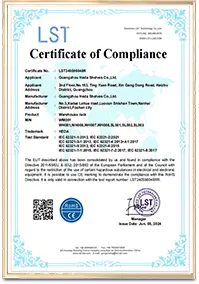
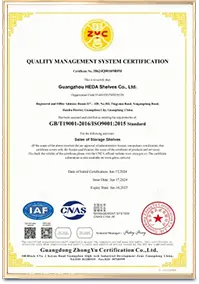
Verified Quality Accreditations for International Tenders
Civil engineering consultants, municipal safety inspectors, and multinational insurance underwriters mandate verified structural documentation. Guangzhou Heda Shelves Co., Ltd. operates under strict third-party audited credentials.
Frequently Asked Questions on Cantilever Engineering & Export
Empirical answers compiled by our chief structural engineers to assist buyers, logistical project managers, and warehouse facility leads with sizing and importing industrial cantilever systems.
What engineering data is required to calculate safe arm capacities and column profiles?
- Commodity Dimensions: Length (min/max), bundle depth, bundle height, and flexural rigidity (rigid steel vs flexible plastic conduit).
- Bundle Weight: Maximum point weight and uniform distributed load (UDL) per level.
- Number of Supporting Arms: Typically, long loads require 2 to 5 supporting arms to eliminate structural sagging between arm points. Arm load equals total bundle weight divided by number of arms.
- Warehouse Clear Height: Slab-to-truss clearance, overhead lighting, sprinkler clearance, and maximum forklift mast lift height.
- Operating Environment: Indoor climate-controlled, unconditioned tropical warehouse, or open outdoor yard subject to wind uplift, seismic zoning, and marine air corrosion.
How does the Center of Gravity (CG) affect the safe load rating of cantilever arms?
What is the difference between single-sided and double-sided cantilever systems?
How does Guangzhou Heda Shelves protect steel racks against corrosion in humid or coastal climates?
What concrete slab thickness and anchor embedment are required for heavy-duty cantilever racks?
- A reinforced concrete slab with a compressive strength of ≥ 25 to 30 MPa (C25/C30).
- A slab depth between 180 mm and 300 mm depending on upright height and arm moment loads.
- High-tensile Grade 8.8 mechanical wedge anchors or chemical capsule resin anchors with embedment depths ranging from 120 mm to over 200 mm, certified under European Technical Assessment (ETA Option 1 for cracked concrete).
Can cantilever racks be fitted with wire mesh decks, steel panels, or timber bunks?
How are knocked-down cantilever components packaged to optimize 40ft HQ container shipping?
What installation support does Heda Shelves provide for overseas warehouse projects?
- Numbered CAD layout schematics detailing every bay sequence and expansion joint offset.
- Step-by-step 3D exploded assembly diagrams identifying torque specifications for all bolt connections (ranging from 120 Nm to 350 Nm depending on bolt diameter).
- Pre-shipment video installation guides and continuous remote engineering oversight via real-time video link.
- For large turnkey projects over 500 tons, we dispatch veteran on-site installation supervisors to guide local labor crews, oversee laser leveling, and certify anchor pull-out testing.