Precision Medium Duty Warehouse Pallet Racking Systems
Engineered for uniformly distributed loads ranging from 300 kg to 1,500 kg per tier. Each structural profile utilizes high-tensile cold-rolled steel, high-precision punching pitches, and anti-corrosive electrostatic powder coating for optimal operational resilience.
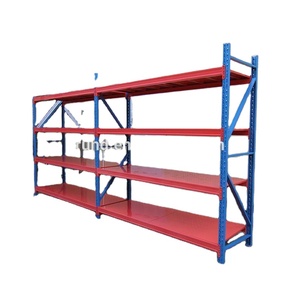
Warehouse Rack System 300kg Metal Iron Storage Holders Stacking Racks & Shelves
- Payload Rating: 300 kg / Tier
- Steel Material: High-Grade Q235B
- Upright Pitch: 50mm Adjustable
- Surface Coating: Epoxy Polymerized
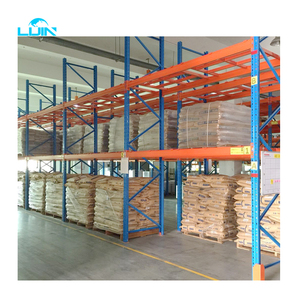
1 Ton Warehouse Storage Adjustable Pallet Racking Shelf Unit Forklift Assemble Manufacturer Steel Rack
- Payload Rating: 1,000 kg / Tier
- Connection: Interlocking Safety Claw
- Beam Section: Roll-Formed Box Beam
- Assembly: Modular Boltless
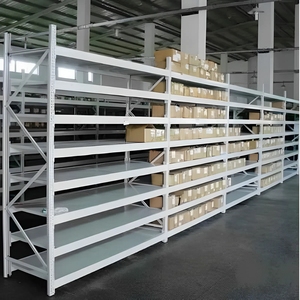
Adjustable Heavy Duty Steel Storage Rack Corrosion Protection Anti-Rust Epoxy Powder Coating Durable Pallet Racking Rack
- Payload Rating: 800–1,200 kg / Tier
- Treatment: Phosphating Pretreatment
- Profile: Reinforced Omega Column
- Durability: Salt Spray Tested >500h
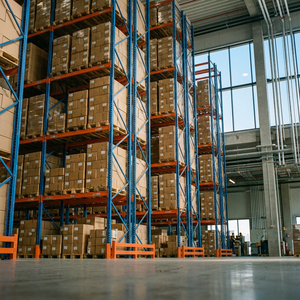
Customized Heavy Duty Pallet Racking System Warehouse Storage Rack Factory Direct
- Payload Rating: 1,000–1,500 kg / Tier
- Standard: FEM 10.2.02 / EN 15512
- Clear Height: Up to 11,800 mm
- Customization: OEM Spec / Custom RAL
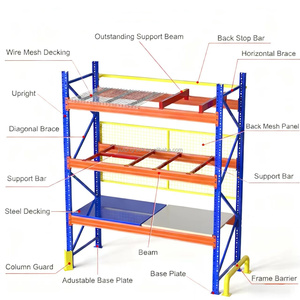
Cheap Heavy Duty Pallet Racking System Carrier Pallet Racks in Cold Warehouse
- Operating Range: -35°C to Ambient
- Surface: Galvanized / Sub-Zero Coat
- Thermal Relief: Expansion Joint Engineered
- Structure: Carrier Bay Stabilized
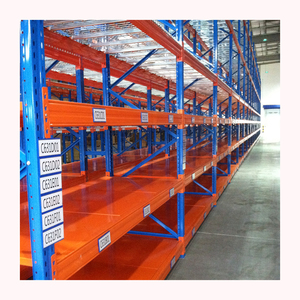
EBILTECH Heavy Duty Shelves Industrial Steel Rack Warehouse Pallet Racking for Medium Weight
- Payload Rating: 500–1,000 kg / Tier
- Accessibility: 100% Selective Access
- Decking Option: Wire Mesh / Steel Shelf
- Safety System: Spring Lock Fasteners
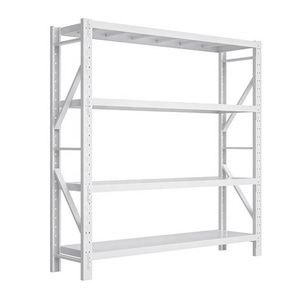
Medium Duty Storage Rack Steel Pallet Warehouse Medium Duty Rack
- Payload Rating: 400–800 kg / Level
- Connector: 3-Claw / 4-Claw Stamped
- Upright Section: 55×47 / 60×50 mm
- Floor Interface: Seismic Baseplate Anchor
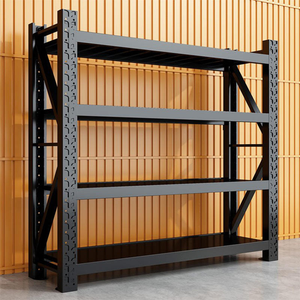
Medium Duty Industrial Steel Pallet Rack Selective Storage Shelving System Corrosion Protection Adjustable Racking for Warehouse
- Payload Rating: 600–1,200 kg / Level
- Coating: Lead-Free Electrostatic
- Forklift Types: Reach Truck, Counterbalance
- Deflection Ratio: Strict L/200 Safety Limit
Structural Definition and Mechanical Integrity of Medium Duty Racking
In modern industrial intralogistics, precision engineering dictates warehouse throughput, operational safety, and structural longevity under cyclic loading.
Within international warehousing taxonomy, Medium Duty Pallet Racking bridges the mechanical threshold between standard manual longspan shelving and high-capacity heavy-duty selective structures. Engineered to handle Uniformly Distributed Loads (UDL) between 300 kg and 1,500 kg per beam level (with cumulative bay capacities ranging from 4,000 kg to 9,000 kg), these systems require rigorous cold-forming fabrication tolerances. Guangzhou Heda Shelves Co., Ltd. uses high-grade Q235B and Q355B structural steel coils that undergo continuous roll-forming. This yields high cross-sectional modulus values while avoiding unnecessary deadweight that can strain floor slab load tolerances.
The core stability of our medium-duty architecture is rooted in the moment-resisting hook-and-slot joint connection. Cold-formed upright profiles—featuring 55×47 mm or 60×50 mm cross-sections with material gauges from 1.5 mm to 2.0 mm—are punched with teardrop, diamond, or butterfly slots along a continuous 50 mm or 75 mm vertical pitch. Step beams and box beams are constructed with precision-welded 3-claw or 4-claw connectors that engage the column slots mechanically. When fitted with cadmium-plated spring steel safety locking pins, each connection can resist upward dislodgement forces exceeding 10,000 N, keeping the beam locked even during accidental forklift impacts.
| Structural Parameter | Light Duty Shelving | HEDA Medium Duty Pallet Racking | Heavy Duty Structural Racking |
|---|---|---|---|
| Load Rating per Level (UDL) | 100 kg – 300 kg | 300 kg – 1,500 kg | 1,500 kg – 5,000 kg |
| Steel Grades (GB/ASTM) | Q195 / SPCC Commercial | Q235B / Q355B (ASTM A36 / S355JR) | Q355B / Heavy Structural Channel |
| Upright Section Modulus | 38×38 mm / 0.8–1.2 mm gauge | 55×47 mm to 60×50 mm / 1.5–2.0 mm | 80×60 mm to 120×95 mm / 2.0–3.0 mm |
| Beam Deflection Threshold | L/150 Max Deflection | Strict L/200 (EN 15512 & RMI Standard) | L/200 to L/250 Standard |
| Material Handling Interface | 100% Manual Hand-stacking | Electric Walkie, Stacker, Reach Forklift | Counterbalance, VNA, Turret Trucks |
| Floor Anchor Fastening | M8 expansion bolt (optional) | M10–M12 wedge anchor into 150mm slab | M12–M16 high-shear seismic anchors |
Adhering strictly to international testing directives including FEM 10.2.02 (European Racking Code) and ANSI MH16.1 (Specification for the Design, Testing, and Utilization of Industrial Steel Storage Racks), beam deflection under maximum nominal UDL is kept within 1/200th of the clear span (L/200). This stiffness prevents permanent sag, reduces cyclic fatigue, and protects secondary decking structures like galvanized steel panels, timber decks, and welded wire mesh dividers.
Future Global Procurement Trends in Medium Duty Storage (2025–2030)
Procurement directors and supply chain engineers are re-evaluating intralogistics specifications in response to rapid automation, regional nearshoring, and circular sustainability mandates.
AMR & AGV Hybridization
Modern distribution hubs require medium-duty bottom tiers with recessed baseplates and flush front profiles. This allows Autonomous Mobile Robots (AMRs) to navigate under racks for automated order picking.
Demountable Modular Fleets
Global 3PL providers increasingly prioritize knock-down structures that pack flat into 40ft High Cube containers. Reconfigurable bay spacing enables rapid warehouse redeployment across evolving lease terms.
Low-Carbon Steel & Eco-Coatings
Strict ESG guidelines demand electric arc furnace (EAF) low-carbon steel, heavy-metal-free pre-treatment chemicals, and triglycidyl isocyanurate (TGIC)-free powder coatings with zero volatile organic emissions.
Resilient Port Logistics Sizing
Importers across coastal zones specify pre-phosphated zinc coatings and hot-dip galvanized components. This protects structural steel from marine air and condensation during ocean transport and terminal staging.
R&D Horizons: Next-Generation Racking Manufacturing
Modern steel manufacturing balances material yield efficiency with repeatable structural performance under dynamic load conditions.
Finite Element Analysis (FEA) Profiling
Our engineers use ANSYS and SolidWorks FEA simulation to optimize the radius-to-thickness ratio across 18 separate cold-roll forming passes. This refines the omega profile's structural corners to resist local buckling and web crippling under dynamic pallet placement.
Continuous Micro-Crystalline Pretreatment
Components undergo an automated 10-stage pre-treatment process: hot alkaline degreasing, twin rinses, sulfuric acid pickling to eliminate mill scale, followed by micro-crystalline zinc-iron phosphating. This produces an inert conversion layer that anchors powder coatings and stops under-film rust migration.
Robotic Continuous Seam Welding
Connector claws are secured to step beams and box beams via 6-axis Panasonic robotic welding cells using a gas-shielded carbon dioxide/argon process. This achieves complete joint penetration without thermal distortion, maintaining beam perpendicularity within ±0.5 degrees across 3.6-meter spans.
10-Stage Precision Manufacturing Workflow
Every cold-formed column, interlocking step beam, and baseplate passes through ten tightly controlled production stages inside our 30,000 m² factory.
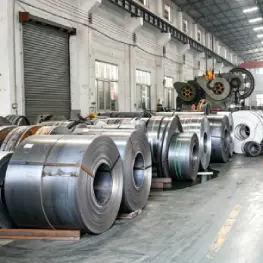
Raw Coil Metallurgy
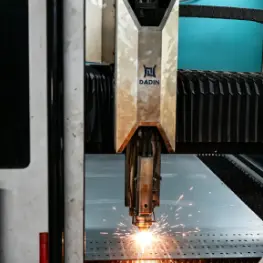
High-Speed Slitting
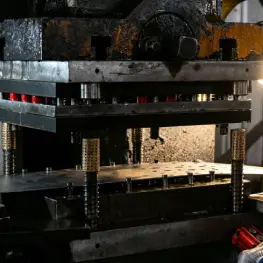
Automated Punching
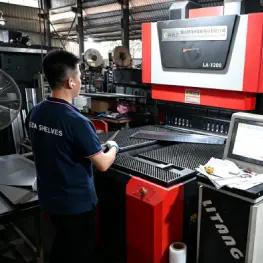
Cold Roll Bending
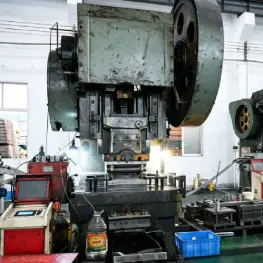
Profile Roll Forming
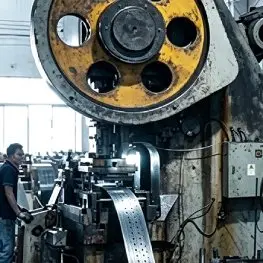
Deburring & Polishing
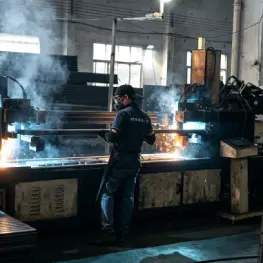
Robotic Cell Welding
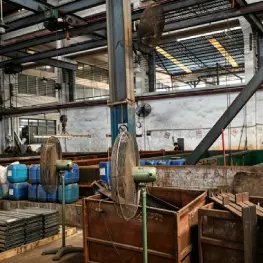
Pickling & Phosphating
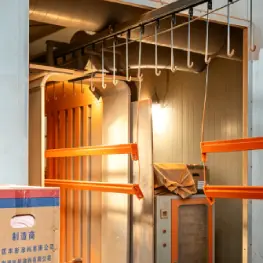
Powder Cure Coating
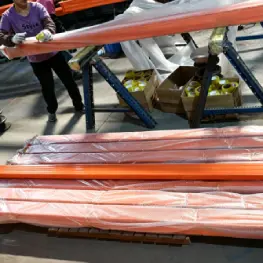
CMM QC & Staging
Guangzhou Heda Shelves Co., Ltd. Structural Advantage
Combining factory-direct scale with full OEM/ODM engineering support for international engineering contractors, 3PL providers, and commercial distributors.
Founded in 2001, Guangzhou Heda Shelves Co., Ltd. operates a 30,000 square meter production facility equipped with high-precision automated roll-forming lines, automated punching equipment, and robotic welding stations. With an average monthly throughput exceeding 30,000 metric tons, we have delivered more than 10,000 industrial storage systems across 120 countries throughout North America, Europe, Southeast Asia, the Middle East, and Africa.
Our OEM/ODM engineering team works directly with client design teams to develop custom upright cross-sections, custom hole configurations, and proprietary beam profiles that match local structural requirements. Every project begins with free CAD floor plan development, 3D structural modeling, and finite element load calculations. This guarantees that frame heights, clear beam spans, and bay aisle clearances match your exact reach truck specifications, pallet sizes, and building column spacing.
ISO 9001:2015 Audited
Certified under registration No. 18624Q00169R0M (valid through June 2027). All coil receiving, gauge verification, and weld inspections follow documented quality control protocols.
CE Factory Production Control
Complies with CE Certificate No. 2435-CPR-8605159, verifying the structural integrity of our steel uprights, load-bearing crossbeams, and dynamic safety latch mechanisms under EN 1090-1 execution standards.
High-Density 40HQ Stowage
Knock-down upright frames nest tightly alongside bundled box beams. This maximizes shipping density in 20GP and 40HQ maritime containers, reducing shipping cost per pallet position.
Fast-Track CAD Turnaround
Our 30-member engineering department delivers structural layout blueprints, 3D isometric renderings, and bill-of-materials pricing within 24 business hours of receiving floor plan files.
Frequently Asked Questions on Medium Duty Pallet Racking
Comprehensive engineering, regulatory, and logistics answers addressing technical considerations for commercial racking installations.
Q How is the structural deflection limit (L/200) calculated for medium duty beams?
Under FEM 10.2.02 and RMI specifications, structural deflection (δ) under maximum static Uniformly Distributed Load (UDL) must not exceed the clear beam span (L) divided by 200 (δ ≤ L/200). For a standard 2,300 mm medium-duty beam span, allowable vertical deflection at mid-span cannot exceed 11.5 mm. Our cold-formed box and step profiles operate below an L/250 ratio under nominal loading, preventing plastic deformation and preserving safety latch engagement.
Q What are the essential parameters required to draft a 3D CAD warehouse layout?
Our engineering team needs: (1) Architectural drawings showing slab dimensions, unobstructed clear height, and building column locations; (2) Pallet specifications including depth, width, total height, and maximum loaded weight; (3) Forklift fleet details, specifically turning radius, mast lowered/extended heights, and aisle clearance limits; and (4) SKU volume counts and preferred stock rotation (FIFO or LIFO).
Q How does phosphated electrostatic powder coating compare to hot-dip galvanizing?
Electrostatic epoxy-polyester powder coating (60–80 microns) applied over pickled and phosphated steel delivers high scratch resistance, structural bonding, and a wide choice of RAL colors for indoor humidity-controlled warehouses. For sub-zero cold storage (-20°C to -35°C), high-humidity coastal facilities, or open-air loading docks, we recommend hot-dip galvanizing (ISO 1461, 70–100 microns) or pre-galvanized cold-formed coil profiles to stop rust formation permanently.
Q What container loading volume can buyers expect in a standard 40ft High Cube (40HQ)?
Because all HEDA upright frames are shipped knock-down (bolted on-site) and beams are nested on steel dunnage with protective foam dividers, a standard 40HQ container typically accommodates between 24 and 27 metric tons of steel components (equivalent to roughly 600 to 1,000 pallet storage positions, depending on beam length and bay configuration). This approach maximizes container weight limits while keeping ocean freight costs down.
Q Can medium-duty pallet racking be adapted into a rack-supported mezzanine system?
Yes. Our medium-duty upright profiles (notably our 60×50 mm and reinforced column series) are engineered to support multi-tier shelving floors or rack-supported mezzanines. By anchoring beam levels with structural aisle cross-ties and deck channels, warehouses can add upper picking walkways (carrying 300 to 800 kg/m² floor loads). This approach effectively doubles or triples usable floor space without requiring structural building modifications.
Q Which safety mechanisms protect medium duty racking against forklift impact?
We integrate three primary structural safety measures: (1) Drop-forged steel safety locking pins with spring clips on every connector claw to prevent upward beam dislodgement; (2) Heavy-gauge (4.0–6.0 mm) wraparound column protectors anchored directly into the floor slab to shield vulnerable aisle corners; and (3) Heavy-duty tubular aisle-end guardrails that absorb horizontal impacts from turning forklifts.
Request an Engineered Layout & Direct Factory Quotation
Collaborate directly with our senior application engineers. Receive custom 2D/3D CAD layout drawings, structural finite element load calculations, and container loading schedules tailored to your facility—free of charge within 24 hours.