Precision Warehouse Racking & Material Handling Equipment
Explore our comprehensive industrial portfolio, spanning gravity-fed dynamic lanes, automated high-density handling systems, and heavy-duty structural steel platforms designed for demanding global logistics operations.
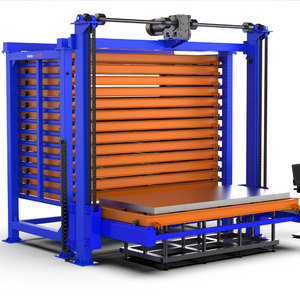
Fully Automatic Sheet Metal Warehouse Rack High Density Smart Storage with Loading Robot
- Robotic Crane Infeed/Outfeed
- Payload: Up to 5,000 kg / Sheet
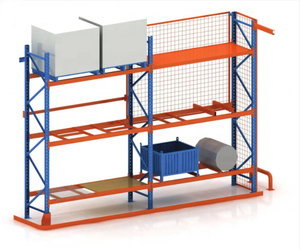
Mobile Base Movable Selective Pallet Rack System Flexible Layout Industrial Warehouse Storage Rack
- Single Aisle Access Optimization
- Motorized Guided Rail Tracks
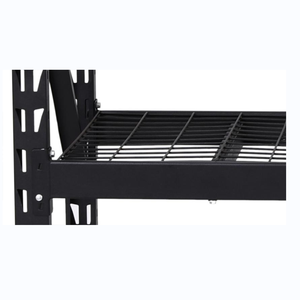
JDS Warehouse Heavy Duty Steel Racking Pallet Racking Adjustable Shelves System Factory Shelves
- High-Grade Q235B Cold-Rolled Steel
- Custom Beam Upright Pitches
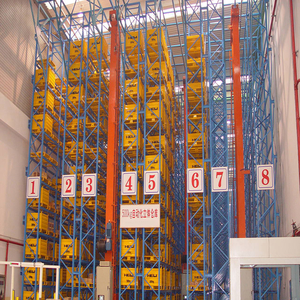
ASRS Warehouse Storage System Automatic Automated Retrieval System Steel Storage Racks Pallet Racking
- Integrated WMS / WCS Connectivity
- Continuous Stacker Crane Retrieval
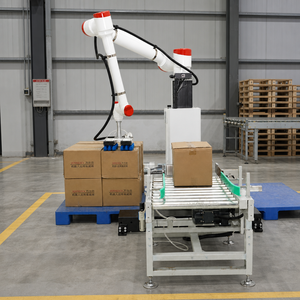
End Of Line 30kg Carton Palletizer With Suction Gripper For Finished Case Stacking And Shipping Flow
- High Precision Vacuum Gripper
- High-Velocity Outfeed Automation
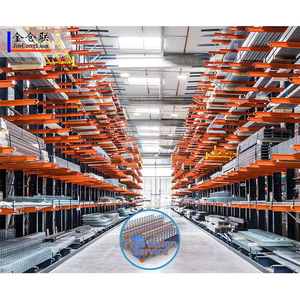
Single Sided 5 Layer Steel Cantilever Storage Rack Complete Small Bolts Nuts Anti-Corrosion Treatment
- Unobstructed Front Opening
- Ideal for Pipes, Tubes & Profiles
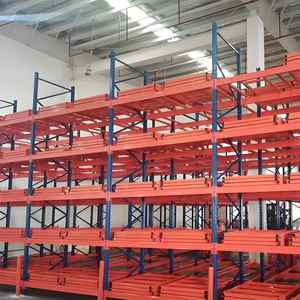
Space Saving Push Back Pallet Racking Nestable Cart for Medium Turnover Single SKU Warehouse Storage
- 2 to 5 Pallet Nested Carts
- Inclined Rolling Rail Structure
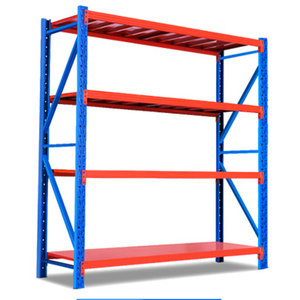
HUAWU 200kg Per Layer Boltless Shelving System 4 Shelf Steel Q235 Light Duty Warehouse Storage Rack HD036
- Fast Interlocking Pin Assembly
- 200 kg Per Shelf Uniform Load
Physics, Kinematics & Structural Design of Gravity Pallet Flow Racks
A rigorous evaluation of passive mechanical FIFO logistics, load acceleration control, pallet bottom deformation vectors, and dynamic separator mechanics.
Gravity Flow Mechanics & Centrifugal Retardation Dynamics
Pallet flow rack storage systems—also classified in global materials handling engineering as dynamic gravity flow racking—utilize inclined roller tracks or skate wheel beds angled precisely between 3.0% and 4.2% (1.7° to 2.4°) to transport palletized loads effortlessly from the loading face (charging aisle) to the discharge face (picking aisle). By leveraging purely mechanical gravitational potential energy, pallet flow systems convert horizontal transit into a fail-safe, energy-independent warehousing process that completely eliminates intermediate forklift travel aisles.
However, managing the velocity of rolling masses exceeding 1,200 kg represents the central mechanical challenge in deep-lane pallet flow engineering. Without speed retardation, terminal velocity increases exponentially over lane depths beyond four pallets, resulting in severe dynamic impact forces at the discharge face. To mitigate this hazard, our OEM factories integrate proprietary centrifugal braking rollers (speed controllers) fitted with internal planetary gearboxes and friction brake pads. Operating on centrifugal governor principles, these retarders apply non-linear braking torque proportional to rotational speed, guaranteeing an optimal controlled descent velocity between 0.15 m/s and 0.25 m/s regardless of pallet weight variance.
Technical Principle: The static coefficient of rolling friction (μr) varies sharply between smooth hardwood skids (0.015), ribbed Euro pallets (0.022), and molded HDPE plastic bases (0.035). Our OEM manufacturing lines customize the diameter, bearing grade, and roller pitch (typically 50mm, 75mm, or 100mm on-center) to perfectly balance static breakaway torque with dynamic deceleration stability.
In addition to speed retarders, deep-lane pallet flow designs require advanced mechanical Pallet Separators installed at the picking face. When a forklift retrieves the front pallet, back-pressure forces generated by the cumulative slope-weight of behind pallets can exceed 15,000 N in a 15-deep lane. The separator mechanism automatically isolates the leading pallet, locking the upstream lane until the front pallet is completely extracted. This mechanical detachment eliminates fork pinches, prevents pallet structural fracturing, and dramatically improves operational ergonomics.
Full-Width Steel Rollers
Fabricated from heavy-duty welded structural carbon steel tubing (Ø50mm or Ø60mm) with precision-stamped steel bearing housings, zinc-galvanized finishes, and solid spring-loaded hex axles capable of supporting dynamic localized point loads up to 350 kg per individual roller.
Centrifugal Speed Controllers
Maintenance-free self-contained planetary governor rollers equipped with high-temperature synthetic grease, abrasive-resistant brake linings, and heavy-gauge mounting brackets engineered to endure millions of load cycles without hydraulic oil leaks or seal failure.
Positive Stop & Entry Guides
Reinforced structural entry funnel guides ensure centered pallet loading even during off-axis forklift placement, paired with heavy 8mm steel discharge arrestor plates engineered to absorb the kinetic inertia of fully laden skids safely and repeatedly.
High-Density Storage Comparative Parameter Matrix
A data-driven engineering comparison evaluating dynamic gravity flow racking against conventional high-density warehouse storage topologies.
| System Architecture | Stock Rotation | Space Utilization | Lane Depth Range | Power Requirement | Forklift Travel In-Rack | Capital Cost / Position |
|---|---|---|---|---|---|---|
| Custom Pallet Flow Rack | Strict FIFO | 85% – 90% | 2 to 25 Pallets | Zero (100% Gravity) | None (Loading/Unload Faces) | Moderate to Premium |
| Drive-In Racking | LIFO | 65% – 75% | 2 to 10 Pallets | Zero (Manual) | High (Risk of Upright Collisions) | Low to Moderate |
| Push Back Racking | LIFO | 70% – 80% | 2 to 6 Pallets | Zero (Gravity Return) | None (Single Aisle) | Moderate |
| Radio Shuttle Racking | Both FIFO & LIFO | 85% – 92% | 2 to 40+ Pallets | Lithium Battery Powered | None (Carrier Shuttle) | High |
| Selective Pallet Racking | Arbitrary | 40% – 50% | 1 Pallet (100% Access) | Zero (Manual) | Standard Aisle Navigation | Lowest |
Strategic Procurement Trends in Dynamic Storage (2025–2030)
How industrial supply chains, corporate ESG benchmarks, and shifting cold-chain economics are reshaping global pallet flow rack procurement.
1. Decarbonization Mandates Accelerating Zero-Electricity Material Handling
Enterprise warehousing is confronting unprecedented sustainability and energy scrutiny. Global logistics corporations facing Scope 1 and Scope 2 carbon reduction goals are re-evaluating continuously powered conveyor lanes and electric transfer carts. Pallet flow systems provide an entirely passive, zero-emission gravity engine that delivers high-velocity FIFO replenishment without consuming kilowatt-hours of electrical energy. In distribution centers operating 24/7, transitioning buffering lanes to gravity pallet flow yields documented operational expenditure reductions while removing parasitic electrical loads from backup diesel generator circuits during grid interruptions.
2. OEM Factory Direct Consolidation & Disintermediation
Industrial racking procurement is shifting away from regional domestic distributors toward tier-one OEM factory direct partnerships. Engineering project managers and logistics real estate developers recognize that bespoke pallet flow lanes require customized roller wall thicknesses, precision rail press-braking, and fine-tuned pitch declinations tailored to the client’s unique pallet fleet. Engaging directly with manufacturing facilities like Guangzhou Heda Shelves Co., Ltd.—possessing integrated roll-forming mills, automated robotic welders, and in-house load testing labs—ensures transparent structural calculations, traceable Q235B/Q355B mill test certificates, and significant cost savings over markup-laden intermediaries.
3. Cold Chain Explosion & Low-Temperature Dynamic Optimization
The global expansion of pharmaceutical cold chains, frozen seafood shipping, and temperature-controlled FMCG distribution has magnified the demand for deep-lane dynamic pallet flow. Cold storage floor space costs up to 400% more to build and refrigerate than ambient ambient space. Maximizing every cubic meter through compact high-density gravity flow lanes directly minimizes air refrigeration volume. Buyers increasingly demand galvanized components and low-temperature synthetic lubrication capable of seamless rolling operations at -30°C without roller seizure or grease oxidation.
Emerging Technological Advances in Gravity Flow Engineering
Discover how the integration of advanced metallurgy, non-contact magnetic retardation, and automated vehicle interfaces is modernizing pallet flow racks.
Eddy Current Magnetic Braking
Replacing traditional friction pads with contactless copper-core magnetic eddy current brakes. As steel roller bodies rotate past permanent neodymium magnets, opposing magnetic fields create dynamic deceleration proportional to velocity with zero mechanical wear, zero dusting, and lifetime operational consistency.
AMR & AGV Outfeed Integration
Developing micro-damped pneumatic pallet release stops and high-precision laser alignment targets at picking faces. This allows Autonomous Mobile Robots (AMRs) and automatic guided counterbalance trucks to perform clean, uninterrupted pallet extractions without manual operator monitoring.
Multi-Tier Mezzanine Integration
Stacking structural pallet flow dynamic lanes directly into multi-tier industrial mezzanines. Ground levels utilize heavy gravity flow tracks for bulk shipping consolidation, while elevated platforms host carton flow pick-to-light operations fed by gravity return channels.
Guangzhou Heda Shelves Co., Ltd. Factory Strengths
Over two decades of precision cold-formed steel manufacturing, automated robotic assembly lines, and certified quality management delivering turnkey storage projects across 120+ countries.
25 Years of Factory Direct OEM Racking Mastery
Established in 2001, Guangzhou Heda Shelves Co., Ltd. operates a premier 30,000 square meter manufacturing base in Guangzhou, China. Producing upwards of 30,000 tons of structural steel storage systems monthly, our enterprise is staffed by more than 300 experienced engineers, CNC tooling experts, and metal fabrication specialists.
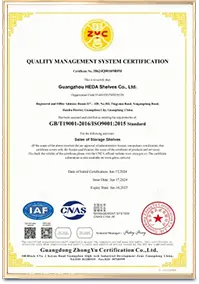
From certified raw steel coil slitting to precision continuous roll-forming of high-tensile upright frames (50mm/75mm adjustable pitch), beam robotic welding, and automated 10-stage pickling-phosphating electrostatic powder coating lines, every element is controlled within our own ISO 9001:2015 accredited facilities.
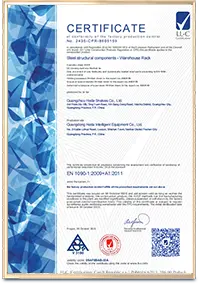
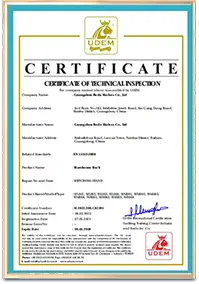
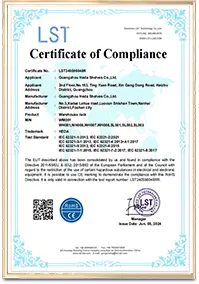
- CE Certification: Fully verified under Certificate No. 2435-CPR-8605159
- ISO 9001:2015 Accredited: Quality Management System No. 18624Q00169R0M
- Containerized Knock-Down Freight: Engineered bundling for maximum 20GP & 40HQ fill rates
- Complimentary 3D CAD & Load Modeling: Turnaround layout schemes within 24 hours
Proprietary 10-Stage Precision Steel Manufacturing Process
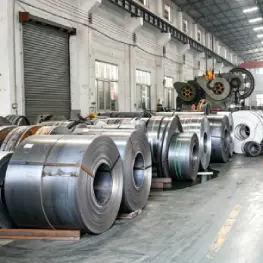
Certified Steel Coils
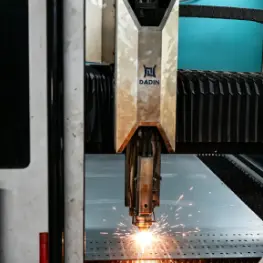
CNC Laser Cutting
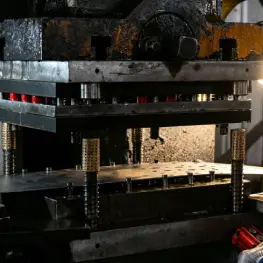
Auto Upright Punching
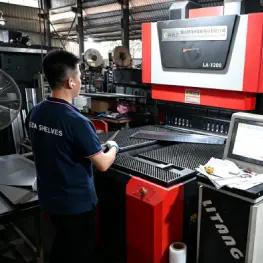
Roll Forming Mills
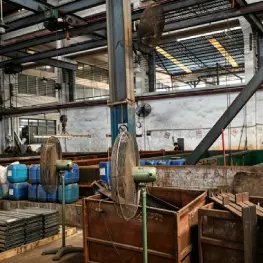
Anti-Corrosion Pretreatment
Frequently Asked Questions on Pallet Flow Rack Procurement
Comprehensive technical guidance addressing floor slab capacity, pallet compatibility, runaway braking safety, and overseas shipping logistics.
Expert Guidance for Racking Specifiers
Have specific structural clearance requirements or dealing with non-standard pallet base dimensions? Our senior structural engineering team prepares bespoke CAD floor plans, FEA load calculations, and container loading schedules.
How is the track slope angle determined for mixed pallet materials?
What mechanical device prevents line pressure crushing on the pick face?
How are centrifugal braking rollers positioned along deep gravity lanes?
Can damaged, warped, or missing bottom-board pallets be used safely?
What warehouse floor slab load capacity is required for deep-lane pallet flow?
How does HEDA Shelves protect dynamic components against tropical humidity and cold storage?
What export packing standards are implemented to protect tracks during ocean shipment?
What are the lead times and minimum order quantities for custom OEM flow racks?
Ready to Engineer Your Custom Pallet Flow Storage Facility?
Connect directly with our senior racking engineering specialists. Submit your warehouse floor plan, clear ceiling height, pallet specifications, and daily throughput metrics for an exhaustive CAD layout, 3D structural rendering, and factory-direct quotation within 24 hours.