Industrial Racking & High-Density Storage Configurations
Explore our custom OEM factory-manufactured dynamic and heavy-duty storage configurations, precision-engineered to meet stringent international structural standards including CE, ISO 9001:2015, and RMI compliance.
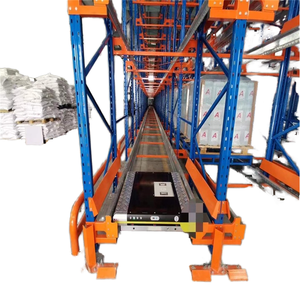
Automated Radio Shuttle Rack High Density Warehouse Storage System 2 Way Pallet Racking FIFO LIFO for Boxed Goods
- Mode: Deep Lane FIFO/LIFO Semi-Automated
- Payload: Up to 1,500 kg per pallet position
- Cold Store Resilient: Operational down to -25°C
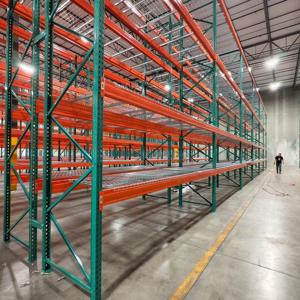
Industrial US Standard Warehouse Shelving Storage Racks Heavy Duty Pallets Racking System for Retail Distribution Center
- Standard: US Teardrop & Structural Beam Patterns
- Load Capacity: Up to 4,500 kg / beam pair
- Finish: High-adhesion electrostatic powder coat
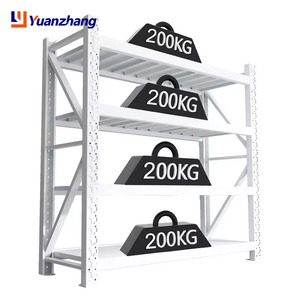
YZ Durable Light Duty Industrial Storage Rack, Long Service Life, Easy to Reconfigure Boltless Steel Shelving Unit
- Assembly: Boltless interlocking slot mechanism
- Layer Capacity: 150 kg to 350 kg per tier
- Application: High-density SKU spare parts picking
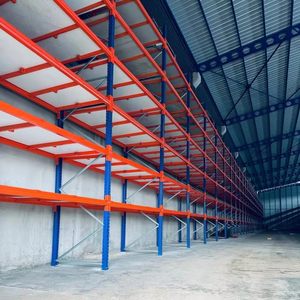
Peterack CE Certified Heavy Duty Stacking Shelf Racks Pallet Rack Multi Layer Shelf Garage Stacking Shelf Warehouse Storage Rack
- Structural: Certified Q235B high-tensile steel
- Compliance: CE 2435-CPR-8605159 Verified
- Modular Stack: 3 to 5 tier variable vertical layout
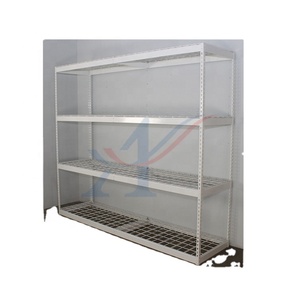
Wire Mesh Shelving & Slotted Angle Rack Metallic Light Duty Display Stand with Powder Coated Finish
- Decking: Fire-safety compliant wire mesh panels
- Protection: Phosphatized anti-corrosion barrier
- Flexibility: 50mm pitch adjustable shelf levels

Anti-Rust Steel Corrosion Protection 5-Tier Adjustable Display Stand Storage Racking Warehouse Shelf Slotted Angle Metal
- Pretreatment: Multi-stage pickling & phosphating
- Durability: Designed for humid coastal logistics hubs
- Footprint: Compact high-density storage profile
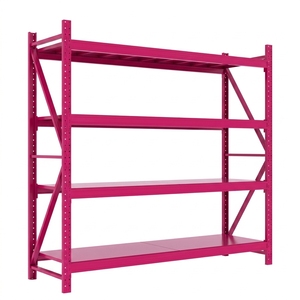
New Smart Shelf Weight Inventory 4-Layer Heavy Duty Supermarket Shelves for Hotels with 1000kg Capacity
- Smart Integration: Real-time weight sensing sensors
- Total Capacity: 1,000 kg distributed load capacity
- Telematics: Seamless WMS stock replenishment API
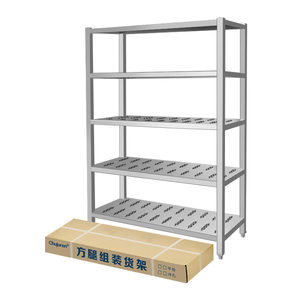
Customizable Stainless Steel Storage Shelving Rack Shelf Factory Square Legs Strong and Durable for Warehouse Kitchen Display
- Material: Premium 304/316 grade stainless steel
- Hygiene Standard: Washdown & HACCP compliant
- Frame: Reinforced square profile leg extrusion
1. Engineering Anatomy of Custom OEM Pallet Flow Racking
In high-velocity fulfilment and bulk warehousing operations, Pallet Flow Racking Systems (widely classified as dynamic gravity flow racking) serve as the preeminent mechanical automation paradigm for First-In, First-Out (FIFO) material rotation. Engineered with inclined structural steel wheel tracks or cylindrical roller beds set at a precisely calculated gradient—typically between 2.5% and 4.0% depending on pallet base composition, dead load weight, and bottom-board morphology—these systems leverage gravitational potential energy to autonomously propel palletized unit loads from the loading (replenishment) face to the unloading (picking) interface.
As a primary original equipment manufacturer (OEM), our custom design and fabrication framework reconciles structural integrity with kinematic fluid-dynamics. A standard pallet flow storage lane relies on three mission-critical mechanical sub-assemblies:
- Centrifugal Speed Controller Rollers (Dynamic Magnetic/Mechanical Brakes): Prevent runaway acceleration over long dynamic lanes (exceeding 4 to 20 pallets deep). As the tangential velocity of the rolling pallet reaches 0.25 to 0.30 m/s, internal planetary gears engage internal brake pads or eddy-current magnetic resistances to govern the descent velocity, ensuring smooth, non-destructive transit.
- Mechanical Pallet Load Separator Sub-systems: Relieve the tremendous cumulative hydrostatic line pressure exerted by queueing rear pallets onto the discharge-end pallet. By isolating the front unit load by a physical mechanical lock (disengaged only when the front pallet is completely hoisted by the forklift), our systems eliminate forklift mast binding and prevent load rollover hazards.
- Dynamic Self-Centering Track Channels: Custom-profiled guide entry tracks engineered from Q235B/Q355B structural steel, coupled with directional flanges, correct fork truck misalignment up to 45mm off-axis during initial lane induction.
High-Density Storage System Architecture: Comparative Technical Benchmark
Warehouse architects, operations directors, and logistics procurement teams face structural trade-offs between capital expenditure (CapEx), operational throughput velocity, floor-area utilization, and electrical dependency. Below is a comprehensive engineering comparison evaluating contemporary high-density storage typologies:
| Evaluation Parameter | OEM Pallet Flow (Gravity) | Radio Shuttle Racking | Drive-In Racking | Push-Back Cart Racking |
|---|---|---|---|---|
| Inventory Rotation Model | Strict FIFO (First-In, First-Out) | Configurable FIFO or LIFO | Strict LIFO (Last-In, First-Out) | Strict LIFO (Last-In, First-Out) |
| Floor Utilization Efficiency | 80% – 85% of total footprint | 82% – 88% of total footprint | 65% – 70% of total footprint | 70% – 75% of total footprint |
| Electrical / Grid Reliance | 0% (100% Mechanical Gravity) | Moderate (Lithium Battery Shuttles) | 0% (100% Mechanical) | 0% (100% Mechanical Gravity) |
| Throughput Velocity (Pallets/Hr) | Extremely High (Concurrent Pick/Pack) | High (Dependent on Shuttle Speed) | Low to Medium (Aisle Congestion) | Medium (Single-Faced Access) |
| Lane Depth Potential | Up to 25+ Pallets Deep | Up to 40+ Pallets Deep | Up to 10 Pallets (Safety Bound) | Up to 5–6 Pallets Deep |
| Forklift Mast Collision Risk | Near Zero (Trucks stay in outer aisles) | Near Zero (No aisle penetration) | High (Operators drive inside bays) | Low (Aisle interface only) |
| Annual MRO & Servicing Overhead | Ultra-Low (Passive Mechanical Rollers) | Medium-High (Batteries, Motors, PLC) | High (Frequent Upright Frame Damage) | Low (Periodic Cart Track Cleaning) |
2. Strategic Future Procurement Trends in Pallet Flow Racking (2025–2030)
Global intralogistics procurement is undergoing a paradigm shift driven by macroeconomic volatility, industrial real estate inflation, and rising energy costs. Enterprise warehouse planners who source custom OEM pallet flow systems are adopting modern procurement methodologies focused on sustainable performance and lower lifecycle costs:
Decarbonized Cold Chain Dynamics
Refrigerated warehouse facilities represent up to 6 times the energy intensity of dry ambient hubs. Pallet flow racking condenses thermal volume by eliminating unconditioned aisle voids. With 0% operational electrical consumption, operations hedge against grid failures and soaring peak-hour kilowatt charges.
Autonomous Fleet Convergence (AMR/AGV)
Dynamic flow lines are increasingly deployed as staging buffers for Autonomous Mobile Robots (AMRs) and Automated Guided Forklifts (AGFs). OEM specifications now mandate laser-cut positional entry fixtures, optical sensor targets, and millimetre-level discharge tolerances for machine-vision picking.
Direct-from-Source OEM Engineering
Tier-1 distributors and multinational 3PL operators are actively bypassing regional trading intermediaries. Direct factory engagement enables tailored metallurgical formulations (such as low-temperature micro-alloyed steel), custom lane geometries, and direct integration with existing building columns.
3. Structural Evolution: Metallurgy, Surface Protection & Safety Engineering
Modern pallet flow systems have evolved significantly beyond generic mild steel frameworks. The current manufacturing benchmark requires advanced metallurgy and precision engineering to guarantee structural durability under dynamic, high-cycle conditions:
Cold-Formed High-Tensile Structural Profiles: Using continuous high-speed roll forming production lines, upright columns are fabricated from certified structural grade steel coils exhibiting yield strengths exceeding $f_y \ge 355\text{ N/mm}^2$ (Q355B / ASTM A572 Grade 50). This high strength-to-weight ratio allows for taller configurations—reaching clear building heights of over 12 to 14 metres—while maintaining compliance with EN 15512 and RMI MH16.1 elastic buckling and seismic drift tolerances.
Advanced Multi-Stage Pretreatment & Anti-Corrosion Chemistry: Chemical degreasing, ultrasonic acid pickling, and hot zinc phosphating create a dense crystalline conversion coating on the steel surface. When followed by thermosetting electrostatic polyester-epoxy powder application cured at 200°C, the finish delivers over 500 hours of continuous salt-spray resistance (ASTM B117). For coastal warehouses and harsh cold-chain freezer facilities subject to repetitive thermal cycling and condensation, components can be specified with continuous pre-galvanized or batch Hot-Dip Galvanizing (HDG) per ISO 1461, yielding complete zinc-alloy intermetallic protection.
Direct-From-Factory OEM Production & Supply Chain Infrastructure
Founded in 2001, Guangzhou Heda Shelves Co., Ltd. operates an integrated 30,000 square-meter production facility in Guangzhou, China. With over 25 years of engineering experience, our team controls every step of manufacturing—from raw steel coil slitting to precision roll forming, automated robotic welding, and powder coating.
-
Container-Optimized Logistics Packing Algorithms:
Components are precision knock-down packed and nested into dense bundles, maximizing 40-foot High Cube (40HQ) container utilization up to 95%. This drastically minimizes international ocean freight per pallet position to global ports (Lagos, Tema, Mombasa, Durban, Santos, Rotterdam, Long Beach).
-
Free 3D Architectural CAD & Structural Load Calculations:
Our engineering team provides comprehensive spatial layouts, dynamic simulations, seismic baseplate calculations, and 3D warehouse models at no extra cost prior to manufacturing release.
-
Rigorous Structural Safety Testing Protocols:
In-house destructive load deflection testing, weld-penetration ultrasonic non-destructive testing (NDT), and dynamic roller speed controller friction benchmarking ensure total operational safety.
Frequently Asked Questions by Technical Buyers & Supply Chain Engineers
Key engineering, structural calculation, and procurement guidelines for logistics directors evaluating OEM pallet flow racking projects.
What parameters determine the incline gradient and roller pitch in custom Pallet Flow systems? +
How does the system prevent runaway pallets and manage line pressure in deep gravity flow lanes? +
What structural and geotechnical information is required for an accurate OEM engineering design proposal? +
Can custom OEM Pallet Flow Racking operate reliably in sub-zero cold chain and freezer facilities? +
How does HEDA Shelves support global container shipping, logistics export, and local on-site installation? +
What quality assurances, warranties, and international structural certifications back HEDA systems? +
Transform Your Warehouse Throughput Velocity
Connect directly with Guangzhou Heda Shelves engineering specialists. Obtain a complimentary, fully customized 3D spatial CAD layout, dynamic roller gradient calculation, and competitive factory-direct pricing within 24 hours.