High-Performance Warehouse Storage & Material Handling Equipment
Engineered for high load safety, rapid assembly, and corrosion resilience. Select standard modular rack profiles or order custom OEM/ODM builds fabricated to your facility specifications.
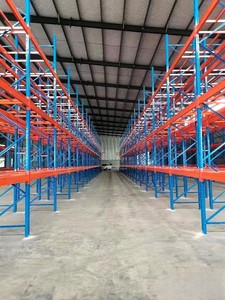
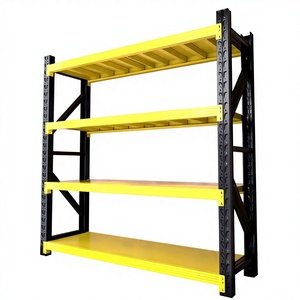
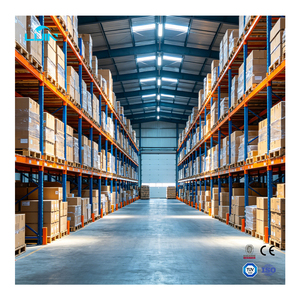
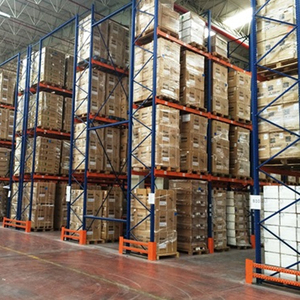
Direct Factory OEM Capabilities & Structural Reliability
Backed by over two decades of metallurgical research, fully automated roll-forming lines, and strict compliance with European and global load bearing regulations.
Q235B Structural Grade Steel
Every beam, upright column, and footplate is forged from prime certified cold-rolled coil, ensuring elastic yield tensile strength that resists structural deflection under dynamic warehouse traffic.
Pretreatment & Coating
Our automated 10-step surface treatment applies continuous pickling, chemical phosphating, and electrostatic epoxy-polyester powder coating for coastal corrosion resilience up to 500 salt-spray hours.
Free 3D Layout & FEA Calculations
Our senior structural engineers analyze beam deflection limit ratios (L/200 standard), seismic floor constraints, and forklift turning radiuses, delivering complimentary CAD layouts in 24 hours.
Certified Compliance
Holders of verified CE Certification (No. 2435-CPR-8605159) and ISO 9001:2015 Quality Management standards. Every production batch undergoes non-destructive load stress verification prior to packaging.
The Strategic Procurement of Industrial Warehouse Shelving: Engineering Reliability, Spatial Density, and Supply Chain ROI
Industrial storage infrastructure is no longer evaluated merely as passive static steel racks; in modern warehousing, it serves as the physical backbone directly governing throughput velocity, worker safety compliance, pick-to-ship fulfillment cycle times, and operational continuity under macro supply chain stress.
When corporate procurement managers, logistics consultants, and cold-chain operators negotiate original equipment manufacturer (OEM) supply contracts, the evaluation model requires deep technical scrutiny that bridges structural metallurgy, surface chemistry, warehouse workflow ergonomics, and long-term modular expandability. A poorly calibrated racking configuration inevitably leads to systemic structural deflections, fork truck collision hazards, aisle congestion bottlenecks, and crippling underutilization of clear vertical building height.
"Procurement teams that transition from treating industrial shelving as a commodity to an integrated material handling system achieve up to 64% greater volumetric storage utilization while simultaneously lowering insurance premiums through third-party certified load calculations."
1. Total Cost of Ownership (TCO) vs. Initial Landed Freight Cost
A recurrent error in industrial shelving procurement is focusing entirely on the initial FOB factory quotation while overlooking the true metric: landed, fully-installed Total Cost of Ownership across a 15-to-20-year structural lifespan. OEM manufacturers like Guangzhou Heda Shelves Co., Ltd. counter these structural overheads through intelligent knockdown modularity. By fabricating boltless connector lugs, interlocking beams, and standardized tear-drop or diamond-punched uprights that nest seamlessly inside 40HQ high-cube shipping containers, freight shipping space is optimized by up to 38% compared to un-nested structural welded frame models.
Furthermore, corrosion vulnerability determines ongoing maintenance write-offs. Facilities operating in high-humidity regional climates, maritime shipping port zones (such as Lagos, Tema, Mombasa, and Durban), or unheated ambient facilities must specify automated chemical pretreatment. Standard wet paints flake and oxidize rapidly when subject to abrasion from timber and plastic pallet skids. Incorporating an electrostatic thermosetting epoxy-polyester powder coat—bonded after automated degreasing, pickling, and chemical phosphating—ensures that accidental scratches do not expand into structural beam oxidation failures.
2. Balancing Selectivity vs. High-Density Storage Physics
Every square meter of warehouse concrete entails fixed rental or construction capitalization. Optimizing spatial efficiency requires matching the storage system configuration to SKU velocity and product lifecycles:
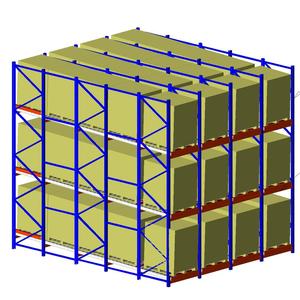
100% Selective Pallet Racking
Best For: High SKU variety, fast-moving retail distribution, and direct immediate access to every pallet position. Operates with standard counterbalance and reach trucks without dedicated lane entry.
Dynamic Gravity Flow (FIFO)
Best For: Perishable foodstuffs, cold storage, and pharmaceutical items demanding strict First-In, First-Out rotation. Powered by calibrated brake rollers that glide pallets smoothly toward the picking face.
Semi-Automated Radio Shuttle
Best For: Deep-lane bulk distribution and energy-intensive blast freezers. Independent radio-controlled battery carts transport pallet loads deep inside racking lanes, mitigating forklift impact damage.
Next-Generation Warehouse Shelving: Emerging Engineering Trends
Technological transformation, electrification, and structural sustainability are reshaping commercial storage procurement models worldwide.
Autonomous Mobile Robot (AMR) & AGV Integration
Modern OEM rack fabrication increasingly incorporates high-tolerance guide rails, zero-clearance baseplates, and laser-guided floor plates to accommodate automated guided vehicles (AGVs) and sorting robots without obstruction.
Cold-Formed High-Yield Micro-Alloy Steels
To reduce steel deadweight while augmenting dynamic seismic capacity, leading factories are deploying high-strength micro-alloy coils. These provide up to 25% higher yield strength with reduced raw material volume, driving down shipping carbon footprints.
Power-Independent Mechanical Resilience
Global supply chain operators are prioritising resilient mechanical systems—such as nested push-back gravity carts and selective high bays—that maintain seamless cargo flow during unexpected regional grid or electrical distribution interruptions.
Frequently Asked Questions on Custom OEM Warehouse Racking
Direct answers from structural engineers regarding fabrication standards, international shipping, customized finishes, and on-site assembly.
What engineering variables are required to generate an accurate OEM warehouse racking layout?
How do HEDA Shelves' manufacturing protocols prevent corrosion in coastal or cold-storage environments?
What third-party certifications and structural safety standards validate your load capacities?
How are large-scale OEM structural components packaged to protect against international sea-freight damage?
What installation support and structural documentation accompany factory-direct exports?
Transform Your Warehouse Volumetric Efficiency Today
Submit your warehouse dimensions and SKU profiles. Our structural engineering department will prepare a comprehensive CAD layout, 3D visualization, and detailed OEM factory quotation within 24 hours.
Get Catalog