Direct-From-Factory Racking & High-Density Storage Lineup
Engineered in our 30,000 m² ISO 9001:2015 and CE-certified manufacturing facility. Each system integrates certified Q235B/Q355B structural steel, automated beam profiling, and custom electrostatic powder coating for industrial, cold-chain, and high-velocity distribution centers.
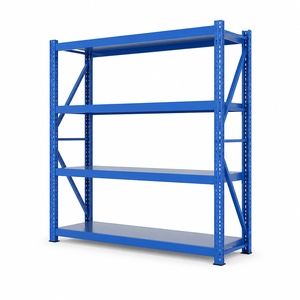
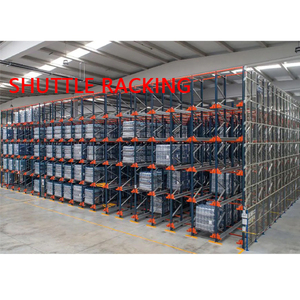
High-Density Ratio Shuttle Racks System Asrs 4 Way Shuttle Racking Radio Shuttle Pallet Rack
Technical Specifications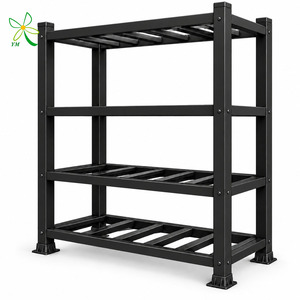
Global Export Corrosion Protection Lightweight Stackable Heavy Duty White 1200mm Storage Shelving FRP Storage Rack Rack
Technical Specifications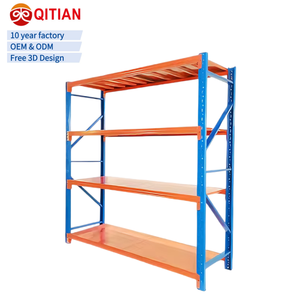
Custom Shelves 200kg 4-Tier Load Capacity Anti-Rust Boltless Steel Industrial Warehouse Storage Rack
Technical Specifications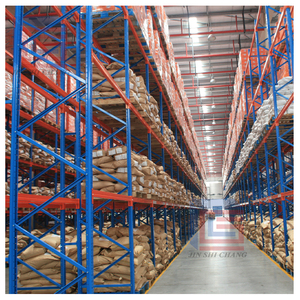
Manufacturer Steel Selective Pallet Rack for Warehouse Storage
Technical Specifications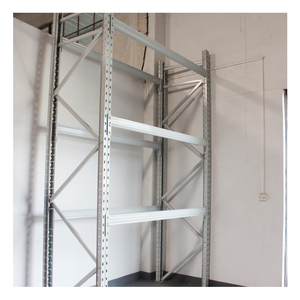
Heavy Duty Boltless Shelf Rack Adjustable Metal for Warehouse Storage Steel Low Price
Technical Specifications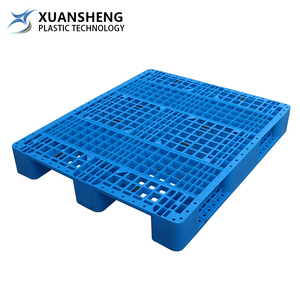
NEXARA High Load Capacity Euro Pallets Single-Sided Grid Automatic ASRS Warehouse Shelving System 4-Way Entry
Technical Specifications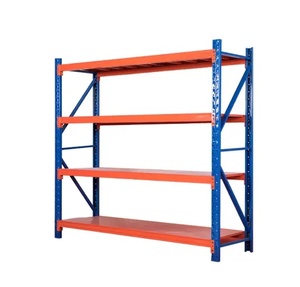
Kinematic Principles and Structural Dynamics of Industrial Gravity-Fed Racking Systems
Gravity-fed racking—universally classified in modern intralogistics as Pallet Flow Racking and Carton Flow Live Storage—operates on pure kinematic gravitational potential energy. By transforming the static deadweight of unit loads into controlled lateral kinetic motion along inclined roller beds, these systems achieve uninterrupted First-In, First-Out (FIFO) stock rotation without consuming electrical energy. For B2B enterprise procurement teams, supply chain directors, and warehouse architects, evaluating an OEM/ODM gravity fed racking factory requires deep scrutiny of dynamic mechanical engineering tolerances, centrifugal speed governors, structural pitch configurations, and metal yield limits.
Core Kinematic Formulation: The descent velocity of a unit pallet load is governed by the track incline angle $\theta$, the dynamic rolling friction coefficient $\mu_k$ between the pallet bottom runner and the roller surface, and the dampening resistance coefficient $C_b$ imparted by centrifugal brake rollers: $m \cdot \frac{dv}{dt} = m \cdot g \cdot (\sin\theta - \mu_k \cdot \cos\theta) - F_{\text{brake}}(v)$. Standard industrial gradients range strictly between 2.5% and 4.0% (1.5° to 2.3°) depending on the pallet bottom runner material (solid hardwood, engineered plastic, or pressed composite).
In high-density distribution environments handling high-velocity SKUs (such as FMCG distribution centers, cold-storage produce vaults, dairy maturation facilities, and pharmaceutical quarantine zones), failure to balance gravitational incline with dampening friction causes catastrophic pallet collision or deceleration stall. A dedicated OEM/ODM manufacturer designs customized roller pitches and integrates precision centrifugal magnetic or friction brake drums every 1 to 2 pallet depths. This keeps the pallet terminal speed capped beneath an OSHA-compliant threshold of 0.3 m/s, protecting inventory and equipment from severe impact shock.
Centrifugal Brake Rollers
Internally geared flyweights expand against internal drum walls proportionally to roller RPM, establishing an automatic velocity governor that absorbs dynamic kinetic energy from pallets weighing up to 1,500 kg.
Pallet Separation Separators
Mechanical foot-pedal or latching arm separators decouple the extraction-face pallet from the cumulative backpressure of trailing pallets in 10- to 20-deep lanes, ensuring zero-pinch forklift retrieval.
Full-Width Steel Rollers
Constructed with cold-drawn precision carbon steel tubing, equipped with dual shielded 6204-ZZ deep-groove ball bearings, rated up to 250 kg per individual roller under harsh -30°C freezer operations.
Self-Centering Entry Guides
High-visibility flanged flared entry guides mounted on the charging side prevent off-axis pallet insertion, correcting angular misalignment up to ±35mm before the pallet engages the track bed.
From an engineering standpoint, an OEM/ODM gravity fed racking factory must guarantee beam deflection does not exceed $L/200$ to $L/300$ under sustained maximum operating loads, as specified by EN 15512 and FEM 10.2.02. If dynamic load-bearing beams flex beyond this limit, the predetermined gravitational slope shifts, resulting in dead-spots where pallets stall mid-channel. This requires manual clearing operations that expose operators to hazardous working conditions.
OEM/ODM Manufacturing Infrastructure: From Steel Metallurgy to Precision Roll-Forming
True OEM (Original Equipment Manufacturer) and ODM (Original Design Manufacturer) delivery extends far beyond standard modular assembly. It represents complete vertical control over structural mechanics, metallurgy, CNC profiling, and surface chemistry. At Guangzhou Heda Shelves Co., Ltd., our 30,000 m² industrial production campus executes custom engineering programs tailored to exact regional logistics codes, pallet dimensions, environmental humidity profiles, and chemical corrosion factors.
Our OEM/ODM engineering pipeline encompasses four distinct technological stages:
Metallurgy & Slitting
We source certified hot-rolled steel strip in Q235B (yield strength $\ge 235 \text{ MPa}$) and Q355B (yield strength $\ge 355 \text{ MPa}$). Fully automated CNC slitting lines maintain width tolerances within $\pm 0.1 \text{ mm}$.
Continuous Roll-Forming
Continuous 22-station roll-forming lines shape multi-bend omega upright columns (up to 120 mm profile width and 3.0 mm material thickness), increasing torsional resistance by 28% over standard profiles.
Robotic Laser & Welding
Robotic multi-axis welding cells produce beam end-connectors with deep-penetration metal active gas (MAG) welds, eliminating manual weld inconsistencies and micro-crack propagation under heavy loads.
10-Stage Surface Treatment
Immersion degreasing, acid pickling, zinc phosphating, high-purity DI water rinsing, and automated electrostatic powder curing at 200°C for superior corrosion and abrasion resistance.
For custom ODM projects, our finite element analysis (FEA) engineering suite models dynamic strain gradients, seismic base-shear reactions, and cyclic fatigue limits before physical prototypes are rolled. If an international buyer requires non-standard pallet footprints (such as 1100×1100mm Australian standards, 1200×1000mm UK industrial, or 48×40 inch US GMA specifications), our tool and die department manufactures custom roll-forming tooling, connector stamping dies, and brake mounts with turnaround cycles under 14 days.
Comparative Analysis: Gravity-Fed Flow vs. Alternative High-Density Warehouse Systems
Selecting the optimal storage geometry requires balancing floor footprint utilization, SKU selectivity, pallet throughput velocity, and total cost of ownership (TCO). While radio shuttle and automated storage and retrieval systems (ASRS) offer automated travel, they introduce high electronic failure rates and battery charging overhead. Gravity-fed racking provides an optimal, zero-power middle ground for rapid FIFO inventory turn.
| Storage System Type | Stock Rotation Logic | Space Utilization (%) | Hourly Throughput Velocity | Power Consumption | CapEx per Pallet Position | Forklift Travel Time |
|---|---|---|---|---|---|---|
| Gravity Flow (Pallet Flow) | Strict FIFO | 85% – 90% | Ultra High (Dedicated Lanes) | 0 kW (Zero Power) | Moderate ($85 – $140) | Lowest (Separate Loading/Picking) |
| Selective Pallet Racking | Universal (FIFO/LIFO) | 40% – 50% | Moderate (Single Pallet) | 0 kW | Lowest ($35 – $65) | Highest (Aisle traversal required) |
| Drive-In Racking | Strict LIFO | 65% – 75% | Low (Forklift enters rack) | 0 kW | Low-Moderate ($50 – $80) | High (Slow, careful maneuvering) |
| Push-Back Racking | Strict LIFO | 70% – 80% | Moderate (Cart nesting) | 0 kW | Moderate ($75 – $115) | Moderate (Single charging aisle) |
| Radio Shuttle System | Programmable FIFO/LIFO | 85% – 92% | High (Automated carrier) | Battery / Charging Grid | High ($130 – $220) | Low-Moderate (Shuttle transfers) |
As demonstrated by comparative intralogistics metrics, gravity-fed flow eliminates forklift travel inside storage bays. Loading operators remain restricted to the charging aisle, while order picking takes place at the opposite extraction face. This spatial separation reduces forklift rack collision risks by up to 74% compared to drive-in configurations, while cutting round-trip machine transit distances in half.
Strategic Sourcing & Procurement Trends: The Next Decade of Gravity-Fed Storage (2025–2035)
Procurement teams at multinational 3PL operators, industrial manufacturers, and FMCG retail chains are facing changing warehouse constraints. Rising urban industrial rents, volatile energy tariffs, tightening cold-chain traceability regulations, and carbon accountability mandates are reshaping international racking supply chains. B2B buyers sourcing from an OEM/ODM gravity fed racking factory must navigate these major forward-looking shifts:
Hybrid Integration with AMR & AGV Fleets
Traditional gravity racks relied entirely on counterbalance or reach forklifts. Modern facilities are retrofitting roller beds with robotic end-stop pick docks, optical retro-reflective beam sensors, and magnetic alignment pegs. This enables Autonomous Mobile Robots (AMRs) to extract live pallets directly without human intervention.
IoT Telemetry & Speed Monitoring Rollers
Next-generation dynamic flow tracks are incorporating self-powered piezoelectric telemetry nodes inside select roller assemblies. These industrial smart rollers monitor speed acceleration, vibration signatures, and roller bearing temperature in real time, alerting maintenance managers to unseated pallets or bearing failures before lane jams occur.
Circular Metallurgy & Carbon Accounting
Global procurement agreements increasingly mandate low-carbon supply chain accounting (EPD certifications and Scope 3 lifecycle footprint audits). Leading Chinese OEMs are adopting scrap-recycled EAF (Electric Arc Furnace) steels, chrome-free pretreatment washes, and zero-VOC thermoset hybrid powder coatings that guarantee corrosion resistance over a 20-year design life.
Additionally, modular knock-down containerization has become a critical procurement factor. With fluctuating oceanic container freight rates, ordering racking with unoptimized geometry inflates shipping costs per pallet location. OEM factories utilizing sophisticated CBM nesting algorithms can bundle upright frames, step beams, pre-assembled roller tracks, and safety brackets into compact bundles that maximize container weight capacities in 40HQ maritime containers, reducing freight cost per storage position by up to 35%.
Why Industrial Sourcing Specialists Partner with Guangzhou Heda Shelves Co., Ltd.
Since our founding in 2001, Guangzhou Heda Shelves Co., Ltd. has grown from a specialized metal fabrication shop into a modern manufacturer of high-density warehouse storage systems. Operating from our central 30,000 m² factory in Guangzhou, China, our team delivers custom OEM/ODM solutions to industrial operations, logistics hubs, and distribution centers across 120+ countries.
Verified Compliance
Certified under CE Certification No. 2435-CPR-8605159, ISO 9001:2015 Quality Management No. 18624Q00169R0M (valid through June 2027), and international RoHS directives.
Free 3D CAD & Load Calcs
Our 20+ member application engineering team delivers complete CAD layout configurations, 3D photorealistic structural renderings, and FEA static-load calculations within 24 to 48 hours free of charge.
Container-Optimized Bundling
Proprietary component nesting and heavy-duty steel frame skids eliminate transit bending, protect pre-finished powder-coated surfaces, and streamline fast container destuffing at destination ports.
Full Lifecycle Support
From pre-production steel mill testing certificates (MTC) to custom color powder-coating matching, step-by-step structural erection blueprints, and live video installation guidance for local site crews.
Whether your project requires selective racking, multi-tier industrial mezzanines, radio shuttle tracks, or high-throughput gravity pallet flow lanes, our engineering team manages the complete manufacturing process from raw steel coil to final container seal.
Frequently Asked Questions: OEM/ODM Gravity Fed Racking
Key structural, mechanical, metallurgical, and logistical questions evaluated by industrial warehouse engineers, logistics consultants, and procurement managers.
What is the standard engineering incline gradient for pallet flow gravity racking?
How do centrifugal brake rollers maintain pallet speed control over deep lanes?
Can gravity flow racking operate inside cold storage and sub-zero blast freezers?
What steel grades and structural safety factors are applied to the uprights and beams?
What is the difference between Pallet Flow Racking and Carton Flow Racking?
What information must a buyer supply for an accurate OEM/ODM engineering quote?
How does your factory ensure surface coating durability and corrosion prevention?
What packaging methods are utilized to prevent transit damage in ocean shipping?
Plan Your High-Density Gravity Racking Installation
Connect directly with our senior intralogistics structural engineers. Share your building layout, pallet dimensions, and throughput goals to receive a free CAD floor plan, 3D rendering, and structural load analysis within 24 hours.
Contact Us