[email protected] Serving West, East, Southern & North Africa
ISO 9001:2015 & CE Certified OEM/ODM Manufacturing Plant

OEM/ODM Stainless Rack Shelving Factory & Exporter

Global Heavy-Duty Industrial Stainless Steel Racking Systems, Sanitary Washdown Shelving, and High-Density Warehouse Storage Solutions Engineered for Extreme Environments.

Technical Whitepaper & Industrial Sourcing Specification

Industrial Stainless Steel Racking: Metallurgy, Engineering & Global Supply Chain

In mission-critical industrial logistics, standard mild carbon steel shelving treated solely with superficial organic powder coatings introduces severe systemic operational risks. When applied inside pharmaceutical cleanrooms, sub-zero cold chains, corrosive marine ports, or chemical processing environments, minor impact damage compromises coating barriers, resulting in oxidation, microbial harboring, structural fatigue, and non-compliance with strict GMP, HACCP, and OSHA health guidelines. As a dedicated OEM/ODM stainless steel and industrial rack manufacturer operating since 2001, we provide cold-rolled, austenitic AISI 304 and AISI 316L stainless steel storage architectures, alongside heavy structural steel solutions, engineered to resist pitting corrosion, deliver verifiable load safety margins under DIN EN 15512 and RMI standards, and maximize vertical cubic capacity across global supply networks.

2001
Established Since
30,000 m²
Factory Floor Area
30,000 Tons
Monthly Rolling Capacity
10,000+
Global Projects Delivered
Engineered Storage Portfolio

Featured Industrial Racking & Heavy-Duty Shelving Systems

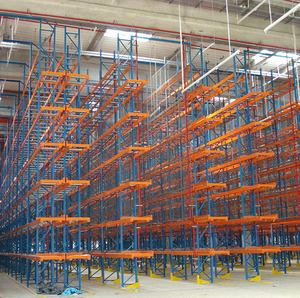
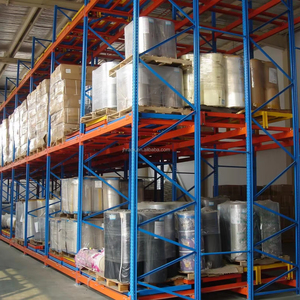
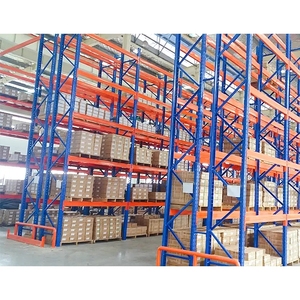
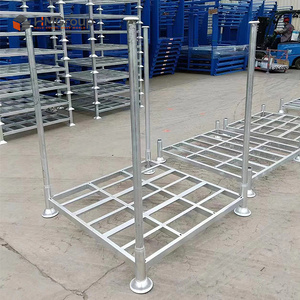
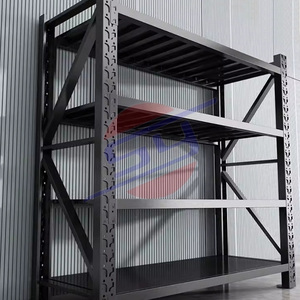
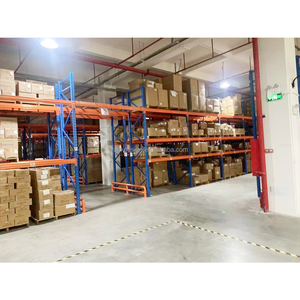
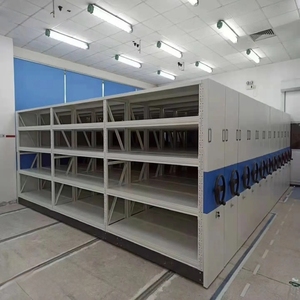
Explore our factory-direct selective, dynamic, and high-density racking configurations. All units support bespoke OEM/ODM dimensioning, stainless grade conversion (AISI 201/304/316L), automated robotic laser perforations, and customized container freight knockdown packaging.

Engineering Whitepaper Specification

Comparative Metallurgy: Austenitic Stainless vs. Coated Steel Racks

Selecting the optimum steel grade and surface chemistry requires balancing initial Capital Expenditure (CAPEX) with long-term Total Cost of Ownership (TCO). In washdown zones, sub-zero cold rooms, and cleanroom environments, material degradation dictates life expectancy.

Evaluation Parameter AISI 316L Stainless Steel AISI 304 Stainless Steel Hot-Dip Galvanized (HDG) Electrostatic Epoxy Mild Steel
Chemical Composition 16-18% Cr, 10-14% Ni, 2-3% Mo 18-20% Cr, 8-10.5% Ni Carbon Steel Q235B + Zinc Bath Standard Carbon Steel + Epoxy
PREN Index (Pitting Resistance) 23.0 - 25.0 (Superior) 18.0 - 20.0 (Standard) Not Applicable (Zinc Sacrificial) < 5.0 (Barrier Failure Risk)
ASTM B117 Salt Spray Hours > 2,500 hrs with Passivation > 1,000 hrs without Rust 500 - 1,200 hrs (to white rust) 120 - 240 hrs (pinhole peeling)
Sub-Zero Brittleness (-30°C) Immune (Austenitic FCC Matrix) Immune (Maintains Ductility) Subject to impact micro-cracking Coating micro-fissuring / flaking
Sanitary Washdown Compliance FDA, HACCP, 3-A Sanitary FDA Cleanroom Class 100/1000 Non-food contact, rough surface Industrial storage only
Expected Service Life (Harsh Environment) 35+ Years Maintenance-Free 20-25 Years Minimum 10-15 Years (Atmospheric dependent) 3-5 Years (Requires repaint/patch)

*Note on Deflection Limits: Under European Norm EN 15512 and RMI specifications, the permissible beam deflection for our structural stainless and high-tensile steel beams is strictly held to $L/200$ under maximum static working load, with ultimate structural safety load factors calibrated to $\gamma_m \ge 1.4$.

Enterprise Strengths

Why Multinationals Source from Our Guangzhou Production Base

Operating since 2001, Guangzhou Heda Shelves Co., Ltd. controls the complete supply chain from raw coil roll-forming to robotic inert gas welding, chemical passivation, and overseas logistics packaging under one 30,000 m² roof.

In-House Manufacturing

Our 30,000 m² factory houses 10 automated cold roll-forming lines, automated punching presses, and dedicated robotic welding bays, yielding up to 30,000 tons of structural steel storage monthly.

Free CAD & 3D Engineering

Our in-house structural engineers formulate free AutoCAD warehouse layouts, 3D visual walkthroughs, and FEA finite-element load analysis calculations calibrated to seismic and floor slab parameters.

CE & ISO 9001:2015 Verified

Every order ships with documented structural validation: CE Certification No. 2435-CPR-8605159, ISO 9001:2015 Quality Registration No. 18624Q00169R0M, and comprehensive RoHS chemical compliance.

Containerized Freight Density

Customized knock-down nesting bundles maximize the volumetric cubing of 20GP and 40HQ maritime containers, reducing sea shipping expenses per pallet position by 22% to 35% globally.

Strategic Forecasting

Future Procurement Trends in Industrial Stainless Shelving

Procurement executives, supply chain architects, and EPC engineering directors are transforming how stainless racking infrastructure is evaluated, sourced, and financed.

Trend 01 · Decarbonization

Circular Metallurgy & Scope 3 Traceability

B2B procurement contracts increasingly mandate environmental product declarations (EPDs) with verifiable recycled scrap content (minimum 60-80% in high-grade stainless melt). Austenitic stainless racks deliver near-100% recyclability at end-of-life, drastically diminishing carbon balance sheet footprint compared to single-cycle coated steel.

Trend 02 · Automation Ready

Deep-Freeze ASRS & Robotic Shuttle Synergy

Rapid cold chain expansion is driving demand for sub-zero (-30°C) autonomous storage and retrieval systems (ASRS). Standard carbon steels experience ductile-to-brittle transition temperature (DBTT) failures when exposed to continuous freezing; austenitic stainless systems provide structural toughness, micro-tolerance deflection, and zero friction degradation for battery-powered automated shuttles.

Trend 03 · Hygienic Mandates

EHEDG & 3-A Sanitary Architectural Protocols

Food and biotechnology logistics centers face intensified FDA, HACCP, and EU 852/2004 audits prohibiting exposed fastener threads, unsealed horizontal ledges, or raw open-seam structural tubes where washdown water stagnates. Modern procurement directs funds to custom laser-coped tubular racking with sanitary hermetic perimeter welding and integrated draining slopes.

R&D & Precision Engineering

Technological Evolution in Stainless Rack Production

Manufacturing heavy industrial stainless steel racking requires specialized roll-forming tooling, advanced fiber laser cutting, and automated electrochemical surface passivation techniques.

Engineering Frontier

Work-Hardened Cold Forming

Austenitic stainless steels exhibit significant work-hardening during rolling. Our 10 continuous multi-station roll-forming lines leverage specialized chromium carbide tool steel dies and flood emulsion cooling to shape multi-bend Ω-profiles and step-beams with longitudinal tolerances inside ±0.5mm without micro-cracking or residual stress deformation.

Surface Metallurgy

Automated ASTM A967 Passivation

Thermal heat tint generated during welding removes chromium from adjacent metal, triggering localized galvanic and crevice corrosion. Our plant incorporates automated pickling tanks followed by ultrasonic nitric/citric acid passivation (ASTM A967/A380) to deplete surface free iron and reconstitute a pure, continuous $\text{Cr}_2\text{O}_3$ passive oxide layer over 100% of the racking framework.

Design Optimization

FEA Dynamic Seismic Simulation

Using ANSYS and SolidWorks Simulation, our engineering office executes 3D non-linear dynamic Finite Element Analysis (FEA) on rack upright columns, pallet backstops, and beam connectors under simulated seismic ground accelerations (Zone 4) and wind overturning forces for semi-outdoor high bay installations.

Procurement Due Diligence

B2B Purchasing & Engineering FAQ

Authoritative technical answers to common queries submitted by global procurement managers, EPC contractors, and warehouse operations leads when sourcing OEM/ODM racking.

When should an enterprise specify AISI 316L over AISI 304 stainless steel racking?

While both are austenitic stainless alloys, AISI 316L contains 2.0%–3.0% Molybdenum, which substantially elevates its Pitting Resistance Equivalent Number (PREN) from ~19 (in 304) to >23–25. AISI 316L must be specified under the following conditions:

  • High-concentration chloride washdown protocols involving sodium hypochlorite or caustic CIP chemicals.
  • Coastal warehousing or marine freight transit where ambient airborne salt deposition exceeds industrial baselines.
  • Direct exposure to acidic food processing environments (citrus, brine, dairy whey) or pharmaceutical synthesis involving organic solvents.

For standard sub-zero cold rooms (-30°C), dry cleanrooms (ISO Class 5-8), and general washdown food distribution warehouses, AISI 304 provides optimal structural durability and corrosion resistance at lower initial raw material cost.

How does your OEM/ODM factory prevent cross-contamination during stainless fabrication?

Carbon steel cross-contamination is the number one cause of premature galvanic pitting on newly manufactured stainless racks. In our 30,000 m² factory, stainless production is physically segregated from carbon steel rolling:

  • Dedicated roller dies, press brakes, and cutting tools lined with polyoxymethylene (POM) protective coatings.
  • Exclusive 100% stainless steel wire brushes, non-woven nylon abrasives, and non-metallic grinding disks.
  • Strict cleanroom-grade packaging protocol using multi-layer polyethylene film interleaving prior to sea container export.
What international structural engineering standards do your racks comply with?

Our industrial pallet racking, mezzanine platforms, and heavy-duty shelving are designed, calculated, and manufactured in full accordance with:

  • EN 15512:2020: European Standard for Steel static storage systems – Adjustable pallet racking systems – Principles for structural design.
  • RMI (ANSI MH16.1): Specification for the Design, Testing and Utilization of Industrial Steel Storage Racks.
  • CE Certification: Structural steel execution standard EN 1090-1 / CPR (Certificate No. 2435-CPR-8605159).
  • ISO 9001:2015: Total Quality Management System (Certificate No. 18624Q00169R0M).
What parameters are needed for your engineers to produce a free 3D CAD layout?

To enable our engineering office to deliver a complete CAD layout, 3D rendering, and structural calculation sheet within 24 to 48 hours, please supply:

  • Architectural floor plan with clear interior ceiling height, column matrix, floor slab load capacity, and egress doorways.
  • Pallet dimensions: Width × Depth × Height (inclusive of goods overhang) and maximum weight per pallet.
  • Forklift fleet specifications: Minimum operating aisle width (AST), maximum mast lift height, and turning radius.
  • SKU profile, inventory turnover rate (FIFO vs. LIFO), and operating temperatures (e.g. ambient, chilled +4°C, or deep freeze -30°C).
What are standard production lead times and ocean container optimization methods?

Typical lead time for 1–5 ocean containers (40HQ) is 15 to 22 working days from CAD engineering approval. Components are packed using knock-down design protocols:

  • Upright columns are bundled with protective dunnage strips and custom lifting straps for forklift unloading.
  • Step and box beams are interlocked in steel frame cradles, protecting connector brackets from in-transit shock.
  • Small accessories (baseplates, row spacers, drop pins) are boxed and crated on fumigated or stainless pallets.

Consult with an Industrial Storage Structural Specialist

From custom 3D AutoCAD design to high-volume stainless roll-forming, our engineering team optimizes warehouse density, satisfies sanitary cleanroom audits, and eliminates freight overhead worldwide.