Featured Industrial Shelving & Intralogistics Storage Systems
Precision-manufactured with premium structural-grade cold-rolled steel (Q235B / Q355B), finite element optimized beam-to-column connections, and specialized multi-stage surface treatments.
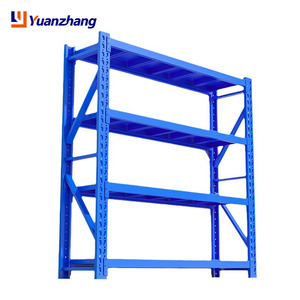
Adjustable 5-Tier Heavy Duty Warehouse Pallet Rack
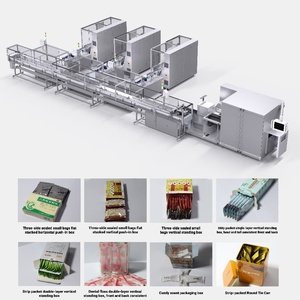
Bulk Product Feeders 3-in-1 Vertical Stacking Machine
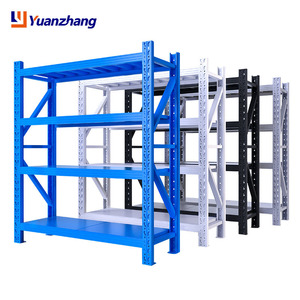
Industrial Warehouse Storage Longspan Shelving
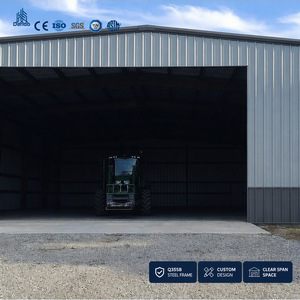
Large Span High-Bay Storage Pallet Racking
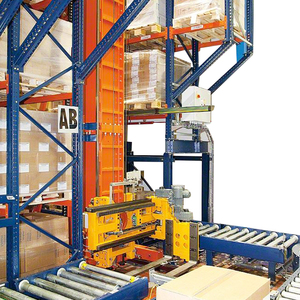
Automated Deep-Lane Pallet Shuttle Racking System
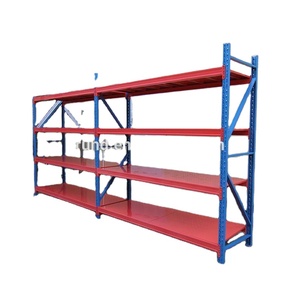
Demountable 300kg-1500kg Metal Stacking Post Racks
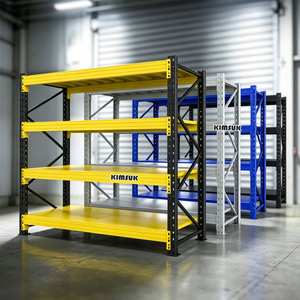
4-Layer Boltless Heavy Duty Utility Shelving Units
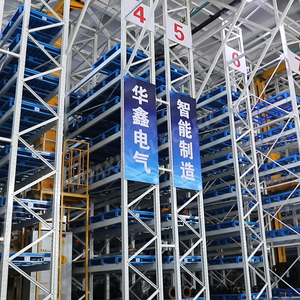
Automated Robot Picking ASRS Shelving Rack
What Distinguishes a Top 10 Commercial Industrial Shelving Manufacturer & Exporter?
In the high-stakes realm of modern global supply chains, industrial racking and commercial shelving are not mere metal frameworks—they are structural engineering installations that carry immense static and dynamic loads. A single localized failure in a high-density racking bay can initiate catastrophic progressive collapse, endangering personnel and wiping out millions in inventory value.
When global intralogistics procurement directors, logistics engineers, and 3PL facility managers evaluate the Top 10 Commercial Industrial Shelving Systems Manufacturers & Exporters, their decision matrix extends far beyond FOB pricing per ton. Tier-1 qualification demands comprehensive manufacturing audits across five core engineering competencies:
Metallurgical Traceability
Strict utilization of prime prime-grade structural hot-rolled and cold-rolled strip steel (e.g., Q235B, Q355B, SS400) accompanied by authentic 3.1 Mill Test Certificates verifying tensile yield strength.
Continuous Roll-Forming
Multi-station computer-controlled cold roll-forming lines that profile upright columns with up to 24 bending passes, eliminating micro-cracking and achieving slot-pitch precision within ±0.3 mm.
Certified Chemistry Pretreatment
Full 9-stage automated spray or immersion pickling and phosphating passivation pipelines that eliminate mill scale, ensuring powder coating salt-spray resistance exceeding 500 hours (ASTM B117).
Container Volumetric Density
Engineered knock-down (KD) sub-assembly nesting protocols that maximize 40ft High Cube container payload utilization up to 92-95%, drastically minimizing ocean freight cost per pallet position.
Technical Engineering Comparison: Tier-1 Manufacturer vs. Commodity Fabricator
Understanding the variance in manufacturing tolerances is essential to mitigating project risks during cross-border warehouse procurement:
| Evaluation Parameter | Tier-1 Certified Manufacturer (HEDA Standard) | Commodity / Local Fabricator | Structural Impact & Operational Risk |
|---|---|---|---|
| Raw Material Specification | Certified prime Q235B / Q355B cold-rolled steel coils with mill test reports | Uncertified secondary steel or scrap-recycled hot strip coils | Non-uniform yield points cause premature upright buckling under dynamic forklift loads. |
| Upright Forming Passes | 18 to 24 continuous precision roll-forming stages | 6 to 10 rapid bending press-brake stamping hits | Inadequate passes induce localized cold-work stress fractures at profile corner radii. |
| Column Punching Precision | Continuous online CNC progressive die punching (< ±0.2 mm pitch variance) | Manual mechanical stamping punch (> ±1.5 mm drift) | Misaligned beam connectors cause twisted frameworks and impossible level adjustments. |
| Pretreatment Chemical Wash | 9-stage automated degreasing, acid pickling, silane/phosphate passivation | Manual solvent wipedown or dry powder wipe | Paint delamination, blistering, and rapid structural rusting within 12–24 months in humid areas. |
| Powder Coating Adhesion | Electrostatic TGIC-free polyester powder, cured at 180–200°C (60–80 µm film) | Air-sprayed alkyd paint or uneven recycled low-temp powder | Chipping on pallet contact exposes bare steel to deep oxidation and reduces structural life. |
| Safety Deflection Limits | Engineered to FEM 10.2.02 and EN 15512 (Max deflection ≤ L/200 under full load) | No deflection calculations; informal estimation | Excessive beam sag destabilizes pallets, risking dynamic load shifts and pallet drops. |
Guangzhou HEDA Shelves: 25 Years of Manufacturing Precision
Founded in 2001 in Guangzhou, China, HEDA Shelves operates a self-owned 30,000 square meter intelligent manufacturing base with an annual production throughput topping 360,000 tons. Serving tier-one supply chains across Africa, Southeast Asia, South America, and Europe.
Every upright column, box beam, step beam, cantilever arm, and shelf decking plate is cut, punched, roll-formed, robotically welded, pretreated, and powder-coated entirely in-house. By maintaining complete ownership of the metallurgical transformation lifecycle, HEDA provides complete accountability from raw coil intake to sea-container dispatch.
Raw Coil Slitting
High-precision uncoiling and continuous longitudinal slitting of structural steel coil.
CNC Punching
Online progressive punching for precise diamond, butterfly, and teardrop hole arrays.
Cold Roll-Forming
22-station automated roll-forming machines shaping uprights and double-C interlocking beams.
Robotic Welding
Automated multi-axis robotic welders securing connector claws to beams with complete penetration.
Passivation & Finish
Automated 9-stage pickling, phosphating, electrostatic powder spray, and 200°C curing tunnel.
Certified Credentials: CE Certification No. 2435-CPR-8605159 | ISO 9001:2015 Certification No. 18624Q00169R0M | RoHS Directive Compliance
Future Strategic Trends in Commercial Industrial Shelving Procurement
Industrial warehousing is transitioning away from static, single-level floor storage toward agile, high-density, and robot-compatible vertical spatial architecture. Procurement executives must align their capital expenditure (CapEx) with five transformative trends:
Vertical Cubic Density
Rising industrial land lease rates are compelling warehouse developers to exploit vertical clearances from 8m up to 30m using multi-tier mezzanine floors and narrow-aisle (VNA) selective configurations.
Passive Energy Storage
Regions prone to electrical grid intermittency (e.g., emerging industrial corridors across Africa and Southeast Asia) prioritize passive gravity-flow rollers and push-back cart racks that run 100% mechanically.
Standardized Interoperability
Global procurement teams favor modular boltless and plug-and-play connector designs that permit fast beam level reconfigurations and rapid warehouse relocation without specialized structural welding.
Extreme Climate Protection
Increased humidity and salt-air corrosion in coastal transshipment hubs (Lagos, Tema, Mombasa, Rotterdam) necessitate dual-layer epoxy-polyester powder coats or continuous hot-dip galvanizing.
Key Technological Development Trends Shaping Commercial Shelving
Manufacturers competing at the technological pinnacle are no longer just delivering fabricated steel; they are creating smart, responsive storage interfaces engineered for lights-out automated warehousing:
1. Native AMR & AGV Grid Integration
Modern commercial shelving is designed around Autonomous Mobile Robots (AMRs) and automated Guided Vehicles (AGVs). Upright footings, bottom clear-span clearances, and low-tier shelf stiffeners are engineered with laser-calibrated tolerances to enable seamless robot drive-through and bin pick-and-place maneuvers.
2. Micro-Alloyed High-Yield Steels
By transitioning from standard carbon structural grades to cold-rolled micro-alloyed steels with enhanced yield points (> 355–420 MPa), next-generation racking systems achieve 15–20% steel gauge reduction without sacrificing allowable load ratings, lowering shipping weights and environmental carbon footprints.
3. Sensorized IoT Structural Telemetry
Advanced industrial installations now feature load-cell integrated beam connectors and wireless impact sensors installed on aisle upright protectors. These edge sensors stream real-time deflection and collision analytics directly to facility Warehouse Management Systems (WMS), warning of structural overstress before failure.
Frequently Asked Questions (FAQ) on Industrial Shelving Sourcing
Direct answers to critical technical, structural, and international logistics questions faced by procurement managers.
What are the key technical differences between Q235B and Q355B steel in racking design? +
How does HEDA ensure ocean shipping protection and rust prevention during long transits? +
What information is required to generate a complimentary 3D layout and structural calculation? +
What are the allowable deflection limits for industrial beams under international standards? +
Which industrial racking systems continue functioning during complete power grid outages? +
How does HEDA support on-site installation for overseas cross-border procurement projects? +
Connect Directly with a Senior Racking Application Engineer
Need to optimize warehouse cubic storage capacity, calculate beam safety loads under FEM 10.2.02, or plan container shipment schedules? Send your warehouse architectural parameters and receive an engineered CAD layout, 3D render, and structural quote within 24 hours.