Engineered Industrial Racking & Modular Storage Systems
Direct-from-factory solutions manufactured to stringent international standards, balancing structural load capacity, volumetric space utilization, and long-term durability.
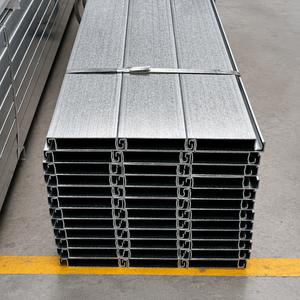 Modular Decking
Warehouse Rack Platform Floor Deck | Dry-Lay Prefabricated Steel Panel
- No-Concrete Fast Assembly
- High Uniform Distributed Load
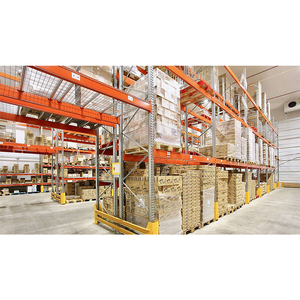 High Density VNA
Very Narrow Aisle Storage System Space Saving VNA Rack
- Maximized Clear Height (15m+)
- 100% Pallet Accessibility
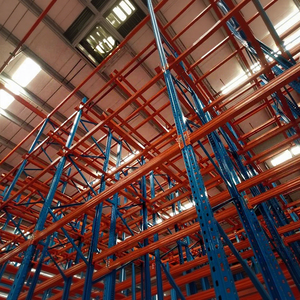 Industry Standard
Heavy Duty Single Deep Industrial Selective Pallet Rack
- Corrosion-Resistant Powder Coat
- Custom Beam Up to 4000kg/Level
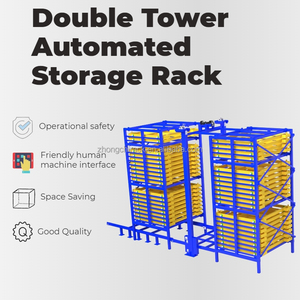 Automated Vertical
Smart Steel Sheet Storage System Vertical Type Rack
- Automated Overhead Handling
- High Density Sheet & Plate Store
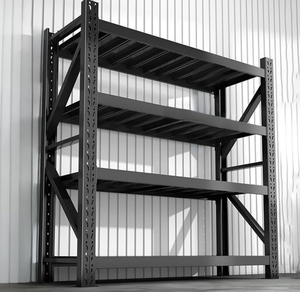 Medium Duty
5 Layer Long Span Medium Duty Cold Rolled Steel Shelving Rack
- 200-800kg Shelf Capacity
- Modular Clip-In Upright Pitch
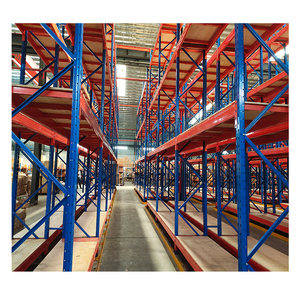 Heavy Commercial
Commercial Warehouse Steel Storage Racking System
- High-Yield Q235B / Q355B Steel
- Full Seismic Base Engineering
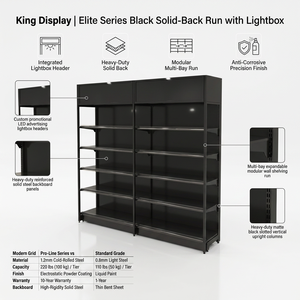 Commercial Retail
Versatile Cold-rolled Steel Double-sided Wire Shelving
- Waterproof & Ventilated Decks
- Flexible Gondola Display System
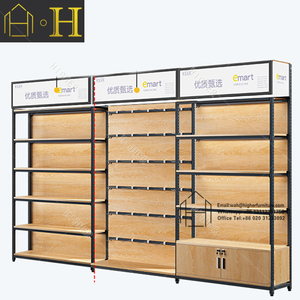 Display & Storage
High-quality Multi-layer Display Rack Wholesale Shelf
- Rapid Tool-Less Breakdown
- Reinforced Base Stability
Evaluating the Top 10 Industrial Pallet Storage Racks Factories: A Structural White Paper
In modern high-velocity distribution centers, manufacturing consolidation hubs, and cold-chain facilities, an industrial pallet rack is far more than modular steel; it is a critical, life-safety structural framework. Procurement teams tasked with selecting an industrial pallet storage rack factory must look beyond simple price-per-tonne quotes. The difference between an inferior manufacturer and a premier global producer lies in cold-formed steel metallurgy, precision roll-forming tolerances, robotic welding integrity, automated pre-treatment surface passivation, and compliance with strict international codes such as EN 15512, RMI (Rack Manufacturers Institute) ANSI MH16.1, and AS 4084.
| Evaluation Pillar | Tier-1 Factory Standard (e.g. HEDA Shelves) | Standard Industry Baseline | Risk Assessment of Non-Compliance |
|---|---|---|---|
| Raw Material Sourcing | Certified prime Q235B / Q355B coils with mill test certificates (MTC) tracking tensile & yield curves. | Secondary market commercial steel with variable chemical composition. | Premature column buckling under rated operational load; catastrophic progressive collapse. |
| Roll-Forming Precision | Continuous multi-station roll-forming lines; pitch punch tolerances within ±0.15mm. | Batch hydraulic step punching leading to pitch cumulative drift. | Connector disengagement, uneven load transfer across beam pairs, skewed plumbness. |
| Welding Integrity | Robotic GMAW / MIG welding with continuous penetration inspection (EN ISO 15614-1 / AWS D1.1). | Manual arc welding with variable welder qualification and uninspected slag entrapment. | Brittle fracture of connector claw welds under sudden forklift drop impact loads. |
| Surface Passivation | Automated 10-stage pre-treatment: alkaline degrease, double water wash, pickling, iron phosphating, DI rinse. | Manual wipe-down or single-stage wash directly before paint booth. | Delamination of powder coat; inter-granular rust blisters in coastal or cold environments. |
| Engineering & Design | Finite Element Analysis (FEA) 3D modeling, dynamic seismic design, custom beam deflection optimization. | Generic load tables without seismic site-specific spectral acceleration calculations. | Building regulatory rejection, structural failure during low-amplitude ground acceleration. |
Factory Benchmark: Guangzhou Heda Shelves Co., Ltd.
Established in 2001, Guangzhou Heda Shelves Co., Ltd. has established itself as an engineering and manufacturing cornerstone among the world's premier industrial pallet storage rack factories.
30,000 m² Integrated Campus
Every structural component—upright omega profiles, box beams, step beams, wire decking, base plates, and pre-engineered mezzanine floor panels—is manufactured in-house under a strict ISO 9001:2015 quality control regime.
Certified Quality Credentials
Full compliance with CE Certification (No. 2435-CPR-8605159), ISO 9001:2015 (No. 18624Q00169R0M, valid to 2027), and RoHS environmental standards. Documented testing delivers verified peace of mind for international third-party engineering audits.
Export Packing Optimization
Specialized knock-down nested packing strategies tailored for 20GP and 40HQ ocean containers. Protects powder finishes across maritime voyages while achieving 98% cubic container load efficiency to slash landed freight costs.
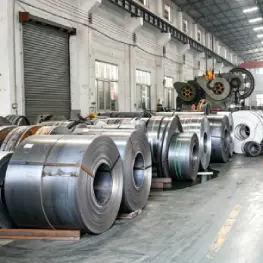
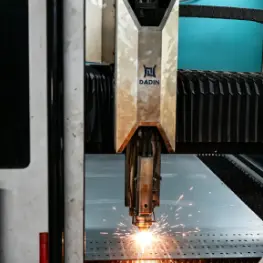
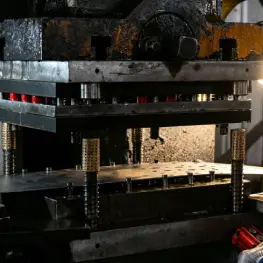
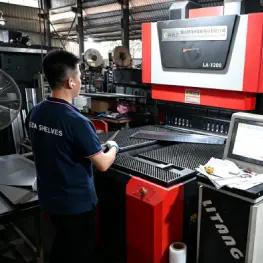
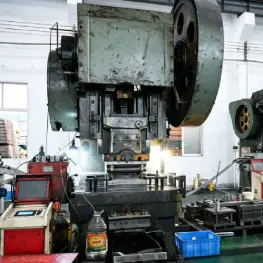
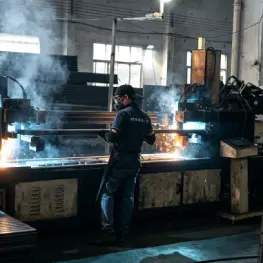
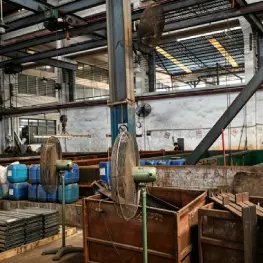
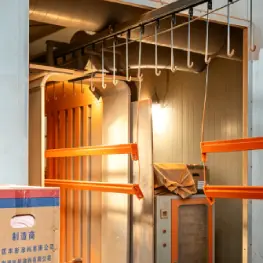
Inside the 10-Stage High-Precision Manufacturing Flow
Witness how raw steel coils are transformed into precision-engineered pallet storage systems.


Future Procurement Trends: How Racking Specifications Are Evolving
Global supply chain disruptions, warehouse land scarcity, and accelerating warehouse automation are transforming what enterprise buyers require from industrial pallet storage rack factories.
1. Hybrid Automation & AMR Integration
Procurement is pivoting from static storage to automation-ready racking. Uprights must now incorporate tight vertical deflection tolerances to accommodate Autonomous Mobile Robots (AMRs), Automated Guided Vehicles (AGVs), and high-density Radio Shuttle carts without frame shudder or optical laser misalignment.
2. Prefabricated Dry-Lay Modular Decks
To circumvent the exorbitant cost and lengthy curing times of concrete mezzanine construction, modern warehouses are shifting toward prefabricated, dry-lay corrugated steel floor deck systems. These bolt-together modular panels permit rapid installation, zero site dust, and 100% disassembly for facility relocation.
3. Circular Metallurgy & Carbon Audits
Enterprise ESG criteria mandate transparent product life cycle assessments (LCA). Tier-1 manufacturers like HEDA Shelves utilize scrap-reduced cold rolling technology, non-toxic heavy-metal-free powder coatings, and fully recyclable certified structural steel to align with Scope 3 carbon reduction mandates.
Engineering Trends: Deflection Limits, Seismic Resilience & NFPA Compliance
In Tier-1 industrial storage facilities, engineering excellence is quantified through structural behavior under static maximum loads, cyclic seismic forces, and operational forklift dynamics. When commissioning an industrial pallet storage rack system, structural engineers must verify three vital technical metrics:
Beam Deflection Thresholds
Under international standard EN 15512, maximum permissible beam vertical deflection ($\delta$) under full design load must not exceed $L/200$, where $L$ is the clear span distance between uprights. Premium systems designed by HEDA Shelves routinely achieve $L/250$ to $L/300$, preventing optical sensor trip errors in automated narrow-aisle trucks.
Seismic Ductility & Baseplate FEA
Earthquake zone engineering requires finite element modeling of high-yield baseplates anchored with heavy chemical or mechanical anchors. Upright frames are calculated with ductility factors ($q \ge 1.5 - 2.0$) allowing controlled plastic deformation at connection joints without brittle collapse.
Flue Space & In-Rack Sprinkler Integration
In accordance with NFPA 13 fire safety standards, racking configurations must maintain a strict 6-inch (150 mm) transverse and longitudinal flue space. Tier-1 manufacturers incorporate engineered pallet backstops and wire mesh dividers that prevent pallet overhang while permitting vertical water penetration from ceiling ESFR sprinkler heads.
Why Procure Directly from Guangzhou Heda Shelves Co., Ltd.?
Eliminate middleman markups, reduce project lead times, and collaborate directly with senior structural engineers from layout design to container loading.
Rapid 24-Hour Free 3D CAD Layouts
Supply our engineering team with your building dimensions, clear ceiling height, column matrix, and forklift turning radius. We deliver a complete 2D CAD layout, 3D photorealistic rendering, and structural load calculations within 24 hours at zero cost.
Tropical & Coastal Climate Protection
Warehousing operations in high-humidity coastal ports (Lagos, Mombasa, Tema, Durban, Jakarta) require robust anti-corrosion barriers. Our proprietary 10-stage phosphating and high-build electrostatic powder coating ensures 500+ hours of neutral salt spray resistance, with hot-dip galvanization available for sub-zero cold rooms.
Outage-Ready Mechanical Engineering
In regions facing unstable electrical grids, we optimize passive mechanical gravity flow, selective, drive-in, and push-back systems that require zero electricity to maintain full warehouse picking throughput. For semi-automated shuttle systems, battery packs are sized to align with on-site solar or generator cycles.
Industrial Pallet Storage Racks: Technical & Purchasing FAQ
The upright thickness (typically 1.5mm, 1.8mm, 2.0mm, or 2.5mm) is calculated based on cumulative bay load, vertical pitch between beam levels (unbraced length), and seismic spectral acceleration factors. Greater vertical distance between the first beam and the floor increases the effective buckling length ($KL/r$), demanding a heavier profile gauge or wider omega cross-section.
Roll-formed racking uses cold-rolled coil steel formed into teardrop or omega shapes with clip-in adjustable beams; it is lightweight, cost-effective, and highly adaptable. Structural racking is fabricated from hot-rolled C-channels bolted together; it provides exceptional resistance to severe forklift impacts, making it the preferred choice for heavy manufacturing, cross-docking, and outdoor yard applications.
For standard selective pallet racking up to 8 meters, a reinforced concrete slab with a minimum compressive strength of 25–30 MPa and a thickness of 150–200mm is typically required. For Very Narrow Aisle (VNA) systems reaching 12–15+ meters, the slab must comply with rigorous floor flatness classifications (such as DIN 18202 or ACI F-min 75 to 100) to prevent mast swaying during rapid transit.
Every component bundle is strapped with edge protectors, wrapped in heavy-duty polyethylene vapor-barrier film, and nested using timber dunnage. Desiccant silica bags are placed inside closed ocean containers to absorb container sweat across equatorial shipping routes. Uprights and beams are systematically bundled to balance container axle weights under international maritime standards.
Essential safety hardware includes heavy-gauge steel upright column protectors, wrap-around corner aisle guards, drop-in wire mesh decking (to prevent broken pallet fall-through), spring-loaded beam safety locking pins, and pallet backstops that maintain required NFPA fire sprinkler flue clearances.
Yes, provided the original upright profiles and baseplates were engineered with sufficient residual axial load capacity. HEDA Shelves engineers can perform an onsite structural audit, recalculate base foundation loads, and integrate prefabricated dry-lay steel decking, staircases, and handrails to convert empty vertical cube into picking levels.