Engineered Heavy-Duty Industrial Shelving & Racking Systems
Precision-manufactured from high-tensile Q235B cold-rolled steel, chemically treated through multi-stage pickling and phosphating, and powder-coated for heavy structural performance in distribution centers worldwide.
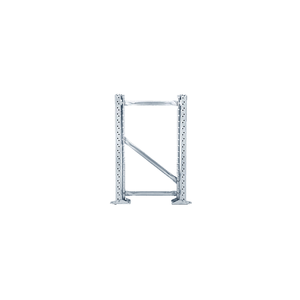
METALSISTEM Superbuild Heavy Duty Industrial Pallet Rack
- Load Rating:Up to 4,500 kg/level
- Finish:Sendzimir Galvanized
- Configuration:Multi-Level High Bay
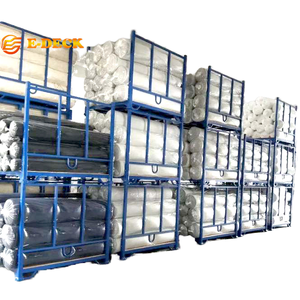
Heavy Duty Double Stacking Industrial Fabric Storage Rack
- Application:Textile Rolls & Bulky Goods
- Bay Depth:Double-Deep Nesting
- Safety Factor:1.5 Static Coefficient
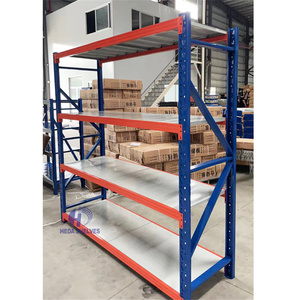
Customized Industrial Workshop Display & Storage Iron Rack
- Deck Type:Solid Sheet / Perforated
- Adjustment:50mm Pitch Boltless
- Capacity:200–500 kg/tier
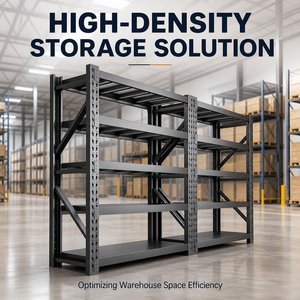
Medium Duty Longspan Shelving Starter & Add-on Units
- Structure:Step Beams + Drop-in Panels
- Modular Span:1,200 to 2,500 mm
- Operation:Manual Case/Bin Picking
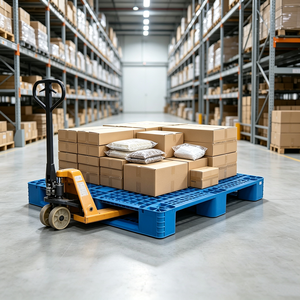
NEXARA 1212 1200x1200mm Three Runner Stackable HDPE Pallet
- Material:Virgin High-Density PE
- Dynamic Load:1,500 kg
- Racking Load:1,000 kg with Steel Rods
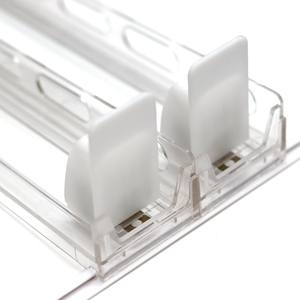
Automated Shelf Pusher System for Rapid Picking & Display
- Spring Tension:3N to 12N Calibrated
- Facing:Auto-Forward Feeding
- Application:Retail & Micro-Fulfillment
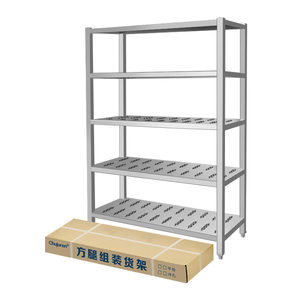
Customizable Stainless Steel Storage Shelving Rack
- Grade:AISI 304 / 316 Sanitary
- Environment:Cold Room & Chemical Lab
- Frame:Square Tube Solid Tig-Welded
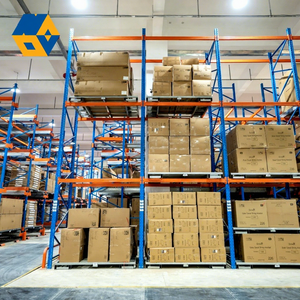
Heavy Duty Automated Radio Shuttle Racking System
- Operation:Semi-Automated FIFO/LIFO
- Channel Depth:Up to 40 Pallets Deep
- Carrier Speed:0.8–1.1 m/s (Loaded)
Founded In
Manufacturing Plant
Tons Monthly Output
Engineers & Technicians
Projects Delivered
Countries Served
Factory-Direct Precision from Coil to Shipping Container
Established in 2001, Guangzhou Heda Shelves Co., Ltd. operates a vertically integrated 30,000 m² heavy-manufacturing base. By avoiding intermediaries, we maintain end-to-end quality control across structural roll-forming, automated CNC punching, robotized GMAW welding, multi-stage chemical surface conversion, and dual-layer electrostatic powder coating.
Our solutions comply strictly with international structural benchmarks including European Standard EN 15512:2020, American RMI ANSI MH16.1, CE Certification No. 2435-CPR-8605159, and ISO 9001:2015 Certification No. 18624Q00169R0M. Every system ships with mill test certificates, static structural load validation, and container-optimized nesting calculations to drastically minimize landed logistics costs.
- Free 24h 3D CAD & Load Analysis
- High-Tensile Certified Q235B Steel
- Pickling & Phosphating Pretreatment
- Complete Export Sea-Worthy Bundling
Structural Verification & QC Pipeline
Spectrometry and tensile yield verification (min 235 MPa) per batch coil.
Continuous cold-roll profile machines holding beam & column profiles to ±0.5mm tolerance.
Acid pickling for oxide removal, followed by zinc phosphating for superior paint adhesion.
Electrostatic cure at 200°C providing a 60–80μm durable finish resistant to coastal corrosion.
Comprehensive Review: The Top 10 Global Industrial Shelving Manufacturers
Based on audited production capacity, metallurgical consistency, static finite element analysis (FEA), compliance with EN 15512 and RMI standards, and global containerized export fulfillment capabilities.
Guangzhou Heda Shelves Co., Ltd.
China (Guangdong) • Est. 2001SSI Schaefer
Germany (Neunkirchen) • Est. 1937Mecalux, S.A.
Spain (Barcelona) • Est. 1966Dexion (Gonvarri Material Handling)
United Kingdom / Norway • Est. 1947Stow Group
Belgium (Spiere-Helkijn) • Est. 1977Metalsistem S.p.A.
Italy (Rovereto) • Est. 1970Jungheinrich AG
Germany (Hamburg) • Est. 1953BITO-Lagertechnik Bittmann GmbH
Germany (Meisenheim) • Est. 1845Frazier Industrial Company
United States (New Jersey) • Est. 1949AR Racking (Grupo Arania)
Spain (Bizkaia) • Est. 2004| Supplier / Exporter | Primary Production Focus | Manufacturing Footprint | Certified Standards | Export Optimization | Direct Inquiry |
|---|---|---|---|---|---|
| HEDA Shelves | Selective, Longspan, Shuttle, Mezzanine | 30,000 m² (Guangzhou, CN) | CE, ISO 9001, RoHS | • High Nesting (40HQ) | Contact HEDA |
| SSI Schaefer | Automated AS/RS, Clad-Rack High Bay | Multi-National (DE, AT, US) | EN 15512, FEM, DIN | Modular Crates | Regional Branch |
| Mecalux | Pallet Flow, Push Back, WMS Integration | 11 Global Plants (ES, PL, US, MX) | EN 15512, RMI | Standard Flatpack | Regional Branch |
| Dexion | Multi-Tier Picking, HI280 Shelving | Factories across Europe | EN 15512, ISO 14001 | Standard Palletized | Regional Rep |
| Stow Group | High Bay Silos, Atlas Shuttles | Multi-Plant Europe & USA | CE EN 1090, EN 15512 | Custom Bundled | Distributor Hub |
| Metalsistem | Sendzimir Galvanized Interlocking Racks | Rovereto, Italy | TÜV, CE, EN 15512 | Knock-Down Nesting | Global Dealer Network |
| Jungheinrich | AGV/VNA Precision Engineered Racking | Moosburg, Germany | DIN EN 15512, ISO | System Package | Direct Fleet Sales |
| BITO-Lagertechnik | Piece-Pick Shelving, Carton Flow | Meisenheim, Germany | RAL-RG 614, EN 15512 | Standard Carton/Bundle | Regional Rep |
| Frazier Industrial | Hot-Rolled Structural C-Channel Racks | 10 US Plants & Mexico | RMI ANSI MH16.1, AISC | Flatbed & Ocean Crate | Direct Factory |
| AR Racking | Seismic-Resistant Heavy Pallet Racks | Tudela, Spain | EN 15512, ISO 3834 | Sea Container Stacking | Authorized Exporter |
Metallurgical Specifications & Structural Safety Criteria
When procuring industrial metal warehouse shelving at an institutional scale, procurement teams must evaluate static safety factors, raw steel yield strength, and surface passivation to avoid catastrophic catastrophic structural failure.
Steel Chemistry: Q235B vs. Q355B
Heavy-duty upright columns and roll-formed box beams demand structural carbon steel with guaranteed yield strengths. Standard installations leverage Q235B (yield strength ≥ 235 MPa), providing excellent elongation (≥26%) to absorb dynamic fork truck impacts without brittle fracture. In seismic or ultra-high-bay installations (>12m), high-tensile Q355B (yield ≥ 355 MPa) is specified, allowing thinner gauges while sustaining dynamic buckling thresholds under maximum static loads.
Deflection Limits: L/200 vs. L/250
Beam deflection under full rated pallet loading is governed by EN 15512 and RMI standards. The standard allowable vertical deflection ratio is δ ≤ L/200 for manual forklift operation, where L is the clear span distance between uprights. For automated shuttle racking, AS/RS cranes, or wire-guided VNA reach systems, tighter tolerances of δ ≤ L/250 or L/300 are mandatory to avoid laser-sensor read errors or carrier drive snagging.
Surface Passivation & Powder Cure
Longevity in tropical, coastal, or humid warehouse environments is defined by chemical pretreatment. High-grade production utilizes acid pickling to eliminate mill scale, followed by zinc phosphating to create a microscopic crystalline conversion layer. Electrostatic deposition of pure polyester or hybrid epoxy powder follows, baked at 180°C–200°C to achieve a minimum 60–80 μm film thickness verified by ASTM B117 salt spray endurance testing (>500 hours).
Future Technological & Procurement Trends Reshaping Industrial Shelving
Key shifts in warehouse automation, sustainability mandates, and volatile ocean freight that global supply chain directors must account for over the 2025–2030 horizon.
1. AMR & Shuttle Synergy
Traditional static shelving is being engineered with continuous guide flanges, lower rack clearance tolerances, and QR-navigational floor channels to facilitate Autonomous Mobile Robots (AMRs) and radio shuttles within existing floor space.
2. High-Cube Mezzanines
Escalating real estate leasing costs are accelerating the adoption of multi-tier rack-supported mezzanines (2 to 4 picking tiers). By multiplying cubic volume instead of square footage, operators achieve up to a 200% increase in SKU picking capacity without expanding footprint.
3. Low-Carbon Steel & Finishes
European ESG mandates and CBAM (Carbon Border Adjustment Mechanism) are driving tier-1 exporters to utilize EAF (Electric Arc Furnace) recycled green steel, zero-lead powder coats, and closed-loop water treatment in chemical phosphating plants.
4. Algorithmic Container Packing
Exporters now employ automated 3D nesting software to calculate optimal loading of upright frames and beams inside 40HQ ocean shipping containers, driving shipping densities up by 18–25% and mitigating global freight cost spikes.
Frequently Asked Questions for International Buyers
Detailed technical guidance addressing load certification, factory audits, import customs documentation, and structural installation safety.
To provide precise 3D CAD layouts and load calculations, manufacturers require: (1) Architectural warehouse floor plan indicating clear ceiling height, column grid spacings, floor slab thickness/rebar details, and dock doors; (2) Pallet specifications (width, depth, total loaded height, and maximum tare gross weight); (3) Material handling equipment (forklift model, minimum turning aisle radius, mast extended lift height); and (4) SKU inventory velocity (FIFO vs. LIFO rotation rules).
Box beams are manufactured by seam-welding two interlocking C-sections together, generating exceptional torsional rigidity and high resistance to lateral twist under heavy, uniformly distributed pallet loads (UDL). Step beams incorporate an indented inner shoulder engineered specifically to support drop-in wire mesh decking, steel support bars, or timber shelves. Box beams are preferred for standard pallet storage, while step beams excel in dual pallet-and-hand-picking distribution environments.
In ambient environments with elevated humidity, a 5-stage automated chemical immersion (acid pickling, degreasing, clean rinse, zinc phosphating, and deionized seal) paired with 60–80μm electrostatic polyester powder coating provides long-term protection. For sub-zero cold rooms (-25°C) or outdoor yards subject to ocean salt air, pre-galvanized structural sheet (Sendzimir process) or post-fabrication Hot-Dip Galvanizing (HDG) per ISO 1461 is mandatory to prevent underfilm corrosion creep.
Institutional buyers should demand: (1) CE Declaration of Conformity under EN 1090-1 / EN 15512 for steel structures; (2) ISO 9001:2015 quality management verification; (3) Third-party Mill Test Certificates (MTC) proving steel chemical composition and tensile elongation per EN 10204 3.1; and (4) Static Structural FEA load rating analysis detailing safety coefficients (minimum 1.5 against yield failure under static capacity).
Upright frames are bundled flat with steel strap bands, interleaved with protective corrugated boards and foam cushioning at contact friction points. Beams are stacked in precision-nested steel dunnage pallets wrapped in stretch polyethylene moisture barriers. Small components like baseplates, anchor bolts, beam safety pins, and row spacers are packed in heavy-duty reinforced wooden crates or dual-wall corrugated export cartons to prevent loose transit loss.
Yes. Modern industrial shelving and teardrop/omega pallet racking utilize modular boltless or slot-in connections. Exporters supply detailed component piece-marking schedules, CAD assembly schematics, anchor bolt torque specifications, and step-by-step 3D video manuals. Local rigging crews and warehouse mechanical teams can successfully assemble complete facilities under remote video technical guidance from factory structural engineers.
When engineered in accordance with EN 15512 or RMI standards and protected by electrostatic powder or galvanized finishes, industrial steel racking exhibits a service lifespan exceeding 20–25 years. Longevity is sustained by conducting annual structural rack safety audits, outfitting lower uprights with heavy-gauge steel column guards, and promptly replacing any uprights or braces that exceed structural damage tolerances (>3mm deflection over 1 meter).
Most institutional transactions execute under FOB (Free on Board, Port of Loading) or CIF/CFR (Cost, Insurance, and Freight, Port of Destination). For multi-bay warehouse installations, components are bundled to pack fully into 20GP (28 cubic meters, ~26 metric tons) or 40HQ (68 cubic meters, ~26 metric tons) intermodal dry containers, optimizing container payload limits to minimize per-pallet-position ocean freight expenses.
Request an Engineered Layout & Factory-Direct Quote
Send your warehouse dimensions, pallet specifications, and target capacities. Our senior logistics and structural engineers deliver comprehensive CAD floor plans, 3D renderings, and certified load calculations within 24 hours.