Engineered Heavy-Duty Warehouse Storage Systems
Precision-manufactured pallet racking, automated shuttle corridors, and modular structural shelving engineered under ISO 9001:2015 and CE standards for high-density modern logistics centers.
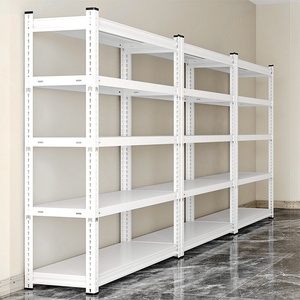
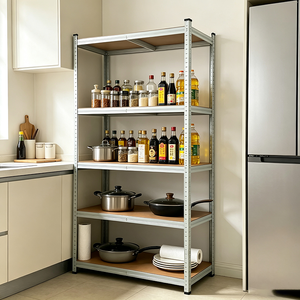
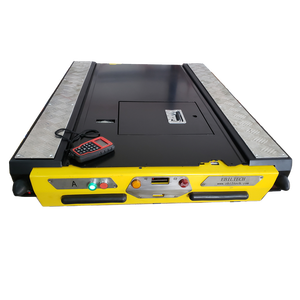
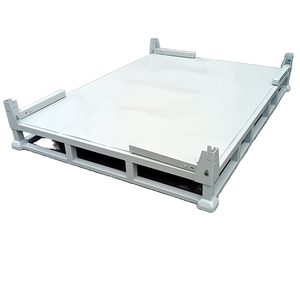
The Mechanics of High-Density Narrow Aisle Logistics Systems
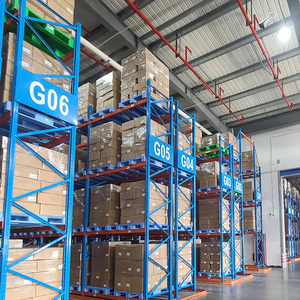
In modern industrial warehousing, land acquisition costs and construction overhead have rendered standard wide-aisle storage configurations (typically requiring 3.2 to 3.8 meters of operating aisle width for counterbalanced forklifts) financially suboptimal. Very Narrow Aisle (VNA) racking systems compress aisle widths down to 1,500 mm – 1,850 mm by utilizing specialized material handling equipment such as articulated turret trucks, trilateral stackers, or man-up order pickers. This geometric compression liberates up to 45% to 50% more pallet locations within an identical building footprint while retaining 100% immediate pallet selectivity.
However, narrowing the structural tolerance envelopes drastically intensifies mechanical requirements. Unlike conventional selective pallet racking, where slight floor irregularities or column deviations can be absorbed by generous aisle clearances, VNA installations demand adherence to strict international standards such as FEM 10.2.02, EN 15512, EN 15620 (Class 300A and 300B), and DIN 18202 Table 3 Group 4. When an articulated turret truck hoists a 1,500 kg unit load to an elevation of 15 meters, an out-of-plumb deviation of merely 3 mm at the base plate can translate into a dangerous 45 mm lateral tilt at the top mast. Therefore, selecting a certified, precision-engineered manufacturer is not merely an equipment acquisition decision—it is a life-safety and operational continuity calculation.
VNA System Comparison: Architectural & Mechanical Clearances
To assist logistics directors, plant managers, and structural engineers in evaluating high-bay configurations, the following matrix benchmarks standard selective racking against narrow aisle and automated shuttle variations across key mechanical parameters:
| Racking Topology | Aisle Width (mm) | Clearance Height (m) | Floor Flatness Spec | Floor Space Utilization | Access Speed |
|---|---|---|---|---|---|
| Standard Selective Racking | 3,200 – 3,800 | Up to 11.5 | Free Movement (FM2) | 35% – 42% | Standard (40-50 pallets/hr) |
| Very Narrow Aisle (VNA) | 1,600 – 1,850 | 12.0 – 18.0 | Defined Movement (DM1 / Superflat) | 58% – 68% | High (60-80 pallets/hr) |
| Double Deep Pallet Racking | 2,900 – 3,200 | Up to 11.0 | Free Movement (FM3) | 50% – 55% | Moderate (50% direct access) |
| Radio Shuttle Corridors | Lane-Based (Deep) | Up to 16.0 | Standard Flatness | 75% – 85% | Semi-Automated Continuous |
| Rack-Supported Mezzanine | Custom Manual | 2 to 4 Tiers | Industrial Floor Slab | 150% – 250% (Volumetric) | Manual Batch Picking |
Top 10 Narrow Aisle Racking Factories & Exporters
An authoritative evaluation of the leading international racking manufacturers recognized for heavy-capacity profile cold-forming, ISO-compliant quality control, and turn-key global project execution.
Guangzhou Heda Shelves Co., Ltd.
Founded in 2001, HEDA Shelves operates a modern 30,000 m² manufacturing plant in Guangzhou boasting a 30,000-ton monthly capacity. Renowned for custom-engineered VNA uprights, cantilever systems, and structural mezzanines, HEDA delivers end-to-end OEM/ODM engineering, complete with 24-hour CAD layouts and container-optimized sea freight packaging.
- Certifications: CE 2435-CPR, ISO 9001:2015, RoHS
- Steel Grade: High-tensile Q235B / Q355B cold-rolled
- Global Footprint: 10,000+ Projects in 120+ Countries
- Surface Finish: Pickling, phosphating & powder-coat
SSI SCHAEFER Systems
A premier European intralogistics conglomerate renowned for high-tolerance automated warehouse racking, hybrid VNA configurations, and integrated automated storage and retrieval systems (ASRS). Known for exceptional steel metallurgy and heavy-duty seismic bracing systems.
- Specialization: Fully automated high-bay VNA
- Design Standards: DIN EN 15620, FEM 9.831
- Market Segment: Tier-1 Enterprise Mega-Hubs
- Key Advantage: Unified software-hardware ecosystem
Mecalux S.A.
With extensive production facilities spanning Europe and the Americas, Mecalux provides versatile narrow aisle systems engineered with optimized profile punching for quick level reconfigurability and seamless wire guidance integration.
- Specialization: VNA & Automated Pallet Shuttles
- Design Standards: EN 15512, RMI Compliance
- Market Segment: Global 3PL & FMCG Distributors
- Key Advantage: Standardized modular component supply
Dexion (Constructor Group)
The pioneer of slotted-angle and pallet racking architecture. Dexion’s P90 VNA series provides variable depths and widths, allowing custom beam locking pins and ultra-rigid upright frames engineered to withstand continuous forklift maneuvering.
- Specialization: P90 Narrow Aisle System
- Design Standards: EN European Standards
- Market Segment: European Industrial Warehouses
- Key Advantage: Deep historical metallurgy expertise
Jungheinrich AG
Uniquely positioned as both an industrial forklift manufacturer and racking fabricator, Jungheinrich engineers VNA racking frames with optimized beam-to-column tolerances calibrated precisely to the physical dynamics of their turret trucks.
- Specialization: Turret Truck-to-Rack Integration
- Design Standards: FEM 10.2.02 Standards
- Market Segment: High-throughput European fulfillment
- Key Advantage: Integrated guide rail & inductive wire systems
Stow Group
Stow manufactures cold-rolled structural steel profiles optimized for extreme heights. Their VNA pallet racking frames integrate specialized baseplate anchors and heavy bracing to dissipate dynamic braking forces produced by high-mast order pickers.
- Specialization: High-Bay VNA & Movu Robotics
- Design Standards: EN 15512, Eurocode 3
- Market Segment: Pan-European Logistics Contractors
- Key Advantage: Advanced roll-forming profile rigidity
AR Racking (Grupo Arania)
Part of an industrial steel conglomerate with over 80 years of metallurgical transformation expertise, AR Racking excels in high-durability galvanized and high-yield cold-formed steel profiles with traceable raw material batches.
- Specialization: Heavy industrial narrow aisle installations
- Design Standards: EN 15620, ISO 3834-2
- Market Segment: Chemical, Automotive, & Heavy Cargo
- Key Advantage: Complete coil-to-component traceability
BITO-Lagertechnik Bittmann GmbH
BITO develops high-tolerance narrow aisle picking towers and heavy pallet racking modules. Their systems feature boltless beam connectors, specialized pick-face accessories, and structural frame stiffeners designed for high-density e-commerce hubs.
- Specialization: Multi-tier narrow aisle picking
- Design Standards: RAL-RG 614 Quality Mark
- Market Segment: Pharmaceutical & Hardware Wholesalers
- Key Advantage: Fine-tuned picking accessories and decks
Daifuku Co., Ltd.
A worldwide powerhouse in automated material handling, Daifuku manufactures high-precision structural racking designed to withstand the strict seismic requirements of the Asia-Pacific region, often pairing VNA configurations with automated cranes.
- Specialization: High-seismic automated VNA bays
- Design Standards: JIS B 8941, ISO 12100
- Market Segment: Semiconductor, Cold Chain & Automotive
- Key Advantage: Earthquake mitigation structural design
Frazier Industrial Company
Frazier is North America’s premier producer of structural steel channel racking. In contrast to roll-formed steel, Frazier uses heavy hot-rolled structural shapes that offer superior resistance against forklift impact collisions in punishing distribution centers.
- Specialization: Structural C-Channel VNA Racking
- Design Standards: RMI Standards, AISC Specifications
- Market Segment: Heavy manufacturing & beverage hubs
- Key Advantage: Impact-resistant hot-rolled structural steel
Why Global Logistics Engineers Specify HEDA Shelves
Direct manufacturer-to-project execution from Guangzhou, China. Combining advanced cold-roll forming lines, certified corrosion engineering, and transparent global logistics logistics for maximum return on investment.
Founded in 2001, Guangzhou Heda Shelves Co., Ltd. has grown into an international leader in heavy-duty warehouse storage infrastructure. Operating from an expansive 30,000 m² modern production facility with a workforce exceeding 300 specialized engineers and fabricators, HEDA manufactures over 30,000 tons of certified steel storage systems every month.
For overseas project owners, general contractors, and logistics directors across Africa, the Middle East, Southeast Asia, and the Americas, HEDA removes export uncertainties by consolidating structural design, load calculation, automated cold-roll forming, in-house electrostatic finishing, and container-optimized export packaging under one roof.
10-Stage Precision Production
From prime raw coil slitting to automatic punching, cold-bending forming, polishing, and robot-assisted welding, our production adheres strictly to ISO 9001:2015 protocol.
Industrial Anti-Corrosion Treatment
Components undergo comprehensive chemical pickling and phosphating pretreatment before electrostatic polyester powder coating, preventing flaking even in humid coastal warehouses.
Container-Optimized Bundling
Knocked-down components are mathematically bundled and palletized to maximize 20GP/40HQ volumetric fill rates, significantly reducing the landed freight cost per pallet position.
Free 24-Hour CAD & 3D Modeling
Provide your warehouse dimensions, clear heights, and pallet weights, and our engineering department will generate complete CAD floorplans, 3D renderings, and load calculations free of charge.
Verified International Credentials
Guangzhou Heda Shelves Co., Ltd. holds CE Certification No. 2435-CPR-8605159, ISO 9001:2015 Certification No. 18624Q00169R0M (valid through June 2027), and verified RoHS chemical compliance.
Turnkey Global Installation Guidance
Every shipment is accompanied by sequential numbered tags, detailed shop installation drawings, and step-by-step video manuals, with optional on-site engineering supervision for major installations.
VNA Racking Technology & Procurement Trends: 2026–2030
As automated supply chains mature, narrow aisle warehouse architectures are transitioning from static structural racking into dynamic, data-monitored, semi-automated logistics nodes.
01. Inductive Guidance vs. Vision AMR
Traditional structural guide rails anchored into the concrete slab are increasingly yielding to floor-embedded inductive wire guidance and SLAM-based vision navigation. This hybrid configuration reduces equipment chassis wear, prevents tire pinching, and enables flexible transitions between manual turret trucks and autonomous mobile robots (AMRs).
02. Direct Laser Superflat Floor Pre-Certification
Specifying engineers now mandate concrete slab grinding to DIN 18202 Table 3 Group 4 tolerances prior to post installation. By incorporating digital floor profile mapping into the procurement contract, logistics operators avoid dynamic mast oscillations and prevent high-speed turret truck slowdowns caused by uneven concrete slabs.
03. High-Tensile Micro-Alloy Steel Profiles
To reduce overall rack deadweight while boosting load capacities to 2,000 kg per level at 18-meter heights, mills are adopting cold-formed high-strength micro-alloy steels (such as Q355B and European S355MC). This allows for thinner profile walls, superior beam stiffness, and enhanced structural elasticity under seismic loading.
04. Sensorized Structural Health Monitoring
Next-generation high-bay installations are deploying wireless IoT strain gauges, tilt sensors, and laser deflection monitors directly on upright frames and beam connectors. In the event of a heavy impact collision or severe ground settlement, warehouse management systems (WMS) receive instant structural integrity alerts.
05. Decarbonization & Green Steel Mandates
Global corporations are requiring carbon emission audits across their procurement chains. Leading racking exporters now provide certified life-cycle assessments (LCAs), incorporating scrap-recycled electric arc furnace (EAF) steel and low-VOC thermosetting powder coatings to meet corporate ESG and LEED warehouse construction benchmarks.
06. Cold-Chain & Controlled Atmosphere Optimization
With cold storage facilities facing skyrocketing power costs, high-density VNA layouts are being engineered specifically for sub-zero (-25°C) environments. Systems combine thermal expansion gaps, impact-resistant cold-room paint formulations, and ultra-dense spacing to minimize refrigerated cubic volume waste.
Technical Audit Checklist for VNA Racking RFQs
When issuing a Request for Quotation (RFQ) to international narrow aisle racking manufacturers, incorporate these critical structural and operational metrics to ensure apples-to-apples engineering comparisons.
Procuring industrial racking from an overseas factory requires rigorous due diligence far beyond simple price-per-ton evaluations. International logistics projects must balance beam deflection formulas, beam connector safety lock ratings, baseplate shearing calculations, and container packing density. Before finalizing procurement agreements, ensure your supplier satisfies the following technical vetting protocol:
1. Beam Deflection Criteria
Verify that beam deflection under 100% full design load does not exceed L/200 (per European EN 15512 codes) or L/180 (per US RMI standards). In VNA environments, tighter tolerances (L/250 or L/300) are recommended to maintain truck sensor clearance.
2. Upright Plumb Tolerances
Demand a guaranteed installation vertical plumb tolerance of not less than H/1000. For a 15-meter upright, total vertical deviation must not exceed 15 mm across both the cross-aisle and down-aisle planes.
3. Anchor Baseplate Shear
Each upright frame footplate must feature engineered mechanical expansion or chemical anchor bolts designed to resist uplift, shear, and rotational moments transferred from high-mast turret truck braking loads.
Furthermore, ensure that the supplier provides a certified steel test report (MTR) demonstrating cold-formed steel tensile yield strengths (e.g., minimum 235 MPa for Q235B or 355 MPa for Q355B). Suppliers unable to provide verifiable chemical composition and yield certificates pose substantial risk to warehouse structural safety.
Narrow Aisle Warehouse Engineering & Sourcing FAQ
Direct answers to the most critical structural, logistical, and operational questions encountered by warehouse project engineers when ordering narrow aisle systems.
What are the precise concrete floor slab requirements for VNA racking?
How does mechanical guide rail compare to inductive wire guidance?
Can standard reach trucks operate inside narrow aisle racking?
How does HEDA Shelves protect structural steel against maritime corrosion during export?
What minimum warehouse building parameters are needed for a free layout design?
What is the standard container loading turnaround time for custom VNA projects?
Request Your Custom VNA Warehouse Layout & Quote
Send your building dimensions, pallet load metrics, and forklift specifications. Our certified racking engineers will return a complete CAD architectural layout, 3D visualization, and structural load calculation within 24 hours.
Send an Inquiry