Warehouse logistics infrastructure is undergoing a fundamental structural transition. As land acquisition costs escalate across key logistics corridors and global supply chains demand compressed replenishment cycles, storage density and warehouse cube utilization have superseded mere square footage. Industrial storage racks are no longer passive steel frameworks; they serve as precisely calibrated, load-bearing infrastructure designed to integrate seamlessly with automated guided vehicles (AGVs), very narrow aisle (VNA) material handling fleets, and high-velocity inventory rotation protocols.
Precision-Engineered Pallet Racking & Industrial Systems
Explore our heavy-duty racking assemblies, automated staging systems, and structural modules precision-manufactured from high-tensile cold-rolled steel (Q235B / Q355B) and compliant with international FEM, RMI, and CE safety standards.
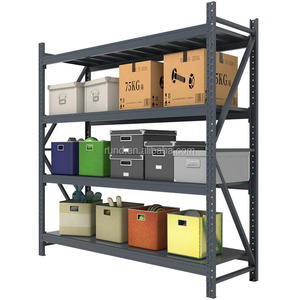
Medium Duty Metal Storage Rack Node Floor Type Fall-Free Design
Engineered with proprietary interlocking nodes and fall-free structural safety clips. Delivers customizable tier spacing for light industrial storage and multi-tier utility environments.
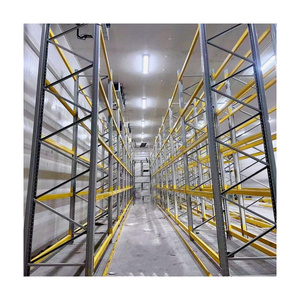
High Density Storage RFID Spare Parts VNA Pallet Racking System
Maximizes vertical clear height using ultra-narrow aisle (VNA) rail-guided parameters. Pre-configured for RFID tagging matrices, building material stacks, and automotive parts depots.
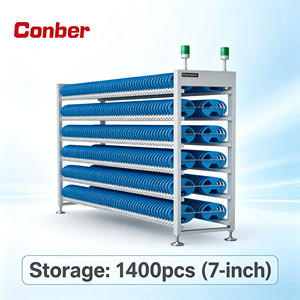
Smart Pick To Light SMT Reel Dynamic Pallet & Component Rack
Integrated multi-color LED pick-to-light hardware and motor core components for high-accuracy electronics manufacturing and precision micro-fulfillment operations.
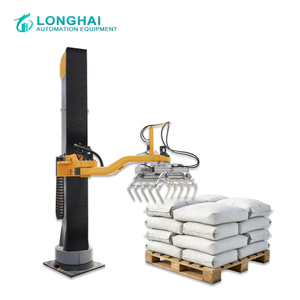
Automatic Robotic Single Column Bag Palletizing Machine
Industrial robotic rotary arm handling 25kg to 50kg grain, cement, and chemical sacks. Bridges manufacturing lines directly into heavy-duty outbound pallet racking systems.
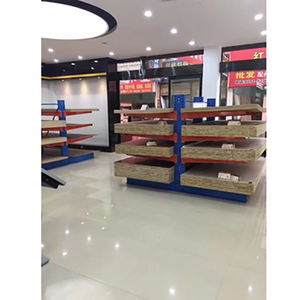
Heavy Duty Adjustable Cantilever Racks for Structural Timber & Steel
Engineered for unimpeded horizontal loading of extrusions, PVC piping, steel bars, and furniture stock. Capable of handling arm loads exceeding 1,000kg to 3,000kg per tier.
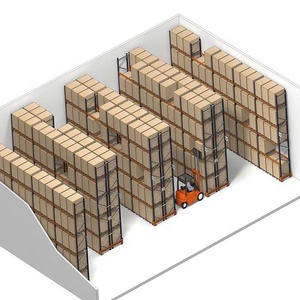
Heavy Duty Pallet Beam Racking System for Industrial Distribution
The gold standard in selective pallet access. Integrates safety locking pins, high-rigidity box beams, and cold-formed upright profiles to deliver 100% immediate SKU accessibility.
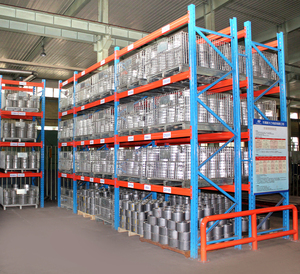
Industrial Grade Vertical Steel Stacking Beam Pallet Rack
High-load vertical column profile designed for multi-tier loads in third-party logistics (3PL) and manufacturing holding areas. Optimized for seismic and mechanical resilience.
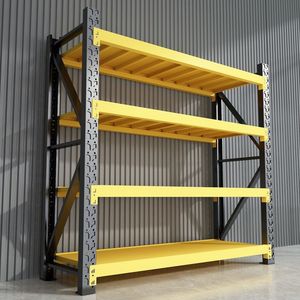
Medium Duty Boltless 4-Layer Industrial Storage Steel Shelves
Rapid-assembly modular shelving featuring electrostatic powder coating for optimal corrosion resistance. Perfect for decentralized carton handling, tools, and spare-parts fulfillment.
Structural Comparison: Engineering Parameters Across Racking Architectures
Selecting the optimal pallet racking framework requires evaluating trade-offs between initial capital outlay, floor space footprint, floor load distributions, and SKU accessibility velocities.
| Racking Methodology | Space Utilization | Selectivity | Inventory Rotation | Forklift Requirement | Primary Application |
|---|---|---|---|---|---|
| Selective Pallet Racking | 40% – 50% | 100% (Direct) | FIFO / LIFO | Standard Counterbalance / Reach | FMCG, Retail Distribution, Multi-SKU Hubs |
| Double Deep Racking | 60% – 65% | 50% | LIFO | Deep-Reach Pantograph Forklift | Dry Grocery, Cold Storage, Medium SKU Runs |
| Drive-In / Drive-Thru | 70% – 80% | 20% – 30% | LIFO (Drive-In) / FIFO | Counterbalance / Narrow Chasis | Seasonal Goods, Bulk Uniform Pallets, Freezers |
| Push Back Racking | 65% – 75% | Selective by Lane | LIFO | Standard Forklift | Intermediate Throughput, Buffer Staging |
| Radio Shuttle Automation | 85% – 90% | Selective by Channel | Automated FIFO / LIFO | Standard Lift + Autonomous Cart | High-Throughput Cold Chain, Beverage, Raw Materials |
| Very Narrow Aisle (VNA) | 55% – 65% | 100% | FIFO / LIFO | Turret Trucks / Wire-Guided Order Pickers | High-Bay E-Commerce Distribution, Heavy Parts |
Strategic Procurement Trends Shaping Pallet Racking Capital Allocations
Procurement directors and warehouse operations heads face fluctuating supply chain conditions. Long-term capital expenditure (CapEx) in racking systems must balance immediate operational agility with the operational lifetime of warehouse real estate. The following trends dominate modern enterprise procurement:
1. Standardized Modularity for Rapid Layout Reconfiguration
Dynamic commercial environments require modular upright slotting and teardrop beam connectors that support rapid beam relocation without field welding or structural re-certification. Facilities are hedging against product packaging shifts by procuring universal step-beam profiles that accept both timber and drop-in wire decks.
2. Seismic Engineering Compliance & Geotechnical Audits
Global procurement teams now require site-specific structural load designs reflecting ASCE 7-22, Eurocode 3, or FEM 10.2.02. Buyers demand validated Finite Element Analysis (FEA) demonstrating seismic base-plate anchoring and beam moment calculations under full rated capacity.
3. Total Landed Cost (TLC) Container-Engineered Logistics
With volatile maritime shipping rates, racking buyers evaluate manufacturers based on volumetric packing efficiency. Racking that is nested, strapped with reinforced dunnage, and planned for full 40HQ cube usage cuts shipping costs by up to 25% per pallet position for cross-border projects.
Technological Evolution: The Next Decade in Pallet Racking Systems
The industrial storage industry is undergoing rapid technological convergence. Racking is no longer considered a standalone asset; it is being integrated into building information modeling (BIM), robotics, and industrial IoT (IIoT) platforms.
Hybrid Autonomous Case-Picking & Shuttle Environments
Traditional drive-in systems are being superseded by semi-automated Radio Shuttle systems and fully autonomous 4D Pallet Shuttles. These automated vehicles travel laterally and longitudinally across deep-lane storage grids, managed via industrial wireless meshes. This enables round-the-clock dark-warehouse operations, minimizes fork-truck collision risks, and reduces the active footprint dedicated to access aisles by over 50%.
Surface Chemistry & Anti-Corrosive Nanotechnology
Coastal logistics hubs, maritime cold rooms, and mining distribution facilities expose structural uprights to severe atmospheric corrosion. Advanced factories have transitioned from basic solvent paints to an automated multi-stage immersion treatment incorporating degreasing, acid pickling, zinc phosphating, and electrostatic epoxy-polyester thermoset powder coating. For sub-zero blast freezers (-30°C) and corrosive chemical handling, hot-dip galvanization conforming to ISO 1461 ensures a 20+ year design life without micro-cracking or rust undercutting.
Guangzhou Heda Shelves Co., Ltd.: Manufacturing Excellence & Capabilities
Established in 2001, Guangzhou Heda Shelves Co., Ltd. has grown into an international racking and industrial storage manufacturer. Operating an advanced 30,000 square meter factory in Guangzhou, China, HEDA combines end-to-end metallurgical engineering with scalable manufacturing capacity.
Complete In-House Production Vertical
We maintain full metallurgical and dimensional control across every production stage: high-precision automated steel slitting, automated CNC upright punching, continuous cold-roll forming, robotic carbon-dioxide shielding welding, pickling/phosphating surface treatment, and electrostatic powder coating lines.
International Certifications (CE & ISO 9001)
Our operations comply with verified structural standards. Guangzhou Heda Shelves Co., Ltd. holds official CE Factory Production Control Certification (No. 2435-CPR-8605159), ISO 9001:2015 Quality Management Certification (No. 18624Q00169R0M), and strict RoHS heavy metal limits on all cured surface coatings.
Complimentary Engineering CAD & 3D Load Design
Before contracts are executed, HEDA’s application engineers provide complete floor plans, rack elevations, slab load concentration analyses, and detailed 3D design renderings at no charge. This technical review ensures that clear ceiling heights, egress doors, sprinklers, and lift equipment work in harmony.