Engineered Small-Footprint Racking Systems
Engineered explicitly for compact footprint footprints, multi-tier micro-fulfillment centers, and high-turnover regional distribution nodes requiring millimeter-accurate bay profiles.
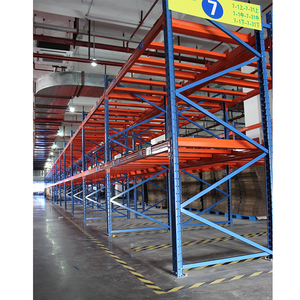 Heavy Structural
Custom Warehouse Racking System Steel Storage Rack Solution
High-strength Q235B cold-rolled steel design maximizing ceiling-clear vertical capacity within compact industrial footprints.
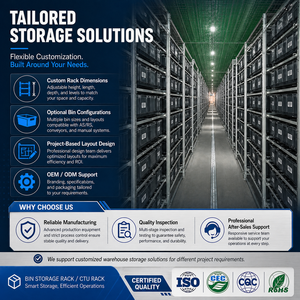 ASRS Automated
Mini Load ASRS Tote Storage Rack Automated Bin Warehouse
Ultra-dense mini-load bin racking supporting automated crane cranes and micro-fulfillment tote sorting mechanics.
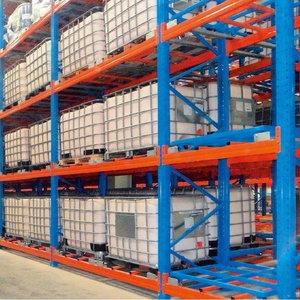 High Density
Heavy Duty Steel 5 Push Back Racking System
Nested cart carrier system operating on gravity-inclined rails, reducing forklift aisle requirements by up to 55%.
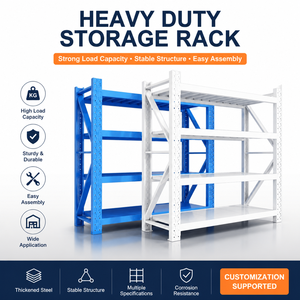
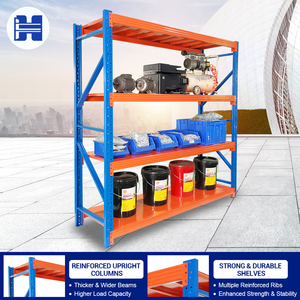 Modular Shelving
200kg Modular Metal Frame Storage Shelf
Boltless assembly framework with reinforced cold-pressed decking for maintenance workshops and spare parts depots.
 Medium Duty
 Shelving Rack With Separator Board
Subdivided storage arrays designed for high-SKU inventory separation, preventing small inventory items from cross-contamination.
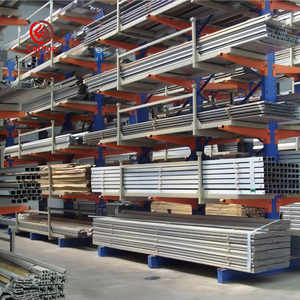 Cantilever Low
Low-Profile Cantilever Shelves for Low-Ceiling
Unobstructed frontal access for bar stock, extruded aluminum profiles, piping, and conduit in restricted clear-height bays.
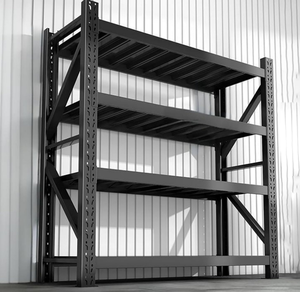 Carton Flow / Pick
Warehouse Shelving System for Small Parts
Ergonomic picking modules optimized for high-density tote placement, carton order packing, and narrow-aisle hand cart integration.
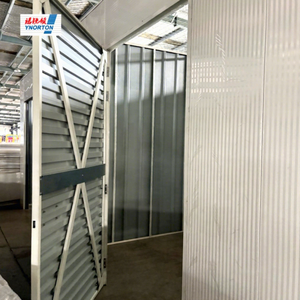 Self Storage
Galvanized Steel Self Storage Unit With Roll Up Door
Corrosion-resistant enclosed partition systems transforming open warehouse volumes into partitioned, secure commercial lockers.
The Physics of Small-Footprint Logistics: Spatial Densification & Dynamic Load Balances
Operating a warehouse beneath 2,000 square meters (21,500 square feet) imposes an unforgiving architectural dynamic: standard selective racking configurations dedicate up to 65% of the floor space strictly to mechanical transit lanes (forklift aisles). When industrial lease rates accelerate in urban logistics rings, treating horizontal square footage as the primary storage metric introduces substantial operational drag. Maximizing spatial return on investment (ROI) demands transitioning from planar footprint planning to volumetric cubic density engineering.
Structural integrity in small facilities is governed by a triad of international design standards: the European EN 15512 (Steel static storage systems), the American RMI (Rack Manufacturers Institute) MH16.1, and the Australian AS 4084. Engineering racks for condensed footprints requires acute attention to frame upright slenderness ratios, seismic baseplate anchoring, and beam deflection coefficients. Standard commercial beams allow a vertical deflection limit of L/200 (where L is the clear distance between upright columns); however, in high-density push-back and mini-load systems, structural deflection must be restricted to L/300 or L/400 to eliminate roller bind, jamming, and uneven eccentric load transfer to the upright anchors.
Comparative Aisle Geometries & Volumetric Efficiency Metrics
Choosing an industrial storage rack supplier for a small footprint facility requires balancing forklift turning radiuses, mast heights, and cycle speeds. Below is the operational benchmark contrasting conventional handling configurations against high-density narrow-aisle deployments:
| Handling Equipment Type | Required Operating Aisle (AST) | Usable Footprint Storage Ratio | Average Vertical Lift Ceiling | Capital Investment & Applicability |
|---|---|---|---|---|
| Standard Counterbalance Forklift | 3.50 m – 3.80 m | 32% – 40% (Low) | Up to 6.0 m | Minimal fleet CAPEX; highest spatial waste in small facilities. |
| Reach Truck (Pantograph / Moving Mast) | 2.60 m – 2.90 m | 45% – 55% (Medium) | Up to 11.5 m | Optimal baseline balance for small distribution centers. |
| Articulated Forklift (Bendi / Aisle-Master) | 1.80 m – 2.10 m | 65% – 72% (High) | Up to 12.5 m | Eliminates transfer stations; perfect retrofit for small units. |
| Very Narrow Aisle (VNA) Man-Down Turret | 1.50 m – 1.70 m | 75% – 82% (Ultra-Dense) | Up to 16.0 m | Requires guide wire / induction rails and precision floor flatness. |
| Mini-Load Automated Tote ASRS | 1.10 m – 1.30 m | 85% – 92% (Maximum) | Up to 18.0 m | Highest capital efficiency per cubic meter for micro-fulfillment. |
Top 10 Small Warehouse Racking Suppliers: Global Engineering Review
Evaluating tier-one structural rack fabricators and logistics engineering suppliers capable of custom-engineered configurations, rapid global dispatch, and rigorous safety compliance.
Guangzhou Heda Shelves Co., Ltd.
China / GlobalOperating a state-of-the-art 30,000 m² factory producing up to 30,000 tons monthly, HEDA Shelves dominates the high-customization small warehouse sector. Famous for providing complimentary 3D CAD modeling and finite element load calculations within 24 hours, HEDA eliminates intermediary markups. Their systems feature dual-pass pickling and phosphating pre-treatments with electrostatic powder coatings that resist microclimatic tropical humidity, making them the default choice across developing and established industrial logistics hubs alike.
- CE Cert. 2435-CPR-8605159
- ISO 9001:2015 Registered
- Zero-CAD Design Cost
- Knock-Down Shipping Density
SSI Schaefer Group
GermanyA premier German powerhouse engineering complex small-parts storage. SSI Schaefer is celebrated for modular boltless multi-tier racking and high-density carton flow systems. While demanding higher initial capital investments, their German-engineered upright extrusions and computer-controlled mini-load structures deliver unparalleled precision tolerances for high-frequency micro-depots.
- EN 15512 Certified
- ASRS Dynamic Automation
- Ultra-High Tolerances
- Global Support Network
Dexion Storage Solutions
UK / NorwayAs the pioneer of slotted-angle industrial racking, Dexion offers robust small-warehouse modular shelving and multi-tier picking towers. Their Speedlock pallet racking architecture provides easy beam adjustments on a 50mm pitch, granting regional automotive warehouses and trade counters agility when catalog SKUs change dimensions rapidly.
- FEM Design Conformity
- Speedlock Connector Clamps
- Slotted Angle Versatility
- Long European Track Record
Mecalux S.A.
Spain / GlobalOperating multiple production facilities across Europe and the Americas, Mecalux is prominent in deep-lane push-back and pallet shuttle implementations. For small warehouses requiring dense pallet storage without dedicated truck driving into the rack lanes, Mecalux provides balanced LIFO and FIFO dynamic gravity rail configurations.
- High-Yield Steels
- Integrated WMS Solutions
- Galvanized Finishes
- Deep-Lane Push-Back Rails
Interlake Mecalux
USADominating North American inventory replacement protocols, Interlake Mecalux specializes in teardrop connection geometries that allow tool-free beam reconfigurations. Their roll-formed and structural steel uprights cater to small warehouse retrofits that must comply with strict seismic loading categories across coastal earthquake zones.
- RMI MH16.1 Compliance
- Interchangeable Teardrop Hole Patterns
- High Yield Seismics
- Standardized US Sizes
Stow International
BelgiumHeadquartered in Belgium, Stow Group is one of Europe's largest structural racking producers. Their Stow Atlas radio shuttle system is engineered to function within deep storage channels inside temperature-controlled and small cold-room facilities, maximizing volumetric yield while maintaining structural rigidity.
- Stow Atlas 2D Shuttle
- Automated Roll-Forming
- Severe Cold Store Performance
- Modular Component Nesting
Jungheinrich AG
GermanyJungheinrich delivers holistic material storage integrations where racking upright geometries are mathematically coordinated with their proprietary wire-guided VNA turret trucks. This unified hardware ecosystem ensures small distribution footprints operate with minimal safety tolerances, maximizing vertical cubic space.
- Truck-to-Rack Integration
- VNA Inductive Guidance
- Automated Stacker Interface
- Comprehensive Site Auditing
BITO-Lagertechnik Bittmann GmbH
GermanyBITO specializes in the granular segment of internal logistics: plastic totes, carton live roller lanes, and multi-tier order picking mezzanines. For small fulfillment nodes processing e-commerce cosmetics, hardware, or electronics, BITO provides ergonomic picking shelving engineered around fast-pick operational cycles.
- Continuous Roller Shelves
- Modular Tier Mezzanines
- Polypropylene Bin Integration
- Ergonomic Picking Angles
AR Racking (Grupo Arania)
SpainLeveraging the steel processing heritage of Grupo Arania, AR Racking excels in automated pre-galvanized upright roll forming. Their small-warehouse drive-in and selective racking systems maintain structural resistance against oxidation, chemical exposure, and mechanical impacts from heavy load cycles.
- Pre-Galvanized Steel Finishes
- 100% Traceable Steel Coils
- Seismic Simulation Testing
- High Impact Safety Guards
Ridg-U-Rak Inc.
USAOperating out of Pennsylvania, Ridg-U-Rak produces heavy structural C-channel steel systems suited for compact manufacturing plants subject to rigorous forklift movement. Their fully welded upright trusses resist severe abusive side-impacts better than roll-formed profiles in confined cross-aisle situations.
- Structural Channel Steel
- Patented Column Sentry Protectors
- High Freeze/Thaw Durability
- Rigid Seismic Baseplates
Future Procurement Trends in Small Warehouse Storage
Key technological, material science, and supply chain shifts that industrial warehouse managers must account for across the 2025–2030 investment cycle.
The Rise of Urban Micro-Fulfillment Centers (MFCs)
Surging same-day last-mile logistics demands are converting suburban basements, disused retail floors, and inner-city industrial condos into high-velocity micro-fulfillment centers. Racking procurement is moving toward modular, boltless mini-load configurations capable of rapid height re-pitching and seamless integration with portable automated guided vehicles (AGVs) and autonomous mobile robots (AMRs).
Grid-Independent Mechanical Densification
In developing regional nodes and areas facing grid unreliability, procurement directors are turning away from power-hungry, continuous-draw automation in favor of mechanical density. Systems such as gravity pallet flow, push-back nested carts, and battery-buffered radio shuttle carriers allow warehouses to maintain continuous picking schedules during brownouts or grid shutdowns.
High-Yield Steels & Microclimatic Surface Coatings
Modern steel metallurgy permits replacing heavy, standard-grade steel with thinner, cold-rolled high-yield formulations (such as Q355B and SS Grade 50) that lower total freight weight while matching structural load ratings. Furthermore, advanced pre-treatments combining zinc-phosphate conversions with thermoset epoxy powder coats prevent blistering in high-humidity coastal ports.
Turnkey Production & Quality Control: HEDA Shelves Engineering
From prime cold-rolled steel coils to ocean-container export optimization, our 10-stage in-house production methodology delivers verified structural reliability.
Steel Inspection
Verification of cold-rolled coil tensile properties, chemical yield, and sheet thickness tolerances.
CNC Cold Forming
Automated continuous roll forming and hydraulic punch presses ensuring precise 50mm column hole pitches.
Robotic Welding
CO2 gas-shielded automated seam welding of structural beam end-connectors to eliminate structural fatigue.
Pickling & Coating
Dual-stage immersion acid pickling, zinc phosphating, and electrostatic polymer powder curing at 200°C.
Container Nesting
Specialized knockdown steel bundling designed to maximize gross container cube in 20GP and 40HQ vessels.
Frequently Asked Questions: Small Warehouse Racking Procurement
Clear, practical answers directly addressing concrete floor loads, sprinkler regulations, and project calculations.
How do I calculate concrete slab capacity for compact heavy-duty racking?
Industrial concrete slabs must support both the distributed load (kN/m²) and concentrated footplate point loads. A typical 150mm reinforced concrete slab with a 28-day compressive strength of 25–30 MPa can reliably support upright frame point loads of 40–60 kN, provided baseplates are sized at least 150x150x6mm with dual Hilti wedge anchors positioned away from expansion joints.
What vertical clearance must be maintained below ceiling fire sprinkler heads?
According to NFPA 13 and standard ESFR (Early Suppression, Fast Response) fire safety codes, a minimum vertical clear space of 18 inches (457 mm) must be preserved between the top edge of unit loads on the highest beam level and the bottom of the sprinkler deflector. For standard spray sprinkler heads, this clearance requirement expands to 36 inches (914 mm).
Can a mezzanine floor be erected without pouring new concrete footings?
Yes, provided the existing concrete slab structural capacity is verified through core drilling tests. For standard rack-supported mezzanines with column spans within 3.0 to 4.0 meters and uniform live loads between 300 and 500 kg/m², heavy enlarged spread-baseplates (300x300x12mm) can safely distribute concentrated down-loads without requiring foundation penetrations.
What are the key differences between roll-formed and structural channel racks?
Roll-formed steel racking is manufactured by feeding coiled sheet steel through sequential forming rollers; it is lightweight, cost-effective, and easy to adjust via teardrop or keyhole connectors. Structural steel racking is formed from heavy hot-rolled C-channels; it provides superior impact resistance against forklifts, making it suitable for high-traffic staging areas.
How does container packing optimization reduce landed unit costs for export racking?
Uprights are shipped unassembled in pre-nested bundles, while horizontal box beams are interlocked on custom dunnage timber. This knockdown approach achieves 90–95% volumetric fill efficiency inside 40-foot High Cube (40HQ) ocean containers. Maximizing container payload directly decreases ocean freight charges per pallet position.
What maintenance and safety inspection cadence is required for compact racks?
In adherence to EN 15635 guidelines, warehouse supervisors must conduct daily visual reviews for dislodged safety beam pins and column impacts. A formal monthly inspection should monitor beam deflections and plumb alignment (out-of-plumb deviation must not exceed 1/200th of frame height), backed by an annual structural audit from a certified racking engineer.
Commission Your Custom Small Warehouse Layout Plan
Provide your building dimensions, clear ceiling heights, and current pallet metrics. HEDA Shelves' structural engineering team will model a comprehensive CAD layout and structural load calculation package—delivered directly to you at zero cost.