Flagship Wide Aisle & High-Density Storage Solutions
Explore our precision-fabricated selective, high-bay, double-deep, and multi-tier systems engineered for maximum pallet accessibility, structural rigidity, and certified worldwide export compliance.
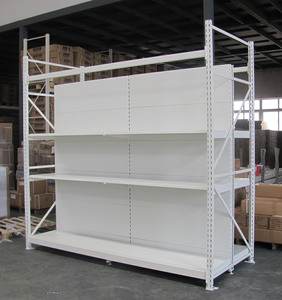
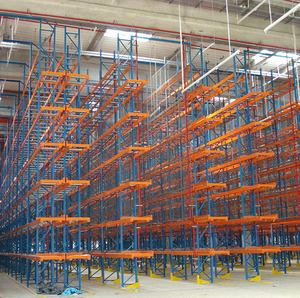
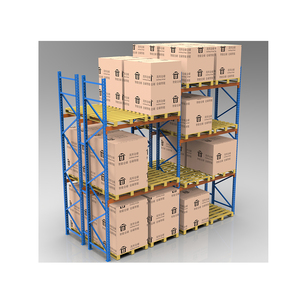
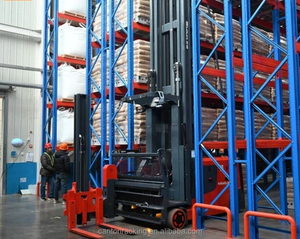
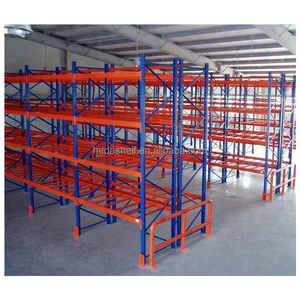
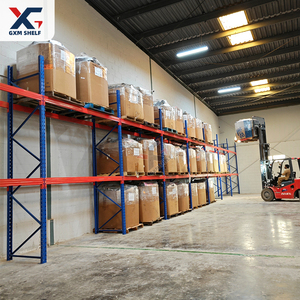
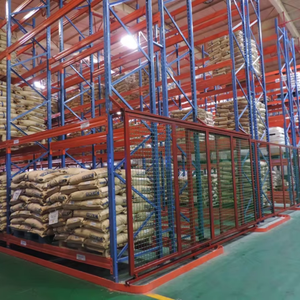
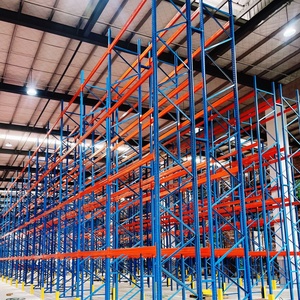
The Engineering Paradigm of Wide Aisle Selective Racking
Wide Aisle Pallet Racking (commonly engineered as standard selective pallet racking) serves as the primary structural backbone for global distribution centers, third-party logistics (3PL) hubs, retail fulfillment complexes, and industrial manufacturing plants. Unlike ultra-dense systems such as Drive-In or Radio Shuttle arrays, wide aisle systems are configured with aisle clear widths typically ranging from 3.0 meters to 3.8 meters (9.8 ft to 12.5 ft), facilitating unrestricted operation for conventional counterbalance forklifts, reach trucks, and articulated equipment.
The core structural advantage of wide aisle racking is its 100% immediate selectivity. Every pallet position remains directly accessible at any given second without moving neighboring loads. For enterprise supply chains managing diverse stock-keeping units (SKUs) subject to rapid inventory turnover and dynamic dispatch cycles, selective wide aisle infrastructure delivers an unrivaled return on investment (ROI), low upfront capital cost per pallet position, and minimal structural maintenance overhead.
Engineering Taxonomy: Wide Aisle vs. Alternative Storage Architectures
Strategic warehouse planners must evaluate operational parameters—throughput velocity, pallet handling equipment, building clear heights, and structural floor slab tolerances—when selecting an optimized storage layout. The following technical matrix compares wide aisle selective racking with alternative high-density topologies:
| System Architecture | Operating Aisle Width | Selectivity Ratio | Space Utilization | Capital Cost / Pallet | Required Handling Equipment |
|---|---|---|---|---|---|
| Wide Aisle Selective Racking | 3.0m – 3.8m | 100% Direct | 35% – 45% | Lowest Tier | Standard Counterbalance / Reach Trucks |
| Very Narrow Aisle (VNA) | 1.6m – 1.9m | 100% Direct | 55% – 65% | Moderate to High | Specialized VNA Turret Trucks / Rail or Wire Guided |
| Double Deep Racking | 3.2m – 3.6m | 50% (FILO pairs) | 50% – 60% | Low to Moderate | Reach Trucks with Pantograph / Telescopic Forks |
| Drive-In / Drive-Through | N/A (Lanes) | Low (Last-In-First-Out) | 65% – 75% | Moderate | Counterbalance / Reach (Limited Cab Clearance) |
| Radio Shuttle Automation | Transfer Aisles | Batch / High FIFO/LIFO | 75% – 85% | High (Automated Carriers) | Standard Forklifts + Autonomous Lithium Shuttles |
Top 10 Wide Aisle Racking Factory & Exporter Selection Criteria
Procuring industrial racking across international borders demands comprehensive due diligence. Tier-1 enterprise buyers evaluate manufacturers using rigorous technical benchmarks that extend far beyond initial invoice quotations. When compiling the top-tier global benchmark of wide aisle racking manufacturers and exporters, structural engineers focus on six foundational capabilities:
1. Raw Material Metallurgy & Certified Steel Grade
High-tensile, mill-certified hot-rolled or cold-rolled strip steel (grades Q235B, Q355B, SS400, or S355JR). Verified chemical composition guaranteeing yield strengths upwards of 235–355 MPa prevents catastrophic shear failure under dynamic forklift impacts.
2. Continuous Roll-Forming & Multi-Cavity Punching
Fully continuous CNC roll-forming lines capable of rolling 12–16 stations ensure micro-tolerance upright cross-sections (e.g., 80x60, 90x70, 100x70, 120x95mm). Precision automated CNC punching guarantees 50mm or 75mm beam adjustment pitches with zero elongation drift.
3. Surface Passivation & Electrostatic Powder Coating
Durability against harsh industrial atmospheres relies on 8-stage automatic pretreatment: alkaline degreasing, acid pickling, rinsing, and zirconium/zinc phosphating, followed by 60–90 micron thermosetting epoxy-polyester powder coating cured at 180°C–200°C.
4. Beam Connector Dynamics & Welded Box Sections
Heavy-duty interlocking beams formed by inter-welding dual C-profiles into continuous box sections. End-connectors feature 3, 4, or 5-claw high-strength robotic welds with integrated spring steel safety locking pins to eliminate accidental dislodgement.
5. CKD Knock-Down Packaging & Ocean Freight Optimization
Professional exporters package upright frames disassembled (knock-down CKD) or pre-assembled based on container utilization models. Custom heavy steel strapping, moisture-barrier wrapping, and corner protectors prevent transit abrasion during multi-week ocean shipping.
6. Full Project Lifecycle Support & Finite Element Calculations
Comprehensive CAD layout engineering, 3D structural modeling, and finite element analysis (FEA) verify seismic resistance, torsional stability, and dynamic impact damping under maximum rated uniform distributed loads (UDL).
Guangzhou Heda Shelves Co., Ltd. – An Industry-Standard Racking Exporter
Founded in 2001, Guangzhou Heda Shelves Co., Ltd. stands among China's premier heavy-duty pallet racking and industrial warehouse storage manufacturers. Operating from an expansive 30,000 square meter standardized production hub in Guangzhou, HEDA integrates every stage of the manufacturing process under one roof—from raw steel decoiling and automated punching to robotic welding and powder coating.
Over two decades of structural engineering specialization catering to supply chain operators, global retailers, and 3PL warehousing mega-projects.
Massive monthly steel processing capacity powered by automated continuous roll-forming lines, ensuring ultra-reliable delivery schedules for high-volume orders.
Verified structural conformity holding CE Certificate No. 2435-CPR-8605159, ISO 9001:2015 Management System No. 18624Q00169R0M, and RoHS environmental compliance.
Over 10,000 warehouse projects successfully installed across 120+ countries, backed by free 24-hour CAD layouts and 3D architectural load calculations.
The 10-Stage Precision Manufacturing Pipeline
A premier wide aisle racking exporter maintains rigorous quality control at every phase of component transformation. The production workflow below illustrates how raw certified hot-rolled steel coils are converted into heavy-load structural racking assemblies:
Future Procurement Trends in Wide Aisle Storage (2025–2030)
The global warehousing landscape is experiencing substantial technological evolution. Procurement directors are no longer purchasing static steel frames in isolation; they are planning modular ecosystems designed to interface seamlessly with modern intralogistics technologies. The following industry macro-trends are shaping procurement strategies across the Americas, EMEA, and Asia-Pacific:
Hybrid AMR/AGV Navigation Pathways
Warehouses are upgrading standard 3.4m wide aisles into dual-operation zones shared by counterbalance reach forklifts and Autonomous Mobile Robots (AMRs). Racking uprights now incorporate optical QR code mounts, floor-level LiDAR reflectors, and heavy perimeter bullnose guards to ensure seamless autonomous navigation.
Cold Chain & High-Humidity Anti-Corrosion Upgrades
With the global expansion of frozen food distribution and coastal transit hubs, standard paint finishes are giving way to pre-galvanized coils or hot-dip galvanized (HDG) components that withstand 1,000+ hours of continuous salt spray (ASTM B117) and resist thermal shock in sub-zero freezers down to -30°C.
Modular Vertical Expandability & Mezzanine Conversion
Rising real estate land acquisition costs drive buyers to specify heavy upright columns (minimum 90x70x2.0mm or 100x70x2.5mm) with surplus bearing capacity. This engineering foresight allows standard wide aisle racking to be later retrofitted with catwalks, rack-supported mezzanines, or pick modules without structural replacement.
Decarbonized Sourcing & Container Packaging Efficiency
Global logistics procurement demands sustainable manufacturing with documented environmental footprints. Advanced container nesting algorithms pack up to 26–28 metric tons of knock-down racking components per 40ft High Cube (40HQ) container, drastically minimizing oceanic shipping emissions and landed freight costs per pallet location.
Structural Sizing Formulas: Calculating Required Aisle Width (AST)
An essential formula in warehouse layout engineering dictates the minimum operating aisle width required for safe equipment operation. Specifying an aisle that is too narrow increases frame collision risks, while an overly wide aisle wastes floor space. The Minimum Aisle Width for 90° Pallet Stacking ($AST$) is calculated as follows:
AST = Wa + R + CWhere:
• Wa = Turning radius of the specific counterbalance or reach forklift (provided by the truck manufacturer).
• R = Load dimension distance from truck front axle to pallet rear edge:
R = √[(b/2)² + (l + x)²] (where l is pallet depth, b is pallet width, and x is load distance).• C = Operational safety clearance factor (standard industrial practice specifies 200mm to 300mm of total buffer space to prevent racking impact).
For standard Euro-pallets (800 x 1200mm) or standard ISO/GMA pallets (1000 x 1200mm) handled by a typical 3-wheel electric counterbalance truck, AST typically settles between 3,100mm and 3,500mm. For heavy 4-wheel engine-powered forklifts, operating aisles expand to 3,600mm – 4,200mm.
Frequently Asked Questions (FAQ) – Wide Aisle Racking Procurement
Clear, authoritative technical answers on manufacturing tolerances, load certification, global logistics, and on-site assembly to streamline your enterprise sourcing.
What steel grades and mill certifications are required for heavy-duty wide aisle racking?
How is the beam deflection limit calculated, and what is considered acceptable under safety codes?
What safety accessories should always be specified for wide aisle warehouse installations?
How does a manufacturer optimize wide aisle racking for ocean container freight?
What concrete slab specifications are required to support heavy-duty wide aisle racking?
How do you ensure proper fire protection compliance (such as NFPA 13) in selective wide aisle racking?
What is the typical manufacturing lead time and export delivery process for project-scale orders?
Can wide aisle racking systems be reconfigured or expanded as warehouse requirements evolve?
Engineer Your Optimized Warehouse Storage Layout Today
Connect directly with our senior structural racking engineers. Share your building floor plan, clear ceiling heights, and pallet specifications to receive a complimentary custom 2D/3D CAD layout, finite load calculations, and a direct factory quotation within 24 hours.